Sonic Adventure 2: Combat as Traversal

Sonic Adventure 2 is loved and it is hated. As an early adaptation of the 2D platform game star Sonic the Hedgehog it is rife with both 3D growing pains and extravagant, outside-the-box ideas. I find it notable for a great number of things. I’m particularly fond of how the game integrates its main gameplay attraction of momentum-based platforming- going fast, in so many words – with enemy encounters. More precisely, how this enemy encounters do not intrude upon the traversal gameplay, as the combat itself becomes a form of traversal.

Specifically I am talking about the Sonic and Shadow Action Stages, as they are relevant to what I’m getting at here, with the treasure hunt and mech stages being their own beasts. The Action Stages as such involving running across long, winding highways filled with deadly robots and ridiculous loopdy-loops. The first thing to note about these enemy robots is that they barely attack Sonic. Maybe a laser or bomb or two will be launched every few seconds. The thing is that Sonic stages need obstacles for there to be a game. Speed is meant to be a reward for performance, and if there’s nothing to overcome there’s no way to perform. An excess of obstacles though, quickly grinds down the experience to one of attrition, with frequent starting and stopping that strips away the core gameplay. In other words, Sonic has to have a very low skill floor and barrier to entry. Complicating this with more involved combat breaks the flow of Sonic that is one of its staple selling points.
Sonic (Sonic Adventure 2), in a tropical jungle environment, rolls into a ball and dashes straight ahead at high speed, blasting through a robot and running ahead as if the obstacle was nothing.
Yeah, that robot did not put up much of a fight.

So enemies in Sonic Adventure 2 are barely obstacles, and will generally be destroyed in one strike. They’re more like platforms in and of themselves, as the act of attacking them can propel Sonic forward and allow him to bridge gaps. By making the act of combat also an act of traversal, it blends more seamlessly with the main gameplay of traversing at high speeds. Sonic doesn’t have to stop and build up any sort of combo or other combat-centric mechanic to deal with enemies. He can simply vanquish them as he runs by, they’re more like a speed bump than a wall.
Sonic (Sonic Adventure 2) spins into a ball and launches into the air in a San Francisco-like cityscape, bounces off three flying robots, destroying them, then jumps off a hapless humanoid robot as it jumps out of a hidden spot.
Being able to careen past this humanoid robot at the end is hilarious, and fun. Stupid enemies can be a feature!

By necessity, this is also somewhat an article about the homing attack, introduced in the original Sonic Adventure. The homing attack was a pretty clever solution to adapting Sonic’s primary method of attack, which is to say jumping into things as a spinning ball, from his 2D genesis games to 3D space. By pressing the jump button in mid-air, Sonic will do an air dash with a burst of speed, and home in on a nearby enemy, destroying it, if there is one. It’s still possible to precisely jump into enemies as Sonic in Sonic Adventure 2, but it is cumbersome, a pain, and more pertinently, slow. That’s the real undercurrent here, that every time the Sonic franchise has endeavored to include more complex or involved combat into its gameplay it’s operated mostly to slow down gameplay or distract from the core fantasy of playing as Sonic The Hedgehog. Obviously, to go fast, or in a more practical game design sense, to build and maintain momentum and feel powerful in doing so.

Sonic is at its best when speed is an expression of skill that gives the player power over their environment. The homing attack essentially compensates for the third axis of a 3D game in a way that makes using a homing attack comparable to jumping Sonic into an enemy on a 2D plane, in terms of complexity. What’s more, if there is no enemy is available to home in on, the attack operates more as a normal air dash, giving Sonic a degree of momentum in the direction he is facing with little to no ending lag. With the homing attack as Sonic’s primary method of attacking, combating enemies because an integrated part of movement itself. You’re always moving while attacking, and almost always attacking while moving as well. Part of the reason I chose Sonic Adventure 2 in specific to cover this topic is because the homing attack’s lack of ending lag is not always the case in every Sonic game. I feel as though the evolution of the homing attack across the series is something that could fill out its own write up.
In a grassy urban park, Sonic (Sonic Adventure 2) spins into a ball and dashes ahead at high speed, bouncing off a humanoid robot, destroying it, and bounding over a fence. He then speeds across the grass to two flying robots, which Sonic bounces off of and destroys in one smooth motion.
The homing attack would never feel nearly as satisfying as this again.

The game implements some clever ideas with the homing attack too. It allows strings of enemies to act as a sort of make-shift bridge to get to hard-to-reach areas. It allows Sonic to climb up more vertical surfaces if they’re lined with targets. Common elements in Sonic that need to be interacted with, like powerups and bounce pads, are less easily missed with the homing attack. If every one of these targets needed to be precisely collided with, Sonic’s own speed could make the process disruptive, and the homing attacking does away with that awkwardness as well.
Sonic (Sonic Adventure 2) swings through the air of a tropical jungle on a vine, then briefly runs across a grassy platform before rolling into a ball as he jumps and homing in on two flying robots, destroying them, then homing in on a red bounce spring.
No stopping to fight, fighting is going, because this is a game about going!

All of these advantages Sonic Adventure 2 rings out of the use of simplified combat are things that later Sonic games double back on at various times, that I feel makes them overall weaker. Sonic Heroes and Shadow The Hedgehog populate their levels with slow combat encounters full of enemies that will take multiple, repetitive attacks before allowing the player to return to the main gameplay loop of high-speed platforming. Sonic The Hedgehog (2006) and many of the later “boost” style games like Sonic Colors sport a homing attack with greater ending lag and less seamless momentum, making them clunkier and less generally useful for traversal. When combat is an end onto itself, rather than an element of the greater gameplay which adds to the overall experience, the combat itself has to be extremely engaging. The problem with putting extremely engaging combat into a game primarily about traversal, is you’re now overloading your design overhead with two very complex, very essential systems that need to not only both have a great deal of depth, but also not interfere with one another. It can be done, but it’s not something to be undertaken lightly. When Sonic attempts to flesh out combat in this way it has thus far for me invariably fallen flat. If there’s any point I was trying to make here, I think it’s that combat does not always have to be an end onto itself, and can be simplified to serve a greater design purpose. That from a guy who has an embarrassing number of hours in the sorts of high-complexity combat games that are the antithesis of the homing attack. Sometimes less is more.

Sonic Adventure 2‘s weakness, when it comes to combat encounters, I feel is largely in its boss fights. The game is not without some fun to be had in boss encounters, but this is definitely one area in which the Sonic franchise has usually improved over time. If the unity of combat and traversal is the game’s strength, as I have claimed, then the scarcity of boss battles that take place while Sonic is running a distance is pretty alarming. Later Sonic games would have Sonic running down an infinitely long highway as the boss keeps apace with him and the two exchange blows that way. It seems a natural fit to Sonic’s gameplay, so the question of a lack of this sort of encounter in Sonic Adventure 2 may have been a technological one. The game includes precisely one boss encounter of this type, but it is rather simplistic compared to what would come later.

Combat in the Sonic series never felt so satisfying to me as when it was merely a tool of traversal. It had its place, populating the Action Stages with obstacles that were not too intrusive to the overall experience. Often I find games, especially platforms, shoehorn combat into spaces where it does not belong, and this intrusion can disrupt the flow of a game, which can be dire for a game like Sonic, so dependent as it is on that flow state. Sometimes the best way to design a system is knowing when to simplify, and knowing when to hold back, knowing the proper place for each element. The prospect of the upcoming Sonic Frontiers is an exciting one, following in the trend of open world games inspired by The Legend of Zelda: Breath of The Wild, itself a game primarily about traversal, but applied to the momentum- based platforming of sonic. The synthesis of those unique gameplay styles could be something really special. I hope the design keeps its emphasis where Sonic really shines – on the traversal – with combat not intruding too much on the fantasy of gliding across vast landscapes with super speed.
Sonic (Sonic Adventure 2) runs along metal scaffolding over an artificial bay. He spins into a ball then launches into the air, destroying several flying robots before landing on another scaffold.

Talk about low budget flights! No food or movies? I’m outta here…
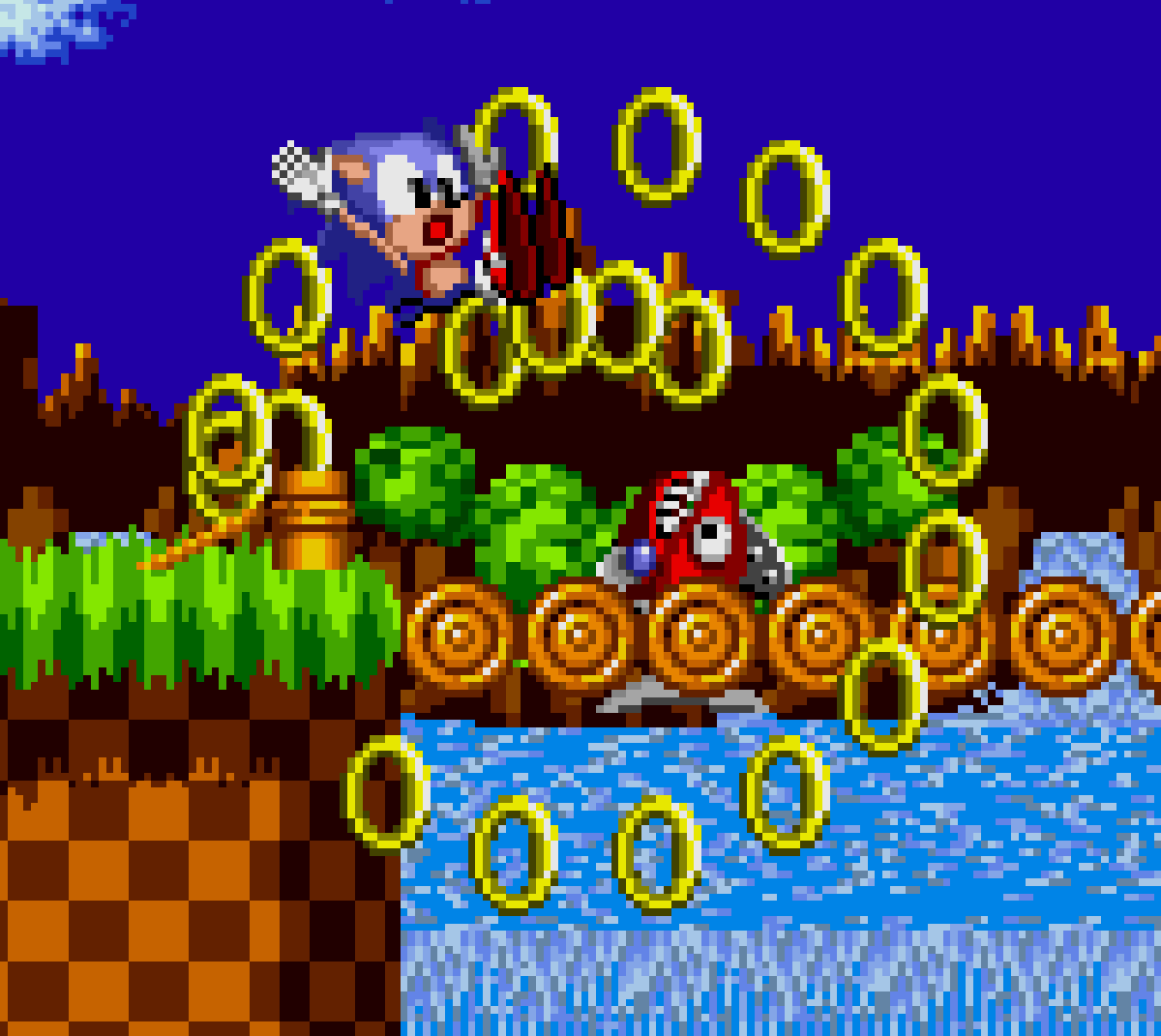
Sonic’s Famous ‘Health’ System, The Rings

Sonic The Hedgehog is an exquisite corpse of a franchise with a history as deep, interesting, and confusing and some of earth’s mightiest empires. You could fill volumes on the ins and outs of this thing. I cannot deny, I love this weird little rodent and his weird little world immensely. Yes, I’m as excited as anyone for Sega’s next absurd windstorm of a Sonic title, despite all the, uh, feedback, I’m about to unleash. Sonic has had some very high highs for me, and it’s a series that does certain things in gameplay that have never quite been captured elsewhere. There’s a laundry list of things people like to complain about in regards to this series, and I’d probably agree on most fronts too. Instead of the usually suspects, though, I want to complain about something I haven’t seen brought up before. It’s something that’s been with Sonic since the beginning, actually.

I don’t know if this is something that only bothers me. Perhaps that’s why I feel the need to get this jotted down and explore my feelings about it, but the Sonic The Hedgehog franchise’s rings system is weird, right? In Sonic The Hedgehog, and near every sequel and spinoff to that game since, rings have acted as the primary collectible – a sometimes currency, sometimes score counter, and almost always a barrier against the failure state. While rings in Sonic games frequently have some use within the game that make them valuable, their primary purpose is to prevent a Game Over. When Sonic is hit by an enemy or obstacle, he’ll lose all the rings he’s collected, spilling them out into game space, where they can be re-collected. If Sonic is again hit without any rings, the failure state engages, and Sonic is returned to the last checkpoint.

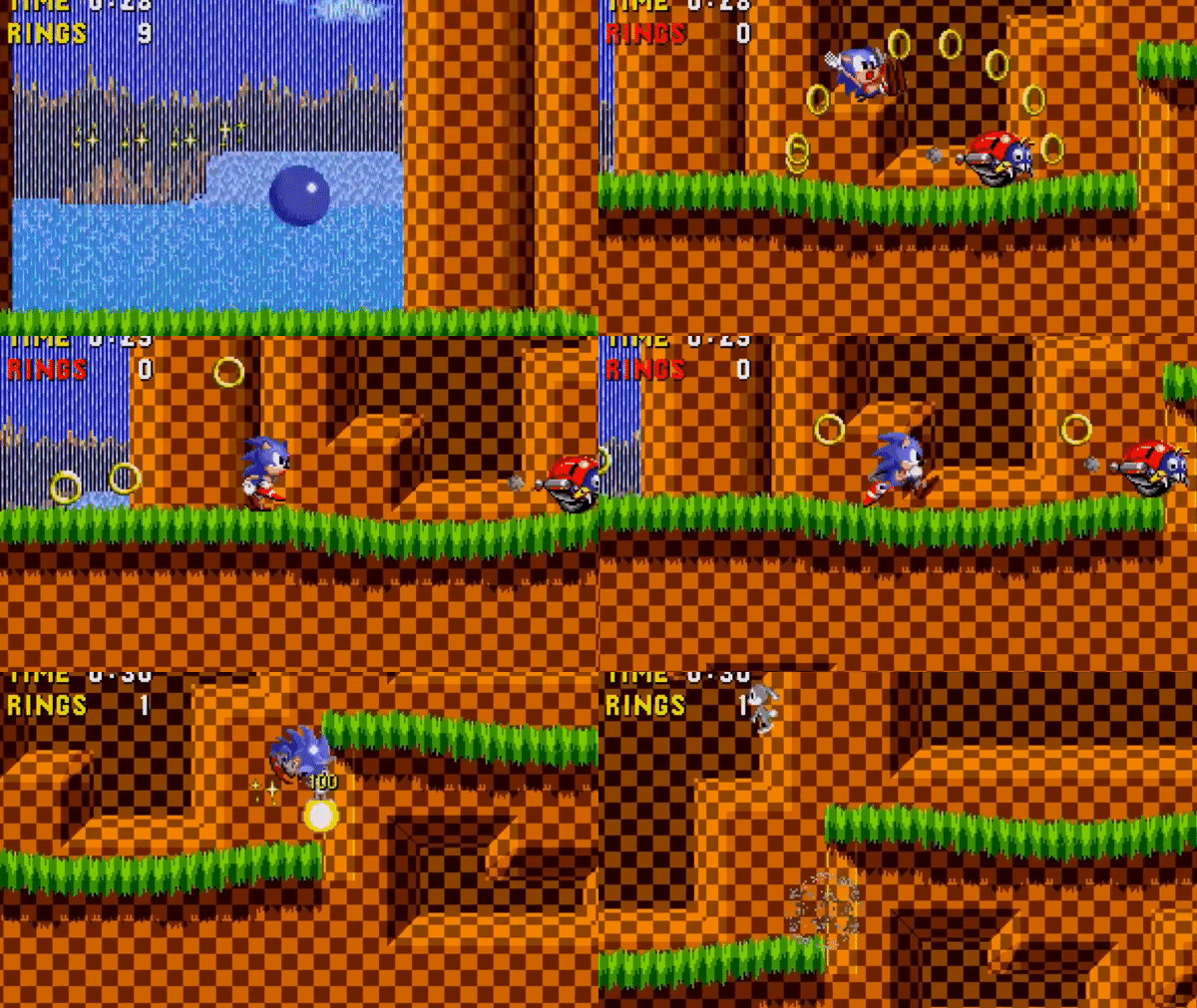
Grassy Cliffs. Sonic The Hedgehog walks into a beetle robot, losing rings, which scatter out in a circle from him. Sonic then destroys the robot by spinning into a ball. (Sonic The Hedgehog)
Gameplay this week sourced from Evolution of Sonic getting hit and losing rings (1991-2021)

To elaborate on what bothers me about this system I went and tried to elaborate on what makes a compelling health or damage system in general. To me, there are three things to guide the design of a successful player health system. A successful health system may include one or all of these. First, the health system provides a balance knob by which the designer may tune how many mistakes a player can make before incurring a greater failure state like a Game Over. It makes for a pretty simple tool to balance the game. If it’s too hard, players can simply be given more health or ways to restore their health. Furthermore, this balance can change as the player collects upgrades and gets stronger, or encounters more deadly enemies. It’s good for tuning the interest curve. Secondly, health systems can create a sense of tension or danger, to shore up the threat of the player’s opposition. Instant death makes for threatening enemies too, but that little bit of anticipation a more graduated health system provides, as the player slowly watches their strength wane with each hit they incur, it exaggerates and emphasizes that danger. Third, health systems can be used to incentivize players in interesting ways to guide the gameplay, by tweaking how it is that players regain or maintain their health through specific behaviors. Doom 2016’s glory kills, which reward aggression when the player is low on health, comes to mind.

So how does the blue blur do on all of these fronts? Well, the ring system is rather limited in that having rings only prevents Sonic’s defeat through a single mistake, before more rings have to be collected. In this way it doesn’t do much for balance. By virtue of how the system works, rings are always available when you get hit, unless you’re over a bottomless pit and will just die from the fall regardless. Rings are also plentiful enough in the world that tense moments of danger are few and far between. This is a good thing in a sense, Sonic is a game about flow and freedom, less one about oppression or danger. The result, though, is often that getting hit is just annoying – a disruption to that flow- more than anything else. Sonic gets a lot of its somewhat undeserved reputation of excessive simplicity from this. It’s hard to fail (instant death traps aside), and very easy to get annoyed.

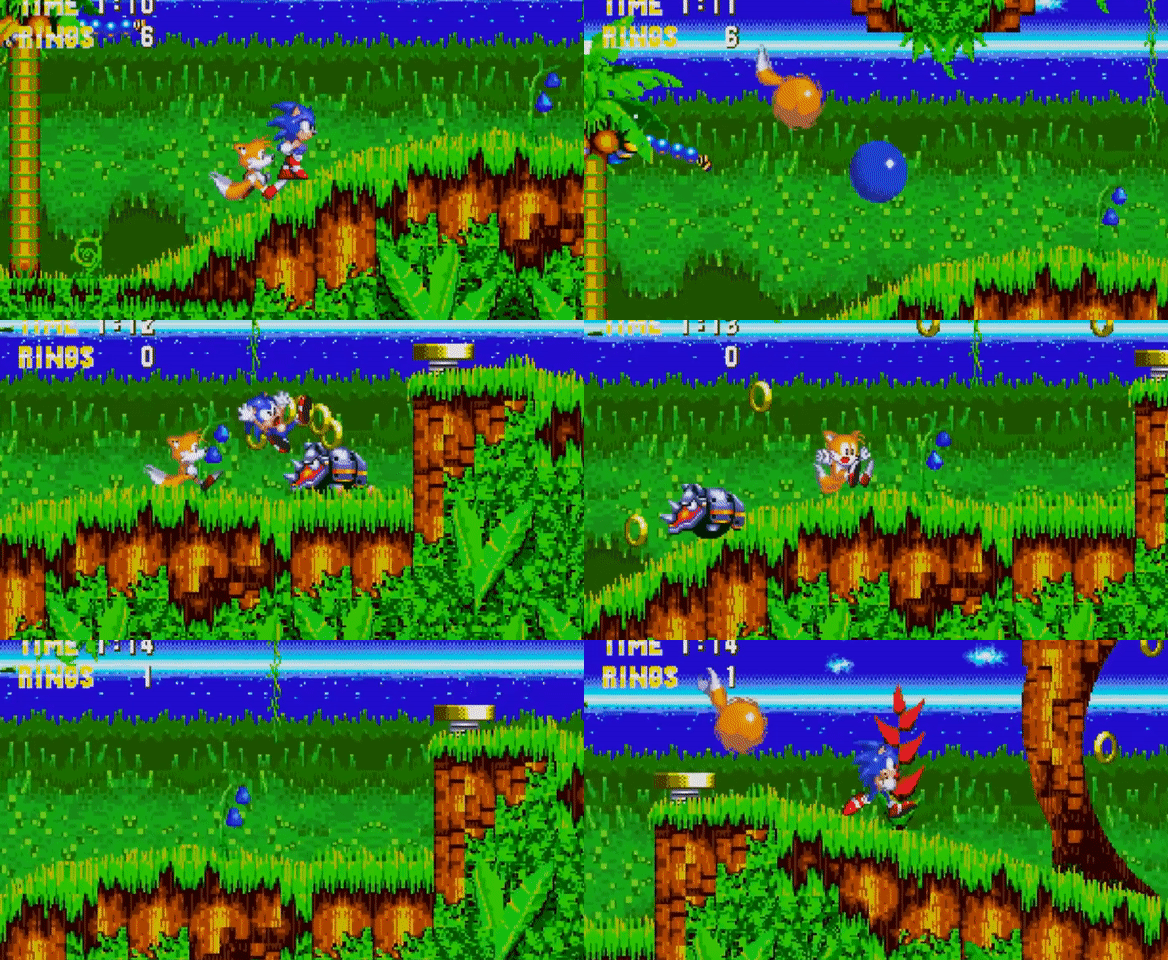
Grassy Hills. Sonic The Hedgehog walks into a moving robot and loses rings, which fall into the foreground and off the screen. (Sonic The Hedgehog 2)
I feel like this ‘scattering rings everywhere’ thing works better in the 2D games, generally. With one less axis to worry about, it feels less restrictive.

Finally, rings are indeed a highly incentivizing aspect of Sonic games, especially those of which have a store in which rings can be exchanged for prizes, although this brings up an important point. I feel as though rings are desirable more for their excellent audio-visual design and feedback. It’s fun simply to hear and see the cheery, shiny sound and sparks of collecting them, and watching the ring counter go up, rather than for any practical gameplay reason. The reason for this is that collecting an excess of rings does very little to contribute towards the player’s success. Sure, having a certain minimum number of rings makes it far less likely you won’t be able to pick up another ring before it disappears, once the player gets hit. However, there is a maximum number of rings that can actually be displayed on screen before any excess rings simply evaporate. You get no real advantages having 200 rings over having 20 rings. So, Sonic‘s health system doesn’t do much to incentivize interesting gameplay. On the contrary, actually, since having a single ring can theoretically keep Sonic alive indefinitely, the player isn’t really incentivized to learn about their obstacles or enemies because getting hit doesn’t have much of an impact or consequence. Some Sonic games have attempted to address this, by having Sonic only lose a fraction of his ring total on hit. The results are a similarly toothless health system, in which hoarding large numbers of rings essentially trivializes any threat enemies could possibly pose, without addressing any of my other issues with the system.

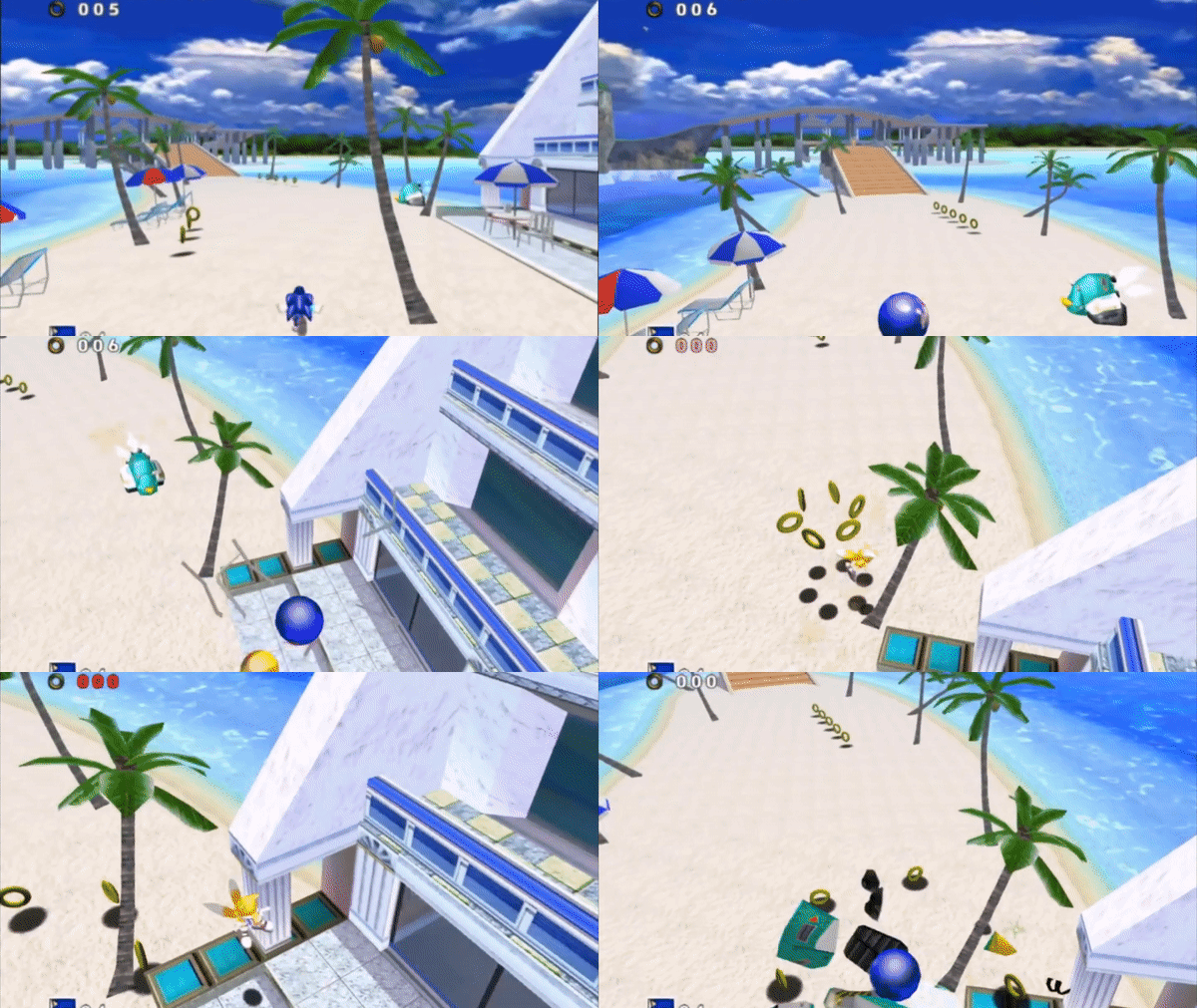
Sunny Beach. Sonic The Hedgehog dashes through the air, but is hurt by a tank-like robot, losing rings which scatter on the ground. (Sonic Adventure)
Stop to pick them up, or ignore them and keep going. Kind of just pointless or disruptive.

One thought I’ve had on it is how starkly getting hit in this game kills momentum. I get it, it’s kind of the point. In lieu of a persistent tracker for how many mistakes the player makes, getting hit simply means halting forward motion, which means you don’t hit that all important state of flow that makes Sonic games so enjoyable. That annoyance is your incentive to get better at avoiding obstacles. At the same time though, if that’s what we assume the player wants – to go fast- then it is odd that rings are scattered around the player when they’ve bit hit at random, or in the case of the 3D games, in every direction on the floor. Surely, we only want to incentivize the player to go in one direction – forward. If a player wants to re-collect some of their lost rings, as they surely would, then they can’t immediately continue their forward momentum where they left off, they have to take a moment to mill about collecting the rings. It’s just a bit odd. Elsewhere in Sonic games, free-floating rings are used as signposts to guide that sense of forward momentum for the player. If you see a path of rings, it’s generally a clear and safe path forward to gaining speed.

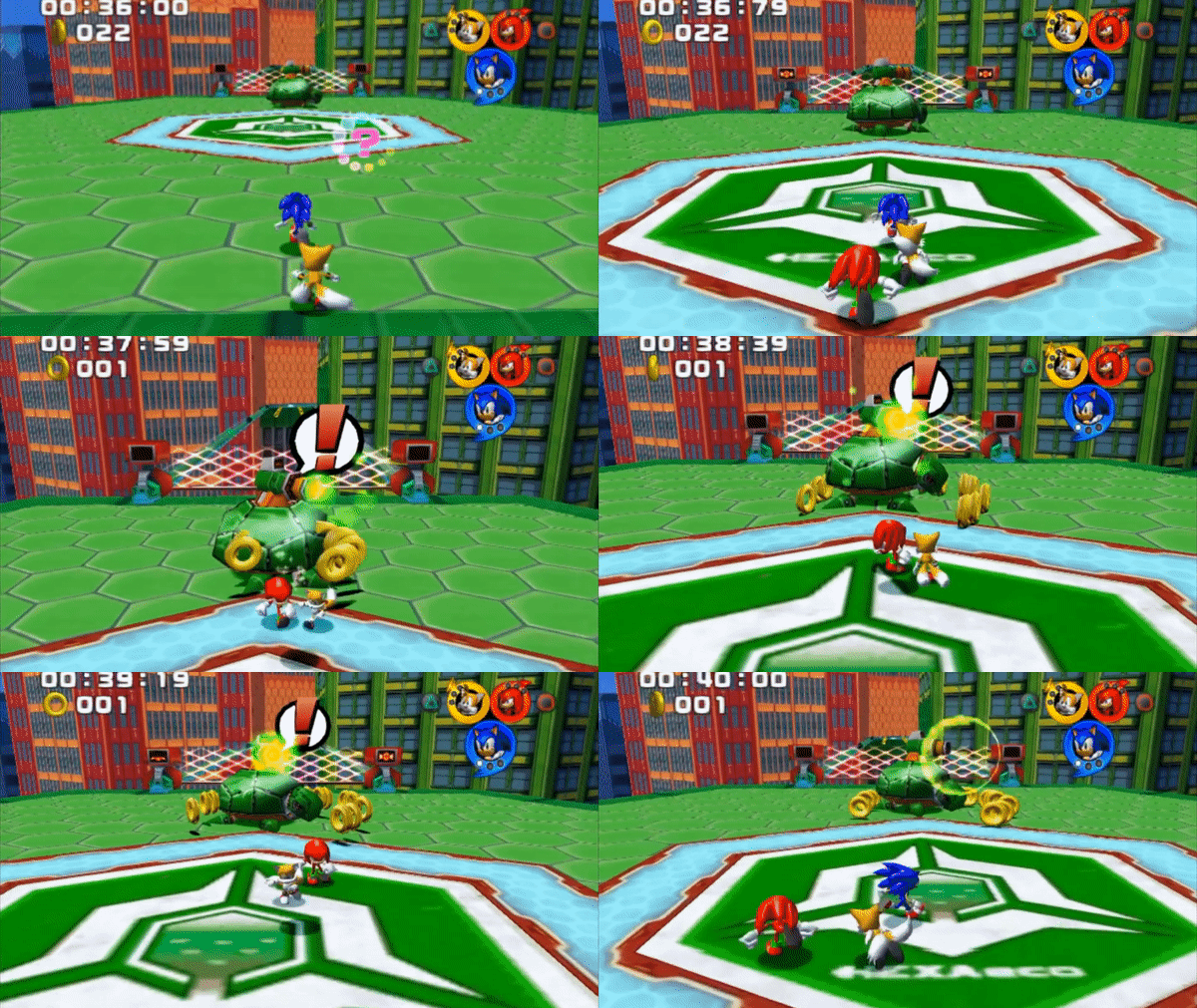
Sci-Fi cityscape. Sonic The Hedgehog, Knuckles, and Tails run into a robot turtle, getting hurt and scattering rings on the ground. (Sonic Heroes)
Sonic Heroes loves to kill forward momentum. It’s basically its favorite thing.

Losing rings normally does not create much of a sense of tension for me either. Getting hit in a Sonic game rarely creates any palpable danger for Sonic, outside of falling into instant death pits. This all-or-nothing approach makes enemies in Sonic games rather toothless, until they aren’t in very specific scenarios, which can often feel cheap – as though the difference between losing some rings and having to start over is outside of the player’s control. You lose any sense that dangerous things in the world are actually dangerous, and more like the environments are dangerous in a way that’s almost arbitrary.

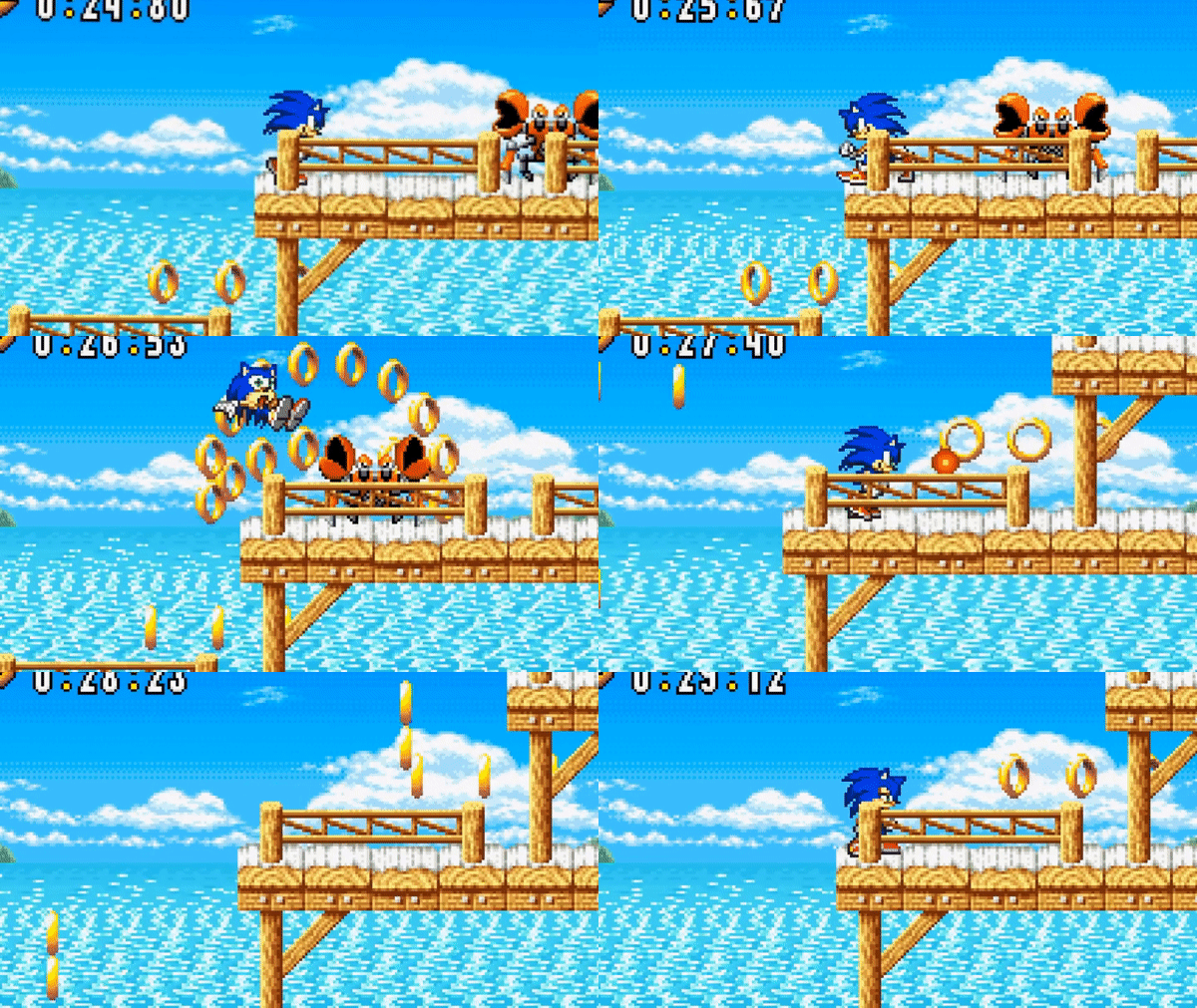
Beach Pier. Sonic The Hedgehog walks into a robot crab, getting hurt and scattering rings everywhere. (Sonic Advanced)
Are we really expecting the player to double back and chase those rings here?

What if, instead of spraying rings in every direction, when Sonic is hit, rings fly out ahead of Sonic relative to the direction he’s moving, so that when it comes time to re-collect rings, Sonic needs to keep moving forward in the direction he was going? He needs to regain his lost speed to regain what was lost. First of all this make sense. If Sonic is losing speed and letting go of his rings at the same time, they should logically pour out in front of him as they retain their previous speed. That’s a secondary concern, but not an unimportant one. I think making the rings behave realistically that way could contribute to keeping the gameplay flow even when Sonic gets hit, which is my primary concern here. The main thing this would accomplish is keeping the re-collection of lost rings as a harmonious part of simply playing the game, which is to say, running forward. Sonic is all about doing things while running forward – defeating enemies while running, avoiding traps while running, and yes, collecting rings while running. In this scenario not only is there a greater challenge, a greater uncertainty of re-collecting what was lost that calls on player skill, but it’s far less disruptive, not requiring the player to behave in a less fun and interesting way as punishment for being hit. On the contrary, your punishment for being hit is a momentary increase in intensity and demand of skill, or in other words, a heightening of tension.

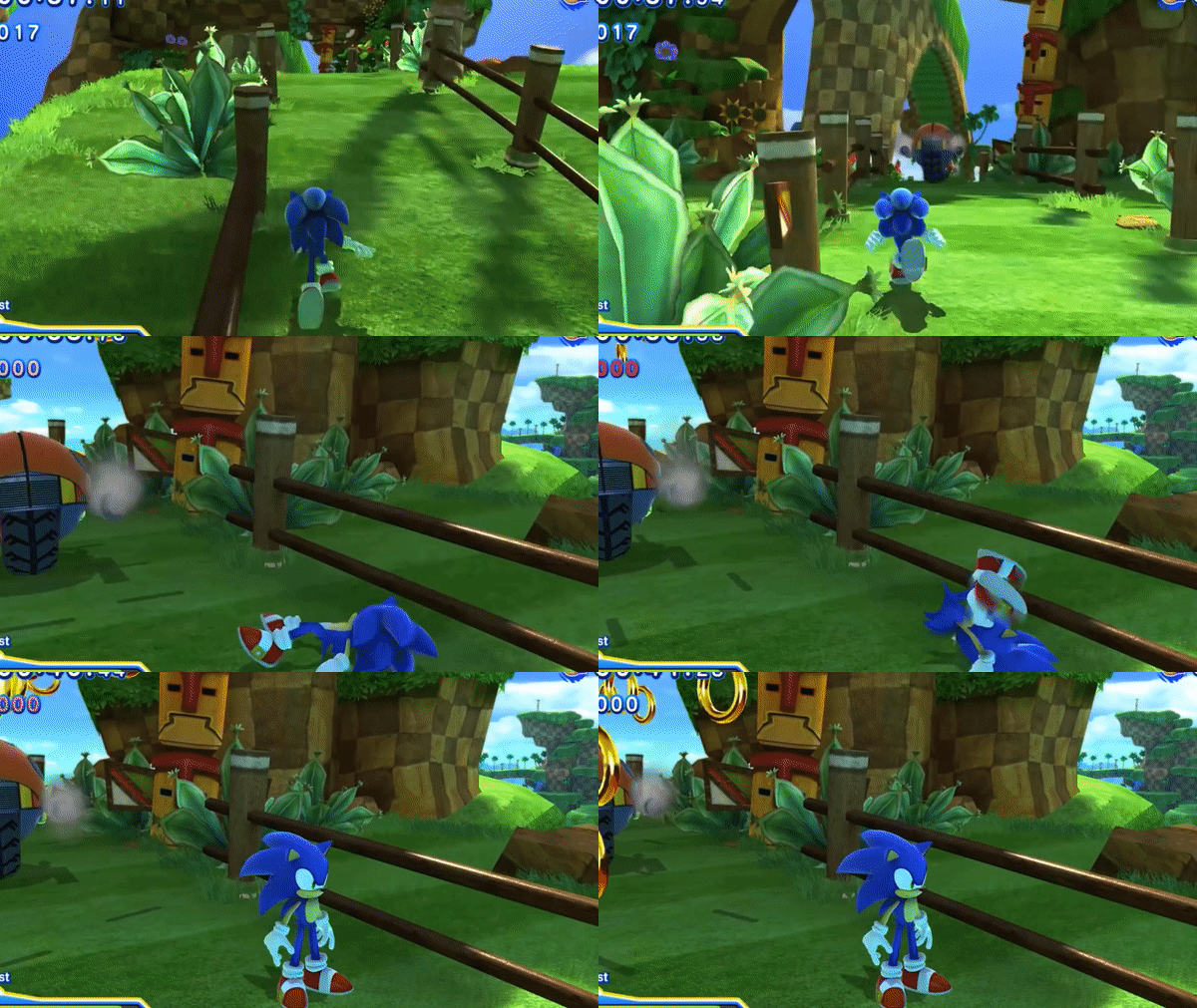
Grassy Hills. Sonic runs into a beetle robot, getting hurt and scattering rings a small distance ahead of him. (Sonic Generations)
When I say ‘fly out ahead of sonic’, I mean send the rings into the distance, so you have to like, build up speed and run after them. Maybe we could even ease up on the ‘knock Sonic on his ass’

Sonic is as inseparable from his rings as Mario is from his coins, which was the point, of course, when Sonic was invented in the 90s. Sonic was meant as a counterpoint to Mario, to stand out as different. He’s younger, faster, and has an attitude. His game is about speed, and his collectibles serve as health, in a way. It’s certainly novel enough to have survived about a billion iterations on Sonic games, but I’ve never totally understood how it fits in a game that’s about speed. Everything good that I love about the Sonic franchise is somewhat apart from this one odd yet oddly persistent gameplay mechanic. The classics like Sonic can provide a useful lens to see how certain design goals can be successfully executed. However, I’d never want to design something in a way just because that’s how it’s always been done. The weird ring system has its advantages, like near any mechanic in the right circumstances, but I’m still skeptical it’s the best solution for what Sonic is and could be.

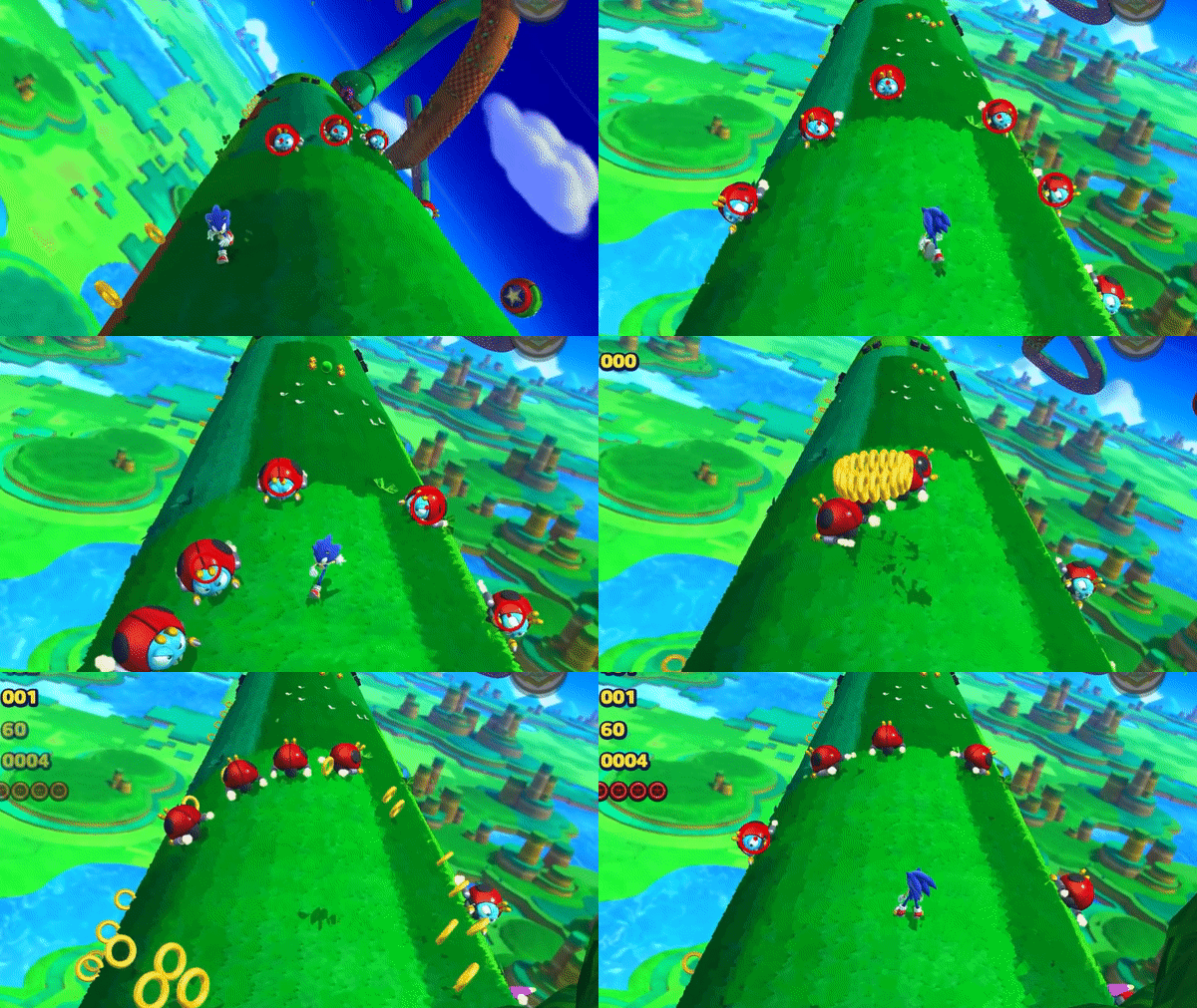
Grassy tube-shaped planetoid. Sonic The Hedgehog walks into a beetle robot, getting hurt and scattering rings in a circle around him. (Sonic Lost World)

Don’t give up on the sun. Don’t make the sun laugh at you…

Yes, that is a real Sonic quote.