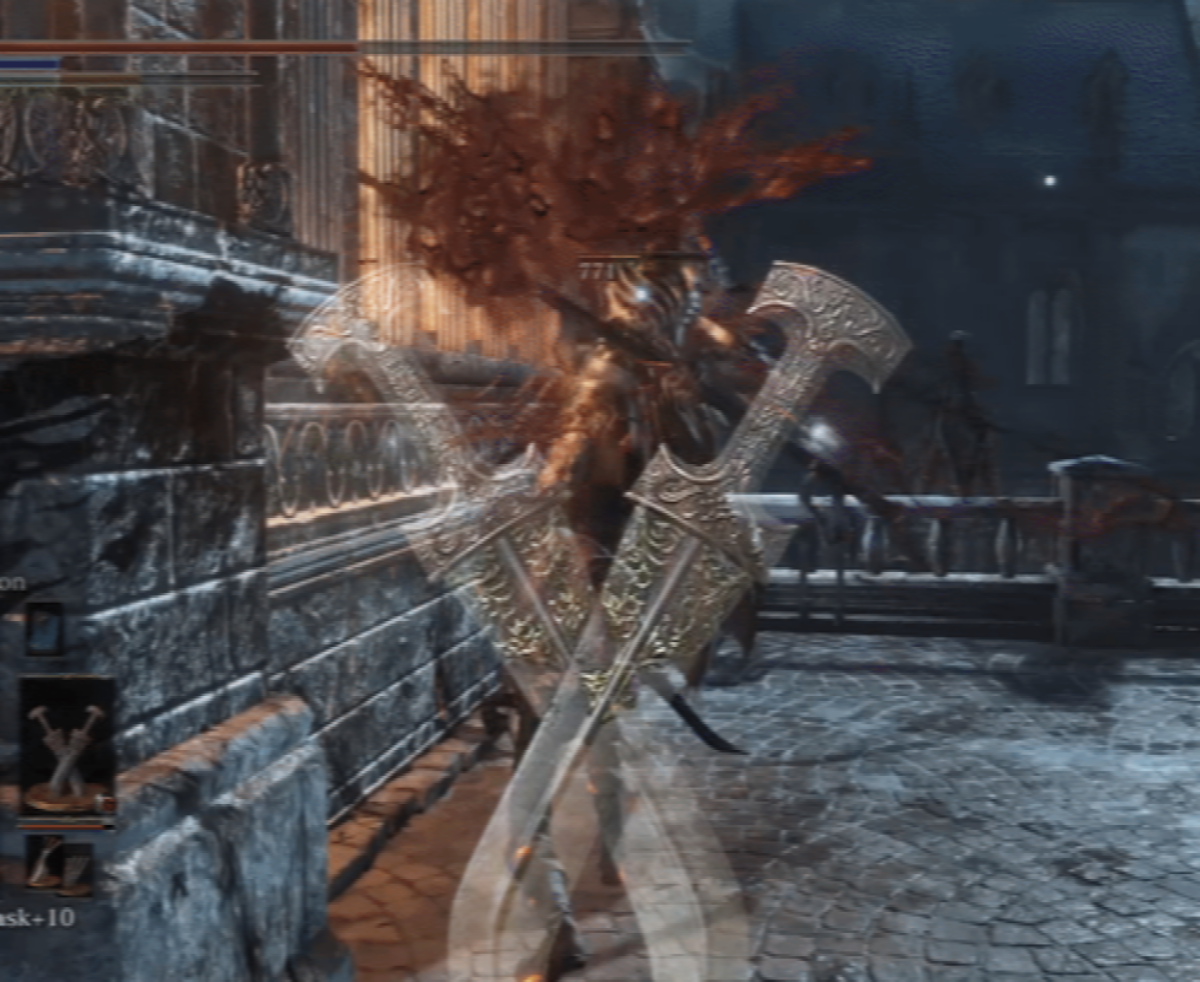
Dark Souls 3’s Brigand Twindaggers or How I Stopped Worrying and Learned To Love Status Effects

It is February 2022, my dudes, and you know what that means. Elden Ring is around the corner and there was absolutely no way I wasn’t going to just talk about Fromsoft games all month. I want to share an interesting experience I found while playing Dark Souls 3 as it pertains to a specific weapon found in the game, the brigand twindaggers. This is less a breakdown of this weapon’s moveset or particular attributes and more a little anecdote about how the daggers won me over once Dark Souls 3 had sold me on using status effects on my weapons, and the subsequent analysis that followed.

In RPGs with character customization I love to bring in my own stock of characters to populate the world, and there are some old standbys I revisit frequently, such as a thief who wields a pair of daggers, whom is often my player character in Fromsoft games. If at all possible, I will deck out my characters in their appropriate gear. I kind of like the RP side of RPG that way.

In Fromsoft’s Bloodborne, an action RPG that preceded Dark Souls 3, there is a weapon called the blades of mercy, a sword that can transform into a pair of daggers. I often refer to this weapon as a lawnmower – it absolutely shreds enemies to pieces with a massive amount of damage output. It scales incredibly well with Bloodborne‘s equivalent of the dexterity attribute, and its moveset is a flowing, seamless series of rapid strikes. Its the most satisfying to use pair of daggers in any of Fromsoft’s games to that point, so I had high hopes and expectations when it was revealed that Dark Souls 3 would have, as a new feature, paired weapons – weapons that come in a set, made specifically for dual wielding. I went over the game with a fine-toothed comb when I got it, clamoring to find a pair of daggers. Surely if paired weapons were a thing, I’d find dual wield knives.

And so I found them, and it quickly became difficult to contain my disappointment. Compared to Fromsoft’s previous outing with dual wielded daggers, these brigand twindaggers had a slower moveset with a much longer startup, and tremendously pathetic damage by comparison. They didn’t even scale that well with dexterity. I tried to like them, and tried to use them throughout my first play-through, I really did. In the end, there were just so many better speedy weapons, whose damage scaled so much better, that I could really not justify using the daggers any longer. I ended up embracing my inner edgelord and used a paired katana and wakizashi, two japanese style swords, as their damage output was insane compared to the daggers.

I had a blast on my first playthrough of Dark Souls 3, but I always regret not making a player build I was satisfied with involving the daggers. It didn’t feel true to my player character to not have him using knives, and I wished the knives were better. They didn’t really need to be though, after some experimentation, I would discover I just needed to change my approach. It started when I saw a player versus player showcase of the brigand twindaggers. The very skilled video author was destroying human opponents, seemingly with ease, utilizing the weapon I had condemned as largely useless. His secret? The daggers were enhanced with a bleeding effect. The Dark Souls series has always had weapon status effects, special attributes that can be applied to weapons to make them debilitate enemies in specific ways, applied if enemies are hit enough times rapidly. Primarily, this takes the form of bleed weapons and poison weapons.
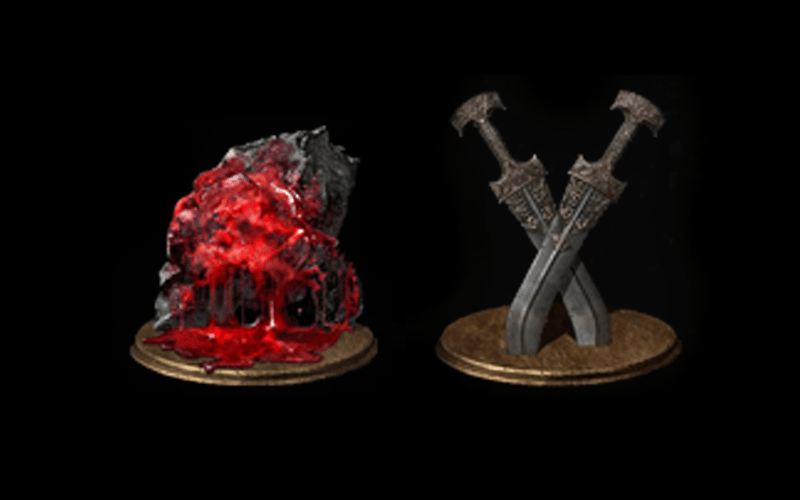
On two pedestals, side-by-side, sits a jagged stone covered in a shiny oozing red liquid, dribbling onto one pedestal. On the other, a pair of curved knives crossed over each other.
Like peanut butter and jelly.

Enhancing a weapon in Dark Souls always modifies its base damage and damage scaling in some way. Status effect weapons on the whole tend to deal a lot less base damage as a tradeoff, and so I’d often shy away from them not just in Fromsoft games but in RPGs in general. It just felt like it was an unnecessary extra step, compared to simply dealing more damage directly. But I wanted those daggers to work, so I gave it a try. In Dark Souls bleed is a status effect that builds up by hitting your target repeatedly, and when it’s built up completely, the victim loses a large chunk of their health to a hemorrhage, all at once. It’s a rather cool mechanic that gives the player a smaller micro-goal to achieve while fighting enemies, that is, quickly building up bleed, in addition to just fighting. It makes for an interesting playstyle and when I tried it out, I found I was having a ton more fun than before. Even when modified, the daggers still deal similar damage to their sharpened variant, and yet now acted as a powerful poison or open wound delivery system.

An undead wrapped in tattered garb thrashes two daggers at a frostbitten undead ghoul, in a snowy medieval city. The ghoul gushes blood as they are struck. After several hits, the ghoul's health indicator suddenly takes a large amount of damage.
See how quickly enemies vulnerable to bleed pop like balloons? It’s a great time, all round.

Status effects in Dark Souls 3 just work. Astounding. But why is this such a pain point for me in so many other RPGs? What is it about Dark Souls 3 in particular that makes it work? I think I’ve identified a few factors that majorly contributed to my enjoyment of using bleed and poison variants of the brigand twindaggers. First off…

It Works

Yeah okay so this one is a little self explanatory. Players aren’t likely to use a game mechanic that doesn’t work, obviously. It goes deeper than that though, players aren’t likely to use a game mechanic that isn’t effective. Every enemy in the game could be vulnerable to bleed, but if it only did a piddly pathetic amount of damage nobody would care enough to go that route. Thankfully bleed is very effective, and can often kill enemies even faster than raw damage. It was also seen fit to make nearly every enemy in the game vulnerable to bleed, a very wise decision. Some are resistant to it, some weak to it, but only a handful are completely invulnerable to bleed. Was this point even worth mentioning? Yeah I think so. Each of these points is something I’ve seen failed in many many games before. There are tons of games where status effects are simply unreliable to the point of near-uselessness. What good is a poison effect if it takes a dozen tries before it actually sticks? What’s more, what is the point if the poison is super hard to apply, but it barely does anything as a result? By then I could have just beaten by opponent to death with a stick. Floundering around with weak status effects feels terrible, and they need to be at least as viable as the more straightforward option.

It Works On Bosses

I cannot stress this one enough. Nothing will make me drop a combat mechanic which requires a time investment more definitively than seeing it is ineffective against boss encounters. Often in combat centric games bosses are the height of the combat system, pushing it to its limit where the most fun to be had is, or even the central axis about which the rest of the gameplay turns. If a combat mechanic breaks down in a boss fight, as a player I often feel as though it’s not worth my time. Status effects work on bosses in Dark Souls 3, generally, or at least frequently enough that I never find myself despairing at the futility of using them.

It is so strange to me that so many RPGs see fit to make bosses immune to status effects. On the one hand I can see the perspective – status effects tend to be very powerful in certain contexts, especially when they are not direct damage dealers, like disables or other utility effects, and one does not want to trivialize combat encounters. And yet. If one has been relying on a certain game mechanic, they begin to take ownership of it as a playstyle. They feel clever or powerful for utilizing it. Taking it away at the most crucial encounter feels awful. There are ways to design around the brute force method of just making bosses immune. Perhaps bosses are merely resistant, and incur a diminished form of status effects applied to them. Perhaps bosses have the ability to remove their own status effects under the right circumstances, or perhaps they last less time. Perhaps status effects are balanced as such to simply be generally useful, but not overly powerful against bosses. I think it’s rarely ever wrong to let players think around a problem, and removing a strategic tool such as status effects from their arsenal, when they can be employed elsewhere feels like player punishment.

In Dark Souls 3, applying a bleed effect deals a flat chunk of damage to enemies, usually enough to kill lesser foes. On bosses, it’s merely a nice step toward their defeat, but not an utter showstopper by any stretch. For bosses that may be felled too quickly if they are bled out repeatedly, it was decided they would be resistant to bleed effects. You can still get that extra damage, and it’s not that hard to do, it just takes a little longer, and the balance is kept that way. There are some enemies and bosses which are immune to bleeding, but not nearly enough to make me question the status effect’s efficacy, and what’s more it contributes to the overall fiction of the game, which has to do with my next point.

Strong Feedback

Dark Souls 3 has very strong audio-visual feedback for when you’re wailing on an enemy. Blood shoots out in exaggerated sprays along with a crunchy *squelch*ing sound with each strike of your weapon. Against armor, you can hear the rattling clang of steel on steel. This is obviously good design from a gamefeel standpoint, but it also provides the very useful advantage of illustrating what can and cannot be inflicted with a status effect. Hitting stuff that can be bled tends to use that exaggerated blood graphic I mentioned, but things that are resistant or immune will show less blood when struck, or none at all.
A well-armored women swings a wrist-mounted blade at a cage full of reanimated corpses. Blood shoots out when it is struck, and after several hits, an explosion of blood gushes from it.
A cage full of reanimated corpses? Can the cage bleed? Kind of ambiguous, except that it shoots blood off when hit. Okay so it can be inflicted with bleed!

I’ve mentioned that some enemies are immune to status effects and how that enhances the fiction of Dark Souls 3. What I mean by that is, it is effectively intuitive what enemies can and cannot bleed. Bulbous fleshy beasts, dripping and shambling undead, living creatures. Things that obviously have blood, are all vulnerable to the bleed effect. Things like enchanted empty suits of armor, a giant tree, skeletons. These things obviously do not have blood, and thus do not bleed. It seems like a simple trick not to miss, but yet again I’ve seen this very concept done poorly too often. Consistency is key. The player shouldn’t have to guess, or at least not guess blindly whether or not their combat tools will even work. Obviously you can’t bleed a skeleton, but obviously you can bleed a giant rat. Design the game so players can trust their own eyes and ears, and the play experience will feel much more seamless. Immunities and resistances should have logical reasoning grounded in the rules of the real world, even if the game takes place in a fantastic one, so your player has a hint of familiarity with which they can decipher the rules of your game.
We’ll have to come up with some other clever solution to deal with the skeletons

Conclusion

So I guess my takeaways from this experience are twofold: certain weapons can be satisfying to use in how they fulfill certain gameplay niches. The brigand twindaggers are an excellent status effect tool in how they apply effects quickly through rapid hits. My other takeaway is that a lot of games could do status effects in a much more satisfying way that makes them feel powerful and useful, something a lot of the designs I’ve seen are often too bashful about. They can be a viable alternative gameplay style all their own, you just need to put in the legwork to make sure this gameplay style feels strong and effective. Locking it out of boss fights makes it feel like a lesser, illegitimate gameplay style, an afterthought. Players should be able to discern the applicability of status effects with audio and visuals alone, without having to consult a wiki. Overall, I think status effects can be underappreciated in games mostly because they so often could be implemented better. When games get it right, I think it’s worth giving a closer look to see exactly what went right. Status effects in Dark Souls 3 were fun enough to use, and strong enough to completely reverse my opinion of an entire weapon’s implementation.
An undead wrapped in tattered garb thrashes two daggers at a giant armored mage wielding a flaming staff. in a snowy medieval city. The mage gushes blood as they are struck. After several hits, the mage's health indicator suddenly takes a large amount of damage.

Such weapons inflict lacerating damage. Most effective with sharp or spiked weapons…
Everything Stacks With Everything, ft. Risk of Rain, Binding of Isaac, etc.

There’s a specific design ethos that I’ve noticed runs through a lot of roguelike games such as Risk of Rain 2 and The Binding of Isaac: Rebirth. These are action games in which the player collects a myriad of various weapons, powerups, and augments to enhance their combat capabilities. These items often do weird and wild things that greatly change up the gameplay, and yet, they all almost always work together in ways that never cancel out. Every item you collect remains significant throughout your run of the game, and adding new powers on top of it only further enhances your abilities, and often, these items even synergize in exciting ways that multiply your capabilities. Risk of Rain 2 and The Binding of Isaac: Rebirth adhere to this design philosophy almost religiously.

A lot of games have cool effects and weapon qualities that augment your combat abilities, but tend to lean toward special exceptions, edge cases, and fuzzy inter-connectivity between combat abilities. For example, I play a Dark Knight character in the online RPG Final Fantasy XIV. The Dark Knight can spend the resource MP on special abilities which deal extra damage, allowing them more attacks in the same amount of time than they’d normally be able to do . The Dark Knight can also activate an ability called Blood Weapon to restore some MP with every attack ability they land for a few seconds. I’d often find myself wondering if I can generate MP with the same abilities that spend it, as they are technically attack abilities. Through experimentation, unfortunately, the answer is no. I feel as though storing up MP to spend before using Blood Weapon to get in more hits is a cool ability synergy I’m missing out on because of this arbitrary lack of inter-connectivity. Blood Weapon also specifies in its description that extra MP is not awarded for using AoE abilities which hit multiple enemies, another case of non inter-connectivity of abilities. A lot of RPGs do this, Final Fantasy is just one example. This can not only cut off cool synergies that reward exploration of ability interactions, but also makes systems more difficult and complicated to read, as the player needs to parse sometimes very complicated layers of exceptions when it comes to understanding how things work. Being able to critically strike with normal attacks does not guarantee one can critically strike with special attacks, etc.

Something that a lot of roguelike games such as The Binding of Isaac and Risk of Rain have embodied, is a system of interconnected combat abilities which do not interfere with one another, and coexist with very few special exceptions. I never find myself asking the question ‘do these two things work in concert?’ while playing Risk of Rain 2, as pretty much invariably, they do. Sometimes this happens in ways you may not even expect, but are a welcome synergy when you realize. For example, Risk of Rain 2 features an item which will spray razors at nearby enemies when you take damage, and even these razors will apply any attack effects the player has, like bleed and critical strike, among others. This opens a world of possibilities, where things like building a loadout in which taking hits is a viable method of destroying enemies, may be plausible.

Isaac from The Bind of Isaac destroys some monsters by crying tear "bullets" at them, goes through a door, then fires said tears from both his eyes and the back of his head.
Here my tears (bullets) are capable of blocking enemy projectiles, shooting out of the back of my head, and inflicting fear on enemies, all-in-one!

There are a couple of big advantages to this strategy. As I explained above, it allows for a much grander scope of variety when it comes to player loadout, which often translate to a grander variety of playstyles. Variety is always an excellent tool for increasing replayability, expanding your games appeal, and just generally enhancing interest. Another advantage is a clarity and unity of combat attributes when it comes to the player’s loadout. You’re demanding less parsing of systems, rules, and exceptions on the part of the player if it can be assumed that any advantage they obtain from an item or powerup can be applied universally.

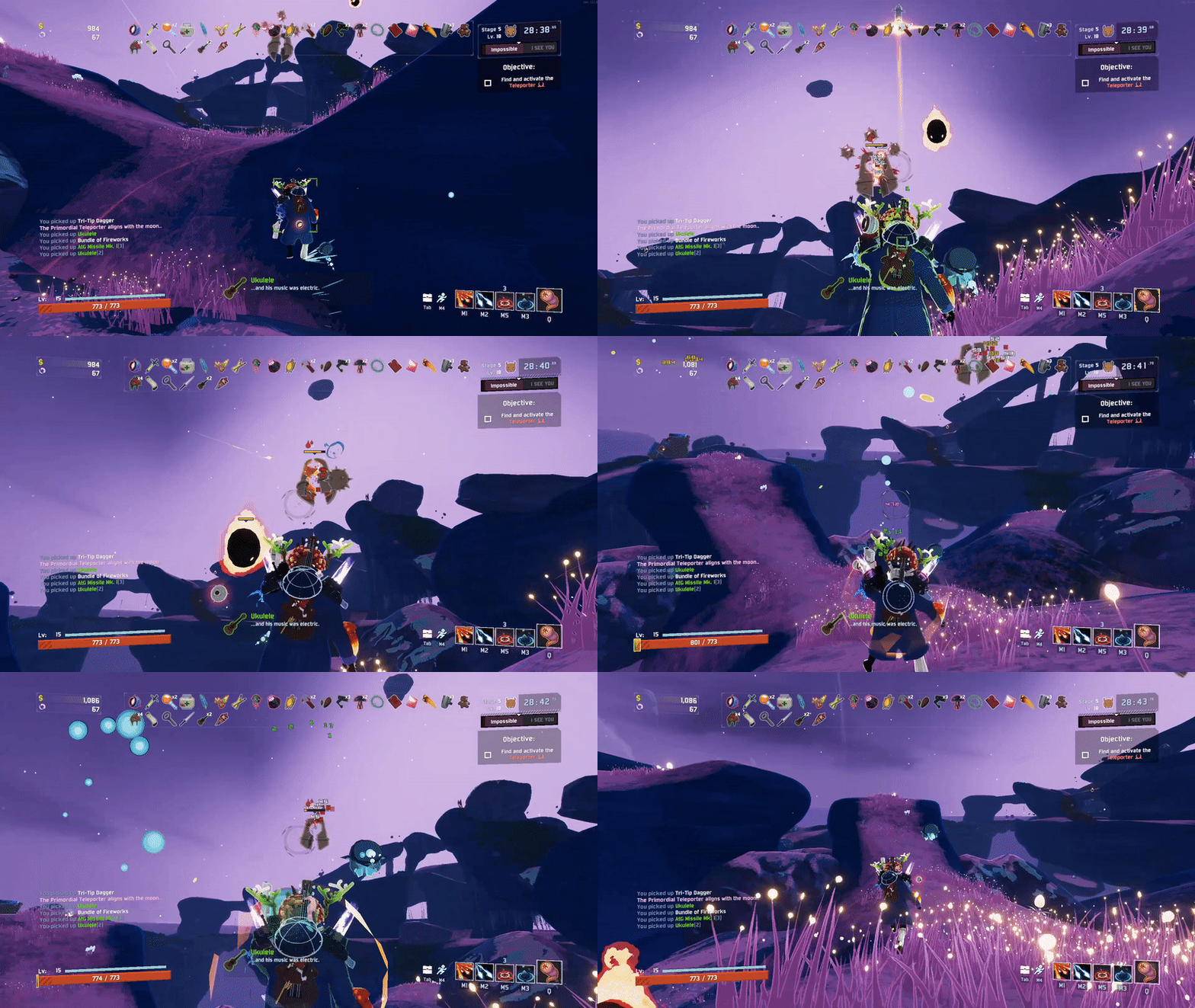
Captain from Risk of Rain 2 shoots a shotgun at a bell-like robot in a purple field. A missile fires at the contraption, causing lightning to arc from it to nearby floating fireball enemies.
Notice that the arc of lightning, itself a powerup, originates from the missile, another powerup. Powers in Risk of Rain can be nested, and synergize in this way.

To be clear, there are also advantages to making exceptions to ability interaction, even beyond the technical overhead. Design wise, lots of games have made interesting decision making out of a specific separation of abilities. One of the most common forms this takes is separate magic and physical ability types, wherein each set of abilities have their own advantages and disadvantages that don’t intersect, which leads to compelling strategizing on the part of the player. Sometimes having to choose between one advantage and another is a good thing, both for strategic depth and for fun. Another advantage to compartmentalizing game mechanics in this way is simplicity for the designer’s sake. Making sure everything in a very large pool of game mechanics mix and mingle in an organic way can be a daunting task.

The disadvantages, however, become apparent when abilities do not combine in ways that feels like they should. If a special item exist that causes your bullets to split on impact and hit multiple enemies, and there’s another item that causes your bullets to bounce between enemies, it stands to reason having both my allow your bullets to split as they bounce between targets. In The Binding of Isaac, this is the case! Although I’m sure you can imagine a fair few games with similar scenarios in which these items are mutually exclusive, and that cuts off a lot of interesting gameplay opportunity!

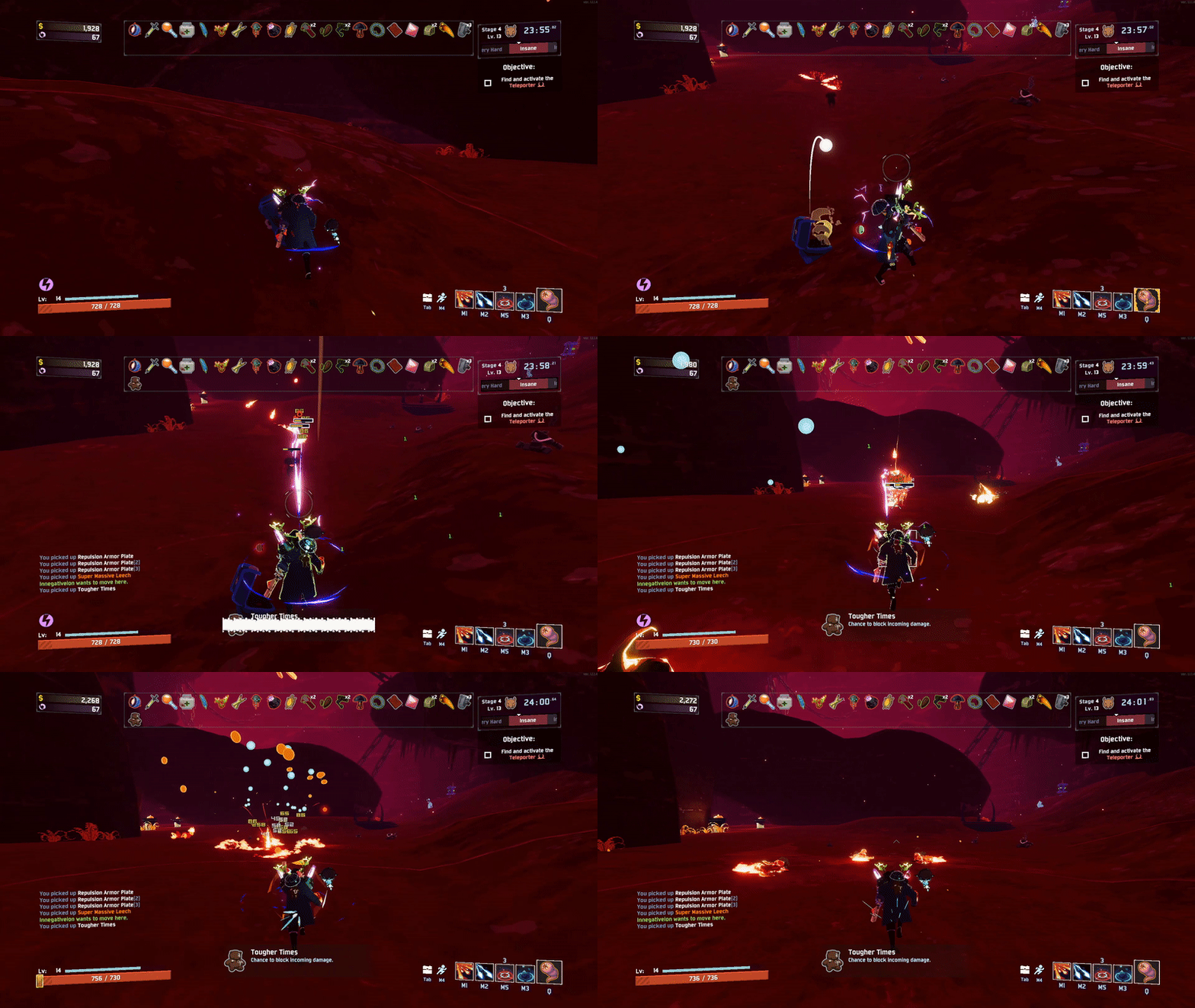
Captain from Risk of Rain 2 destroys monsters simply by walking near them in a hellish cavern. Lightning arcs from the Captain, and a missile fires from his back just after.
Passive damage is one of my favorite ways to play Risk of Rain 2

I love how in this clip, my passive lightning-emitting item is launching missiles and spraying lava at enemies. I have an item that causes me to do so when damaging enemies, and indeed that means all damage I deal, no matter the source. This comforting reliability, that any special bonus to attacks I pick up applies to all forms attack allows me to play the game in whatever way I want. If I prefer to use the shotgun, I can. If I want to focus on passive damage, I can. If orbital strikes are more my thing, that works too.

I do love those orbital strikes.

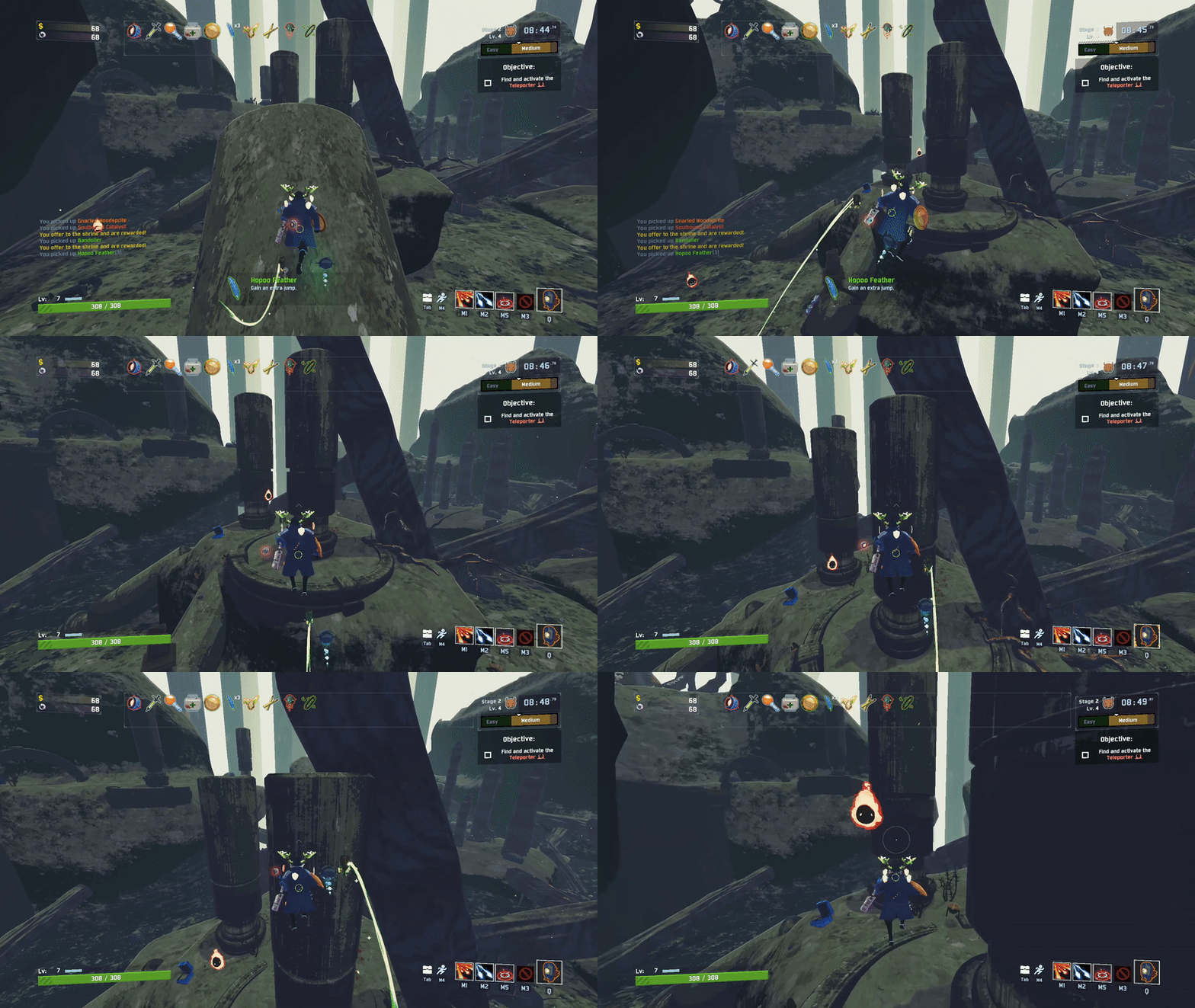
Another example of this from Risk of Rain 2 that I love are the mobility items. The Hopoo Feather allows your character to perform a double jump, or in other words jump a second time in midair before touching the ground. If get multiple Hopoo feathers… you just get more midair jumps. In fact, I was lucky enough on my last run to get three Hopoo feathers, meaning I can jump a total of four times in one. This insane level of mobility is something many games would shy away from, the fact that Risk of Rain 2 does not makes all of its systems feel a lot more organic and reactive to the player.

Captain from Risk of Rain 2 jumps three times in midair above a greenish canyon full of mossy old ruins.
Get enough items in this game, and you can basically fly.

Overall, I tend toward preferring this sort of game mechanic parity that allow unambiguous and universal interaction between mechanics. When every stacks with everything, I find it all much simpler to understand as a player. I also find it affords a lot more room for creativity in playstyle by allowing a multitude of interesting and often bizarre combinations. There’s a lot of design overhead necessary to make sure everything works together seamlessly and without jank, and not every gameplay system will be conducive to this level inter-connectivity of gameplay mechanics

WEAK, WITHOUT YOUR BAUBLES AND TRINKETS…

FromSoft and The Taxonomy of a Parry

I love parrying things in video games. You might have already guessed that. I’m always looking for how and why things work or don’t work in games, so I have a particular interest in one of my favorite gameplay mechanics, the parry. So what is a parry? In the context of an action game, I’d define it as a maneuver the player can execute on the fly to nullify incoming damage and disarm enemy defenses, which requires an acute execution of timing to succeed. Commonly, it’s a button press that initiates a short window of animation during which, if an enemy attack connects with the player character, the parry activates. After considering how to approach the design of this gameplay mechanic, I’ve decided there are three pillars of a good parry mechanic: usability, versatility, and impact.

Usability describes the practicality, from the player’s perspective, of actually using the parry at all. How restrictively difficult is the timing necessary to succeed in using one? Is the risk of using the parry worth the reward? How necessary is the use of this parry to succeeding within the game? Are there other specific considerations like spacing that make the parry more or less practical?

Versatility describes the frequency of general use cases for the parry. Can the parry be used to deflect any attack encountered in the game, or is it limited in some way? Can even large and powerful enemies be parried? Do you need a specific weapon or in-game skill to use the parry? Is the parry’s reward worth forgoing a more straightforwardly offensive approach?

Impact is at the center of what makes me want to use a parry. A parry can be powerful, but ultimately I am motivated to use it by how fun it is. What’s the audio-visual feedback of a successful parry like? Do I get a rush from disarming my opponent, or is the reward for parrying barely noticeable? Does it make me feel powerful? Does it make me feel skilled?

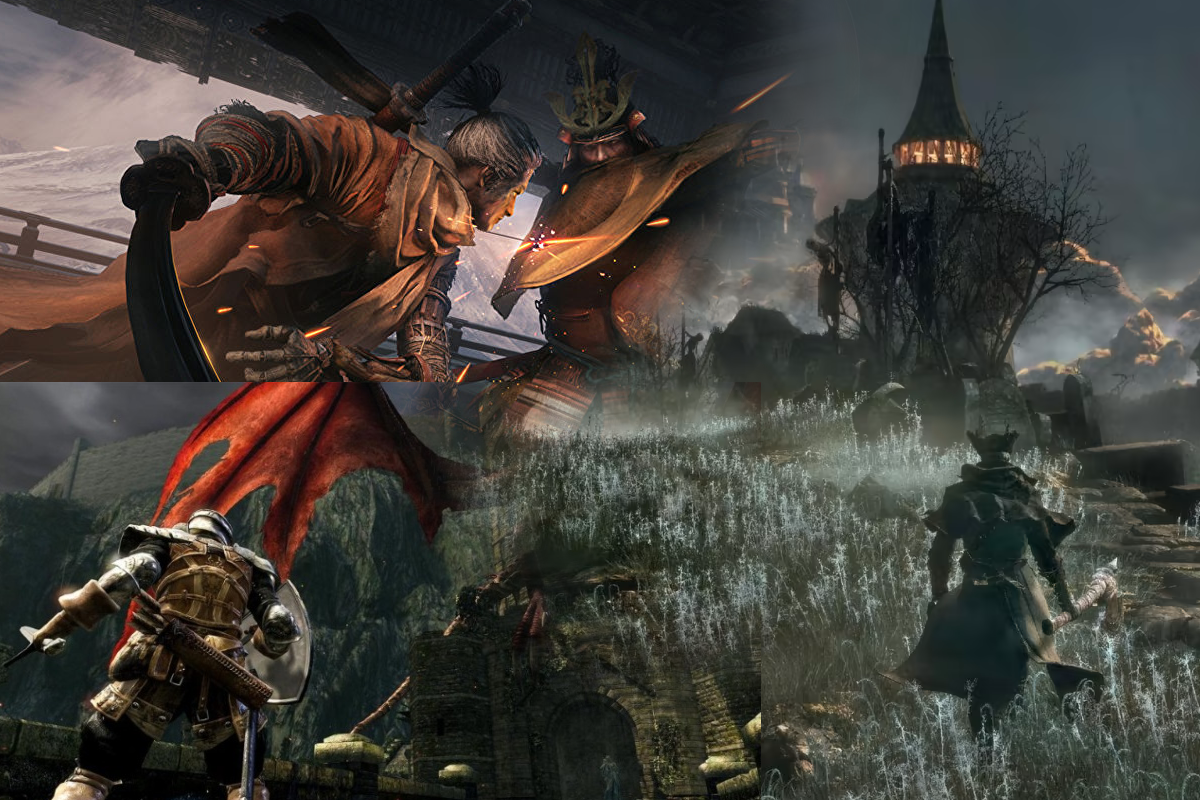
FromSoftware or FromSoft is a Japanese game developer well known for their popular action games, all of which in recent memory include a parry of some kind. I want to run through three of their flagship titles, the original Dark Souls, Bloodborne, and Sekiro: Shadows Die Twice, and analyze their respective parry mechanics through this lens I’ve come up with to see how it can be applied to specific cases.

The parry mechanic in Dark Souls is an interesting beast. A favorite of the game’s more hardcore fans but, in my experience, one that new and even many veteran players ignore completely. It’s powerful, and it’s fun to use once you get the hang of it, but that’s kind of the problem, it’s not very fun to learn to use, and many players will not bother with it, as it is far from essential to completing the game. I’ve found most friends I’ve introduced to the game simply ignore the utility of parrying, or try it once and discard it in favor of the game’s more developed mechanics.

Though powerful, the parry in Dark Souls is stiff, restrictive, and difficult to master

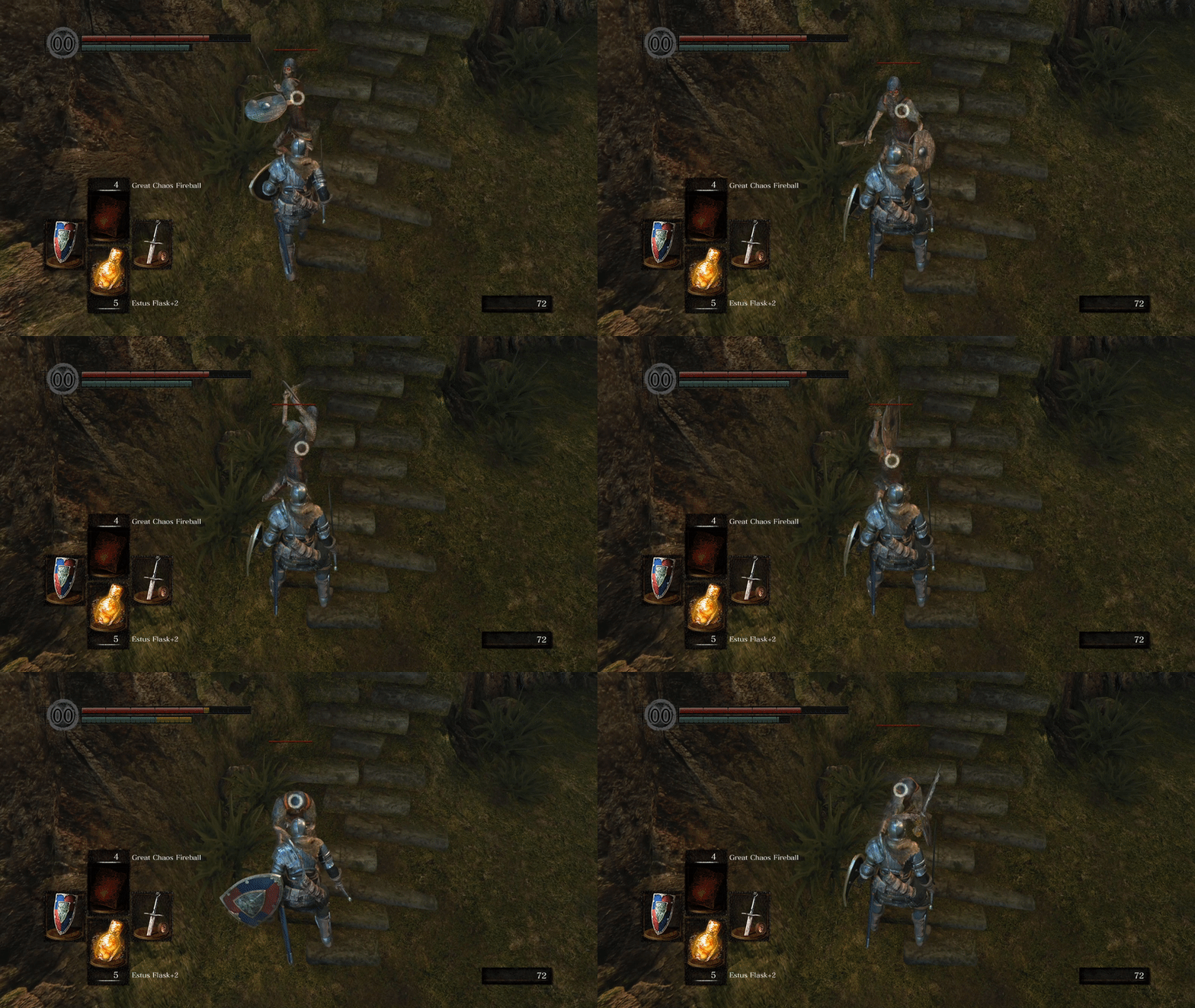
The parry in Dark Souls suffers severely from a lack of usability and versatility. Usability, as I explained, is my concept of how practical it is for a player to actually execute your parry maneuver consistently and successfully. Firstly, this parry is not universally available – the player must be wielding a small or medium sized shield in their off-hand. Given the wide and varied options of character customization in this game, it’s possible a player won’t be using a shield at all. I think the greatest source of dissuasion for using this mechanic, though, is how difficult it is to succeed with it. Dark Souls has a very specific and narrow window of time at which a parry will succeed. An enemy’s attack must connect with the player character during this 6 frame window – that’s one fifth of a second. Needless to say, it is a difficult mark to hit. Now, with practice one can hone in on Dark Souls‘ very consistent and reproducible rhythm. Not every enemy attacks with the same timing, but they all share a fairly general pattern of wind-up, swing, and follow-through. Once you get it, you’ll find parrying a pretty consistent tool.

Failing to parry can result in incurring massive damage, and its timing is excessively strict

However, the skill floor to reaching this point of consistency is restrictive, even by this game’s standards. Given how great the risk is of failing a parry in this game, and how the game itself trains players to be extremely risk-averse with enemies that deal massive amounts of damage when interrupting player actions, players are naturally disinclined to even take those risks. Thus, they’ll not learn the parry timing. What’s more, most enemies can be thoroughly dispatched, with far lesser risk, by simply striking them down with your favorite weapon or spell when the foe’s defenses are down, between their attacks. I conclude that the parry in Dark Souls is not entirely practical, or usable without a great deal of personal investment, time, and effort most players will find better spent in learning the nuances of movement, dodging, and attacking. These options are far more practical, realistically, even if the parry becomes very powerful once one masters it.

The impact of this parry is intense, and intensely reward, so it’s a shame it’s so hard to use

This would be enough turn off most players from the mechanic on its own, but the move also struggles in the versatility department, meaning the frequency of its general use cases. Dark Souls is filled with enemies that can be parried – essentially any enemy that can suffer a backstab. I’d always say that any enemy with an obvious spine that your player character can reach can probably be backstabbed and parried, as a general rule of thumb. Not every enemy matches this criteria though, and nearly none of the game’s 25 boss encounters do either. Boss encounters are a major part of this game, and something players will be spending a lot of time on. They’re also notoriously among the game’s most difficult and high-intensity segments. Since parrying is useless in those encounters, it further disincentivizes paying the mechanic any time or energy. If you can’t use a move for a game’s greatest challenges, what worth is it? Any real world skill building towards parry mastery is, objectively, better spent on other things, if finishing the game is your goal.

I like using the Dark Souls parry – it’s got excellent impact. A harrowing low boom sound effect accompanies its successful use. Parried enemies reel in a wide, exaggerated swooping animation, soon to be followed by a riposte that drives a weapon straight through them, gushing comical amounts of blood (if the foe has blood). It all really accentuates the player’s power and superior skill over the opponent. The totality of the audio-visual feedback here is excellent, it’s just a shame so few will ever get to actually see it. The move is simply not useful to a significant portion of the player base.

When a mechanic like this goes so underutilized by your players, the designer might ask themselves what’s causing this discrepancy, and what can be done to address it.

In Bloodborne, FromSoft wanted to shift to a more action-oriented system, less about patient and considered movements, more about reaction and aggression, as compared to Dark Souls‘ more traditional RPG inspired roots. As part of this shift, the parry in Bloodborne was made to be more of a central mechanic than in Dark Souls, something to be expected of the player regularly throughout combat encounters. So that means getting players to actually use it. First, FromSoft needed to address usability. Bloodborne‘s parry is unique in that it takes the form of a projectile. This accomplishes two things. One, it makes accounting for space exceedingly easy for players. Dark Souls was fairly strict about where player and opponent were standing for a parry to successfully work. In Bloodborne, if an enemy is shot during the tail end of its attack animation, it will be parried, no matter its distance from the player. Two, this means the player does not have to put themselves in direct danger to parry, as an enemy can be parried even if their attack is very unlikely to actually hit the player. The risk to parrying now feels much more proportional to the benefit, making it a valid alternative to just wildly attacking.

Even when incurring damage, it’s possible to parry in Bloodborne, the mechanic is forgiving

As the timing for Bloodborne‘s parry is now timed to the enemy‘s attack, and a moving projectile, rather than lining up the player’s parry animation with the enemy’s animation, the player really only has to track one movement, the enemy’s. Together, these elements remove a ton of cognitive blocks on actually using Bloodborne‘s parry system, so its usability is extremely effective by comparison. Bloodborne‘s parry is also extremely versatile. When looking at the 30 or so bosses in the game, about 15 of them can be parried, roughly half, making mastery of the parry a far more effective tool in way more situations than it was in Dark Souls. Bloodborne doesn’t shirk in the impact department either. The same familiar boom sound effect accompanies a success, and can be followed up with a violent and beastly visceral attack that grabs the enemy’s insides, twists them, and rips out a huge gush of blood, knocking the foe to the ground and stumbling nearby enemies. The player hunter’s sense of superiority over their prey is the focus.

Even the biggest and burliest can be parried, and at a distance too!

The Dark Souls parry had another issue I didn’t mention; if you did master it, and made it a consistent tool in your arsenal, many enemies outside of boss encounters become exceedingly easy to deal with, even if they are still fun to beat. Nevertheless, this runs the risk of the move becoming too powerful, especially if it’s easier to use. FromSoft’s solution to this was to make parry attempts a limited resources. This elegantly maintains the risk of attempting a parry, while assuaging the frustration of losing one’s own progress as a result of said risk. There’s still some risk of injury to a failed parry, but it’s much less likely than in previous games, most of the risk is the parry-centric resource of quicksilver bullets.

If Bloodborne made parrying a more central mechanic, then Sekiro made parrying a core mechanic, one of the primary action verbs of the game. Parrying is most of what you do in combat. Formally, the Sekiro move is called ‘deflection’.

To accomplish its design goals, Sekiro‘s parry is made to be even more accessible and low-risk than Bloodborne‘s. A deflection can be directly transitioned into from a block (which itself nullifies incoming damage), and a block can be transitioned to directly from a deflection. Both ‘block’ and ‘deflect’ are activated with the same button, block is simply the result of holding it. Deflections are initiated when the button is compressed, not when it is lifted, so erring on early deflections makes the maneuver even safer – deflections that fail for being used too soon simply result in a block. No damage is taken either way. The limiting resources of Bloodborne are gone here, at least for parries, so player’s will often find themselves using the deflection move even more than they attack, but this was the goal. Sekiro aims to evoke the back-and-forth clanging of cinematic sword fights, and the game is built around the interest of deflecting a series of attacks in quick succession. Any one given deflection is easy, but the difficulty can be smoothly ramped up by stringing a sequence of them together.

Sekiro conditions the player to use a series of parries as a defensive, and offensive tool

We’ve come a long way since Dark Souls, with a skill floor that is extremely approachable, without sacrificing the skill ceiling. Where the parry window of Dark Souls was only 6 frames, one fifth of a second, Sekiro‘s deflection window starts at the extremely generous, by comparison, half-second. This deflection window decays in size if the player abuses the deflect button. Deflecting rapidly and repeatedly causes the window to shrink down to only a small fraction of a second. The goal is to make any given deflection easy, but the player is encouraged to use their own powers of reaction and prediction, rather than relying on spamming the button. Even still, this window decay is also generous, as the deflection’s full capability is restored after only a half second of not using it.

All this to say, Sekiro has extremely generous usability for its deflection mechanic. It has to, as deflection is the primary tool for defeating enemies in this game. Were it as restrictive as the parry in Dark Souls or even Bloodborne, it would be an exercise in frustration. To counterbalance this, the individual reward for one Sekiro deflection is much lesser, and you need to do a lot of deflections to add up to a bigger reward.

Sekiro is a masterclass in parry versatility. The deflection maneuver is applicable to nearly every encounter in the game. It’s extremely generally useful, so much so that exceptions, attacks which cannot be deflected, are unlikely to be deflected, or require other special maneuvers to deflect, are given their own glowing red UI graphic to further make them stand out. Outside of that, if it deals damage, it can be deflected by the player’s sword, near-universally. Formalizing what can and can’t be parried in this way is also helpful for usability, as it removes guesswork on the part of the player.

When deflecting successfully, right orange sparks fly like a firework cracker was set off as a cacophony of metal sounds clang in satisfying unison. The audio-visual feedback for a successful deflection is actually kind of subtle, compared to simply blocking. It is merely a heightened, more intense version of the block visuals, just distinct enough to unambiguously be its own separate function to ensure players know when they’re succeeding, but similar enough to not be distracting. This makes sense, as players are expected to deflect a lot of attacks in any given encounter. A series of successful deflections looks and sounds like a larger-than-life battle of master swordsmen, with sparks showering about amidst the metal clanging. When an enemy has finally been deflected past the limits of their endurance, Sekiro will delight players with some of the most lavishly animated executions in video games, anything from the tried and true gut-stab, to decapitating a gorilla with a hatchet the size of a refrigerator, to gingerly extracting tears from a dragon’s occular injury. The impact of Sekiro‘s parry system is not only good, but usually proportional to each situation, even though the overall impact of any one given deflection is not super intense.

It’s clear somebody at FromSoftware loves parrying things almost as much as I do. It’s a common mechanic for a reason, giving players an area of skill to strive for mastery over, which reinforces a sense of power. Few things can make a player feel more powerful than successfully turning enemy attacks against them. Over the course of these three games, FromSoft has made parrying more and more central to the experience, to the point of it becoming the main point of focus for Sekiro. It’s clear there was an awareness of how neglected parrying was in Dark Souls among casual players, and even some veterans. They needed to find ways to make using it more attractive, without sacrificing the sense of power it imparted, the thing that makes it fun in the first place. While the Dark Souls parry has its flaws, I’m glade they persisted in iterating on it. I think Sekiro and bloodborne have two of the most consistently fun combat systems out there, and the excellence of their respective parry mechanics are a huge part of that, in Sekiro especially, which deserves its own write-up, eventually. The metrics I’ve come up with here to assess parry mechanics are just the way I look at things, though. It’s useful to look at design through a variety of lenses. So the next time you stab some zombie in the face after battering its arm away like you’re in a kung-fu movie, think about why and how that maneuver works the way it does.

Hesitation is Defeat…

Undertale: Combat Where Nobody Has To Die

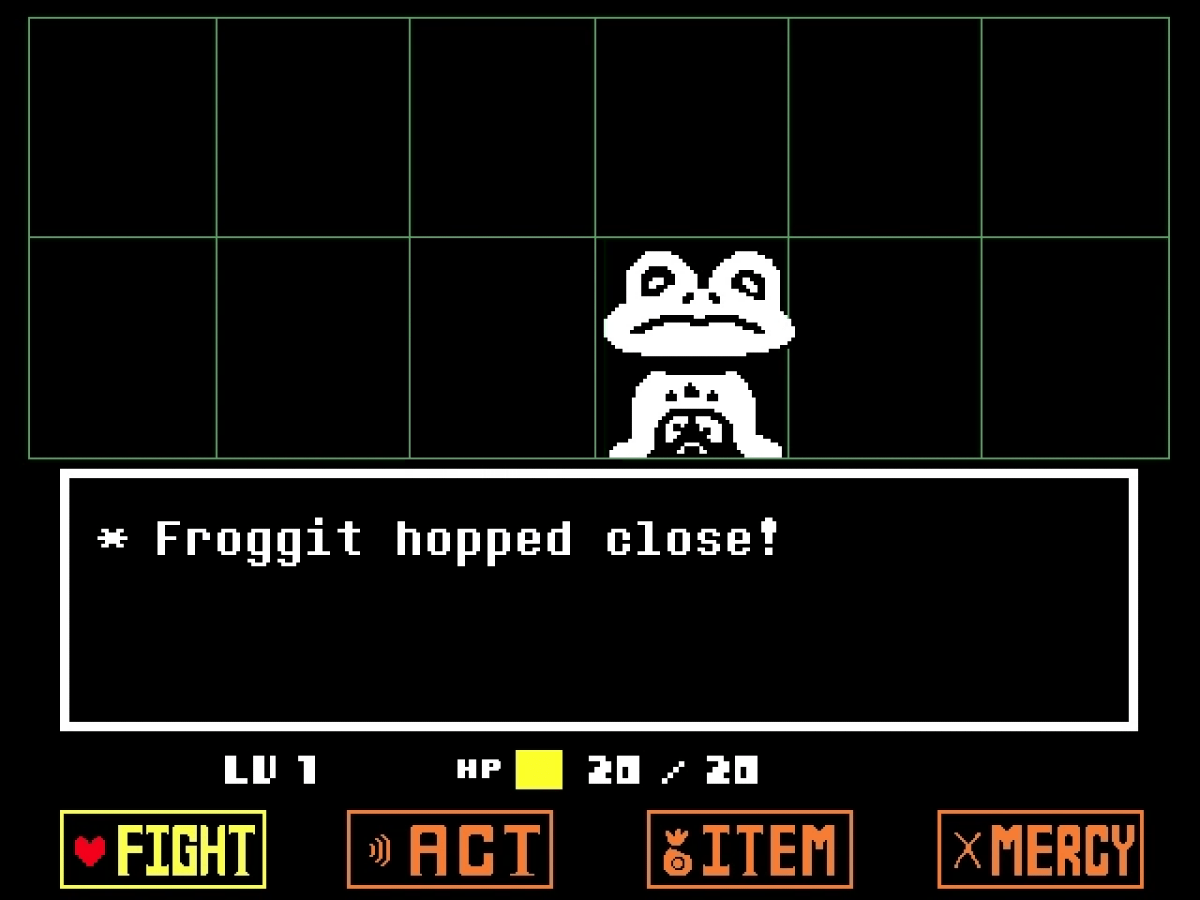
Much ado has been made about the prevalence of violent combat in games, how it is a much-trodden space with an overabundance of focus on the damaging and killing of enemies in games. It’s worth interrogating how we make games and what the systems we put in place represent. ‘Combat’, as a gameplay system takes the form of abstract tasks meant to represent a conflict. Conflict doesn’t have to be violent, or even involve fighting. When you think about it, a lot of the standards and practices that are common for designing ‘combat’ conflict in games can be abstractly applied to a wide variety of real-world situations that don’t directly involve violence. There’s an adage that action or fight scenes in narrative is like a conversation, and I think this broadly applies to all sorts of interpersonal conflict. All this to say that Undertale takes extremely familiar RPG combat design traditions in an extremely nontraditional way to represent its conflict, which can take the form of violent struggle or extremely peaceful, yet tense conversation. I want to talk about this, in particular, the space where the bulk of Undertale‘s gameplay can be found, in the peaceful ‘pacifist’ style of playing Undertale.

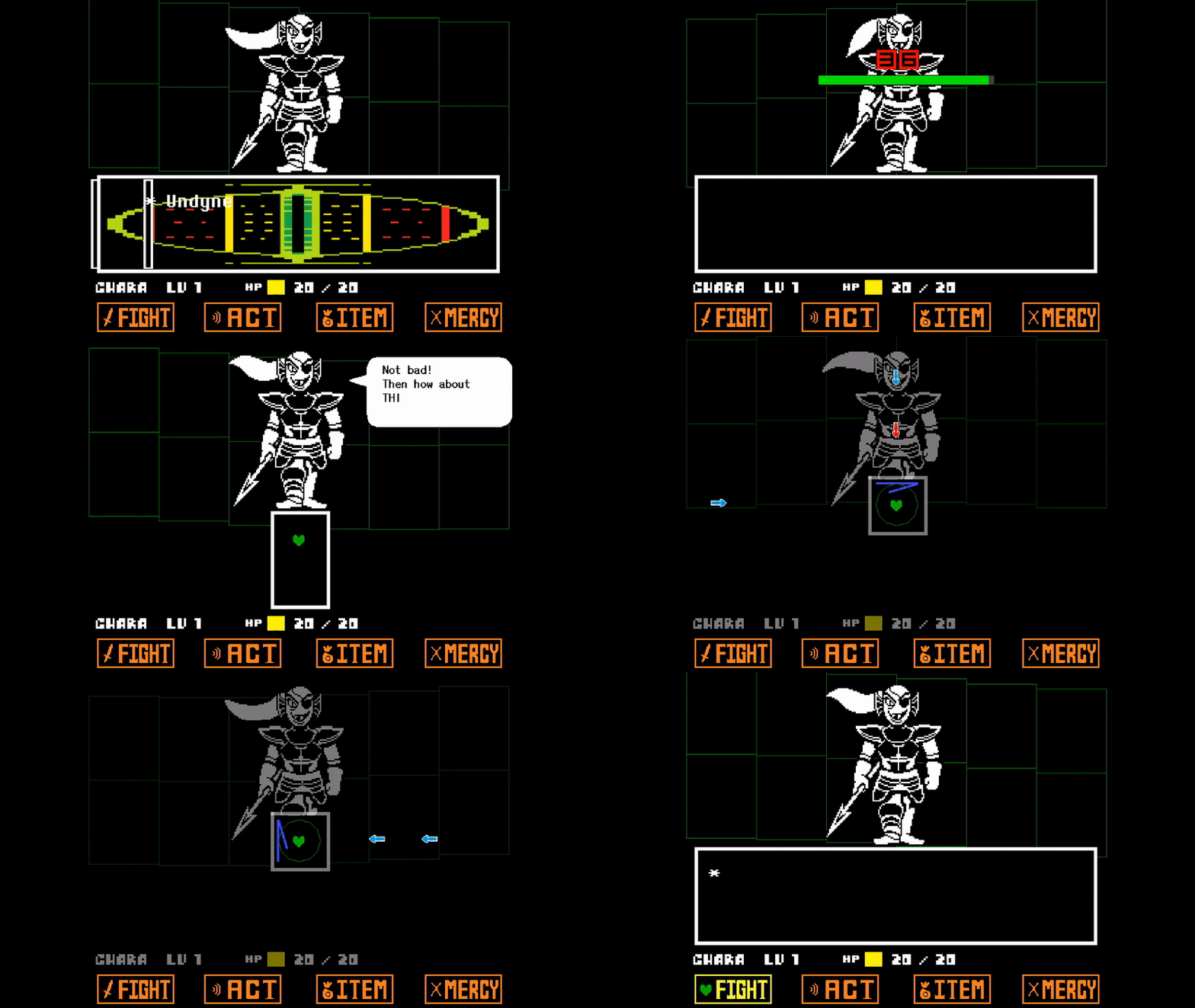
A similarly large quantity of ‘ado’ has been made of Undertale‘s underlying morality system, which allows the game to read and react to player actions across save files to drastically alter the story and how characters react. I’m sure there’s not much more I could add to that well-worn conversation, but what I don’t see talked about near as much is the actual mechanics that make up Undertale‘s combat system. Undertale is ostensibly a turn-based RPG, and it has many of the trappings you’d expect of traditional RPG combat. The player and AI take turns taking actions, there are character statistics such as health or defense, and there are the usual available actions such as attacking or fleeing. Compared to the traditional turn-based RPG formula, however, Undertale leans a lot less on strategy, which is to say forethought and formulating a plan of attack. Success in combat in Undertale is much more contingent on one’s ability to navigate enemy attacks, which take the form of ‘bullet’ patterns in a shoot em’ up or shmup styled dodging sequence. Now, that all sounds rather violent, but all this really means is the player must move around a little icon representing themselves (in this case a heart) so it doesn’t collide with any objects on screen. In this way, Undertale works to make defending, in other words passivity, a more engaging and fun mechanic than attacking. Undertale also loves to borrow from genres outside of RPGs to accomplish this, like incorporating elements of text-based adventure games.

Have fun fighting and/or dating a skeleton, no explicit violence involved

When monsters randomly encounter the player, as they’re wont to do in RPGs, the monsters will be naturally on the defensive around you, a human, a member of the vile people that attacked and banished monsters underground. The goal for a pacifist player will be to simply exit the encounter unharmed so they can reach their next story chapter. You see, when it comes to the player’s form of ‘attack’, their agency in all of this, the problem Undertale faced was making the act of de-escalation as interesting and satisfying as the act of chopping dudes in the face with a sword. The solution to this problem was found in three ways. First, the act of defending is made into a compelling game in and of itself. Secondly, the player is given short-term and long-term goals in every encounter. Finally, the incentive for the player to not perform acts of violence is made to take the form of exploration into interesting characters.

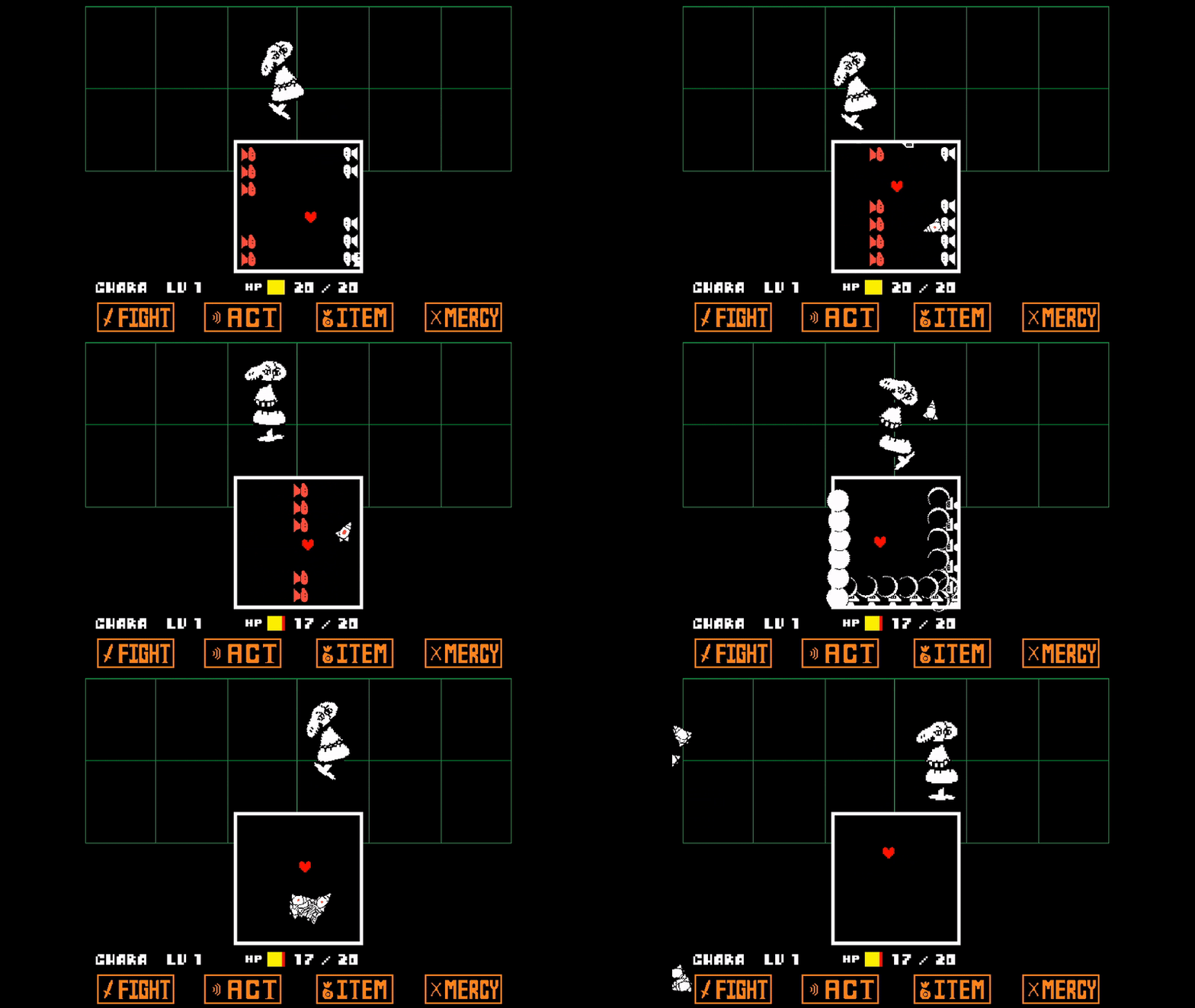
We’ve touched on that first item. Undertale’s defense or ‘bullet hell’ sections involve dodging the magical attacks of your opponents. The conceit here is simple, but a time-tested one, utilized in tons of classic games like Galaga or Space Invaders. The player is represented by a small heart, and obstacles will move around the screen which the player has to avoid by moving freely in two dimensions. It’s among the barest, simplest forms of spacial and temporal awareness as gameplay one could think of, but that’s why it’s so effective. Some of the best games are those that start with an extremely simple base that can be built upon, and Undertale certainly builds upon it. Bullet patterns become increasingly elaborate and difficult towards the end of the game. Bullet patterns can take the form of obstacles that are abstract shapes, obstacles shaped like characters, obstacles along vector lines, any of which can move in a variety of patterns. The game will also iterate on these basic designs using new rules and wrinkles that change up the variety, such as adding gravity to the player’s avatar, a controllable shield, or a controllable projectile to destroy obstacles.

These ‘bullet hell’ sections get very creative. Here I have to redirect the enemy’s own attacks at them to pacify them!

This makes up the player’s short-term goal in every combat encounter. Each turn, the player has to focus on the imminent danger of enemy bullet patterns. Lots of RPGs have incorporated real-time gameplay into turn-based actions. Integrating short-term goals like this sort of action gameplay with longer-term goals keeps the player’s attention engaged and the tension subsequently high. There will always be something in the back of your mind that you’re working toward, while immediate concerns keep you constantly engaged. In Undertale‘s case, the long-term goal for each monster encounter is trying to figure out how to make them passive, and amenable to ending their attack against the player. Each one is different, and like a little puzzle or text adventure encounter where the player has to figure out how to spare their opponents. The need for dodging enemy attacks, is essentially your payment ticket for each attempt made to pacify the opponent. A wrong answer means needing to dodge more attacks. There is some strategy in Undertale’s combat in how you approach multiple opponents. Sometimes more than one monster cannot be pacified in the same turn, so a consideration of the order in which they are tackled is added to the player’s long term goal achieving process.

Not every puzzle solution is a brain-teaser, but they engage you with the monsters’ personalities. Get it? Don’t pick on your eyes.

The final and I think most important of how Undertale solved for nonviolent ‘combat’ is its methods of incentivizing the player. The typical pattern for any game with combat is to reward the player for killing or defeating enemies, increasing the player’s power as they accumulate more and more victories. So it is with Undertale, when you choose to kill. When sparing foes, however, the game goes out of its way to makes sure there is no direct material reward of in terms of player power. Undertale did not have to do this. In a vacuum, there’s no reason a nonviolent victory cannot reward and empower the player. In Undertale it was very important that external rewards like player ‘LV’ be tied exclusively to killing. Undertale is trying to justify its thesis of pacifism by making that path entirely implicitly motivated by narrative elements, or in other words the process of pacifism itself. ‘Not killing things can be fun too, no reward needed’ it seems to say.

Horse mermaid see, horse mermaid do

The ‘bullets’ players must dodge can take a wide variety of forms from the tear drops of a depressed ghosts, to the flexing muscles of a pompous weight-lifting horse. If those sound odd to you, it’s by design. Undertale‘s first boss throws magical flames at you, but very little afterward will ever be so typical. Undertale uses the contrivance of ‘magic’, a power which monsters can use to express their emotions as power, to explore the character of the enemies you fight, as you fight them. In what other game can you expect to be attacked by the excited barks of an overstimulated puppy? These attacks are used as subtle characterization of each and every monster you encounter. The act of play is characterization in and of itself. In the world of Undertale magic is an outward expression of emotion, and this carries through gameplay as well. It’s not always a direct metaphor, and it’s often subtle, as reading emotion is in real life, but the attack conveys the emotional state of the monster which used it. You can get a sense of monster personalities just by playing. The dialogue does heavy lifting in this department as well, through hilariously absurd and weird scenarios. In this way, your ‘prize’ for victory is often a hearty joke, or an emotional catharsis. It can engender an intense curiosity to see more out of these monsters, more you won’t get to see if you kill them.

How could you hurt a face like that?

The player is ideally motivated by the desire to explore interesting and compelling characters. This, entwined with the short and long-term goals I mentioned earlier. The player’s long-term goal is usually discovering exactly how new monsters will react to their various actions. The monster Shyren loves to sing but is too timid, needing gentle encouragement from the player humming along. The monster Woshua is obsessed with washing things, so asking for a cleanup and successfully intercepting its healing water will make it very happy. The monster Aaron will become so swept up in out-flexing you if you try to match his style, that he’ll flex himself right out of combat. Keying in on visual indicators like the enemy’s emotional state, the personality in their dialogue, and the queues of their overall physical appearance all work as hints to solving the ‘puzzle’ of connecting with them socially and deescalating conflict. One can trace subtle changes in expression even, in certain encounters. The game, as it were, becomes one of determining your conversation partner’s wants and needs. It becomes a game that teaches empathy.

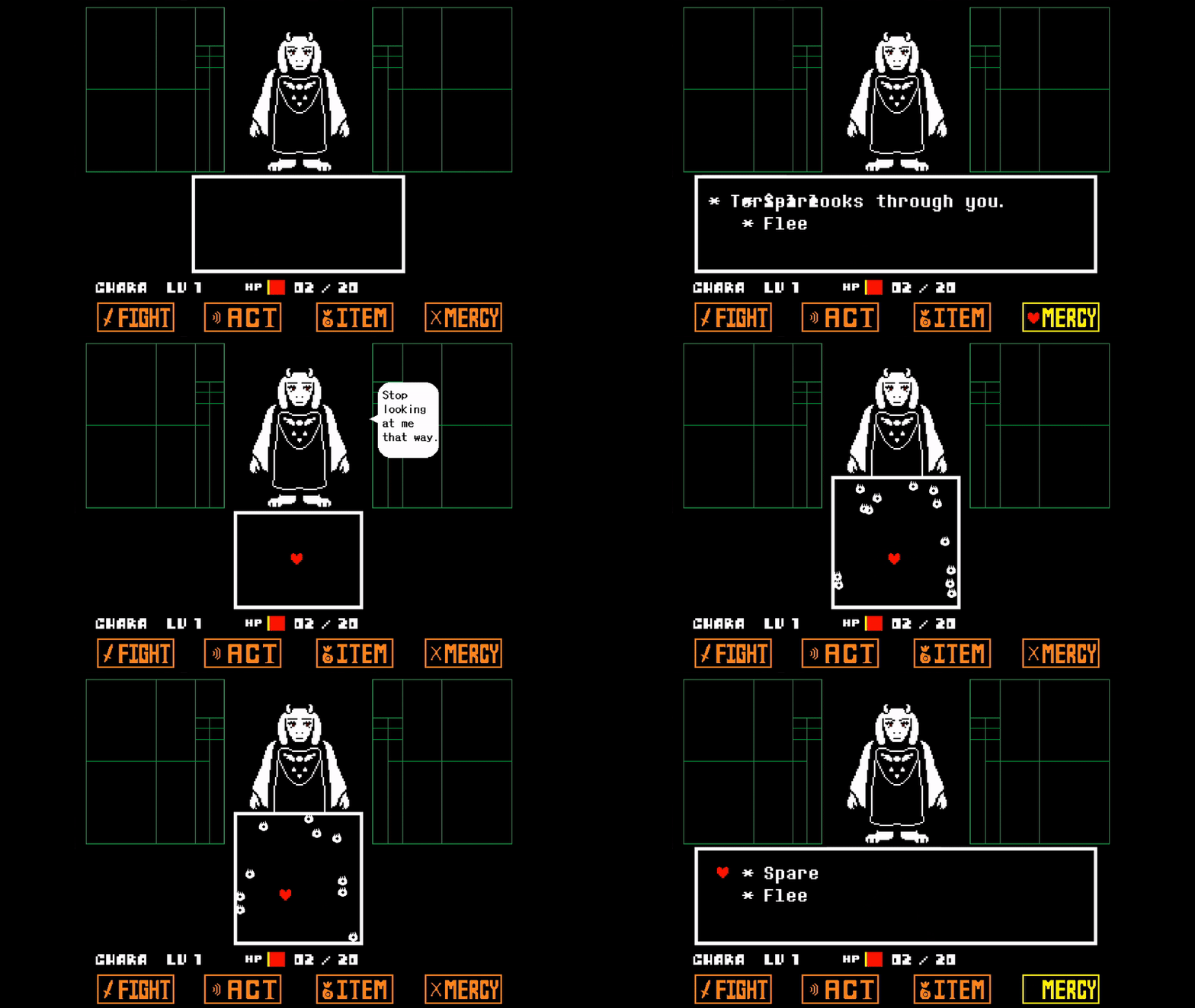
Here our hesitant mentor Toriel refuses to kill us, it’s clear here what emotions her gameplay are meant to convey

Combat, as it is typically designed, in all of its many forms, is fun. That’s just simply true, and it’s probably the biggest reason violent conflict remains so prevalent in games, as it’s the most obvious way to explore this form of play. This form of play was invented to represent violence, after all. Undertale is refreshing in how it explores a world where such play can be representative of all manner of other forms of conflict. Lots of conflict occurs in our daily lives every day that doesn’t end in death or grievous injury. There’s clearly a lot of space yet to explore how to adapt our design conventions to the task of representing these nonviolent forms of conflict in fun and interesting ways. I think part of the reason Undertale made such waves is that there’s a huge appetite for that as-yet only slightly explored space.

Even when you ran away, you did it with a smile…

Galaxy Brain: How NEO: The World Ends With You Recaptures the Experience of its Predecessor

The World Ends With You is a distinct and memorable little action RPG originally for the Nintendo DS. It is remembered and well-loved for an engaging story about coming out of your shell and expanding your horizons by connecting with people. The game also sported an incredibly unique action combat system utilizing the DS’s hardware features – one of the first touch screens used for video games, and two concurrent display screens. In The World Ends With You, combat is conducted through a loadout of unique psyches, the player’s attack moves, that each are used via a respective touch-based gesture to fight enemies. This all occurs on the DS’s bottom screen. At the same time, a second character is controlled with buttons to defend against additional enemies on the DS’s top screen. These features allowed for some standout gameplay mechanics that helped The World Ends With You achieve its cult status, but how has this gameplay evolved as its been ported to other, more traditional interfaces?

It’s a lot to keep track of, but MAN do I feel like a genius when it works!

The World Ends With You has been ported to a number of systems since its original release, including the Nintendo Switch and several mobile devices. Given how entwined the original game is with its hardware, particularly in utilizing the feature of action occurring simultaneously on two screens, it seemed a given that the game’s mechanics would have to be re-imagined for these other systems. The route these ports took accommodating the change in hardware was a simplification of focus. In lacking a second screen, the Nintendo Switch version of the game changed the player’s partner character, normally an independent actor on the DS’s top screen, into another psyche in the player’s arsenal, controlled similarly by touch gesture. Using this partner psyche in conjunction with the normal psyches would confer combat bonuses. This was a fairly elegant way to make the game functional on devices that lacked the DS’s unique features, and the game remains fun, if somewhat more cumbersome to control without a touch screen stylus. However, these ported versions of the game seem to lack something experiential and essential when compared to the original. In cutting the second screen’s mechanics entirely, something fundamental was lost.

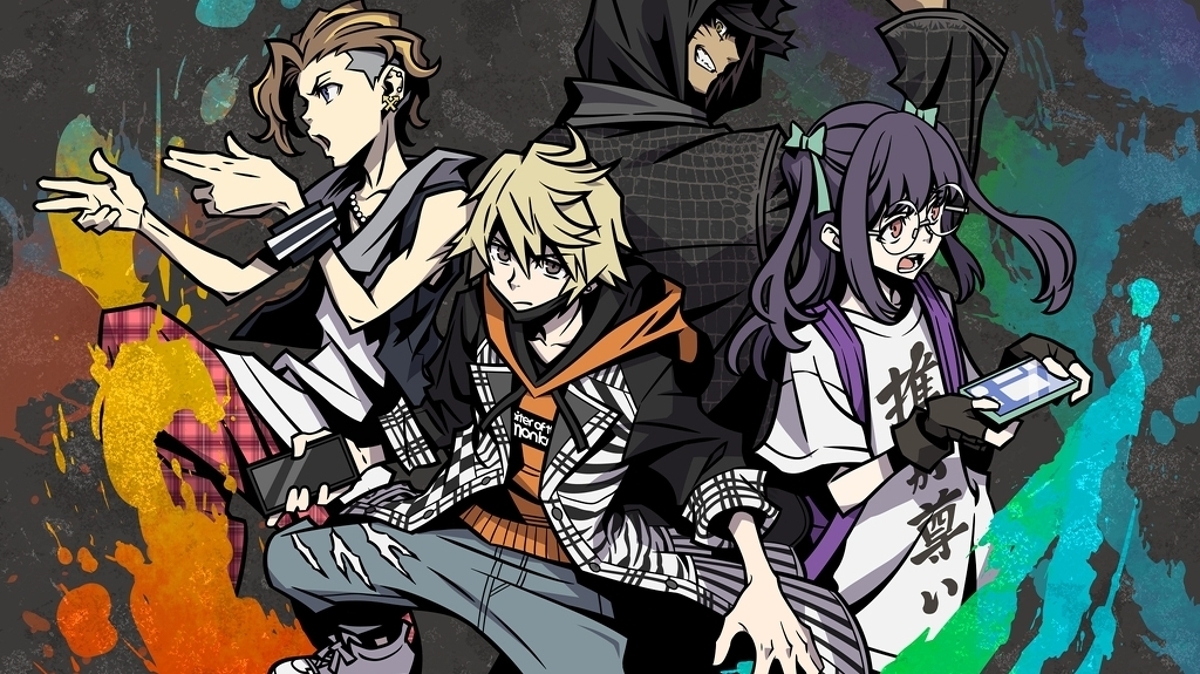
In enters the bluntly titled NEO: The World Ends With You, a new direct sequel to the original game for the Nintendo Switch and Playstation 4, arriving some fourteen years later. The PS4, notably, lacks a typical touch screen entirely. One may note further, that NEO lacks gesture control, entirely. The design focus of this game has, perhaps surprisingly, shifted entirely away from replicating the methods of the DS touch controls. Although The World Ends With You‘s gesture controls were incredibly intuitive and satisfying on the DS, they weren’t entirely one-of-a-kind. Other games like WarioWare: Touched! accomplished similar things with their controls, albeit in different genres. NEO shifts focus to what is more unique about its predecessor, and seeks to replicate not the control scheme, but the core experience, what is happening in the mind of the player, something more recent ports of The World Ends With You struggled to do.

One screen, one window of focus, but has something been lost?

The World Ends With You for the DS had some best-in-class gesture controls for an action game on that system, but this wasn’t the only gameplay mechanic that set it apart. During regular gameplay, the player’s main character, Neku, acted on the bottom screen, where he’d have to attack enemies while dodging around them according to the player’s touch gestures. Simultaneously, on the top screen, Neku’s partner would be stationary, and slowly assaulted by enemies. The player would have to control Neku with one hand, while commanding the partner character to defend themselves via button inputs with the other. Neku and his partner share a health bar, so if either screen was not given due attention, both would suffer. This created an absolutely mesmerizing experience of splitting attention between two active scenes, triaging and reacting to both. It was a different and challenging sort of mindset to get into, this constant multitasking, demanding players adjust to a new way of thinking. In fairness, it could even be restrictive to some players, a shortcoming that is assuaged somewhat by the versatile difficulty options present in the game. Once the player got use to this, however, it could create a state of flow and rhythm where successfully managing two characters was almost hypnotically engaging.

NEO once again features multiple simultaneously controlled player characters that share a health bar, this time up to four, all on one screen, in a 3D space. As stated, gesture control is done away with entirely in favor of assigning each psyche move to a button input. Each psyche is assigned to one of up to four characters in the player’s party. The twist is, each party member answers the player’s input independently of each other, but are each still vulnerable to counterattack at all times. As before, all psyches operate with different game mechanics at different time frames, but they can be layered together, offset from one another, done in sequence, executed in any way the player is able to push the associated buttons.

For example, one character might loose a volley of energy bullets when the player repeatedly taps a face button, while another character charges up a big rock to throw when the player holds down a shoulder button. In this scenario, the rock will do extra damage if timed to hit just as the first character’s bullet salvo is finished, using Neo‘s combo system, which encourages finishing multiple psyche moves on the same enemy in quick, timed succession. Bonus damage and and the potential to unleash a devastating ultimate move is rewarded for doing so consistently. In this way, the player is rewarded for roleplaying their party of characters as working together, and supporting one another, just like the original DS title, all while replicating that challenging and engaging split-attention experience through its design alone.

Boom-Bomb-BAM! Now that’s satisfying.

NEO even further addresses the barrier of entry for new players by condensing all the action to one screen. A single field of view is intuitive- it replicates how we view spaces in real life. Two screens, while novel, also create two separate cognitive spaces in our minds. No matter how close together they are, switching between two screens is harder than simply utilizing your peripheral vision on a single screen, due to that cognitive distance the break between screens creates. There is something to be said for that novelty of control across several distinct cognitive spaces, but it is a trade off that fits naturally for game consoles that simply don’t support multiple screens.

The player characters once again share a health bar, but unlike in the previous title, now all exist in the same game space. Each party member’s movement and dodge mechanics become directly controlled by the player when their psyche was the last one to be used. Each time a new psyche is used, control is shifted to a new character. The player must shift their control around like this. To keep things from getting disorienting, the 3D camera is directed by the game, rather than the player, and party members quickly run into the player’s field of view on their own as they are queued up to be controlled, creating a smooth transition.

Enemies will still react and attack in real-time, and all party members are vulnerable, thus the player has to be splitting their attention to multitask and triage the various goings on in the battlefield, all while keeping up their rhythmic combo of attacks. If one party member is pinned to the ground, the player might respond by sending another to help them out. All this together emulates the original game’s sense of almost melodic flow within gameplay, that makes the player feel smart and skillful to maintain. A complete re-imagining of gameplay mechanics was able to recapture The World Ends With You‘s most distinctive feature, by focusing on the core experience. Although the gameplay is structured very differently in many ways, the experience one feels while playing the new game is incredibly reminiscent of the original.

Here we see one character’s melee attack push an enemy out of the way of a rock throw – being aware of spacing and timing is essential

This also serves to reinforce some of the themes of both games – expanding your horizons by reaching out and connecting with other people. As Neku must learn in the original game to open himself to others, the player learns how to coordinate Neku and his partners’ distinct gameplay styles together, to create a greater whole. NEO‘s combo system accomplishes the same result, rewarding the player for being cognizant of the timing, effects, and spacing of each player character independently, and how they work together. They must consider a greater group, and not just an individualized self. The result on screen is an amazingly coordinated show of teamwork, reinforcing the player’s small band of party members as a real team working together toward the same goal. It’s a narrative in its own right, told entirely through the gameplay mechanics, reinforcing the explicitly written and acted narrative told between sections of gameplay.

A friend’s been pinned by wolves, indicated by those red “!!!” in the front. Let’s beat them back together!

NEO‘s renewed shift in focus re-frames what was once a hardware problem into a design problem, while playing to the strengths of the platforms the game was developed for. What’s more, the new angle by which this design problem is tackled plays to the original strengths of The World Ends With You, recreating the experience that makes it unique, not just the control scheme. It does this to draw the player in to this stylish and exciting world, while also creating a consistency of narrative between gameplay and non-gameplay sections. Re-framing issues like this in terms of design, playing to a game’s strengths and unique experiential identity is something that makes games truly memorable. NEO: The World Ends With You knows its strengths, knows the experience it’s aiming to create, and executes on that in a manner best suited to its platform, choosing not to adhere rigidly to old solutions and patterns. As it turns out, entirely changing its approach and expanding its horizons may have been the best way to become a true successor to The World Ends With You.

Expand your world…