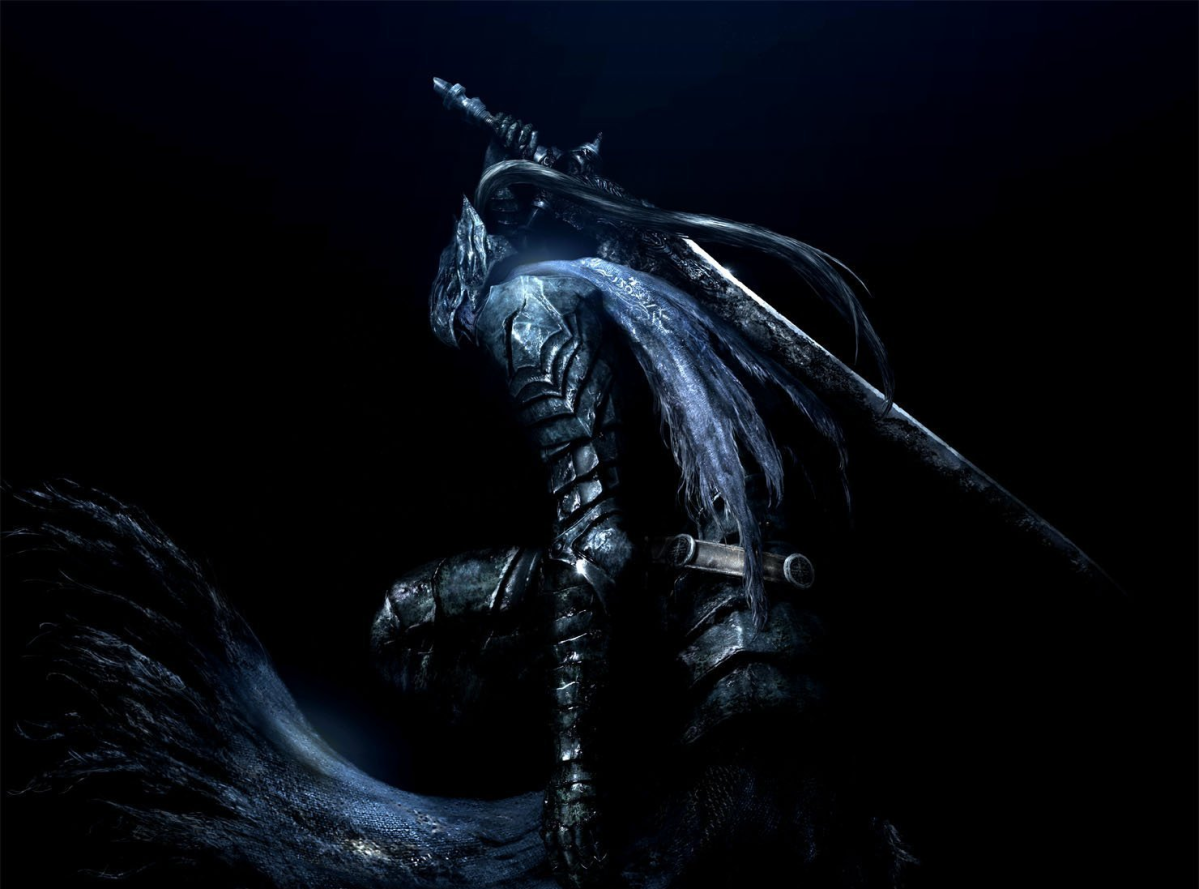
Welcome to Boss Breakdown! I wanted to do a series of posts specifically about boss design and the particulars of some of my favorite bosses (as well as perhaps some not-so-favorite ones that are otherwise notable to me). It didn’t take long for me to think of what boss I wanted to talk about first…

We’re going to start off strong with Artorias The Abysswalker from the original Dark Souls. He’s one of my favorites and an excellent study in readability for enemy design. I’m going to go over his general behavior, as I can observe it, then breakdown a number of the specific attacks and moves he can employ against the player. I’ll wrap up by sharing my analysis of what the design goals of this fight were, and how well the final design accomplished them. Some mild spoilers for Dark Souls are to follow. For context, Artorias the Abysswalker is a legendary and divine knight within the Dark Souls world renowned for his heroics and saving the land from a menacing force called the abyss. You happen upon him crusading against abyssal creatures when he turns on you and attacks like a madman. Dark Souls is an action RPG about clashing sword, spell, and shield against various gods and monsters, and thus you must likewise do so against Artorias.
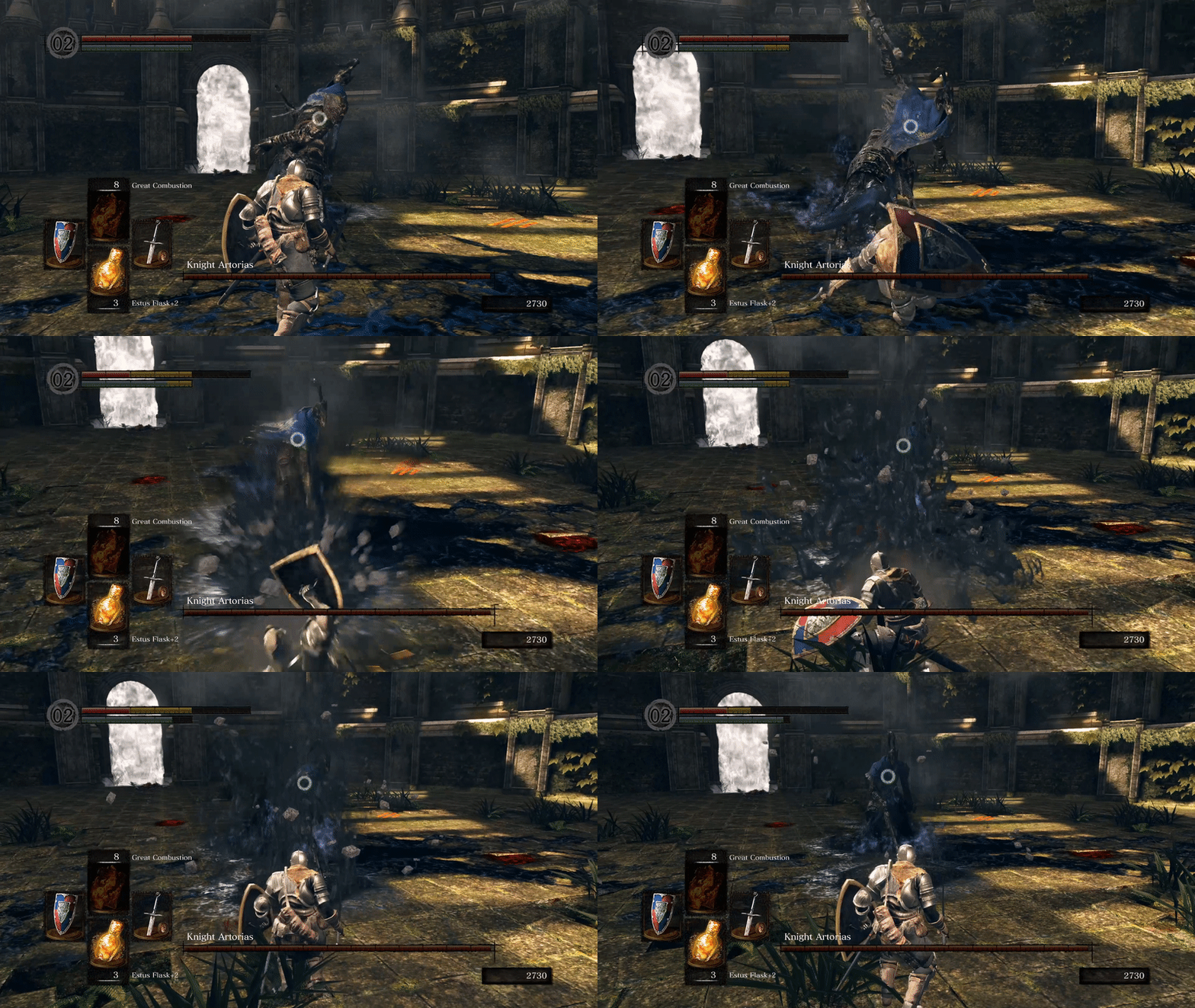
Artorias is a knight, albeit a possessed one, and he fights like a knight. Mimicking many of the behaviors of other humanoid enemies in Dark Souls, Artorias likes to circle around you slowly, as if sizing you up. He’s aggressive, but doesn’t leave you with no breathing room at all. He seems to cycle between states of high-aggression, letting loose a deluge of attacks, and low-aggression, where he’ll be more reactive and less proactive. If in his reactive state, it’s dangerous to engage in maneuvers with a lot of time investment like healing. Enemies in Dark Souls generally do not like it when the player tries to heal, and will move to stop them more often than not if they are able. This is especially true of bosses and especially especially true of humanoid late-game bosses like Artorias. I suspect there is a special behavior baked into his AI to make Artorias lose his cool if he sees you try to slip in a quicky sippy of your healing Sunny-D potion. Healing is not meant to be a free action in this game, rather its something you must do while your opponent is occupied, in order to accomplish it safely. You must take a risk to heal, as healing is, ultimately, correcting a mistake you’ve made to begin with. The added risk is your payment for taking a hit. If you’re hugging Artorias too close he may have trouble hitting you with his wide-arcing attacks, so to counter this problem he may roll away from you to get some distance, or use an attack that allows him to reposition himself like a leaping strike. He also has a dodging side-swipe combination to really dissuade the player from trying to confuse the AI by getting too close. Artorias is most effective when facing the player, so if the player tries to get behind him he’ll splash some dark muck their way. It’s one of his quickest attacks and, proportionately, does the least damage. This move is more an inconvenience than anything, and really meant to just gently discourage getting behind Artorias too often, as it is disruptive and difficult to react to.
Most of Artorias’s attacks are slow and sluggish, objectively speaking. He has some extremely generous telegraphs to his attacks, some of which can be almost as long as a full second, while the average human reaction time is at around 250ms, or one quarter of a second. This is purposeful. Artorias is meant to be difficult, but despite a somewhat exaggerated online reputation, Dark Souls always aims to be fair in what obstacles it throws the player’s way. Clearly communicated telegraphs seem to be a priority for the enemy design in this game, and this seems especially true of Artorias. Obstacles simply tend to be more satisfying to overcome for players when they are clearly conveyed, even if they are difficult to overcome, and in an action-based boss fight this means effective attack telegraphs.
Notice how Artorias really drags his sword behind just before he swings it. The sword is so massive it’s very easy to track with the eye, especially with how the animators framed Artorias’s poses relative to the player’s position. They knew Artorias would be usually staring straight at you from the center of the screen, so they knew how to best frame him such that his actions are very traceable by the player. This is important, as a boss that is difficult to read can often mean a frustrating and dissatisfying fight. Most of Artorias’s attacks do not have very strong tracking, meaning he does not aim himself in 3D space at the player with perfect accuracy. Obviously, if tracking on an attack is too strong it becomes impossible to outmaneuver. Artorias’s sword swings have just enough tracking to make casually walking out of the way an unwise evasive tactic, but not nearly enough to overtake the speed of a well-timed dodge roll.
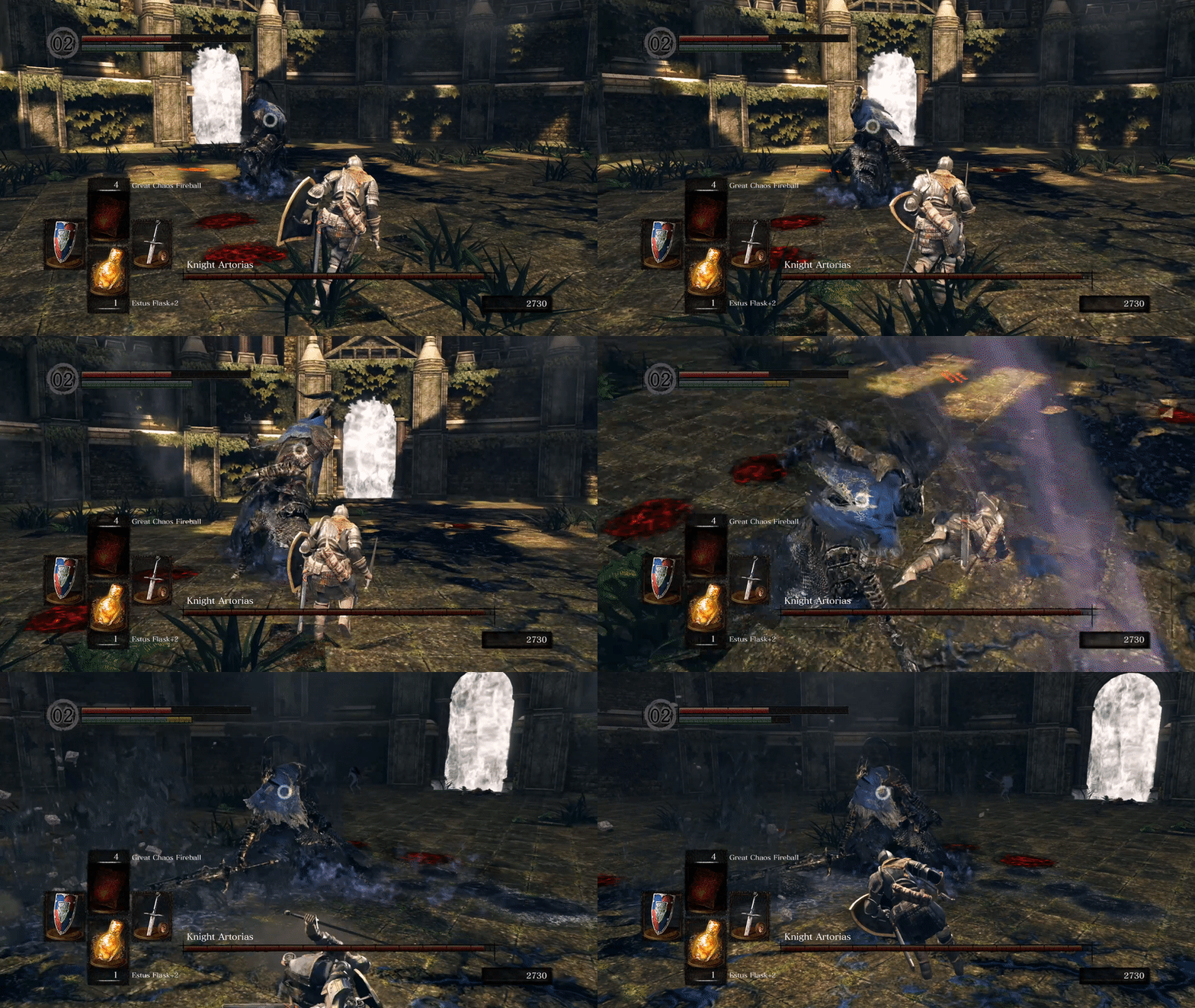
That dragging action of his sword also communicates a part of the narrative; this Artorias is being controlled by an outside, corrupting force. He moves almost like a puppet, as though his limbs don’t act in concert with the rest of his body. Using narrative elements like this as gameplay elements helps make the entire fight feel more cohesive and ‘settled in’ so to speak with the context of the world. I think one of the things that stuck with me so much about Artorias is just how effective his telegraphs are. They are pretty generous with a lot of leeway, but just quick enough to make them feel dangerous, frenetic, and challenging, while at the same time I never feel cheated whenever Artorias gets a good whack in against me (which he does. Frequently). That readability is really essential in making a good boss fight for an action game like this.
Artorias may bound into the air, do a flip, and bring down his sword onto the ground in a slam. For this flipping move you can once again see Artorias’s massive attack telegraphs which give the player ample time to react. This attack doesn’t actually do anything until Artorias has nearly hit the ground, and all that time he spends hanging in the air like he’s posing for a comic book cover is just fluff to telegraph the attack more effectively. Well, perhaps not fluff. It also serves a purpose to cut quite a striking scene. This incredible feat of acrobatics really sells Artorias as an inhuman swordsman. Dark Souls characters don’t really do this. Not usually, anyway. At their most nimble, the player character is a mildly athletic normal person. These sorts of insane stunts really set Artorias and what he’s capable of apart. It reinforces that you’re fighting a monster. Another fun design aspect of this attack is how it can chain into itself. Artorias will do this same attack one to three times in a row, requiring the player to dodge them with correct timing subsequently. It’s one of the best tools in Artorias’s kit for enforcing mastery of the Dark Souls dodge roll. Because the difference in Artorias’s body language between repeated flipping strikes and returning to a neutral position can be very subtle, it’s also an excellent tool for enforcing mastery of observation. To know how to react, one has to perceive their opponent very closely, which can be very challenging with all the moving information in a game like this.

The aforementioned flipping attack as well as a long-reaching vertical strike Artorias may interweave in his grounded combat both share the properties of being overhead attacks. Because of how overhead attacks behave in Dark Souls it is probable, depending on the player’s spacing relative to Artorias, that the attacks will go over the player’s shield and hit them regardless of a block, making shields less viable for these specific sorts of attacks unless spacing is well managed. So, these overheads enforce a level of skill in fine spacing – you want these overheads to tip your shield so they do not overreach you. The other option is to engage in at least some dodging, which fits with this fight’s goals of demanding mastery of numerous game mechanics. Another of those mechanics is the stamina meter, essentially a hard limiter on how often a player can block or dodge. If either defensive option is abused, stamina will be drained for a moment and the player will be unable to defend. When Artorias is in his aggressive state, he keeps up the pressure. If defending is done without forethought, stamina will be quickly drained and the player will likely take damage. Managing stamina in concert with your defensive options is another skill demanded of the player here.
Artorias has a stabbing thrust attack with a unique property- it hits twice, and it hits hard. Blocking Artorias with a shield is a plenty viable strategy. Shields are in fact very powerful in the first Dark Souls. This stab move, if taken full-on with a shield, however, may barrel through your stamina, breaking the player’s block and damaging them. Badly. Having your shield stance broken means entering one of several states the game considers to be off-balance, where combatants are vulnerable to bonus damage. The Artorias fight seems to be specifically tailored to ensure a player never relies too heavily on one strategy. To beat Artorias you have to be adaptable, and have at least a cursory understanding of a variety of Dark Souls‘ many combat mechanics, not just one or two.

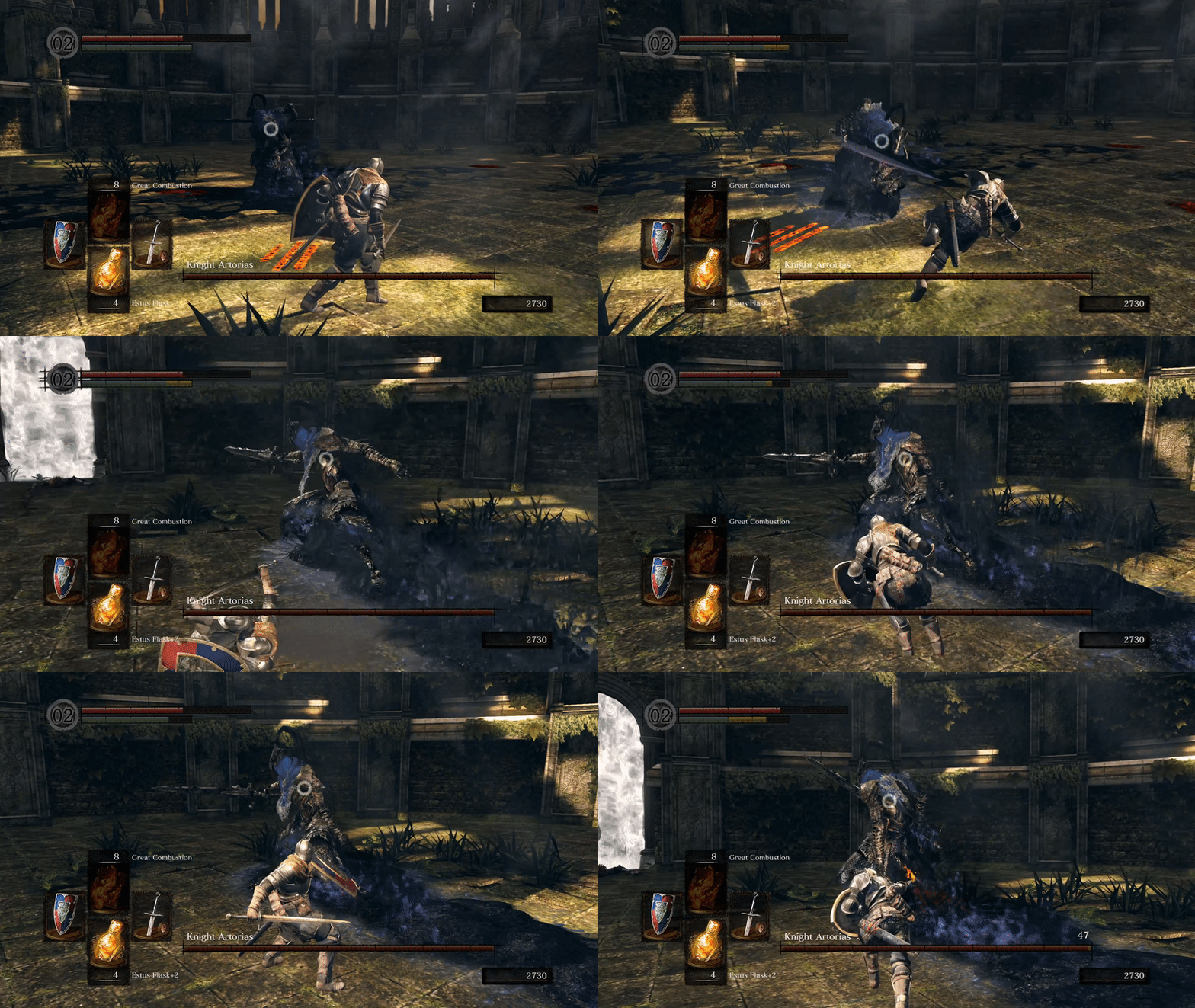
One of the most devastating attacks in this boss’s arsenal is his leaping stab. Generally I find there are two main kinds of attack telegraphs in action games. There are the momentary tells, which flow directly into the attack they are telegraphing. Think a sword pulling back just before it comes down in one smooth motion. Then, there are the “hey heads up, I’m gonna hit ya!” telegraphs that are more like an ambulance siren alerting you to get the heck out the way, because something is coming. Artorias’s leaping stab is the latter kind. In these situations the game wants you to know that something is about to happen, and you need to be ready to follow up on that knowledge. With this kind of telegraph, you’ll know its coming well ahead of the attack. Designing an attack this way helps build variety in an enemy’s moveset and how the player paces themselves. It also allows the enemy to have an extraordinarily dangerous move that does not feel cheap because it is so forewarned. Artorias will howl at you before leaping into the air from a great distance and slamming his sword down in a stab. Sprinkling in these massively damaging yet easily nullified attacks is a good way to convey the danger and power of your boss without making it feel unfair. This attack also reinforces precision in one’s dodging and spacing, as dodging directly away from the landing site of the attack, toward the camera, is a good way to get stabbed, while lateral dodging, or even dodging towards Artorias’s starting position is much safer.

Artorias is not a multi-phase fight, meaning he does not employ new strategies or abilities, for the most part, against the player throughout the fight. Fighting Artorias is as straightforward as it gets. He does have one last trick he might employ once he’s sustained a decent bit of damage, though. What I often affectionately call his ‘super saiyan power-up’ is an ability where he’ll stand perfectly still while gathering a cloud of menacing darkness around him. Cleverly, this makes boss staggering a central mechanic of the fight, whereas in most other boss fights throughout Dark Souls and throughout the series, even, it is a secondary concern, at best. Enemies in Dark Souls take an invisible stagger value or poise damage in addition to health damage when struck by the player. It represents the force being applied to an enemy’s stance and it’s pretty intuitive- a giant battle axe will inflict more stagger than a rapier. Once a minimum threshold of this stagger value has been reached in a short enough time, the enemy stumbles. Most enemies stagger on every strike. Larger ones tend to be able to shrug off a few hits. Bosses will often require a number of strikes to feel the pain and react. The only way to stop Artorias’s accumulation of power is to stagger him. Fail to do so and you’ll not only be caught up in a damaging explosion of darkness if you’re too close, but you’ll also have to deal with an empowered Artorias capable of decimating health and shields alike with his sword for some time. It creates an interesting dilemma of risk and reward. Do you attack Artorias while he refuses to fight back in the hopes you can stop his empowerment? Or do you take the down time to heal and hope you can dodge his empowered assault later? It demands the player make a snap calculation as to whether they can stagger Artorias in the short window they have to do so, while also making Artorias an even more terrifying opponent.

Now I’d like to briefly go over some of the narrative elements of this boss fight. Any game with a narrative that also has bosses will naturally inject some sort of story into those boss fights. Gameplay is storytelling, after all, so there’s some things worth pointing out. As I stated earlier, Artorias’s sluggish and labored movements pull double-duty in making a satisfyingly readable opponent and selling Artorias as a dangerous, wild monster-warrior not in full control of his faculties. He moves almost like a puppet on invisible strings, with his head leading him where he goes, his limbs dragging behind. The sword is animated to depict its incredible weight, which also informs the shape his attacks take. The sheer might of his heavy strikes, their ability to tear through defenses, and his inhuman acrobatics shores up Artorias as a legendary divine knight. Several of his attacks, especially his spinning horizontal strikes, are very reminiscent of his wolf companion Sif, another boss in Dark Souls. Sif would eventually take up Artorias’s sword, so it’s natural Sif learned to wield it by observing their master. The darkened knight’s volatile, mindless state implies the tragic fate of this hero, and his fall to darkness. Dark Souls is also well known for its environmental storytelling so I’ll indulge a bit and point out a fun detail that can be gleaned about this Artorias from the environment. Elsewhere, it is noted that Artorias is renowned as a legendary left-handed swordsman. You may notice Artorias fights the player with his right hand. Eventually it is discovered Artorias gave up his shield to defend Sif from the abyss. It stands to reason that before succumbing himself, Artorias tried to defend with his left arm, sword-in-hand, shattering all of its bones in the process. The now corrupted Artorias fights, hobbled, with his offhand wielding the sword, main hand a wobbly useless husk. As challenging as the Artorias fought in Dark Souls may be, he is but a shadow of his former self. What a glorious sight the fully capable Artorias must have been in his prime.
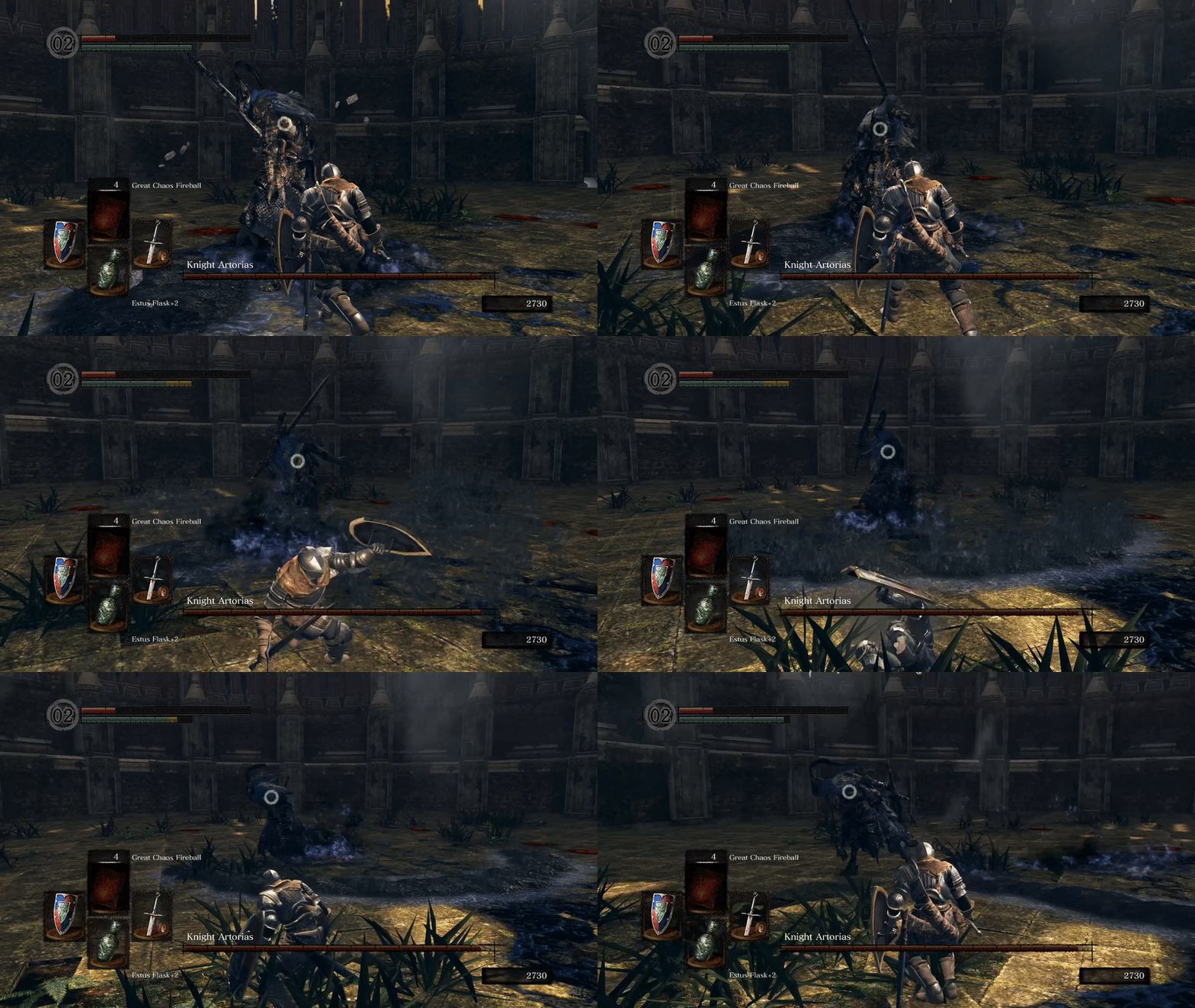
So I obviously really really like this boss fight. It may be one of my all time favorites from any game. The design suggests a boss that is more straightforward than almost anything in the rest of Dark Souls. Even simple bosses like the early-game Taurus demon have some sort of twist or gimmick, but Artorias is fought in a big, round empty room. His tricks are not that tricky, his attacks are mostly what they all appear to be. It’s a drag-out fight where only one guy can walk away. Dodge and hit better than Artorias to win. It really pushes you to use all of your defensive options. With generous attack telegraphs, but tight windows between attacks in which Artorias is vulnerable, the fight makes knowledge of spacing, Artorias’s animations, and the timing of his attacks your greatest tools. It feels like the purest form of Dark Souls. No fat, just learn your opponent’s moves, learn how to deal with them, and execute well to win. That was the goal with Artorias, and even at this relatively early stage of the Dark Souls franchise he’s one of the stand-out examples of that sort of design. Future games will iterate liberally on what Artorias represents, to great effect, but good ol’ Arty will always be one of the most elegant of these ‘pure fighting’ Dark Souls boss fights. It’s also got some great narrative elements baked right into the gameplay. They really wanted to sell you on the mindless rage of this abyssal thing controlling a once great hero. The way he violently massacres a hapless mook in his intro cut-scene sets an excellent tone that the deranged flailing of his animations expertly follow up on.
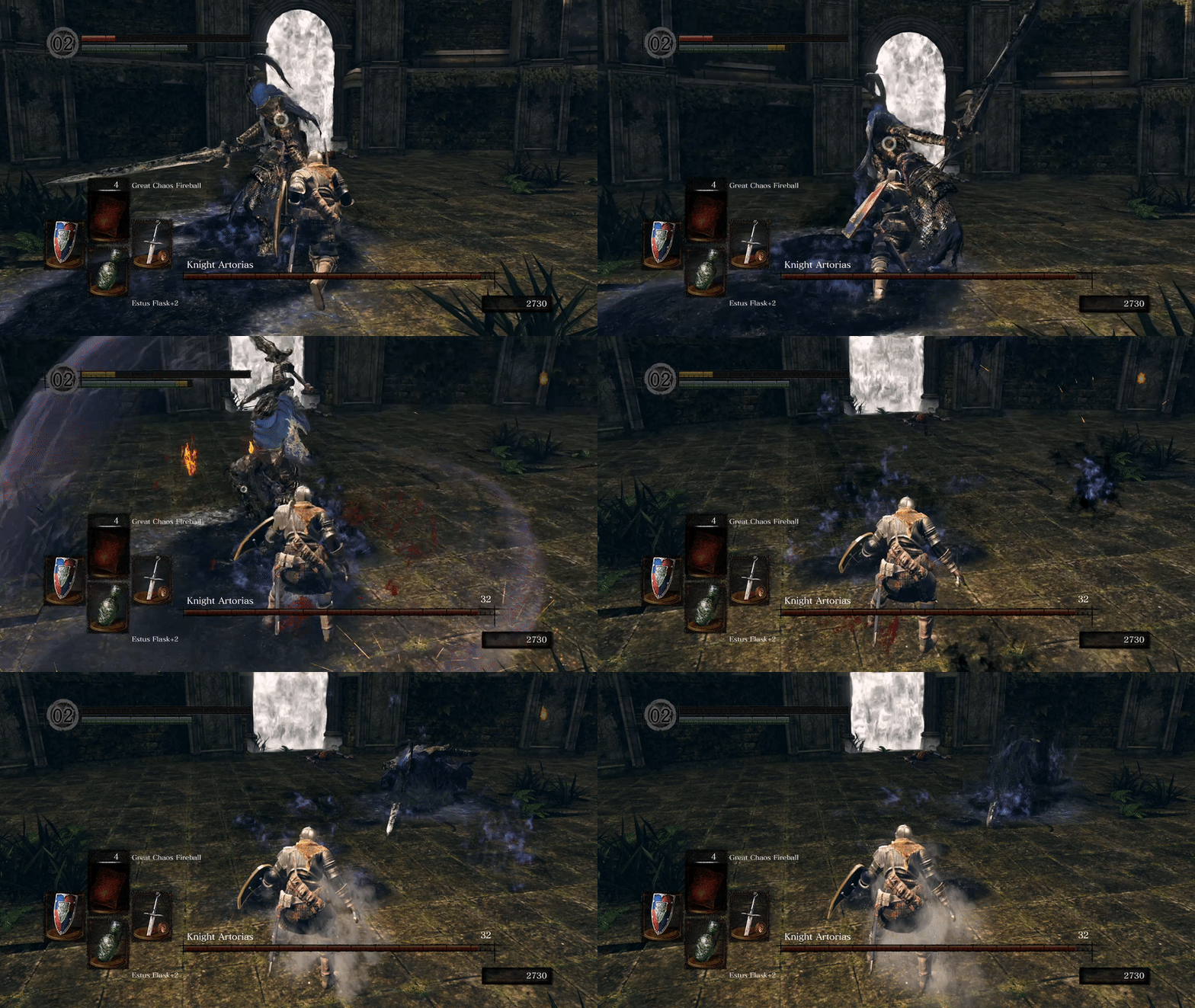
Artorias is a microcosm of what Dark Souls wants to get out of you as a player – observation, spacial awareness, and reaction. Thinking while you’re fighting. No matter what approach you take, with whatever tools are at the player’s disposal, Artorias is prepared to respond with the tools at his disposal to ensure you’re awake, and know what you’re doing. He’s an end-game boss, so he’s tuned to be difficult, and a penultimate test of your mastery over the Dark Souls combat mechanics. Artorias also marks the culmination of a shift in boss design for Dark Souls and its various sister series that began with some of the later bosses in the previous game Demon’s Souls. From this point forward, the emphasis the Artorias fight places on in-the-moment decision making, close observation of the opponent’s tells, high-stakes reaction based gameplay, and mastery of the game’s defensive mechanics such as dodging and countering will become a cornerstone of the series, more so than even anything that had come before.
Knight Artorias came to stop this, but such a hero has nary a murmur of dark…
 Parry Everything