Heyo, taking a break this weekend to Ring in the end of February 2022. Catch you next week.
Month: February 2022
Boss Breakdown: Bloodborne’s Blood-Starved Beast
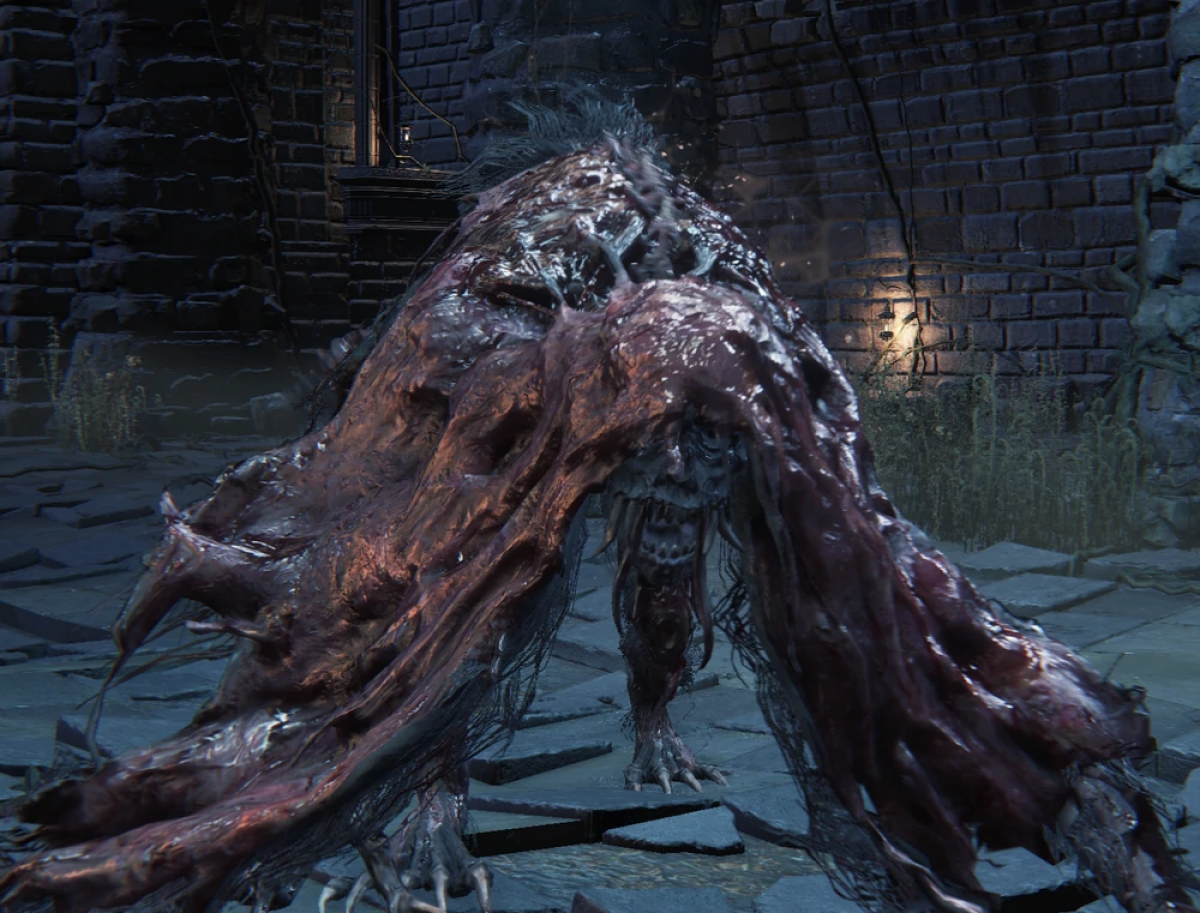
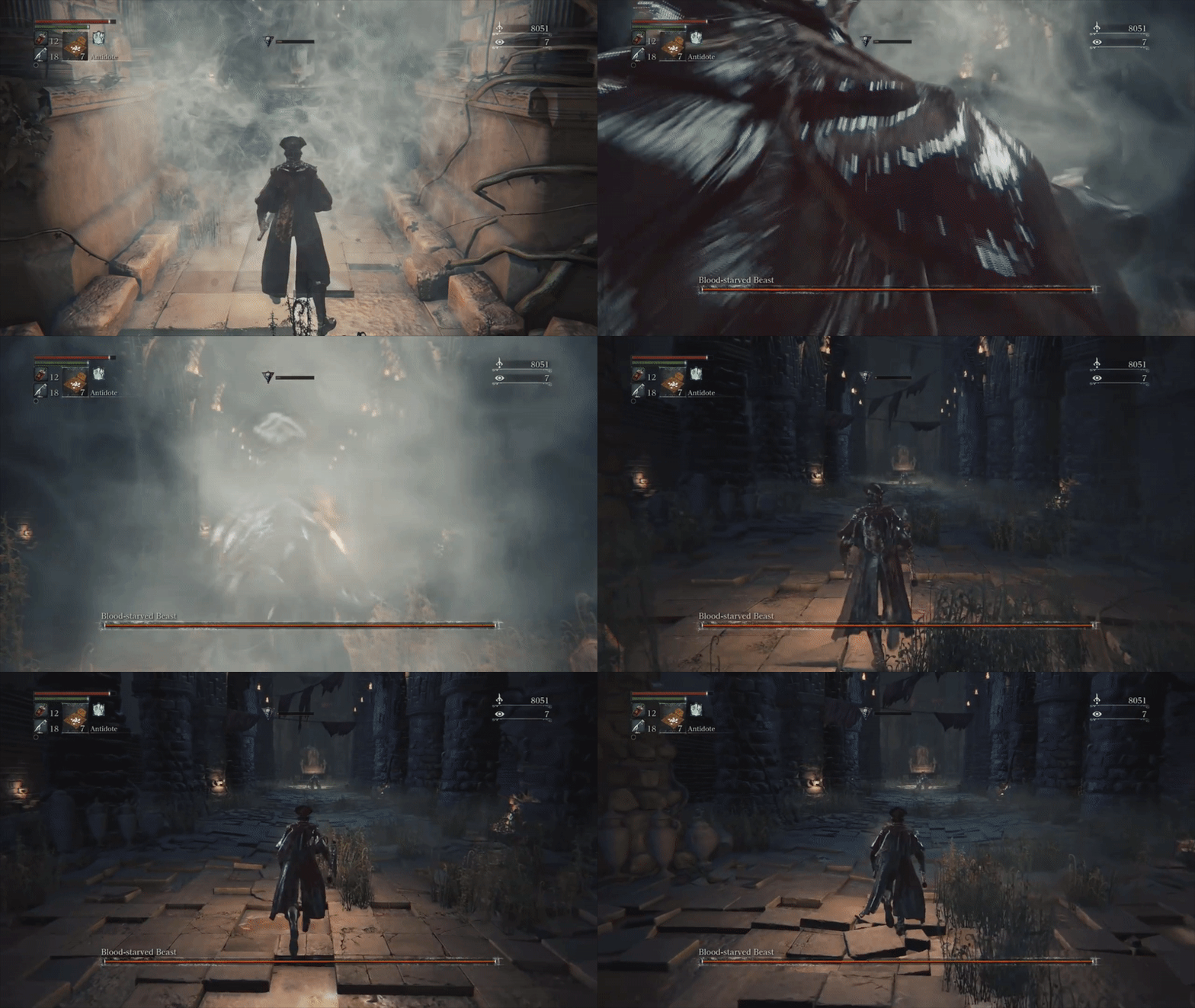
You step into a large chapel overgrown with sickly vines and eerily empty, save for one hunch-over figure at the back, nearest the chapel shrine. It stalks toward you like an animal as its boss music kicks in, and you’re introduced to its name: Blood-Starved Beast. The Blood-Starved beast is a mid-game boss in FromSoft’s action RPG Bloodborne. Though technically optional to complete the game, Blood-Starved is centrally located, and gatekeeps one of the game’s major features; the chalice dungeons. It is thus likely to be a boss that most players encounter toward the start of Bloodborne‘s mid-game. This malnourished and emaciated figure fights with the ferocity of a starved predator, and its design backs up this idea while also serving appropriate functions within the overall experience of Bloodborne.
My philosophy when it comes to design, and especially in regards to big set-piece combat encounters like this is to reinforce the overall feel and experience of the game. It’s one of the reasons I so admire FromSoft’s design ethos overal.. Bloodborne, at this point in its story, is a visceral gothic horror about hunting horrible, bloody beasts. It’s gritty, it’s guttural, and it’s dangerous. The blood-starved beast begins to reinforce Bloodborne‘s overall aesthetics and feel from the moment you see its visual design. It’s a hunched-over, somewhat skeletal, feral humanoid figure with large portions of its skin bloodily peeled from its back, and draped over its head like a shawl. It’s a gruesome sight that reflects the environments and tone of Bloodborne. It fights with a hunter’s aggression, homing in on the player with a ravenous intent, keeping the fight high-intensity. The Blood-Starved beast is a quintessential representation of Bloodborne‘s hunt. It’s bloody, it’s animalistic, brutal, and imminently deadly.
Blood-Starved’s sense of danger is essential to making its fight come together. It needs to feel as though this thing could rip out your throat at any moment, a violent, unstable, rabid animal. This is most embodied in its grab attack, which does a huge amount of damage and can potentially kill a player outright. Highly lethal attacks like this are a favorite of FromSoft’s design to establish the threat of their enemies, and keep them oppressive. The ever-present looming promise of an attack that can potentially outright end the fight in a game over keeps the player on their guard, and shores up the tension. That said, such attacks can feel cheap and unfair if not handled carefully. If an attack is extremely deadly, best practice is keep it predictable and telegraphed, so if the player does fail to avoid it, they don’t feel as though they were blindsided, and the mechanic remains one of skill in the player’s mind, not a random vector of bad luck. The Blood-Starved Beast assumes a very particular posture, it’s normally gyrating and animated movements become still, and focused, it’s arms almost exactly shoulder-width apart in an even stance. This stance really stands out once you know to look for it, rewarding close observation of the boss, which is a standard for FromSoft enemy encounter design, something they are very much always looking to reinforce.
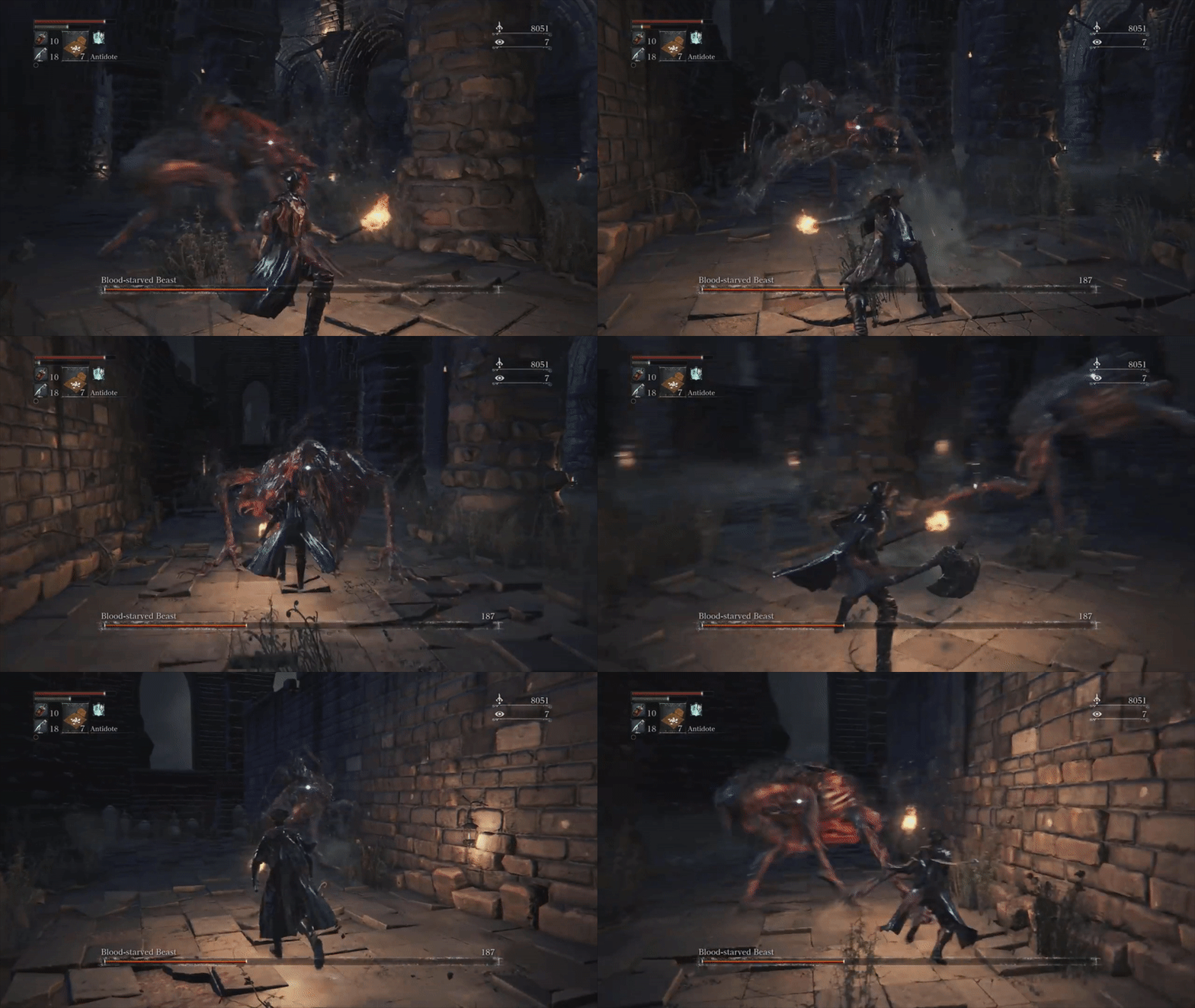
On the more usual and rote side of things, the Blood-Starved Beasts’s primary attacks almost exclusively are aimed in front of it, and they have very little player tracking, meaning just a bit of movement will move the player out of danger. If the player moves too far away, however, the beats will initiate a Dashing attack that covers a lot of ground, to reset the neutral positions of the fight. These patterns, while predictable and simplistic, create the very strong spacial dynamics of the fight.
Blood-Starved’s quick attacks and short response time make it dangerous to approach, and risky to engage in close combat. As an early-to-mid-game boss, Blood-Starved functions to help really cement the player’s skillset and prepare them for the steeper challenges that are to come, and it does so by emphasizing Bloodborne‘s parry mechanic, in which players shoot an oncoming attacker with a firearm just before being hit, stunning the enemy and preparing them for a visceral counter-attack. It’s a powerful option that can carve through enemy health bars quickly, and will remain useful throughout the rest of the game, so Blood-Starved really pushes the player to master this. Its attacks are fast but reactable, wide-reaching but mostly short-ranged, perfect for being parried by the player’s firearm. If the player utilizes the parry and visceral attack, the difficulty of the Blood-Starved Beast can be curbed to a great degree, rewarding mastery of the skill.
Later on in the fight, The Blood-Starved Beast will start to string a long series of attacks together. With a maneuver like this, the beast is more likely to get some licks in, to give players more opportunity to leverage the health-restoring rally system, which rewards reprising attackers. It also punishes a lack of attention paid. Once the attack begins to hit a player, it is not difficult to disjoint with a dodge so the remaining hits miss, but being caught unaware could mean quickly and drastically losing health. There is one more feature to this attack though, which is that, since it’s a rapid series of strikes it makes parrying it very easy. A lot of times FromSoft will employ rapid attacks like this that seem very intimidating, but realizing how parrying works – that it requires player input to intersect with a certain part of an enemy’s attack animation, means knowing that if you try to parry one of these rapid attacks you are very likely to succeed, as the enemy’s ‘vulnerable’ animation is flashing past over and over again, and it only needs to be snagged by your parry attempt once. As I supposed this boss is meant to greatly reinforce the use of Bloodborne‘s parry, I suspect this is one of the primary reasons for the presence of this attack, a reliable parry opportunity. It’s a powerful attack, but it can be turned against the beast, with an equal and opposite counter.
At the same time, Blood-Starved maintains the standard formula of FromSoft’s boss design through a moveset that reinforces spacing and timing. If the player is unable to master the parry mechanic, Blood-Starved is surmountable through diligent use of spacing. Fast yet telegraphed melee attacks make engaging with it directly from the front infeasible without parrying, so circling around behind can be effective. The boss’s preferred response to this is to create distance between itself and the player, which effectively sets up for it’s leaping grab attack or dashing slash attack, both of which require precise timing to avoid. This makes the boss feel proactive and responsive to the player’s actions, while ensuring player’s are unlikely to escape the battle without seeing their enemy’s most deadly attacks. Circle strafing it is an effective tactic, but not one that carries no risk. In a game that relies so much on its atmosphere, this illusion of a thinking and responsive agent behind enemy AI is essential.
Once The Blood-Starved beast has taken significant enough damage, it will begin the first of two phase transitions, marked by a screeching roar it lets loose. Starting in phase 2, its attacks will now apply poison to the player. The addition of poison to the fight accomplishes two things. One, it ramps up the tension and danger of the encounter. If you’re hit by the beast too many times, even if you’ve got enough healing to recover from the damage, you’ll be poisoned and a constant ticking clock will hang over you. This punishment effectively sets the standard of how often the player should expect to successfully dodge boss attacks without incurring major disadvantages in the future, establishing their expectations accordingly. Secondly, the building of a slow poison encourages a more aggressive playstyle, which is one of Bloodborne‘s chief design goals and hallmarks, which sets it apart from its more slow and calculating predecessors, Dark Souls and Demon’s Souls. Players in high-intensity situations will often try to ‘turtle-up’, so to speak, avoiding direct encounters so-as to preserve their resources and maximize safety. This is somewhat the opposite of Bloodborne‘s strengths as an action game, so FromSoft went to great lengths to reward proactive behavior.
The presence of the poison’s ticking clock communicates that your resources will be depleted if you don’t return a good amount of strikes that the Blood-Starved Beast can dish out to you, complemented by Bloodborne‘s rally system, which restores health if player damage is followed quickly by successful attacks against enemies. Blood-Starved serves as an excellent tool for engendering a more aggressive playstyle that matches the frantic and gritty nature of Bloodborne’s encounters. Phase three sees this pushed further, with clouds of poison now spewing from the beast’s wounds in all directions as it attacks. Spacial awareness becomes even more pivotal, and reliance on just one strategy becomes dicey. Players who can utilize a variety of approaches based on the situation, and do so proactively and aggressively, will find the final phase of the Blood-Starved Beast much smoother.
If a player is too risk-averse or simply not yet up to playing very aggressively, there are alternative solutions to besting the beast for the more strategically-minded. ‘Antidotes’ are plentiful from the carrion crow enemies that dot the level leading up to Blood-Starved Beast, and keeping them handy can put off the pressure from poison, if you find a moment to take one in-between dodging attacks. The pungent blood cocktail, a common item meant to distract the bloodthirsty minor beasts players can encounter, appropriately, works on the Blood-Starved Beast. It will become distracted if one is thrown, and clamor after the small traces of blood within. It’s really refreshing to see that kind of flavorful ingenuity that relies on knowledge of the game’s fiction be rewarded that way. Purely from a gameplay perspective, it might not be obvious that an item like that would work, but from a narrative standpoint it makes perfect sense. Anyway, I always appreciate these little alternate routes to victory in difficult games. Thinking around a problem is as impressive a show of skill as tackling it head on, and players should be encouraged to do so. Reward experimentation.
Blood-Starved is an extremely effective mid-level fight, I think. It’s rather straightforward with its only real gimmick coming in the form of the poison, which as I explained, fits rather well in what the beast’s design utility is. That is, the beast is at home in Bloodborne‘s oppressive atmosphere, with its oppressive combat style, and helps to reinforce a lot of Bloodborne‘s combat fundamentals leading up to the more advanced challenges that await afterward. Players who find themselves able to fight aggressively, and reliably perform parries, counters, and sidesteps, will find themselves well equipped for what comes after. You might say the Blood-Starved Beast is a ‘skill check’ in that way. Designs that focus on both teaching the player abstract technical concepts while engrossing them in the atmosphere of the world is what FromSoft does best in its boss design, and I think the Blood-Starved Beast is pretty emblematic of that.
Hunters are killers, nothing less…
Rethinking ‘Health’ as Game Mechanic: Sekiro’s Verisimilitude
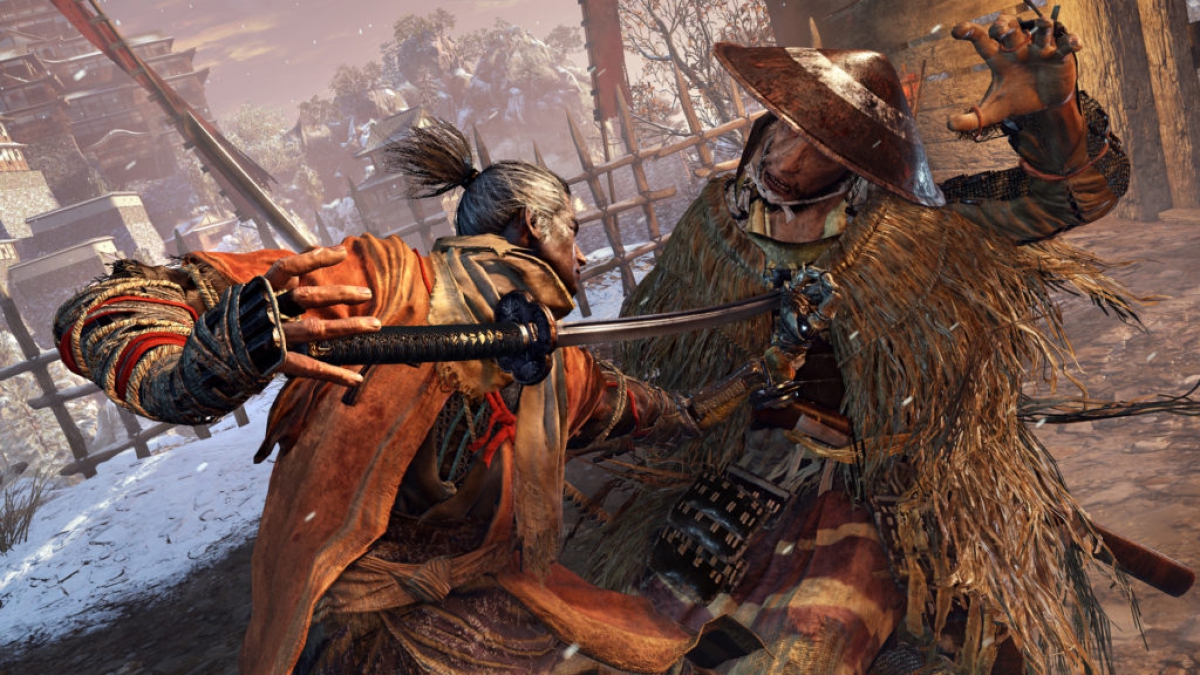
Talking about Sekiro again. Sekiro is a ninja action game by FromSoftware, that involves a lot of sneaking around and backstabbing, but nearly as much sword-to-sword clashing and front-stabbing as well!
Verisimilitude! A big word, and one of my favorite ‘game-designerisms’. What exactly does it mean? So if realism is invocation of the real, of reality upon your fiction, verisimilitude in the context of game design is the invocation of what seems real, or rather feels right to give the impression of reality. That distinction might seem fuzzy, but it’s very important. What makes a game realistic is an adherence to the facts of the subject you are simulating, from an objective standpoint. What gives a game strong verisimilitude is a respect for the experience of what you’re trying to depict. In the latter case, it is more important that the gameplay feels right than it is for the game to be objectively close to reality. A horse’s hooves are expected to make a certain sound in television and movies, but this sound is often expected to be the sound of clapping coconut shells, instilled in audiences after many years of the sound effect’s prominence in television and movies. As you can see, creating a fulfilling sense of verisimilitude involves a complex balance of player expectations and affordances. This becomes even more complex, as these things tend to be, when you involve the dimension of interactivity. In Sekiro, I want to talk specifically about the verisimilitude of the game’s sword fighting.
I think one of the things I respect most about Sekiro: Shadows Die Twice is the design’s willingness to reevaluate even the most fundamental assumptions of action games. The health bar, for one, is ubiquitous in such games. But, if you think about it, ‘health’ as a gameplay mechanic is a little weird, right? There is an arbitrary number representing your opponent’s closeness to death. Maybe the enemy will pull out some stronger ‘desperation moves’ when their health gets low, but so long as it isn’t zero, they can fight as well as they ever have. When that last HP or ‘hit point’ is depleted though, POOF! Their body’s ability to sustain its own weight goes up in smoke and they crumple like their bones have suddenly turned to sawdust. The HP mechanic exists for a reason, it works well. The suspension of disbelief needed to accept this abstraction of how fighting capability works is easy enough to achieve such that most players will not question it, in return for the fun gameplay that HP pools provide. Sekiro wants to go a step further though, and bring the abstraction of their combat closer to a cinematic realization of an idealized sword fight.
In reality, a sword fight does not involve two guys hitting each other back and forth until one guy runs out of hit points and collapses. Really, it’s closer to the first guy to land a clean hit… has probably just killed his opponent. So Sekiro has created a system that abstracts this reality – Sekiro is not generally a game about cutting opponents over and over again until you’ve punched out all of their blood, but rather, you strike at opponents as they deflect your blows until you can land a clean hit, killing them instantly. This makes a lot of sense. In a real fight, wearing down your opponents’ defenses, finding ways around their guard, is paramount. Most opponents are not going to just stand there and let you stab them with a sword. The idea Sekiro proposes is that ‘hit points’ are secondary to ‘posture’, or the strength of one’s defenses.

Posture in Sekiro can be reduced by striking an opponent’s guard to rattle their stance, deflecting their attacks with a well-timed parry, or participating in a number of other contextual maneuvers such as the mikiri counter, a special counter against thrusting attacks, or jumping over enemy sweeping attacks. Posture naturally regenerates over time, and the player or enemy combatants can quickly restore it by holding their position and guard. When posture is completely gone, enemies become vulnerable to a deathblow, which will kill them instantly, while the player becomes stunned if their posture is gone, forcing them to dodge or take a hit. The idea of becoming too tired or psyched-out to defend myself in a tense situation due to relentless pressure from my opponent is much more relatable to me than suddenly exploding into red mist and collectible coins because I was punched one too many times. I am able to, through this system, put a bit of myself in the battle. Feeling my defenses wear down is something I have really experienced, in real life, so that feeling of the real draws me further into the game through Sekiro‘s clever abstraction of the concept.
Deathblows becomes the real hinging point of combat in Sekiro. As I said, whenever an enemy’s posture is depleted, they become vulnerable to the instant-killing deathblow. I say instant-killing, but some enemies can endure two or even three deathblows before really dying. Sekiro takes places in a fictionalized and fantasy-tinged realization of 16th century japan, with inhuman warriors, monsters, and demons, so the idea that a giant ogre-man can survive two ‘clean hits’ before he goes down for good does nothing to hurt the verisimilitude in my estimation. It’s not realistic, but it still feels right. The thought that even the strongest demigod opponents you face can be brought down by just two or three true strikes really grounds the world in a sense of grit and lethality. The illusion is given that life in Sekiro is nearly as fragile as it is in reality, even with divine powers. These ‘deathblow counters’ work brilliantly with Sekiro‘s stealth mechanics as well, as one needs only sneak up on an opponent to get a free deathblow, no risky one-on-one fighting required. The two systems work so well together that I feel I could write an entire article just about that, so I’ll move on for now.

Now hit points still exist in Sekiro, but their role has been shifted somewhat. Enemies will still die if their HP reaches zero, though this is much less likely to occur than their posture reaching zero. That’s not to say wearing down your opponent’s HP is pointless. The lower a combatant’s HP is, the slower their posture can regenerate. Now if HP is still meant to represent ‘health’, then this makes a lot of sense. A clean hit is likely to just kill someone in a sword fight, but a series of glancing blows are very likely to make someone less able to defend themselves. Cuts, bruises, a broken finger or two, such things would definitely add up to a poorer and poorer defense, and so this adds to the overall sense of internal consistency in Sekiro‘s combat. No matter the true reality, fighting in Sekiro creates an experience that meets the player’s imagination of how being a sword-fighting ninja would actually work. This level of gradient to the effects of losing HP, where the more injured a combatant, the worse they can defend themselves, addresses much of the inherent weirdness of HP I mentioned earlier, and it does it in such a simple, smart fashion.
Verisimilitude is all well and good, but I wanted to quickly go over some other practical advantages of this system. Since posture is an ever-shifting and renewable resource, it creates a very dynamic tension that can shift back and forth freely as the situation demands. Empowering reversals of fortune on the part of the player are common, as posture greatly rewards consistent performance, making a win when you’re on the ropes a lot more feasible than you might expect. Posture also allows many little tweaks and knobs for the designers to create a great variety of enemy fighting styles based on their posture stats alone. Maybe one boss restores their posture absurdly quickly, but doesn’t have huge stores of it, meaning this boss must only be parried a few times, but they cannot be given the downtime to recover. Maybe another boss has huge stores of posture, but recovers it very slowly. Some enemies might recover posture quickly, but lose this advantage if they’re even a little injured. Etc. There are a huge number of possible variations of these, and Sekiro implements pretty much all of them.

Obviously glowing praise is my default position for much of Sekiro‘s systems, but it’s worth mentioning some drawbacks. Sekiro‘s posture system works specifically because of how intense a game it is. It demands constant, focused attention of players in a way that may not be appropriate for every game experience. It’s very much ‘Sekiro‘ but every action game may not benefit from such high levels of gameplay intensity so consistently, and so the posture system isn’t a one-size-fits-all solution that can be injected into every action game without adaptation considerations or consequences. I would like to see more systems like the posture system see popularity, but it is a very delicately balanced system that would demand a lot of care in the implementation. Just plain old HP is much simpler, and it’s been the de facto way to represent combat in so many games for so long for a reason. As I’ve said before, the level of abstraction it creates can be an acceptable tradeoff if it’s supported by a strong combat system, and the simplicity of it fits your game. Another aspect of Sekiro‘s posture system is not only the gameplay intensity, but the intensity on the player’s hand in controlling the thing. The system demands a lot of very rapid and often repetitive inputs that may not be suited for all players. It’s an obvious drawback, perhaps not inherent to a posture system, but correlated to how it’s implemented, and so the system would likely need some fundamental changes and re-tuning to map to a more inclusive suite of control options.
I think the posture system is a great look at how we can rethink the traditionally established rules of how games need to be. Creating new and exciting interactive experiences means being willing to accept that no one game mechanic can be sacred, even if it is ubiquitous. HP bars are so universally standard that any deviation from that mold feels almost alien. The posture system picks apart what HP is meant to represent and repackages it in a way that is extremely conducive to the kind of ninja-action experience Sekiro aims to create, in a way that is evocative of the real, even if it is still very abstract. Sekiro‘s posture system isn’t purely realistic, it’s not what sword combat actually looks like, but it feels very real to experience. It feels like pitched life-or-death battle with high stakes, and real tension.
My Lord, I Have Come For You. This… Will Only Take A Moment…
Dark Souls 3’s Brigand Twindaggers or How I Stopped Worrying and Learned To Love Status Effects
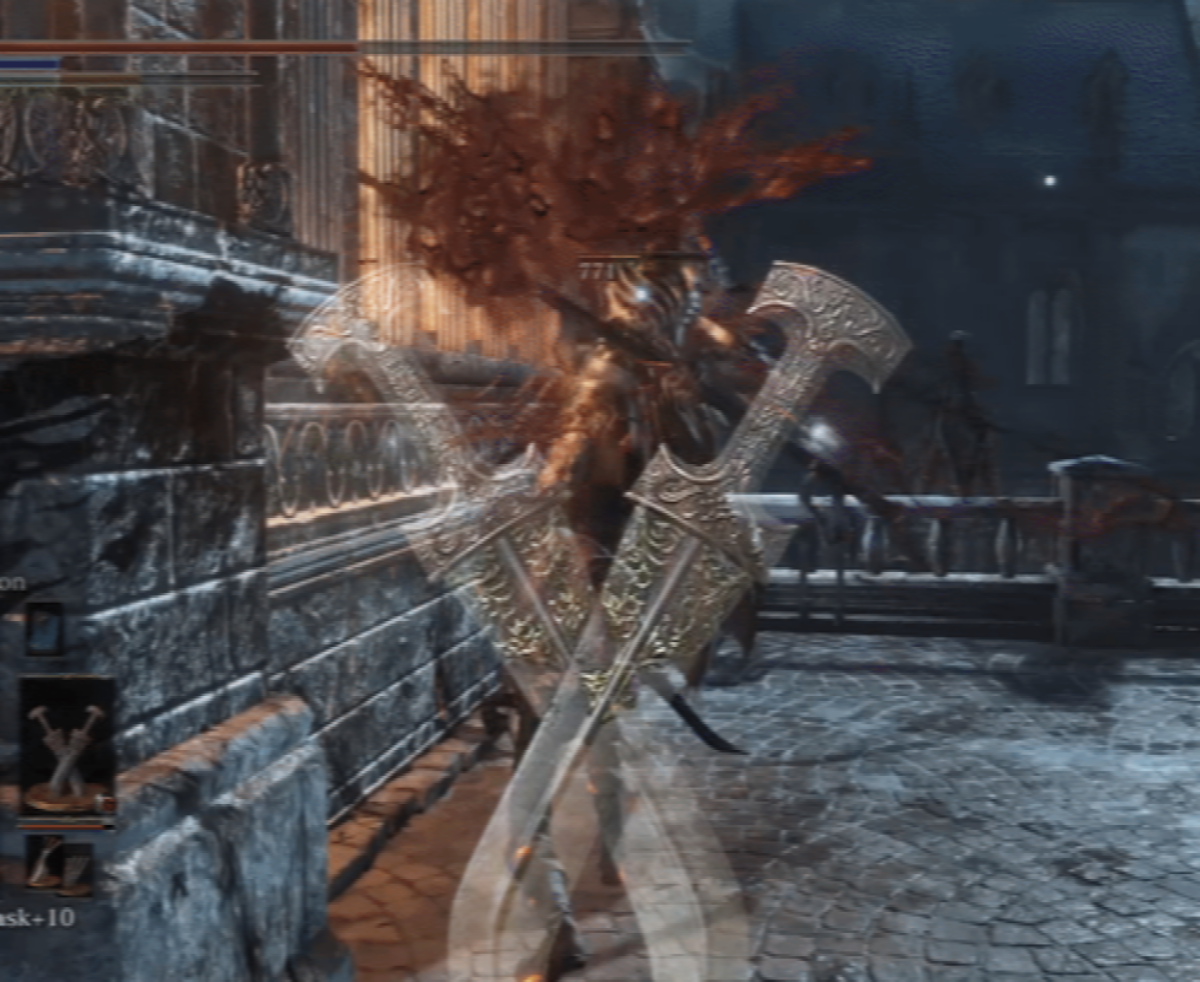
It is February 2022, my dudes, and you know what that means. Elden Ring is around the corner and there was absolutely no way I wasn’t going to just talk about Fromsoft games all month. I want to share an interesting experience I found while playing Dark Souls 3 as it pertains to a specific weapon found in the game, the brigand twindaggers. This is less a breakdown of this weapon’s moveset or particular attributes and more a little anecdote about how the daggers won me over once Dark Souls 3 had sold me on using status effects on my weapons, and the subsequent analysis that followed.
In RPGs with character customization I love to bring in my own stock of characters to populate the world, and there are some old standbys I revisit frequently, such as a thief who wields a pair of daggers, whom is often my player character in Fromsoft games. If at all possible, I will deck out my characters in their appropriate gear. I kind of like the RP side of RPG that way.
In Fromsoft’s Bloodborne, an action RPG that preceded Dark Souls 3, there is a weapon called the blades of mercy, a sword that can transform into a pair of daggers. I often refer to this weapon as a lawnmower – it absolutely shreds enemies to pieces with a massive amount of damage output. It scales incredibly well with Bloodborne‘s equivalent of the dexterity attribute, and its moveset is a flowing, seamless series of rapid strikes. Its the most satisfying to use pair of daggers in any of Fromsoft’s games to that point, so I had high hopes and expectations when it was revealed that Dark Souls 3 would have, as a new feature, paired weapons – weapons that come in a set, made specifically for dual wielding. I went over the game with a fine-toothed comb when I got it, clamoring to find a pair of daggers. Surely if paired weapons were a thing, I’d find dual wield knives.
And so I found them, and it quickly became difficult to contain my disappointment. Compared to Fromsoft’s previous outing with dual wielded daggers, these brigand twindaggers had a slower moveset with a much longer startup, and tremendously pathetic damage by comparison. They didn’t even scale that well with dexterity. I tried to like them, and tried to use them throughout my first play-through, I really did. In the end, there were just so many better speedy weapons, whose damage scaled so much better, that I could really not justify using the daggers any longer. I ended up embracing my inner edgelord and used a paired katana and wakizashi, two japanese style swords, as their damage output was insane compared to the daggers.
I had a blast on my first playthrough of Dark Souls 3, but I always regret not making a player build I was satisfied with involving the daggers. It didn’t feel true to my player character to not have him using knives, and I wished the knives were better. They didn’t really need to be though, after some experimentation, I would discover I just needed to change my approach. It started when I saw a player versus player showcase of the brigand twindaggers. The very skilled video author was destroying human opponents, seemingly with ease, utilizing the weapon I had condemned as largely useless. His secret? The daggers were enhanced with a bleeding effect. The Dark Souls series has always had weapon status effects, special attributes that can be applied to weapons to make them debilitate enemies in specific ways, applied if enemies are hit enough times rapidly. Primarily, this takes the form of bleed weapons and poison weapons.
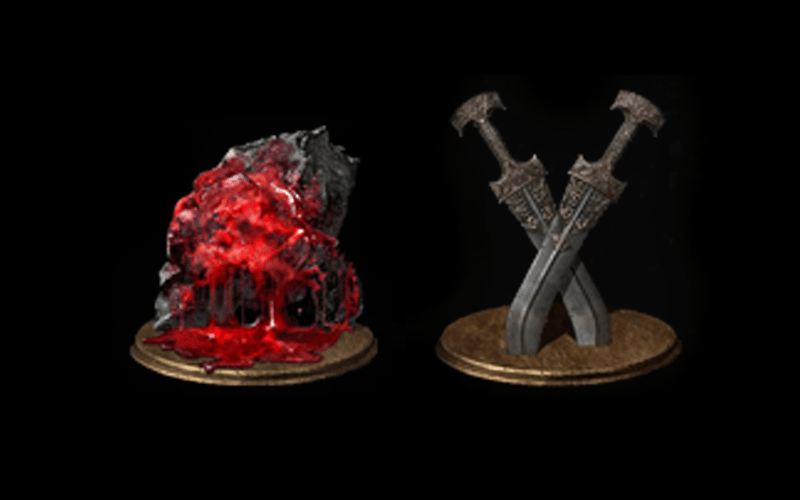
Enhancing a weapon in Dark Souls always modifies its base damage and damage scaling in some way. Status effect weapons on the whole tend to deal a lot less base damage as a tradeoff, and so I’d often shy away from them not just in Fromsoft games but in RPGs in general. It just felt like it was an unnecessary extra step, compared to simply dealing more damage directly. But I wanted those daggers to work, so I gave it a try. In Dark Souls bleed is a status effect that builds up by hitting your target repeatedly, and when it’s built up completely, the victim loses a large chunk of their health to a hemorrhage, all at once. It’s a rather cool mechanic that gives the player a smaller micro-goal to achieve while fighting enemies, that is, quickly building up bleed, in addition to just fighting. It makes for an interesting playstyle and when I tried it out, I found I was having a ton more fun than before. Even when modified, the daggers still deal similar damage to their sharpened variant, and yet now acted as a powerful poison or open wound delivery system.

Status effects in Dark Souls 3 just work. Astounding. But why is this such a pain point for me in so many other RPGs? What is it about Dark Souls 3 in particular that makes it work? I think I’ve identified a few factors that majorly contributed to my enjoyment of using bleed and poison variants of the brigand twindaggers. First off…
It Works
Yeah okay so this one is a little self explanatory. Players aren’t likely to use a game mechanic that doesn’t work, obviously. It goes deeper than that though, players aren’t likely to use a game mechanic that isn’t effective. Every enemy in the game could be vulnerable to bleed, but if it only did a piddly pathetic amount of damage nobody would care enough to go that route. Thankfully bleed is very effective, and can often kill enemies even faster than raw damage. It was also seen fit to make nearly every enemy in the game vulnerable to bleed, a very wise decision. Some are resistant to it, some weak to it, but only a handful are completely invulnerable to bleed. Was this point even worth mentioning? Yeah I think so. Each of these points is something I’ve seen failed in many many games before. There are tons of games where status effects are simply unreliable to the point of near-uselessness. What good is a poison effect if it takes a dozen tries before it actually sticks? What’s more, what is the point if the poison is super hard to apply, but it barely does anything as a result? By then I could have just beaten by opponent to death with a stick. Floundering around with weak status effects feels terrible, and they need to be at least as viable as the more straightforward option.
It Works On Bosses
I cannot stress this one enough. Nothing will make me drop a combat mechanic which requires a time investment more definitively than seeing it is ineffective against boss encounters. Often in combat centric games bosses are the height of the combat system, pushing it to its limit where the most fun to be had is, or even the central axis about which the rest of the gameplay turns. If a combat mechanic breaks down in a boss fight, as a player I often feel as though it’s not worth my time. Status effects work on bosses in Dark Souls 3, generally, or at least frequently enough that I never find myself despairing at the futility of using them.
It is so strange to me that so many RPGs see fit to make bosses immune to status effects. On the one hand I can see the perspective – status effects tend to be very powerful in certain contexts, especially when they are not direct damage dealers, like disables or other utility effects, and one does not want to trivialize combat encounters. And yet. If one has been relying on a certain game mechanic, they begin to take ownership of it as a playstyle. They feel clever or powerful for utilizing it. Taking it away at the most crucial encounter feels awful. There are ways to design around the brute force method of just making bosses immune. Perhaps bosses are merely resistant, and incur a diminished form of status effects applied to them. Perhaps bosses have the ability to remove their own status effects under the right circumstances, or perhaps they last less time. Perhaps status effects are balanced as such to simply be generally useful, but not overly powerful against bosses. I think it’s rarely ever wrong to let players think around a problem, and removing a strategic tool such as status effects from their arsenal, when they can be employed elsewhere feels like player punishment.
In Dark Souls 3, applying a bleed effect deals a flat chunk of damage to enemies, usually enough to kill lesser foes. On bosses, it’s merely a nice step toward their defeat, but not an utter showstopper by any stretch. For bosses that may be felled too quickly if they are bled out repeatedly, it was decided they would be resistant to bleed effects. You can still get that extra damage, and it’s not that hard to do, it just takes a little longer, and the balance is kept that way. There are some enemies and bosses which are immune to bleeding, but not nearly enough to make me question the status effect’s efficacy, and what’s more it contributes to the overall fiction of the game, which has to do with my next point.
Strong Feedback
Dark Souls 3 has very strong audio-visual feedback for when you’re wailing on an enemy. Blood shoots out in exaggerated sprays along with a crunchy *squelch*ing sound with each strike of your weapon. Against armor, you can hear the rattling clang of steel on steel. This is obviously good design from a gamefeel standpoint, but it also provides the very useful advantage of illustrating what can and cannot be inflicted with a status effect. Hitting stuff that can be bled tends to use that exaggerated blood graphic I mentioned, but things that are resistant or immune will show less blood when struck, or none at all.
I’ve mentioned that some enemies are immune to status effects and how that enhances the fiction of Dark Souls 3. What I mean by that is, it is effectively intuitive what enemies can and cannot bleed. Bulbous fleshy beasts, dripping and shambling undead, living creatures. Things that obviously have blood, are all vulnerable to the bleed effect. Things like enchanted empty suits of armor, a giant tree, skeletons. These things obviously do not have blood, and thus do not bleed. It seems like a simple trick not to miss, but yet again I’ve seen this very concept done poorly too often. Consistency is key. The player shouldn’t have to guess, or at least not guess blindly whether or not their combat tools will even work. Obviously you can’t bleed a skeleton, but obviously you can bleed a giant rat. Design the game so players can trust their own eyes and ears, and the play experience will feel much more seamless. Immunities and resistances should have logical reasoning grounded in the rules of the real world, even if the game takes place in a fantastic one, so your player has a hint of familiarity with which they can decipher the rules of your game.

Conclusion
So I guess my takeaways from this experience are twofold: certain weapons can be satisfying to use in how they fulfill certain gameplay niches. The brigand twindaggers are an excellent status effect tool in how they apply effects quickly through rapid hits. My other takeaway is that a lot of games could do status effects in a much more satisfying way that makes them feel powerful and useful, something a lot of the designs I’ve seen are often too bashful about. They can be a viable alternative gameplay style all their own, you just need to put in the legwork to make sure this gameplay style feels strong and effective. Locking it out of boss fights makes it feel like a lesser, illegitimate gameplay style, an afterthought. Players should be able to discern the applicability of status effects with audio and visuals alone, without having to consult a wiki. Overall, I think status effects can be underappreciated in games mostly because they so often could be implemented better. When games get it right, I think it’s worth giving a closer look to see exactly what went right. Status effects in Dark Souls 3 were fun enough to use, and strong enough to completely reverse my opinion of an entire weapon’s implementation.
Such weapons inflict lacerating damage. Most effective with sharp or spiked weapons…
 Parry Everything