Difficulty as Narrative Design – The Emotions That Might Happen When You Fight Sans

I’ve had some stuff on the brain lately, in regards to difficulty’s place in design, which is what tends to happen when you play Elden Ring for so many hours straight. I’ve also been replaying Toby Fox’s Deltarune with a friend, another game that uses difficulty in interesting ways. I’ve had this thought for a while, to do a write up about how difficulty can be, and is, deployed in design to affect the greater experience. This article contains major spoilers for Undertale and mild spoilers for FromSoftware’s Elden Ring.

To be unambiguous here – difficulty is a very nuanced and at times personal subject in design that touches on a host of other things such as game balance, technical depth, general play enjoyment, and of course accessibility. These are very complex subjects that deserve their own discussions. What I’m specifically focusing on in this article is how difficulty can be deployed with purpose, and often has more relevance to the overall design than is often attributed to it, as a simple measure of player competence for the purposes of challenge. I wanted to look at an example of a game where difficulty is an intimate part of its narrative design, where the reactions it illicit is very much a product of how difficulty is utilized.

The idea that difficulty in gameplay can be a narrative tool should be fairly straightforward to grasp when looking at a couple of examples. In Elden Ring, all of your primary boss characters are demigods, children of gods, who once fought over the shards of the titular ring. The demigod Radahn fought his half-sister Malenia to a standstill. Radahn is oft touted as the strongest of all demigods – he holds the stars in stasis by his own power – he takes an entire platoon of elite soldiers in gameplay just to take down! This assertion that Radahn is the strongest remains more or less unchallenged for some time. There are harder bosses, but none that require so much backup to defeat, nor any nearly as hobbled with injury as poor Radahn.

There is a secret and hidden boss, however, another demigod called Malenia, who is still alive. When Radahn is found, Malenia’s power, the same power that has scarred the landscape around Radahn has left him ‘divested of his wits’, and fighting like a wild animal. Malenia, however, is more or less totally lucid, angrily awaiting the return of her missing twin brother and liege lord, Miquella. Malenia has never been in better form – there was nothing stopping her from taking Radahn’s shard of the Elden Ring and yet she did not, so clearly she has no interest in ruling. Indeed her dialogue reinforces the notion that she fought only for loyalty to her brother’s ambitions.
Two warrior women face each other in a lush cavern filled with white flowers. One has red hair and is in golden Valkyrie garb, with a sword. One is in a blue hood, with a spear. The Valkyrie ascends into the air and swings her sword with such ferocity it creates white-hot slashes of air in a blurring flurry around her. The blood-hooded woman runs and rolls around the attacks.
I can practically feel the hairs being shaved off the back of my neck.

Any who’ve fought Malenia will tell you, the idea that Radahn could stand a chance against Malenia in combat, is laughable. They could tell you entirely because of how demanding of a boss she is, how difficult she is tells you the entire story. There’s no possible way she left her encounter with Radahn in defeat, or even in a draw. Her swordsmanship is deadly and near insurmountable, and she hides an even greater power beyond that. She defeated him, and he was left without his senses. She must have left because her brother, the real aspirant to the Elden Ring, went missing. The player will know this intuitively, through experience. They lived it. They will feel it in their bones. Radahn could not have defeated Malenia, and the rest of the story follows. Without Miquella, there would be no reason to collect Radahn’s shard. If you’ve explored the world of Elden Ring thoroughly, this line of thinking is vindicated, as you’ll know Miquella underwent a sudden and shocking disappearance, followed by an extended and secretive absence.
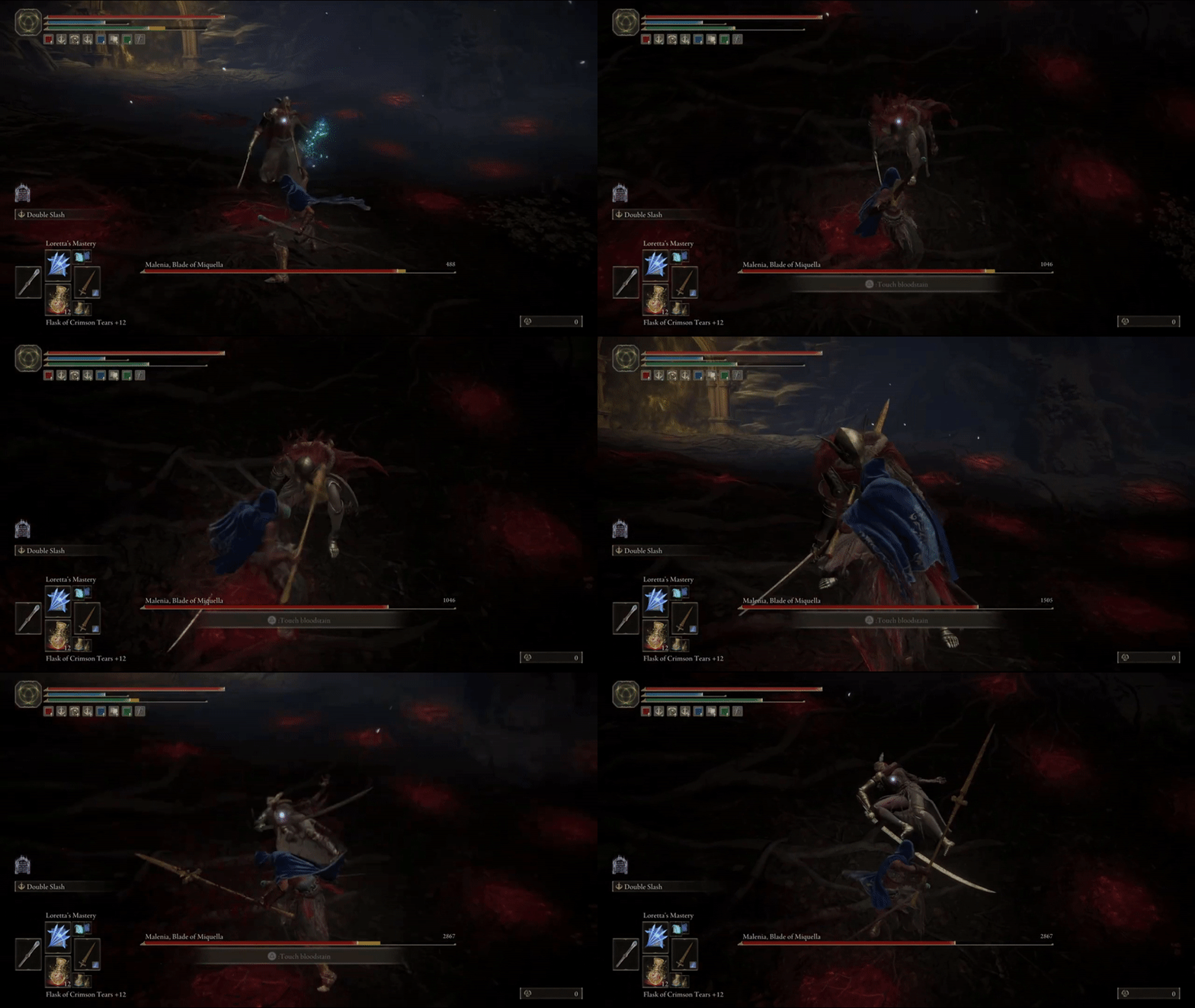
A woman in a blue hood runs her spear through the chest of a taller woman with red hair and golden Valkyrie garb, the stabbed Valkyrie falls onto her back in a pool of blood as the spear is removed.
Difficulty is a marker of power in games, and examining power is essential in stories of conflict

If you’ll indulge me to invoke the first of two quotes from Bennett Foddy, designer of Getting Over It With Bennett Foddy, a notoriously difficult game.

The act of climbing, in the digital world or in real life, has certain essential properties that give the game its flavor. No amount of forward progress is guaranteed; some cliffs are too sheer or too slippery. And the player is constantly, unremittingly in danger of falling and losing everything.” – Bennett Foddy

All that said, difficulty is not just a mechanical gameplay consideration. Like all aspects of a game, it is an essential part of the cumulative experience. I am of the opinion that if an obstacle within your narrative is meant to be threatening, formidable, out to kill our dear player character, then the player should get the sense that this force is threatening and formidable. To trivialize it, or deny the sensation that there is an opposing force trying to halt the player’s forward motion, is to render the narrative dishonest, and rob it of its power. If conflict is about power, than difficulty is one of the most genuine ways power can be communicated in an interactive system. This isn’t to say that every game needs extreme challenge, or even that every game with conflict is necessarily trying to create the aforementioned sense of opposing force. This is but one type of experience you might seek to create, a goal your art may aspire to. In fact, this is just one way to deploy difficulty as a mode of narrative design. That brings us to Undertale.
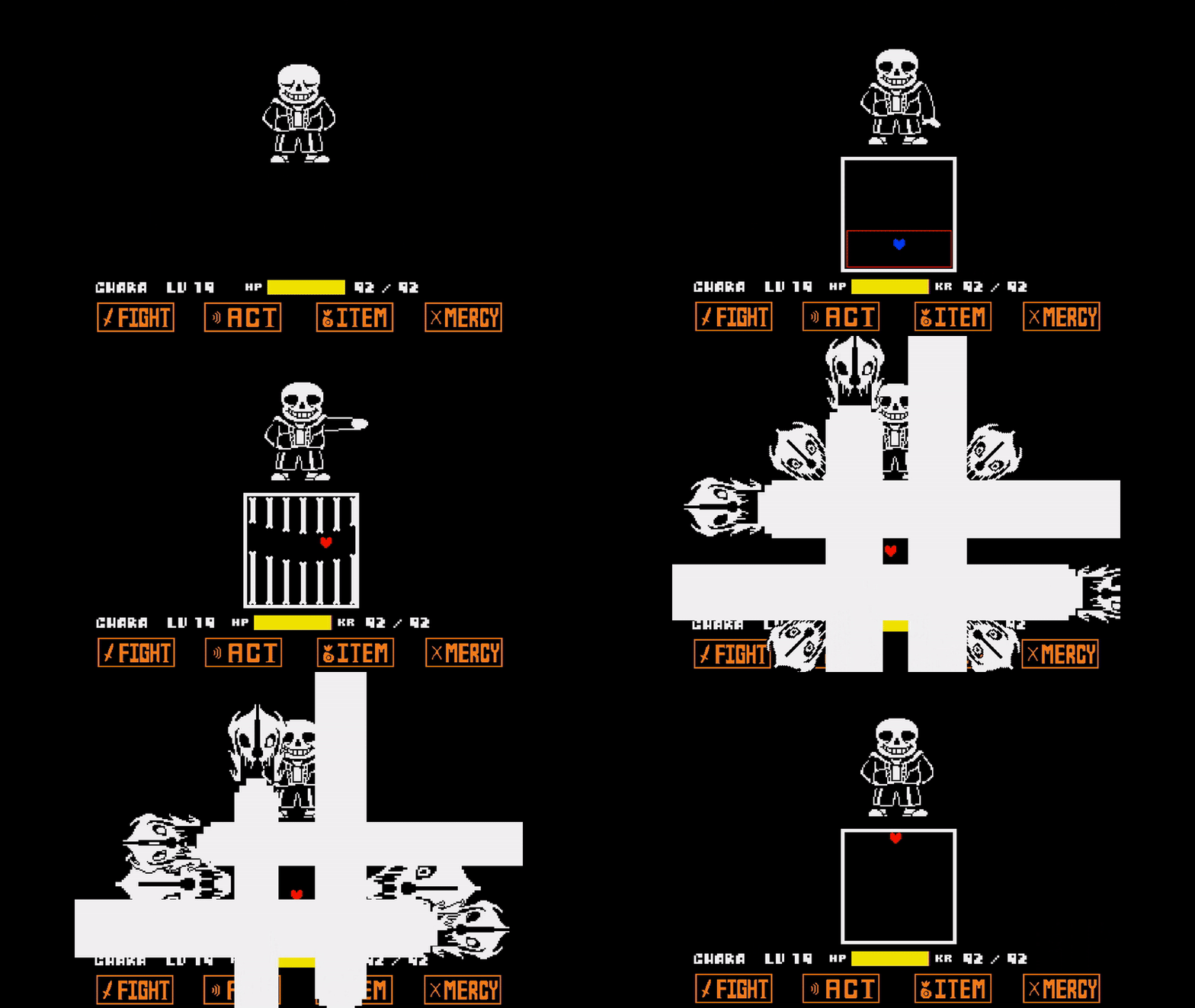
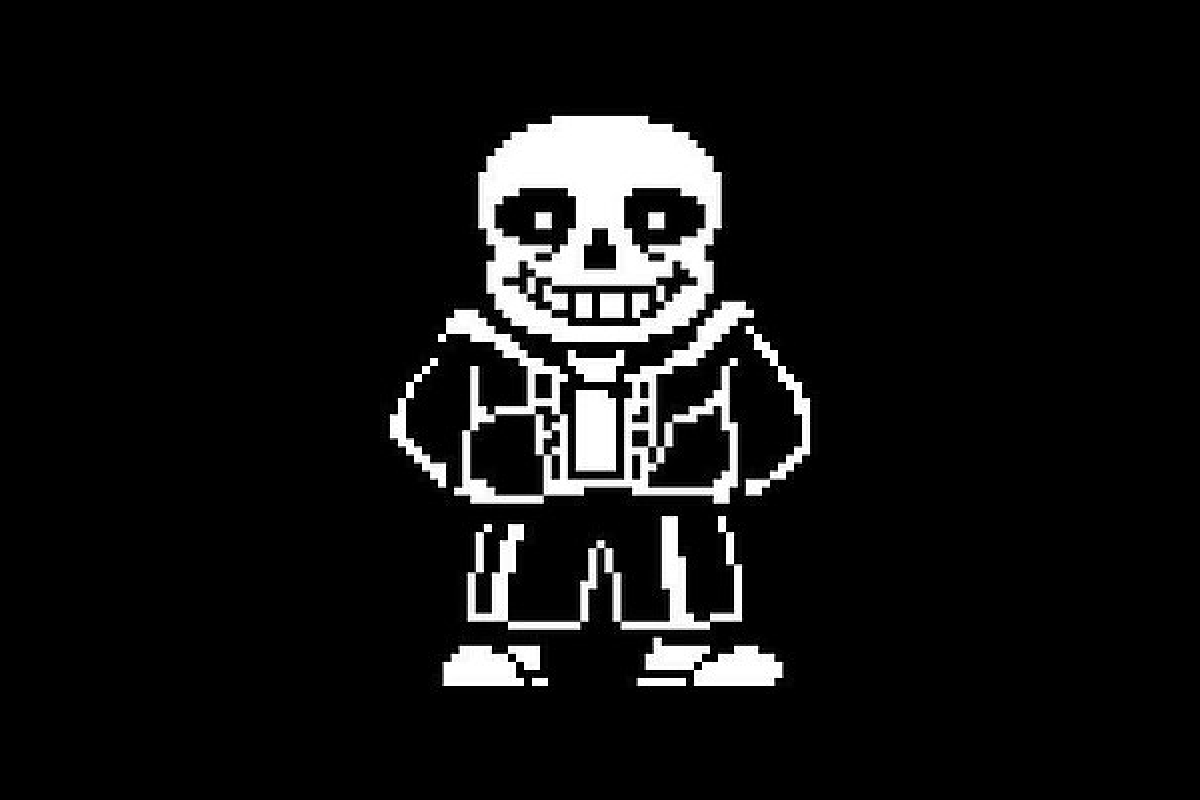
The skeleton Sans stands in a black void, above a battle UI overlay. He says "ready?" then suddenly unleashes a barrage of bones and laser beams to attack the player, represented by a red heart-shaped cursor.
“No.”

In Undertale, the story is persistent – and any runs of the game, even when reset, are remembered and color the experience of playing Undertale going forward in little ways. Death and resetting is diegetic, meaning the player character is literally dying and coming back to life at a previous point in time, within the game’s fiction. In this way failure is kind of inherently tied to the narrative. Undertale comes packaged with a few predefined paths to play that present themselves based on how the player tackles obstacles. Killing monsters casually as they come to confront you will result in one of several ‘neutral’ endings, in which the player’s human character escapes the world of monsters, which is left in varying states of disarray as a result. The ‘pacifist’ run will see the player avoiding lethal violence, and reaching out the hand of friendship to major characters to achieve the best world for everyone. The ‘no mercy’ run is the third and most obscure path, in which not only is lethal force deployed against all obstacles, lethal force is deployed against every potential obstacle, wiping out all monsters in the underground.

To do this, the player has to spend an inordinate amount of time trawling around for enemies to fight. Every single one needs to be killed for the No Mercy ending to hold true. This process is long, repetitive, somewhat dull, and even grueling at times. And yet, it remains an immensely popular way to play this already immensely popular game. There is a purpose to all this consternation, though. I think it pretty noncontroversial to say Undertale‘s ultimate message is one of nonviolence – that the best way to solve conflict is through open communication and a curious, empathic heart. The No Mercy run exists as a counterpoint to this message, to prove its efficacy. Killing everything in Undertale is a pain, frankly. It takes a lot of effort but not necessarily the kind of effort a player seeking challenge might be after. More of that exists along the less violent story routes. No, Undertale is instilling through the avenue of frustration that ‘the easy way out’ isn’t always easy, and while ‘the high road’ isn’t always easy either, it’s a heck of a lot more fun than willful cruelty, which is a continuous and conscious effort on the part of the abuser.

And yet, most playing through will persist. They have buy in, and as Undertale expects, most will be curious enough to want to know what happens next, not in spite of the frustration, but perhaps even because of it. One of Undertale‘s most infamous features is the normally comedic, friendly, and jovial character Sans, who is a bit of an internet meme. There’s a lot of reasons for that, but I think one of them has to be his sudden transformation into the game’s greatest and most stubborn challenge. The boss battle against Sans, with one other exception, is the only real challenge in the No Mercy run, with all other opposition crumpling like paper before the player. The player has not had a ramp up in difficulty in this point, and Sans comes out of the gate swinging with one of the most demanding gameplay experiences in modern popular interactive media. No punches pulled here, Sans is meant to be a brick wall of a boss, one that will have to be worn down with patience if it’s to be cleared at all.
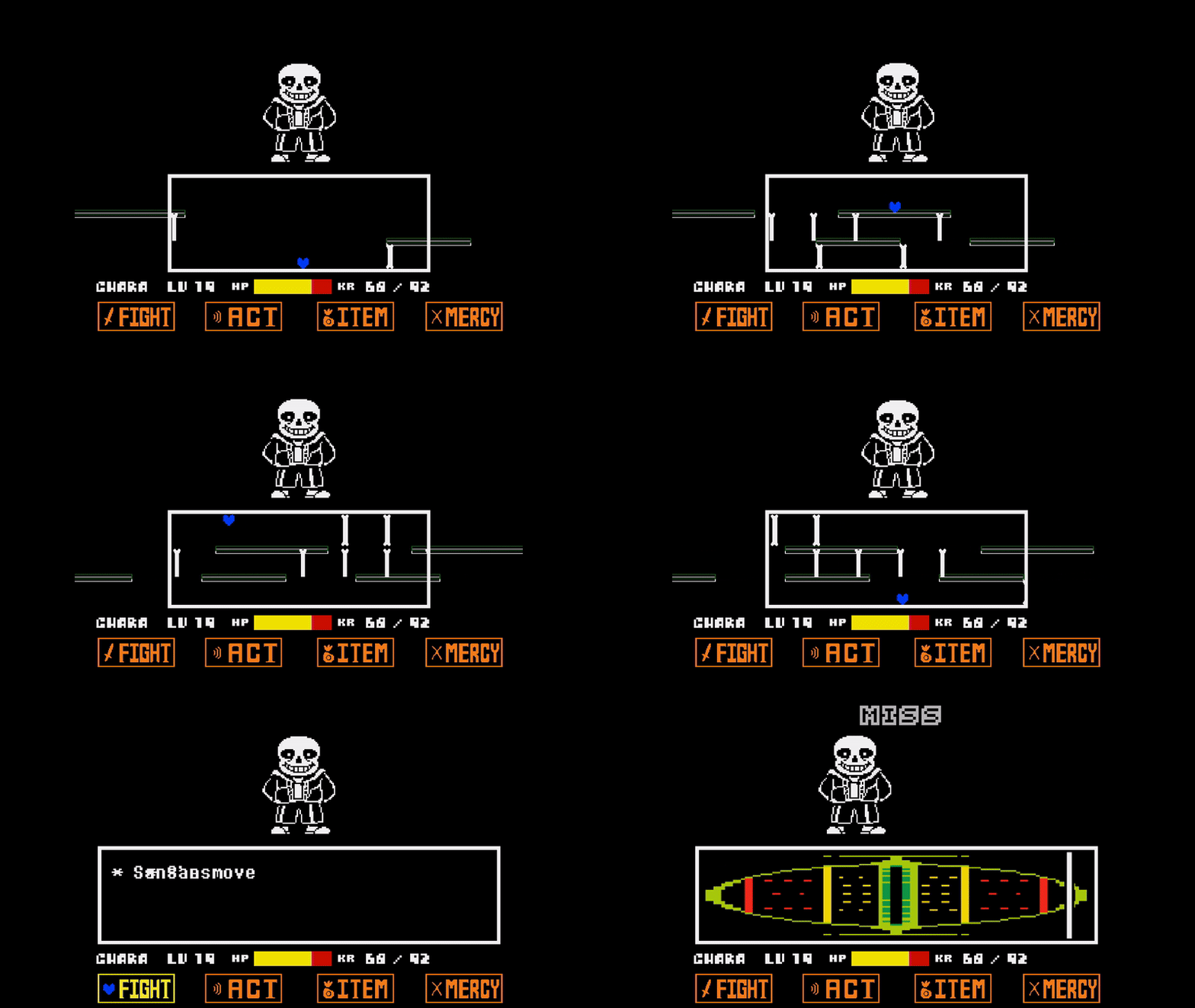
Sans the skeleton stares you down from a black void with a battle UI overlay, as the player's heart-cursor, now blue, jumps across platforms littered with bones.
I have SO MUCH patience right now, you wouldn’t believe. Oh god the patience I have.

Fans of Undertale have such a personal relationship with it, and given its immense popularity that is quite impressive. The player at this point, is acting as an agent within the narrative, separate and apart from their controlled character, Frisk, who ambiguously is either mind-controlled by the player, or influenced by the player subtly to act or fight. Sans tries everything he can to appeal to the player to start over, to do anything but follow through on the path they’re on. He pleads, he appeals to humanity, he threatens, and he even cheats. After each failure, Sans comes up with some new unique dialogue with which to taunt and belittle you for trying. The player can come back as many times as they want to try again, so words and his ability to act as an immovable object are Sans’s only real forms of power over you. The ironclad stubbornness of this encounter, the unerring, unflinching confidence in its unreasonableness makes it feel real, like Sans is a thinking actor specifically trying to get under your skin, and make your goal unreachable, and that is what makes it feel personal.
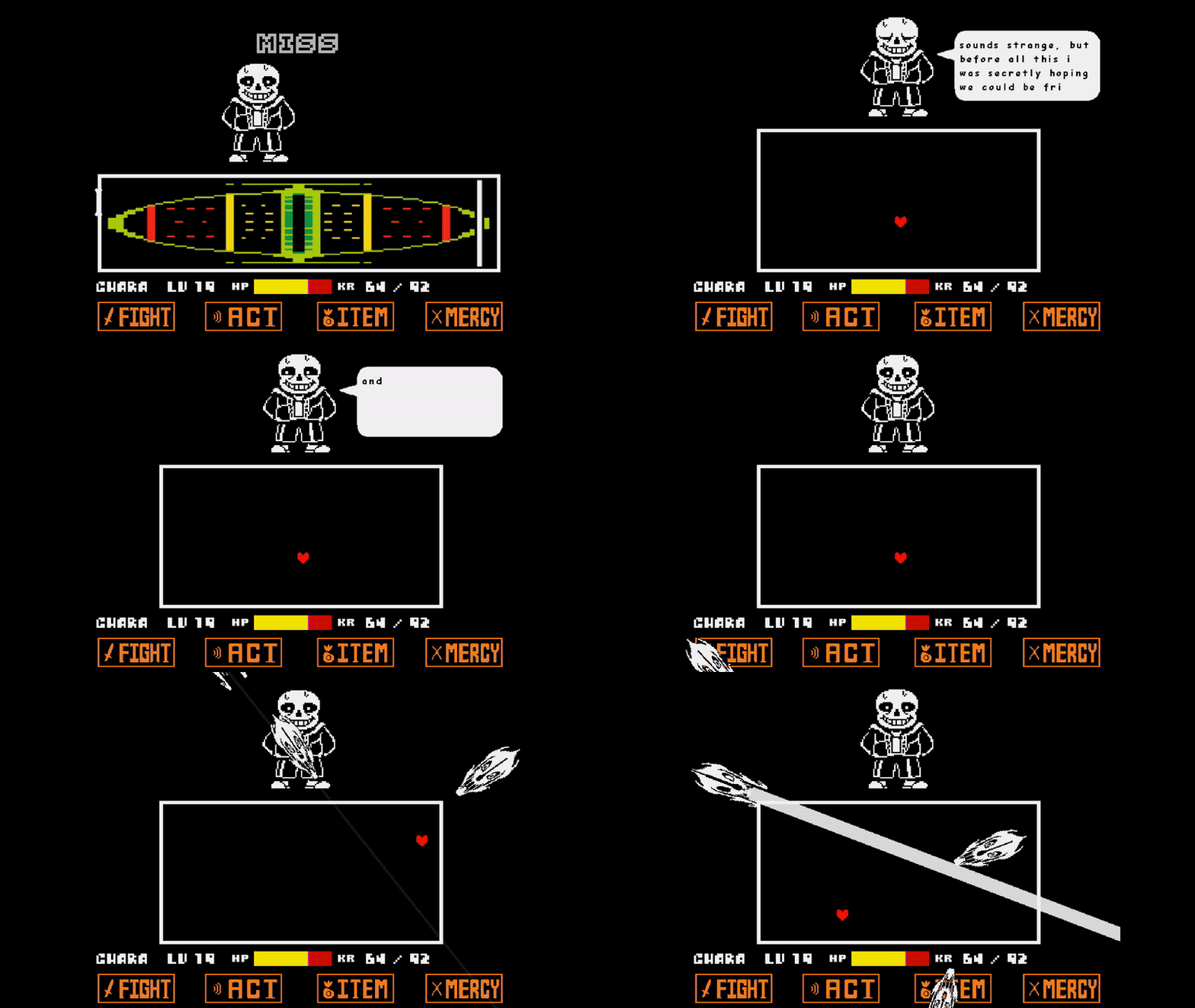
Sans the skeleton says, "sounds strange, but before all this i was secretly hoping we could be friends. i always thought the anomaly was doing this cause they were unhappy. and when they got what they wanted, they would stop."

He then fires a bevy of skull-shaped laser cannons at the player's red cursor.
Oh. Kind of makes me feel bad I’m trying so hard to kil- OH GOD LASERS

Sans isn’t trying to kill you – he knows that is beyond his power. He’s trying to wear you down, to frustrate you, to bore you, whatever it takes to make you give up on your killing spree, and maybe start over, or even give up. The story was very carefully set up to make this a legitimate way to cap off the narrative. In Undertale, the story is persistent – and any runs of the game, even when reset, are remembered and color the experience of playing Undertale going forward in little ways. In Undertale, giving up and starting over is a legitimate and designed-for chapter of the narrative.
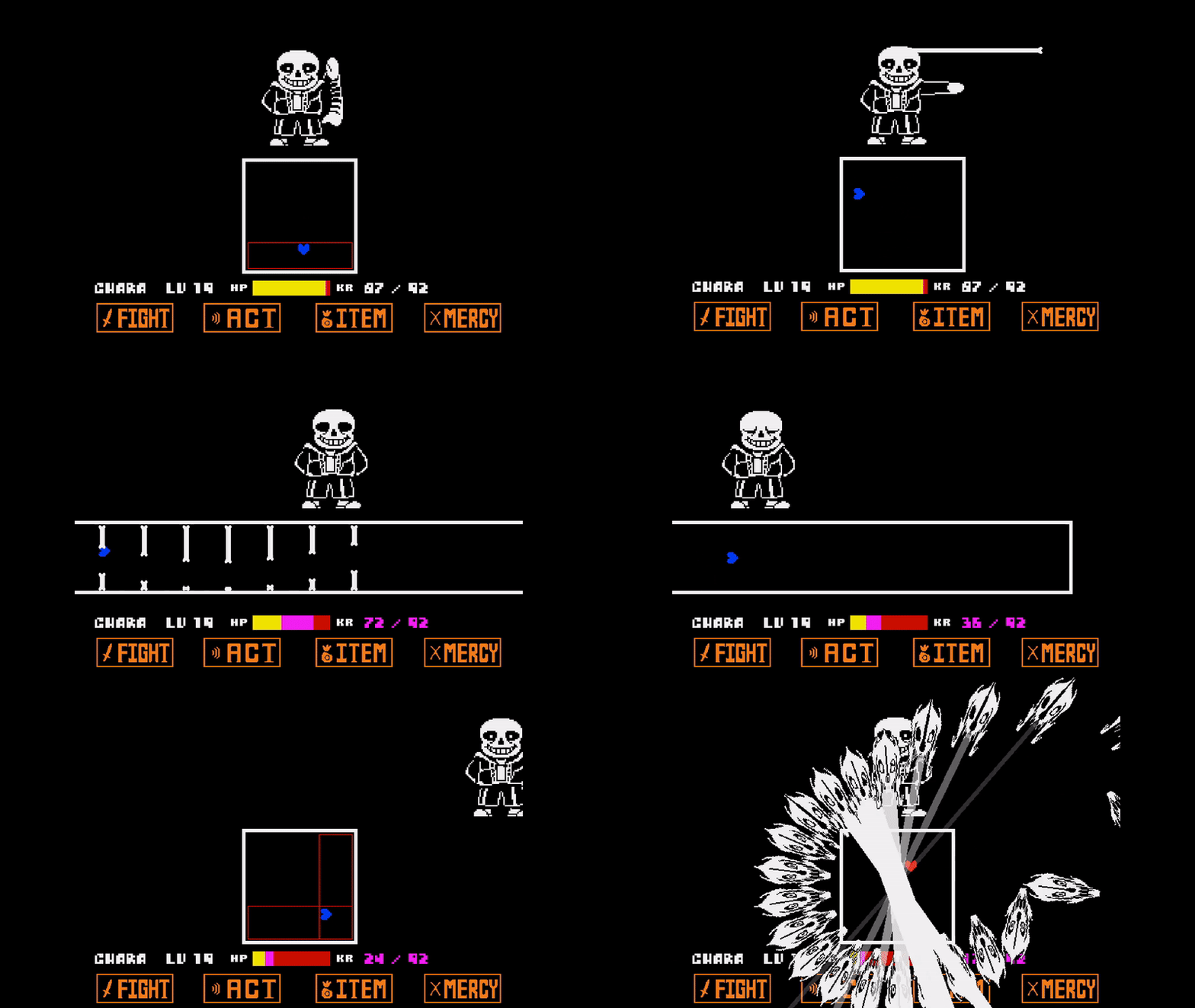
The skeleton Sans sends an onslaught of bones and laser beams at the player's heart-shaped cursor, turned blue now. After a moment he sends the blue heart careening into a deadly maze of bones as it flies against its will to the right side of the screen.
What a reasonable amount of garbage that can instantly kill me, on the screen, all at once

Giving up can mean a new beginning, a world where the player is not a force for destruction and misery, but a force for change and friendship. Whenever I play Undertale, I love to play the part of the sinister player destroying the world and its inhabitants for callous entertainment (and in a way, I truly am that), but then our protagonist, Frisk, overtaken by sorrow after killing Sans, is able to wrestle back control and ease me into a more peaceful, and ultimately more fulfilling world. I’ll play a No Mercy run just up until I’ve killed Sans, and no further. I’ll then roleplay the regretful monster, the powerful demon whose lost everything, and has no more mountains to conquer. From there I return, back to the beginning of the game, anew with a desire to learn and try again. Undertale makes failure an avenue for learning and improving at the game yes, but also a potential narrative moment of fulfillment.

I love this scenario. It creates a full arc for me, as the will and intention of the player character Frisk, to go through. It’s a rich narrative that unfolds entirely through gameplay that I get to be a part of. That’s the real magic of difficulty in games for me, it’s something entirely unique to the medium, a level of interactivity other forms of art simply cannot achieve. Sans is blisteringly difficult, to the point that he may even feel antagonistic to the human behind the screen. But the game isn’t trying to punish you, nor look down on you, it’s trying to play with you. It is a game, after all. It is interactive theater, a stage show where you are the star. And maybe just maybe you’ll get something valuable out of the experience.

Death and rebirth, trying and overcoming—we want that cycle to be enjoyable. In life, death is a horrible thing. In play, it can be something else.“-Hidetaka Miyazaki

You are meant to be along for this emotional ride through joy, through sorrow, through fear, through love, through distress, and yes, through frustration. It’s a frustrating thing to be denied passage, to face an opposing force that’ll do everything in it’s power to stop you. If the art is to be evocative, it may be necessary to instill that sense of frustration. I will deploy the second of two Bennett Foddy quotes, as I admire the way he puts it;

What’s the feeling like? Are you stressed? I guess you don’t hate it if you got this far, feeling frustrated. It’s underrated. An orange, a sweet juicy fruit locked inside a bitter peel. That’s not how I feel about a challenge. I only want the bitterness. It’s coffee, it’s grapefruit, it’s licorice.” – Bennett Foddy
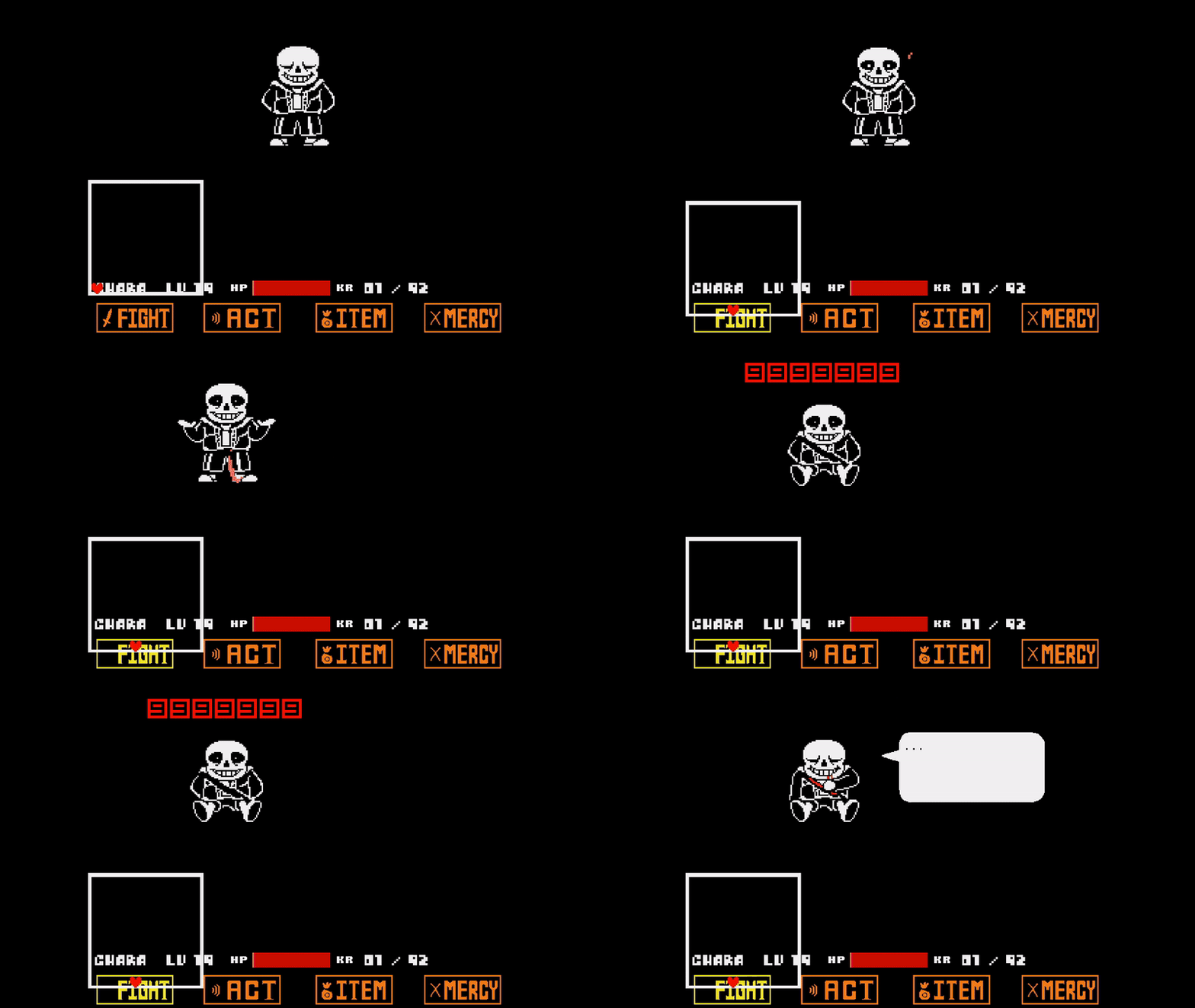
Sans the skeleton sleeps, standing up, in the center of a screen with a battle UI. A red heart-shaped cursor moves over to the UI button labeled "FIGHT". A slashing effect moves toward Sans, but he slides out of the way and begins to speak, but is cut off by a second attack, which leaves a violent gash across his chest.
Frustration and loss isn’t just a roadblock to joy and catharsis, it’s an essential part of the whole.

Frustration is not the opposite of fun. I think the runaway success of games like Dark Souls, Elden Ring, and Undertale, games that very much use frustration as feature of their storytelling, are strong evidence of this. There are hosts of games that follow similar patterns. When you play and watch people play difficult games as much as I do, you begin to notice that not only is frustration not a deterrent to the fun for most, it often accompanies the highest highs of player’s positive emotional reactions. Art is not a vehicle for merely delivering joy and nothing else. Life is a rich tapestry of a variety of emotions, and if art is to speak truth, then I think it’s worth considering how best to accurately reflect that. I’ve been talking a lot about feelings and emotional reaction, and I can’t overstate how subjective such things can be. You’re walking a fine line when utilizing traditionally negative emotions such as frustration to tell a story. As I said before, difficulty is a very nuanced and complex topic and this is just one aspect of it, one feature of difficulty to consider when configuring the shape of the experience you want to create. Difficulty can be used to tell and legitimize interactive narrative in a very profound way. That said, not all games need to, and by no means should they, take the same shape. Knowing how best to achieve the goals of your design starts with understanding your goals, and understanding the tools at your disposal.
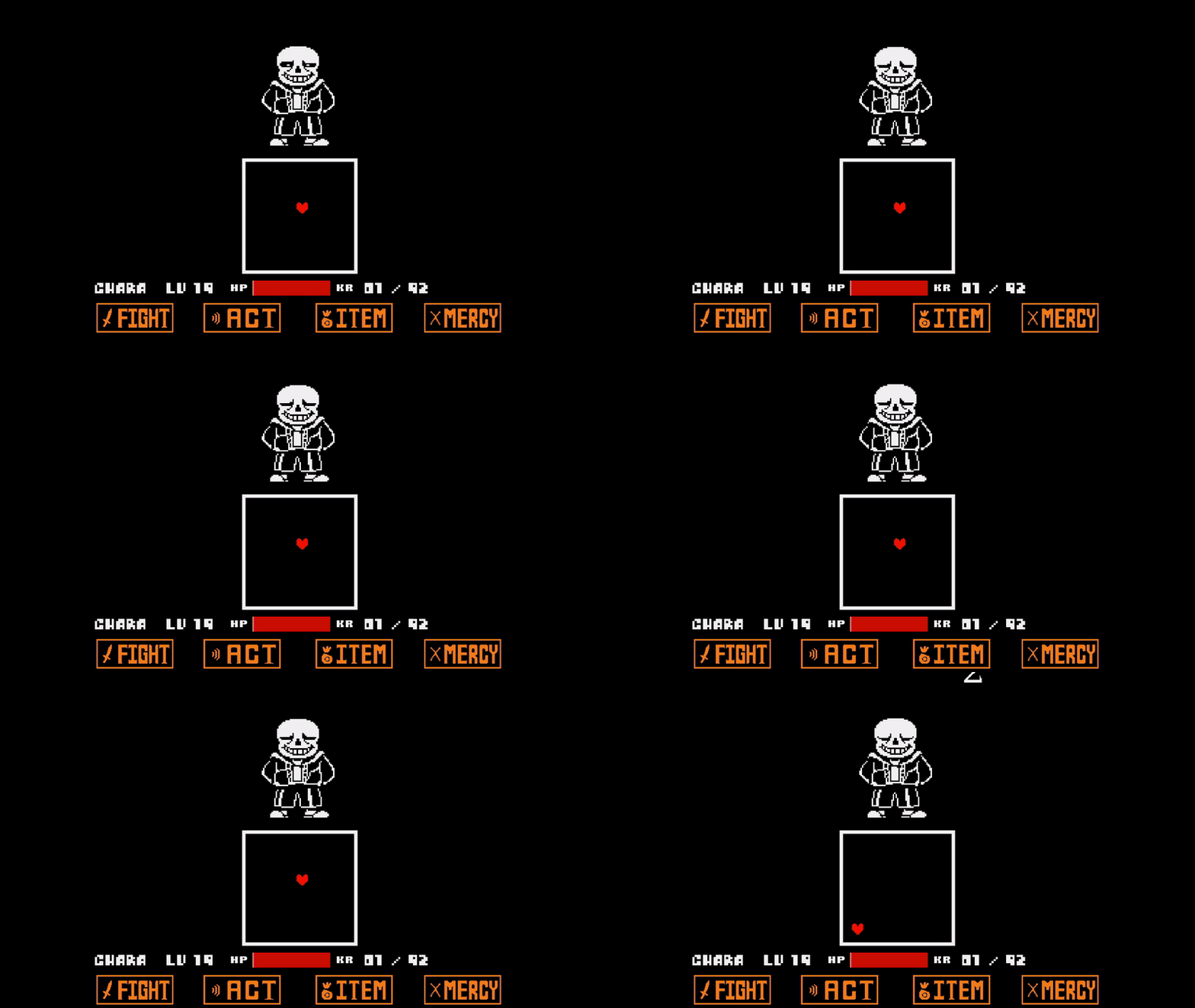
Sans the skeleton sleeps soundly, standing up, in the center of a screen with a battle UI overlay.

You have something called ‘determination.’ So as long as you hold on… so as long as you do what’s in your heart… I believe you can do the right thing…
Let The Player Break The Game Already; Inscryption, Isaac, and Others

While on break for the holidays I found myself finally taking a look at a little indie card battler game I’d heard much about. Daniel Mullins’ Inscryption is a 2021 roguelike card battler in which you build a bestial-themed deck of cards to traverse a table-top adventure scenario game-mastered by a mysterious shadowy card dealer, who seems to be keeping you in a spooky woodland cabin. You may have heard the game is rife with compelling mystery and secrets, and it is, so rest assured I won’t be spoiling anything about the game, merely talking about its combat mechanics sans any story context.

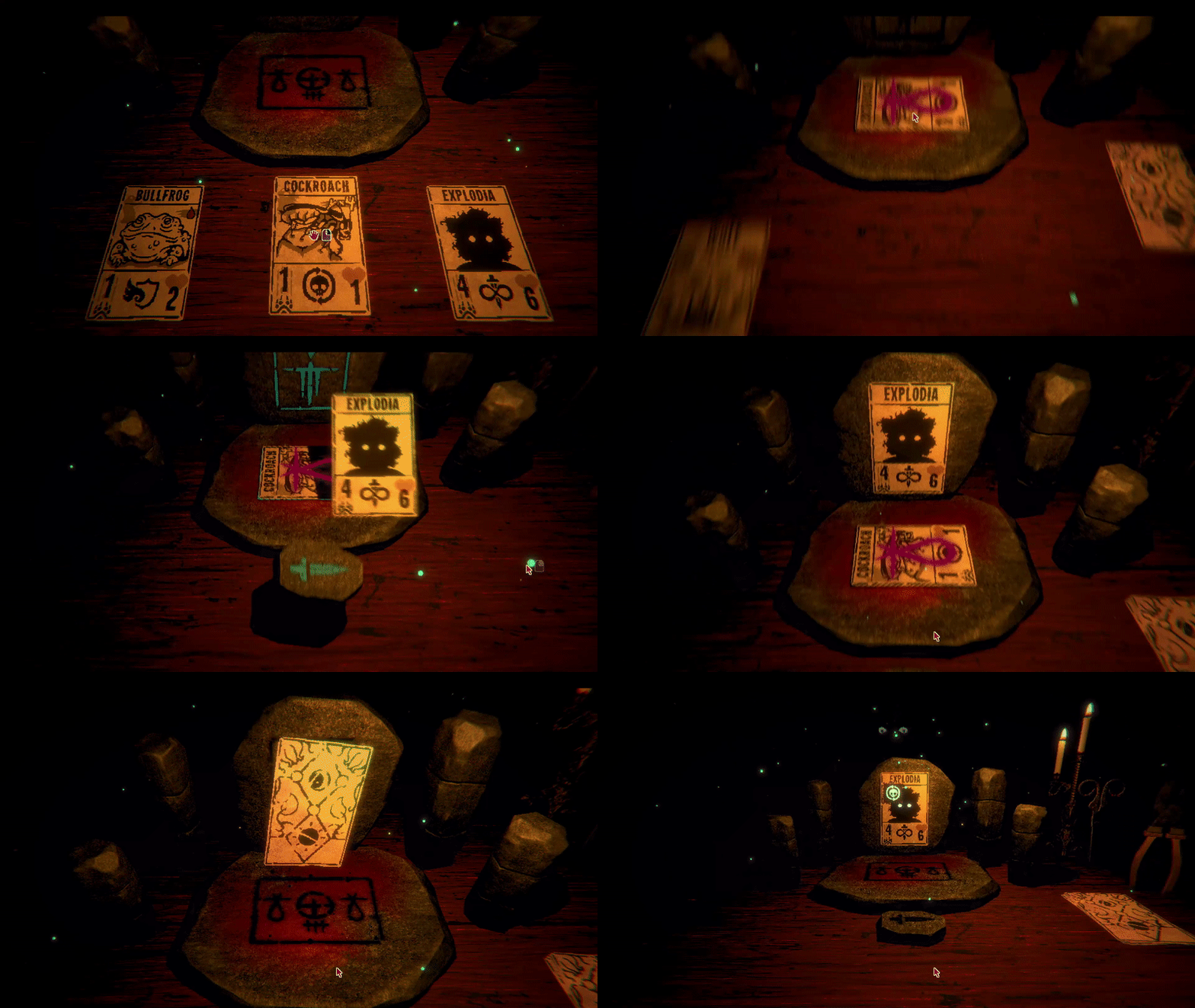
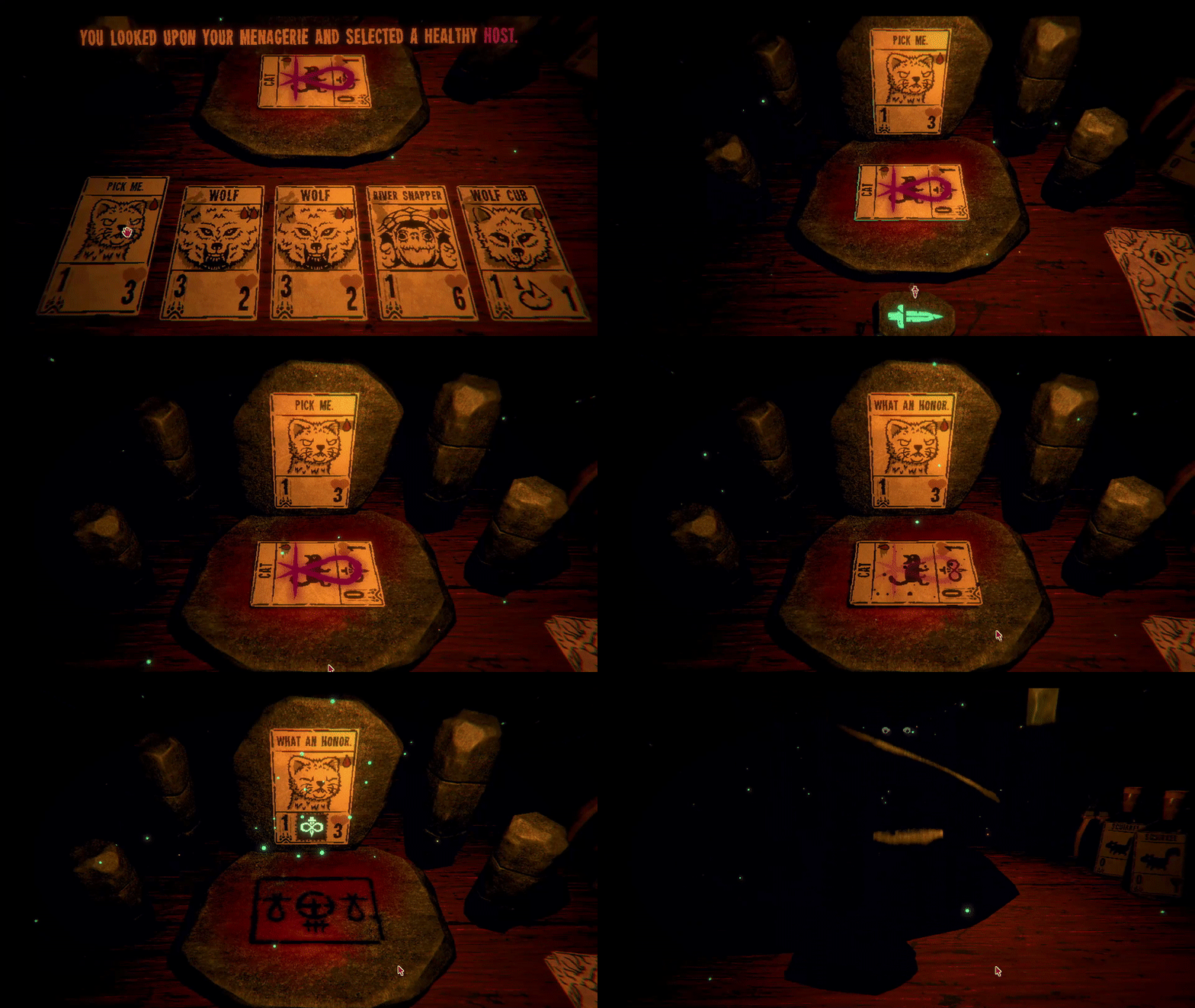
A stone altar is placed on a wooden table immersed in shadow. A set of cards featuring the likeness of beasts is lined up before the altar. A card with a cat is sacrificed on the altar and disappears, but a stoat card is granted the cat's sigil, a special power in the form of an infinity sign on a dagger.
Yeah, you look very honored.

Specifically I want to talk about this concept of ‘breaking the game’, or employing a strategy so overwhelmingly power it almost seems to throw off the difficulty balance. Here’s the thing though, well-designed games like Inscryption and The Binding of Isaac: Rebirth want to create this feeling in the player of overwhelming power, which is why they tend to be so brutally difficult at the start. Roguelike games, by their nature, are games designed with the players’ repeated failure in mind, and thus repeated replaying. With each of those failures, generally, new inherent advantages are collected, as well as new knowledge of the game. By game’s end, the player will have accrued a large number of mechanical advantages and game knowledge, allowing them to plow through challenges that once seemed insurmountable. The game designer’s fear of the ‘Dominant Strategy’ is the trivialization of their game mechanics.

What’s clever about a lot of the more popular roguelikes, is that they leverage powerful strategies as a way to engage the player with their systems. Knowing exactly what the most reliable and powerful combinations of weapons and items in The Binding of Isaac: Rebirth takes time, effort, and exploration, so by the time you’ve ‘broken the game’ so to speak, you’ve already gone through a lot of the game’s interest curve just getting there, and a well balanced game can tilt that power scale back at you. Often in the roguelike Hades I’ve found myself achieving a combo that can absolutely demolish early content, but I’m then brick walled by later enemies, and have to change up my approach, keeping the game dynamic and interesting. These games make the opposition an overwhelming obstacle, so that overwhelming power is not only incentivized in the player, but almost demanded.

I’m tending more and more towards designing the opposition in a combat game to be more powerful, rather than limiting the powers and options of the player. Finding wacky solutions to the problem of ridiculously deadly enemies is fun! Isaac allows you to reach such absurd levels of power that it’s comical, and yet Isaac is so vindictively engaging. Every time I fail in that game I’m just reminded of how much I want to taste that overwhelming power again, I think about all the little ways I could combine and recombine the disastrously large number of powerups existent in Isaac, and I dive right back in. The same is the case for competitive games with deckbuilding elements such as Dota 2‘s Ability Draft, in which one drafts the ability for their player hero from a pool of powers that don’t normally go together in Dota 2‘s base game modes, but can combine to create some ridiculous effects. The possibilities are just so tantalizing, because the designers went out of their way to insure the various elements all meshed with each other in interesting ways, without much need for exceptions or limitation. Dota 2 also has its own roguelike mode that utilizes design sensibilities as I’ve described. Enemies are monstrous, lethal, and oppressive, but clever power up allocation can render what once seemed impossible, routine, and it’s an exciting climb to that point.

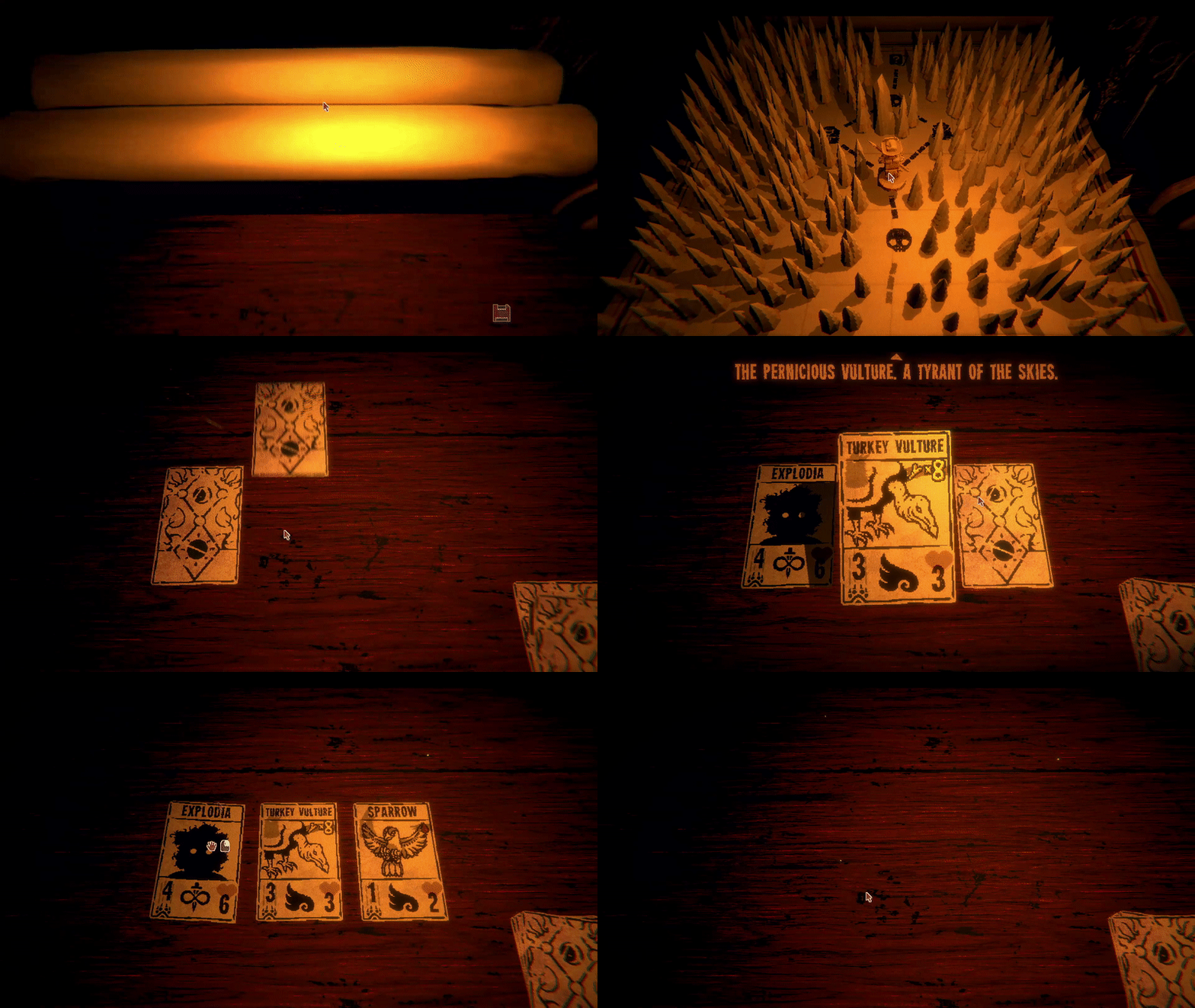
No matter how overwhelmingly powerful one might become in these games, the games generally stay extremely lethal throughout. That is, even if you can crush your opposition with a flick of the wrist, a couple mistakes may still lead to a loss, especially later in the game. Pulling a bad hand in Inscryption, all of your overpowered cards aside, can still be disastrous if you don’t have a plan to stall the game until you can pull your winning cards. This is a pattern games which employ the concept well have in common – their core gameplay is still reinforced even as the player becomes ‘overpowered’. In Hades and Isaac, you still have to be able to dodge attacks, or you’ll most likely be toast very quickly. In Dota‘s Ability Draft, you still need to have a feel for the game to make the advantageous plays. In Inscryption, you still need to think through your strategy in case of unfavorable scenarios, as described above.

The key is to make things dramatic. The game can quickly swing in either direction based on the player’s performance, and if the player ultimately becomes an unstoppable force, it should be as a reward for a good performance, and therefor not feel cheap. The rug can still be pulled out from under you if you underestimate opposition that is designed to itself be powerful, and lethal. Inscryption‘s particular health system resembles other card battlers, but takes the form of a scale, so the winner is determined by who has dealt more damage as weighted by a literal scale, and the threshold of victory is not much. So in other words, even with your most powerful cards, things can swing quickly. If the purpose of combat in a game is to be an easy vector by which to create conflict for the player to overcome, and the purpose of conflict in a narrative sense is to be dramatic, then combat should be dramatic. I’m personally pretty tapped out when it comes to power ups the likes of “Increases critical strike chance by 0.5%”. Sure, such things have their place, but I think I’m over entire skill trees and player progression systems being centered on the low-numbered variety of powerups. They’re often barely noticeable in practice, even if they add up over time. When a player gets a new card, or a new weapon, it should dramatically shift the balance of power, or change how the game is approached. Really play up that drama. Otherwise, what’s the point of the new element even being added?

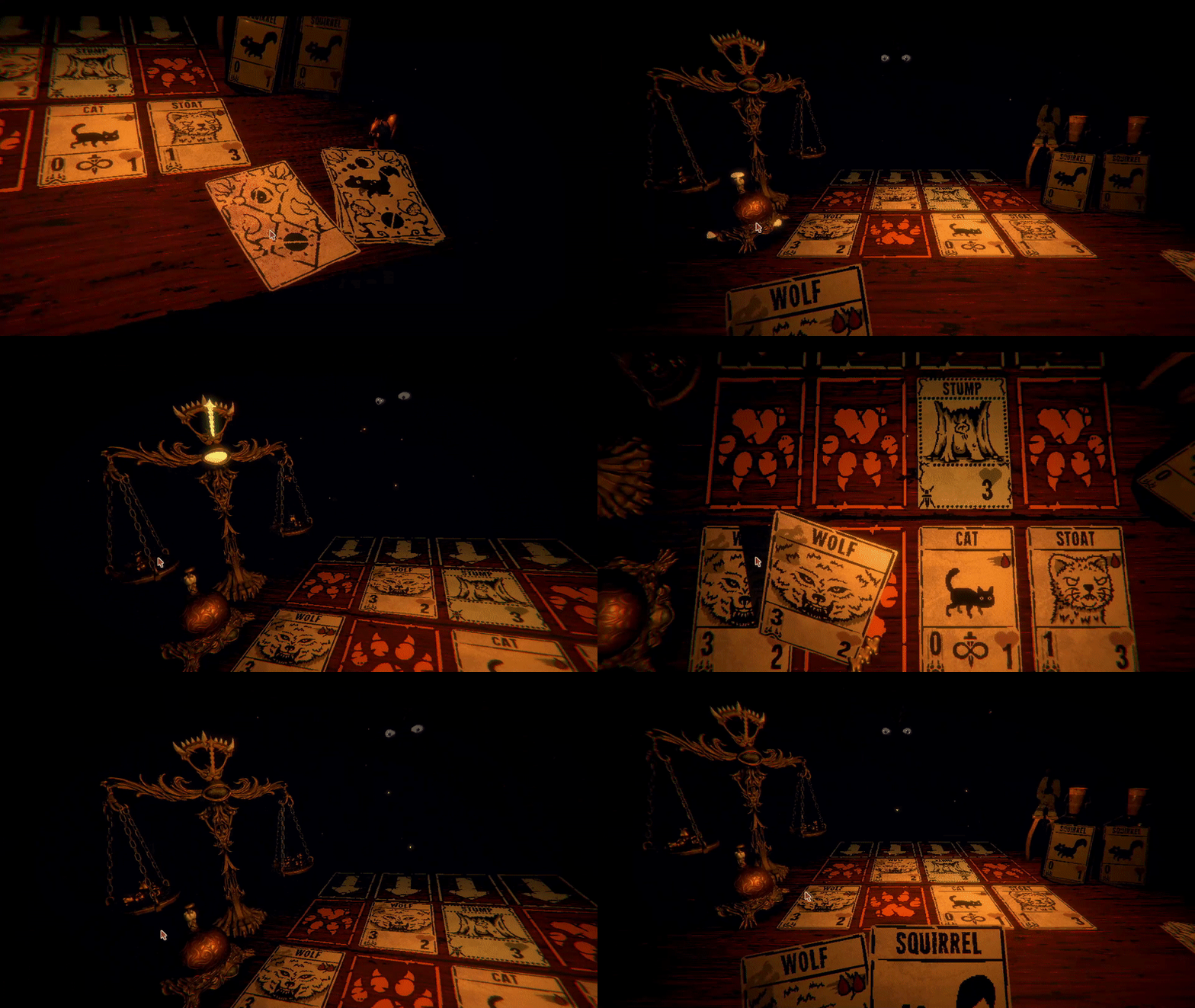
In dark cabin a rustic card game is set up on a wooden table, seen from first-person perspective. The player attacks with two cards marked 'wolf' and 'stoat', causing teeth to be loaded on the opponent's end of a scale. The opponent attacks with their own wolf in kind, and the scale swings back toward the player.
Danger in this game is swift and intense, but it swings both ways

Inscryption embodies this philosophy with how its death cards and sacrificial altars work. Death cards are essentially custom cards, created by the player, utilizing elements of their own deck to combine into one card. The player is given a random assortment of cards from their deck, from which they can choose one card’s play cost, one card’s power and health, and one card’s special effects aka sigils. The result is more often than not something far and away more powerful than what can be normally obtained. The sacrificial altars are similar, allowing you to sacrifice one card to permanently transfer its sigils to another, making a powerful card. This system greatly rewards understanding of the game’s mechanic, and is inherently explorative in nature. Player’s are invited to use the game mechanics as a form of personal experession, so they can leave their own mark (in this case literally, as you can also name the card) on the game. A personal favorite of mine was a card with a medium level of power and health, but no play cost, the ability to attack three times, and the ability to return to my hand when killed on the play field. I called him ‘The Immortal Mantis’. Needless to say, getting this card into play was a reliable way to end matches in my favor. And yet, I never felt as though I was cheating the game, or robbing myself of a more compelling and challenging play experience, because Inscryption like Hades, like Isaac, like enemy players in Dota‘s Ability Draft, and like many other roguelikes, because it took a lot of effort on my part to make this power happen. Either effortful forethought, or playing through a challenging game with little power to start, or both. My ability to swiftly end combat encounters feels earned, and misplays can still lead to a loss by virtue of how lethal a game Inscryption is.

I think making the player ‘too powerful’ is more a question of how you design their environment, or high you contextualize that power, than it is something to be altogether avoided. Inscryption is one of the most compelling play experiences I’ve had this year, all other advantages it has such as its narrative and world-class aesthetic presentation aside. Inscryption certainly allows you to become ‘too powerful’! Power in a combat game often means a wide breadth of possibilities, and that power can translate directly into a sense of ownership of, and self expression within the game mechanics. There are many ways to ‘break’ Inscryption and Isaac and Hades, but no two players are likely to do it in exactly the same way.

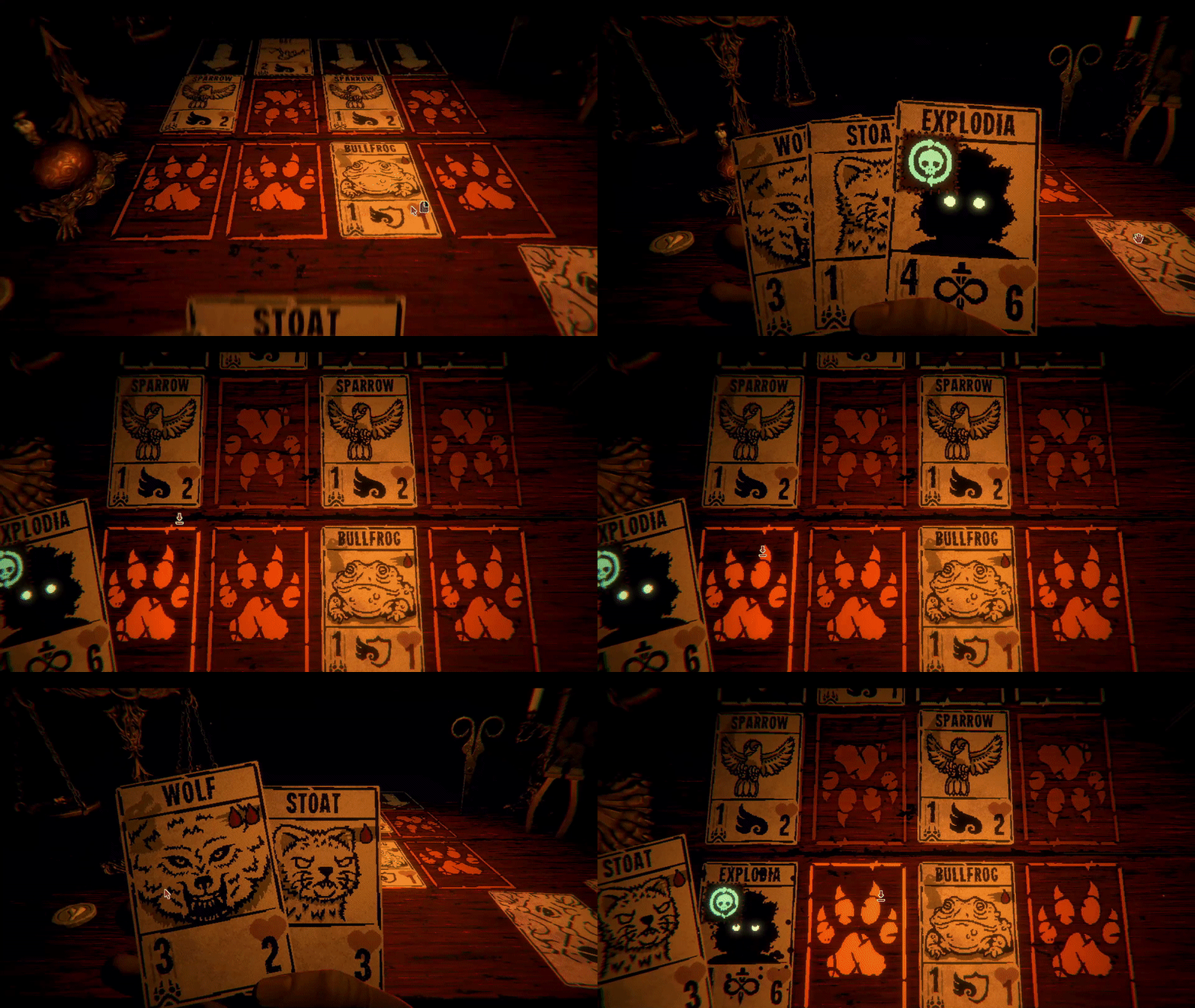
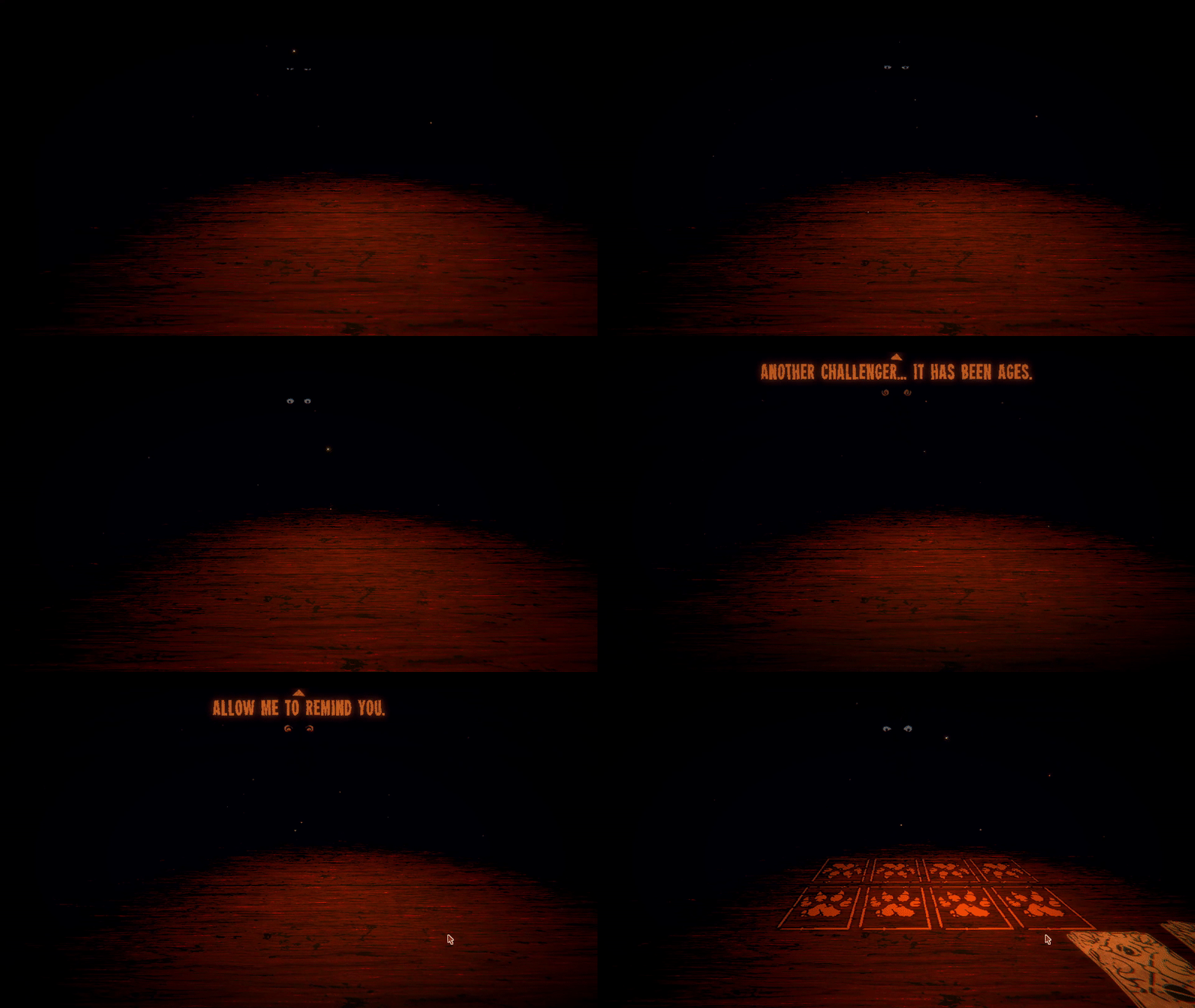
In dark cabin a rustic card game is set up on a wooden table, seen from first-person perspective. The player draws a card featuring a silhouetted figure with the name... Explodia
This card right here is dopamine, in auido-visual format

In that fashion, ‘breaking’ the game, is the game. Outmaneuvering and outwitting your opposition is the essence of conflict. Building systems where breaking free from their perceived constraints is the point of those systems seems somewhat counterintuitive, but I think the continued explosive success of the roguelike genre, especially in regards to games that operate this way, speaks for itself. There is a market for this specific flavor of power fantasy, and there are ways to give the player that overwhelming power without trivializing the game.

Sacrifices must be made…

Mega Man X: The Dash and The Wall Kick, Power and Applicability

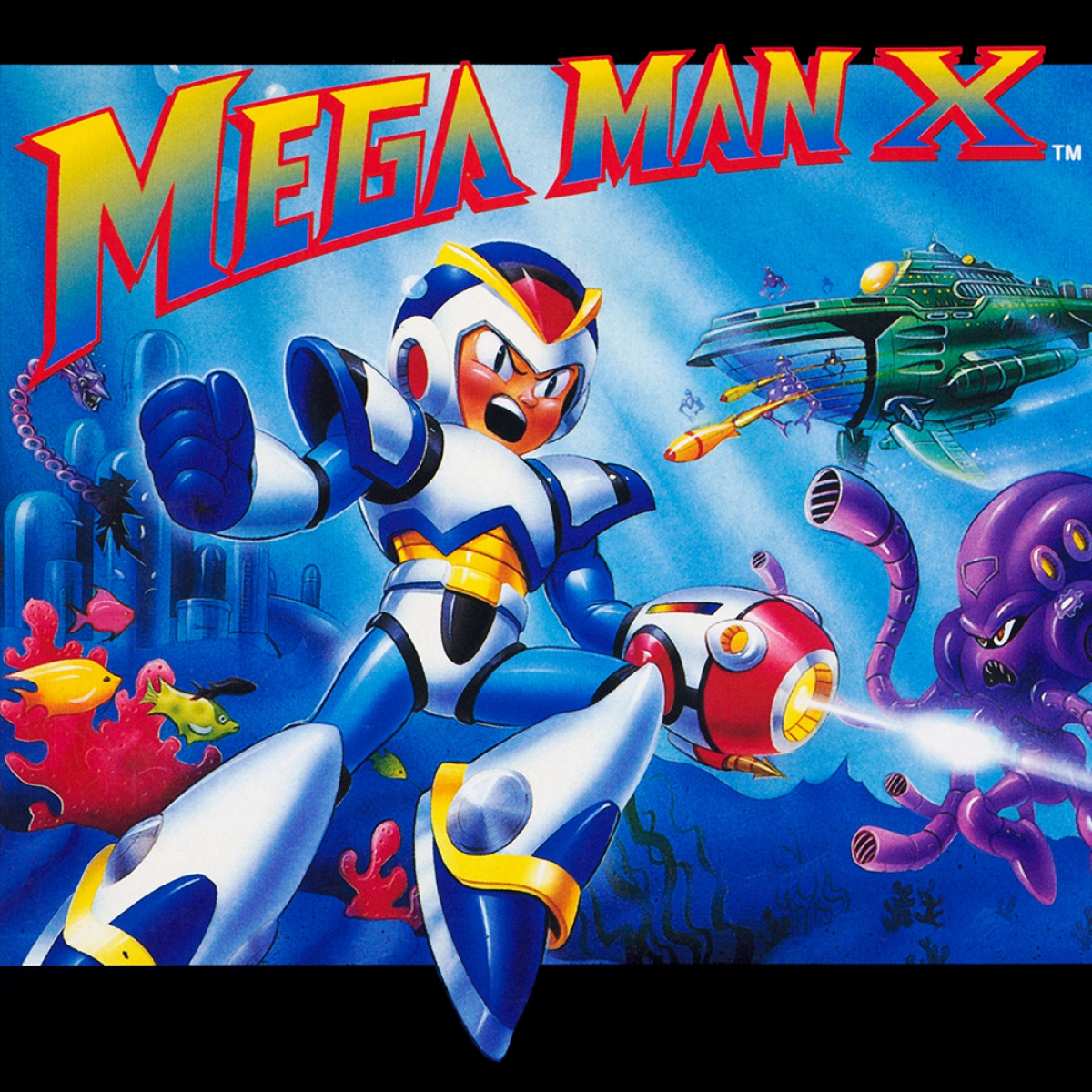
Mega Man X, released in 1993 for the Super Nintendo Entertainment System, marked a big step forward for its sister-series Mega Man, as well as for 2D action games in general. It’s a game about robots, fighting robots, with cool weapons and powers. The protagonist of Mega Man X was cooler, sleeker, just a liiiiiiiittle bit more Bladerunner (maybe like 10%) and slightly less Astro Boy. The titular Mega Man X was made to be stronger, faster, more capable than his older predecessor. Nowhere was this made more apparent than in the movement system, which included two new movement mechanics, the Dash, and the Wall Jump.

The fighting robot Mega Man, starting with Mega Man 3, is able to slide, which changes his hitbox for registering enemy attacks to a wider, shorter rectangle, meaning it could be used to dodge certain projectiles, while also making him move slightly faster in quick bursts. The Mega Man X dash was an evolution of this, retaining the change in hitbox while also greatly magnifying the speed of the ability. It was made more powerful in that sense, but also made more generally useful with an additional technique. Jumping out of the Mega Man X Dash would allow the player to clear greater distances with their jump, as the Dash’s bonus speed would not dissipate until they hit the ground or a wall from said jump.

The protagonist of Mega Man X can jump into a wall, cling to it, and slowly sliding down its length. When jumping from this wall slide, he can gain additional height by jumping off the wall. The interesting thing, is that because of the high degree of aerial maneuverability in this game, it’s possible to change direction mid-air immediately after a wall jump, and reattach to the wall at a higher elevation, effectively allowing the player to climb any vertical surface. This is known as the Wall Kick. 2D action games, obviously, have two axis of movement, though generally one access is rather strictly limited, the vertical axis. The Wall Kick gives a vector of control over this space while maintaining the advantages of limitation through gravity have on the game world. Giving the player a limited method by which they can break the rules of gravity offers the overall design a certain dynamism. The player now has two modes of operation they can switch between on the fly without even thinking about it – aerial oriented and ground oriented.

Secrets and extra areas like this are littered all over the place, giving the levels a rewarding sense of scale

These two moves, simple though they are, were designed intentionally to be extremely powerful, and extremely dynamic by giving them a huge possibility space with a wide range of use cases. Wall climbing can be used to avoid attacks near the ground, to reach hidden areas, or to get over and behind a troublesome enemy. The dash can be used like a dodge to quickly position the player out of harms way, to clear a level faster by stringing dashes together, or to clear large horizontal spaces with the dash jump. Those are just a few examples. With such a broad range of possibilities, this empowerment of the player greatly raises the skill ceiling of this games, making mastery more rewarding, while broadening what can be done in the design of levels and bosses. It’s the applicability of these moves, in particular that widens the possibility space. Mega Man X can climb any vertical surface, and dash at any time. Because these moves are always available, the game needs to be designed with them always in mind.

From here, bosses start to incorporate this possibility space into the overall plan. If a player is made more powerful, in this case given a broader degree of control over their position in 2D space, then the environment needs to be designed to both accommodate and interact with that power. You’ll notice a lot more verticality in the level design of Mega Man X over Mega Man. Trees, tall buildings, and aircraft are common. The original series did play with vertical movement from time to time, but mostly in the form of moving platforms and falling – not things the player had much control over.

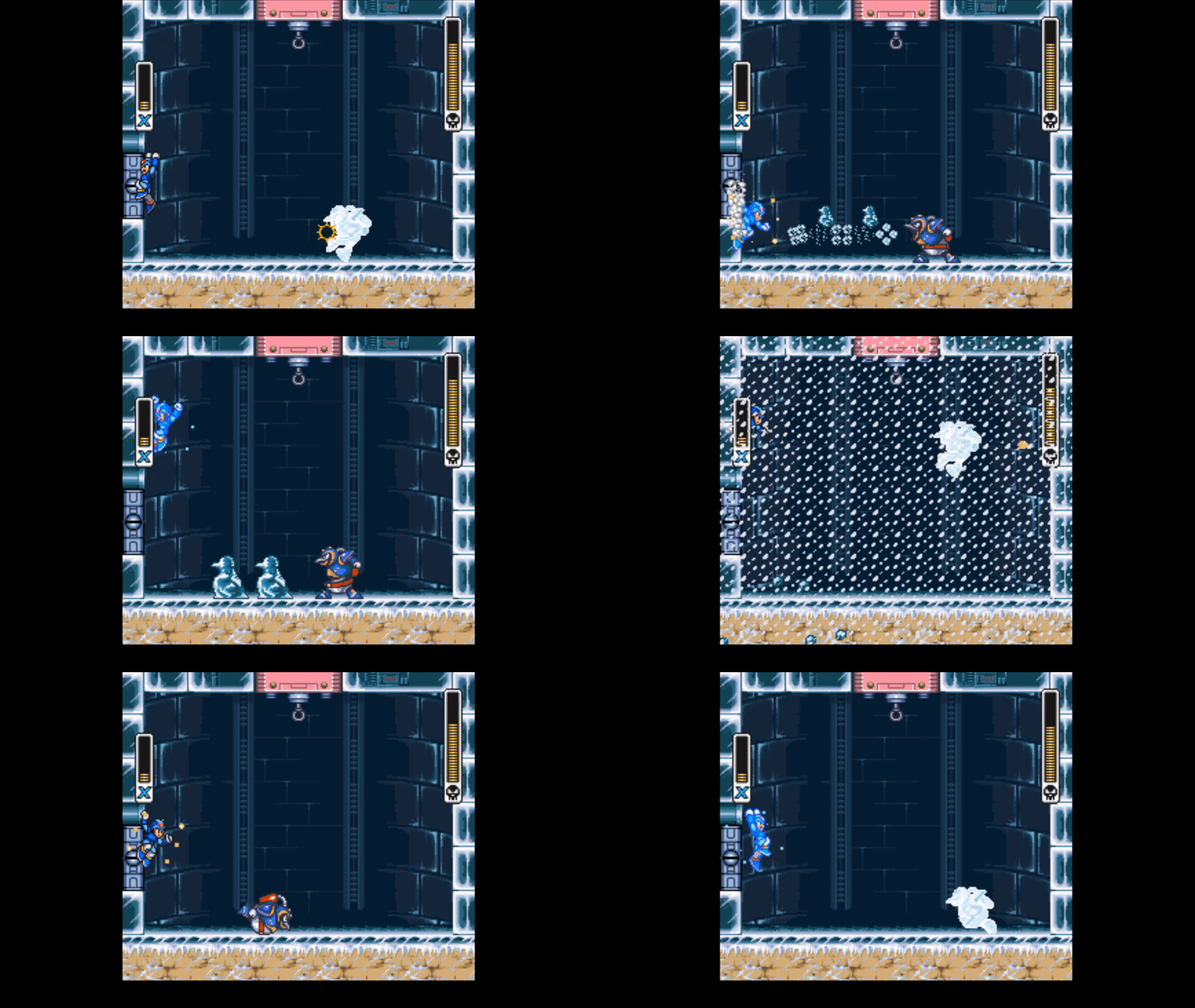
Chill Penguin here is pretty simple, but at least the extra verticality gives him more to do than just running back and forth across the screen

With this added degree of control comes added obstacles. A Mega Man game in which enemies never posed a threat to you while wall-climbing would mean losing the game’s notable blend of combat and traversal for the sake of this new mechanic. Rather than make it incongruous, the Wall Kick feels like a natural extension of Mega Man‘s movement systems, that flows with the established gameplay. What’s more, by introducing threats and problems to solve in the context of using the Wall Kick, the Wall Kick is made to have functional, practical application in and out of combat.

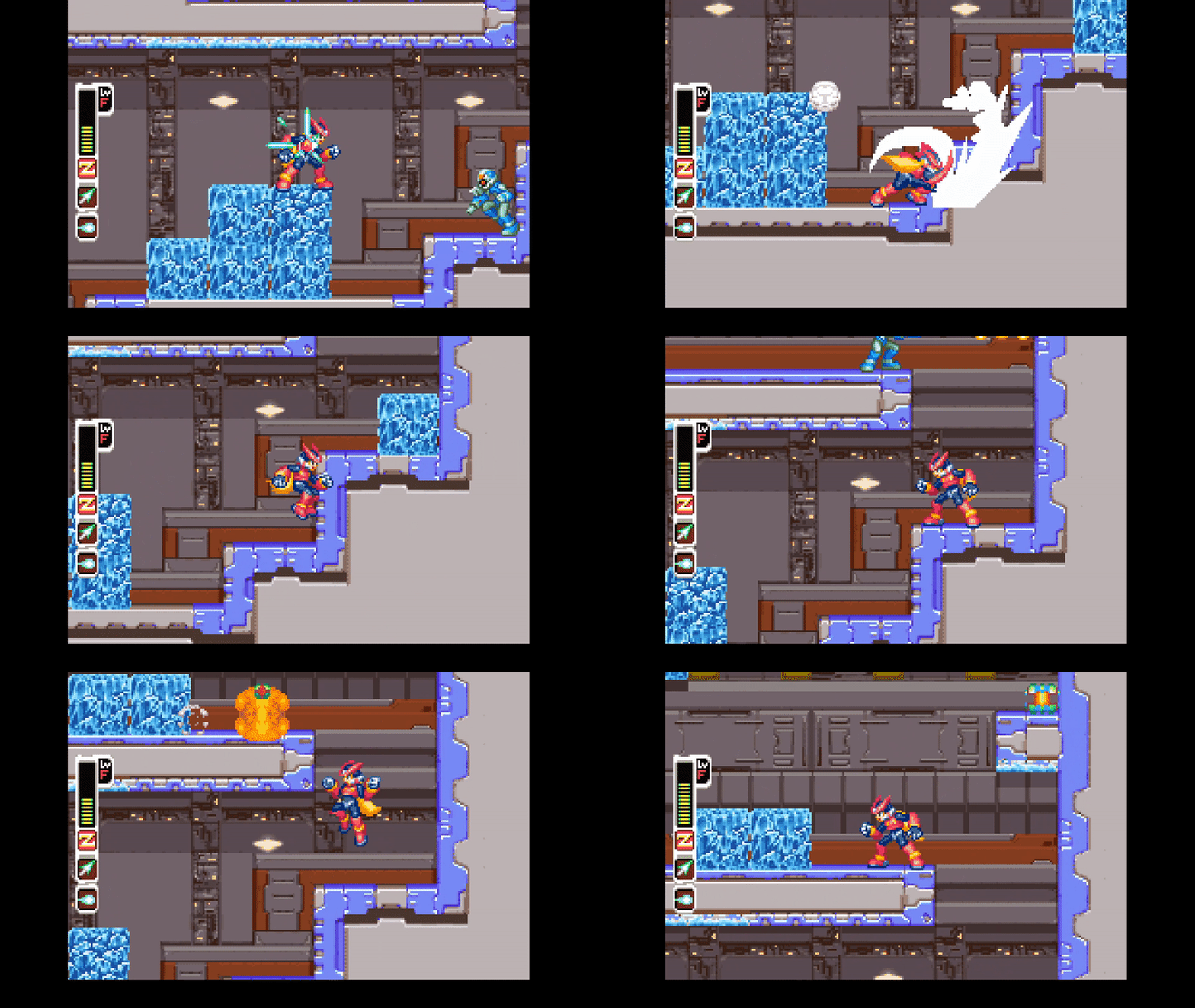
Tall shafts like this become a lot more common as the series goes on. I feel like a ninja!

I know the title of this piece says Mega Man X, but the Mega Man series, overall shows an increasing level of acuity when it comes to making use of the Wall Kick and Dash abilities. The story and general gameplay aesthetic of Mega Man X continued on to the Gameboy Advanced Mega Man Zero titles, as well as the Nintendo DS Mega Man ZX titles, which are direct sequels to the Mega Man X series, despite the change in subtitle. Faster and snappier than ever in both control and combat design, they really illustrate the limits to which the Wall Kick and Dash can really push Mega Man. Mega Man X itself has some fun and memorable bosses, but they only scratch the surface of how the new movement can be leveraged to make new and more interesting boss encounters. X and others like him will find themselves climbing walls to reach weak points, ducking projectiles, and clashing with inhumanly fast foes as the series goes on.

Killing robo goons from below just never gets old. It’s all so seamless

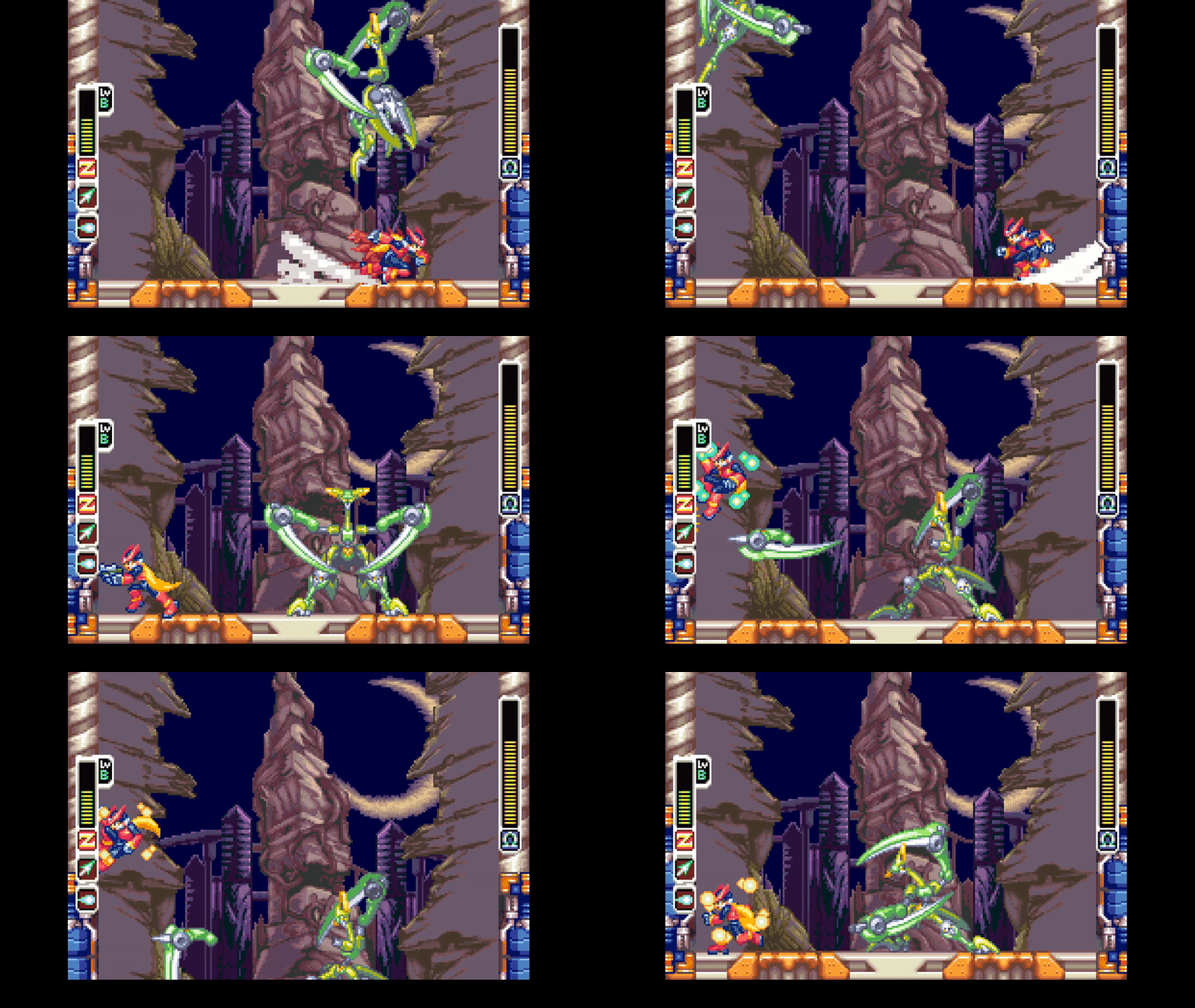
Bosses like Deathtanz Mantisk (which, incidentally, may be the single best name for a boss enemy in any video game ever made. I’m serious. Just, try saying it out loud. You’ll see.) utilize vertical space in really interesting ways, creating a counterpoint to the player’s ability to climb walls. Now not only can the player climb walls, which is fun, but they can outmaneuver their foes by doing so, which is fun and empowering! When this terrifying death-robot zooms across the screen, narrowly missing Mega Man Zero with a razor-sharp scythe blade, as the player readjusts their position with a dash, the sensation of taking part in a sci-fi-anime-robot-battle becomes very real. A high-powered player character creates high-powered situations, if the enemy and level design rises to meet these elevated powers.

Very few games make me feel as capable as a good Mega Man

The best part of all of this is that Dashing augments the Wall Kick, meaning both of these maneuvers can be used in concert to an even more powerful effect. Using to verticality to your advantage is powerful. Moving great distances in quick bursts is powerful. So, moving great distances in quick bursts through vertical space is extremely powerful. Mega Man is able to populate its many entries with some of the most visually impactful and fluidly playing boss encounters in the business leveraging the possibilities allotted by this high level of player power. Growing up on these games, they’ve had a big influence on me, and I tend to, when designing, leaning towers player empowerment. The more powerful a player is, in a practical and broadly applicable way, the more room there is in the design to do crazy and surprising stuff with environmental and enemy encounters. Because Mega Man can traverse so much vertical space so easily, there needs to be wild, sprawling vertical spaces filled with interesting things to see and do, things that wouldn’t be possible if he were more strictly adhered to the ground. There’s something to be said for more limited player power depending on the overall design goals, of course, but Mega Man very succinctly shows the design advantages of allowing the player a great deal of power.

Omega’s encounter has no walls on which to climb, although this is because, as an early boss, he exists to teach you the merits of ducking and jumping projectiles with the dash

The simple combination of a dash and a powerful yet limited method for traversing vertical space has become an extremely effective tool for 2D action games in creating elaborate and spectacular combat systems. It’s no surprise to see surprise to see spins on it utilized in such titles as Hollow Knight, Azure Striker: Gunvolt, and Super Meat Boy. It’s just a very elegant way to give the player a way to leverage the huge amount of air control they have in those games for interesting combat and traversal scenarios. Metroid has been exploring its own take on this concept to similar effect since 1991, actually two years prior to the release of Mega Man X, but no series has quite so thoroughly explored its possibilities as that of the blue bomber.

You may even become as powerful as I am…

Game Design, Combat, and Parrying Everything

Hi there, I’m Ian J Travis and I’ve decided to start a game design blog, with a particular focus on combat design. Since I was child games have always been my medium of choice for art, entertainment, and exploring my personal self-expression. All of my favorite stories and music comes from video games, but what makes this medium special to me is that ludic aspect, the gameplay itself. Good game design can tell story and make a kind of music all on its own. When game design really sings, the play itself becomes the experience – it works in harmony with all the other art and technology that goes into videos games as the linchpin, to create a cohesive experience.

The goal of this site is to put my own ideas about game design and combat design out into the blogosphere, and maybe grow as a designer along the way. I want to make systems of interaction that are so instantly inviting that the players who engage with them want to get absolute best out of the experience. I’ll be looking at games I’ve played to try and discover what they do right, what they do wrong, and how it all fits into a greater game design context. I’ll be breaking down individual player actions, entire boss fights, and broader concepts – the works. I’ve wanted to formally put down my thoughts on game design like this for a long time. I hope you have some fun reading and learning with me.