How Sonic’s Spin Dash Got Iterated Out of Existence

I must admit I have a bit of a bee in my bonnet about Sonic The Hedgehog. That was a sentence. The three-dimensional variety Sonic in particular. It is a topic I could wax about for ages, especially in light of recent promotions for the, as of this writing, still upcoming Sonic Frontiers. Promotions which have given me some thoughts. One such thought was ‘they really still haven’t brought back the spin dash’. 

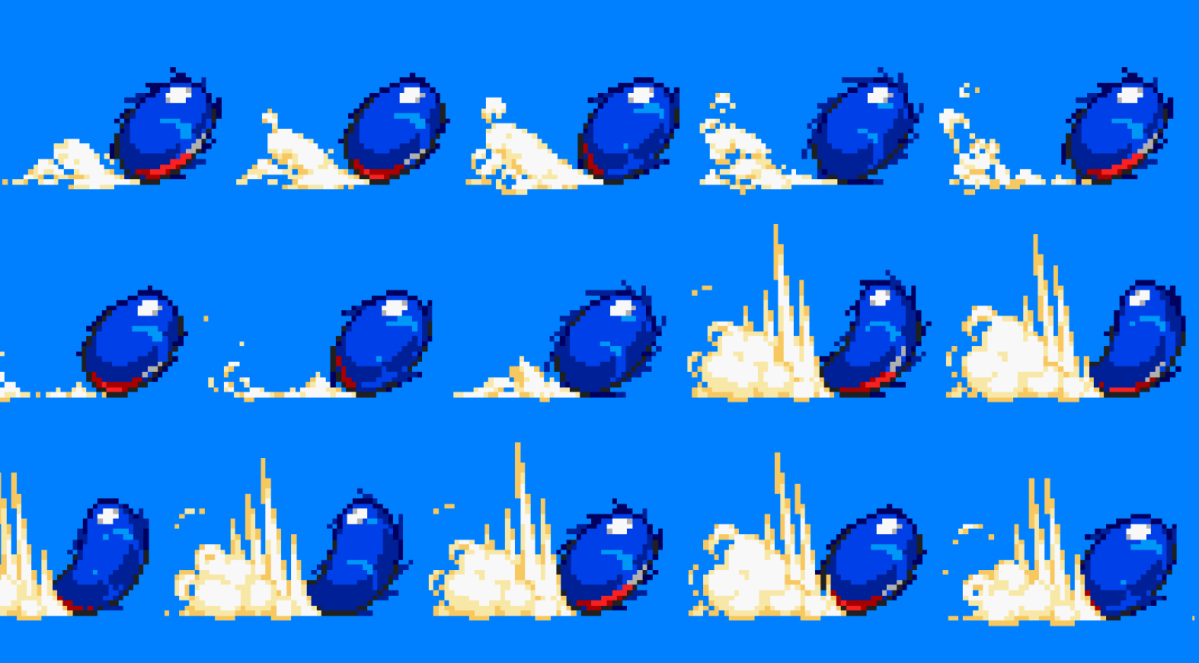
What is the spin dash? If you’ve ever heard of Sonic The Hedgehog you probably know, but it is a special move that Sonic can do by rolling into a ball and spinning to charge up energy, then launch himself real fast in one direction. Terribly simple, terribly elegant. 
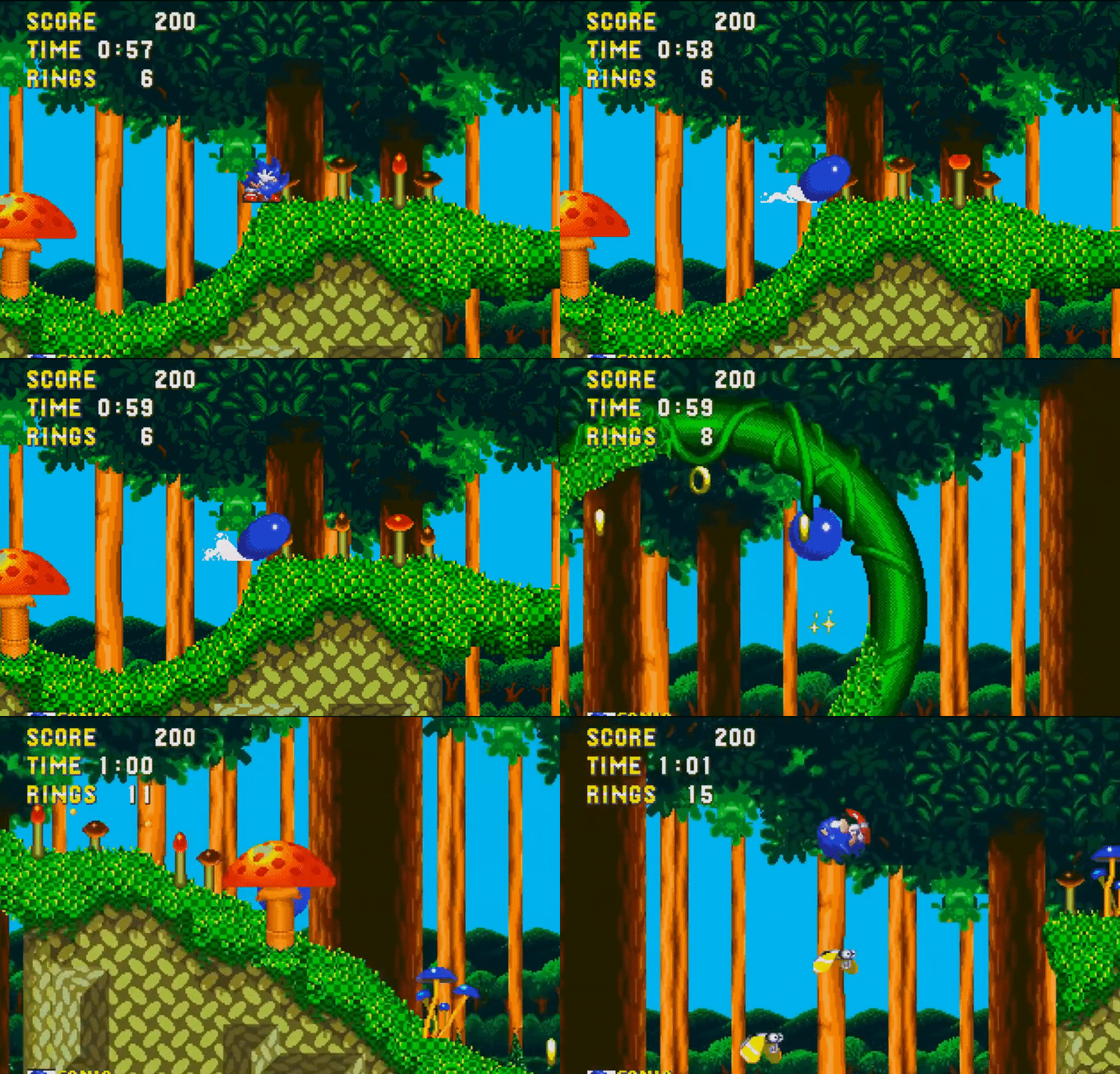
Sonic the Hedgehog from Sonic 3 rolls into a ball then blasts off at high-speed across a vine suspended in a lush green forest.
Spinning and Dashing from the beginning

One of the bottomless yawning abysms which haunt discourse around Sonic as a series of mechanical systems is what values, exactly, make the games fun, and which should be the focus in a given design system. ‘Momentum’ is a word that’s thrown around a lot, and I generally agree it’s an essential component to the gameplay formula of the blue hedgehog. Building momentum is an angle Sonic has explored a lot through his games, but I’d argue that from the beginning, Sonic Team has understood that maintaining momentum is a lot more interesting than building momentum. Sonic The Hedgehog for the Sega Genesis, the debut, introduces us to the spin dash. Titular super speedy player-controlled hedgehog, Sonic is able to roll up into a ball, spin rapidly in place like the wheel of a revving race car, then take off with near-instant acceleration to a great speed. In Super Mario Bros. 3 Mario has to run a good few seconds as the player holds down the dash button to reach top speed. This requires space, it requires time, it’s generally not something you can do on a dime. Sonic Team did not want Sonic crossing long stretches while not running at super speed. The super speed is the draw after all, it’s the fun part. Ideally, the player should be given methods to reach that state of fun as readily as possible if high-paced action is the goal. Even as the spin dash fell by the wayside this value never seemed to go away. The ‘boost formula’ games, as they’re called (Sonic Unleashed, Sonic Colors, Sonic Generations, Sonic Forces), none of which feature the spin dash in the same prominence as the older games, still feature a way to rapidly build speed to a maximum level, but more on that later. 

The spin dash is also a rather compelling bit of fiction. Sonic is a hedgehog, you may have heard, an animal known for rolling up into a ball to bear the quills on its back. Sonic is also super speedy, so combining these ideas creates the rather visually appealing idea of a character rolling up like a wheel in place and peeling out in a particular direction. Sonic isn’t the flash or quicksilver. He doesn’t just run fast, he rolls faster than fast. It’s one of his most distinguishing features. Mario jumps. Doom Guy shoots. Sonic rolls. The maneuver is so synonymous with Sonic that the promotional phrase “Sonic spin dashes onto the Nintendo Switch” preceded a trailer for a game in which Sonic cannot spin dash. 

Or at least, I assume the spin dash is absent. As of this writing Sonic Frontiers has not shown footage of such a feature, and the move hasn’t prominently featured in a 3D Sonic game in years. At the very least this suggests it’s not very central to gameplay. It wasn’t always this way. The classic 2D Sonic games practically built its levels around its use. One of the most versatile techniques it affords by virtue of being an on-demand burst of speed is jumping out of a dash to achieve a huge amount of air time. Similarly, spin-dashing up ramps can send Sonic to great heights he cannot otherwise reach. Secrets, alternate paths, and bonuses are all available this way. The spin dash has always been a tool of exploration. 

You can understand the confusion. You would think any Sonic game would prominently feature his best move. Abstractly, the spin dash is synonymous with not only Sonic but also the very act of play within the Sonic series, so foundational was it to the games’ very identity. It is like Mario’s ability to jump. Well, Sonic can jump, but likewise Mario has near-always had a dash mechanic. Nobody who scrutinizes the mechanics of games would mistake a Mario Jump™ for Sonic’s though, and likewise you could never mistake Mario’s dash for a spin dash. 
Sonic the Hedgehog from Sonic Adventure 2
Gosh I miss it here.

Sonic’s first 3D games leaned into this angle. Jumping out of a spin dash remains a viable and valuable way to navigate levels in interesting and unconventional ways, really embodying the idea that Sonic can go anywhere. Not only that, but 3D adds the wrinkle of allowing the player to precisely plan where Sonic is going to be catapulted. During a spin dash’s charge time, Sonic is totally stationary but his rotation can be controlling for some precision maneuvers. Having a mechanic that halts movement like this may seem backward at first but it’s implementation gives more of a slingshot-like impression. It’s is more of a reorientation than a halt. Like redirecting a bolt of lightning. In combination with Adventure and Adventure 2`s character physics system, which allows momentum to carry or bounce Sonic along surfaces, the spin dash’s sudden dizzying speed can accomplish some truly magnificent feats of traversal. Manipulating and redirecting Sonic’s momentum this way is an extremely compelling game system onto itself. It adds a skill-based bit of nuance to Sonic’s kit where it was needed, as 3D Sonic has historically had to make concessions to automation in certain areas, to keep players on track when running at high speed, and thus the skill ceiling is hidden in little details like these. The spin dash is what gives Sonic’s mode of play the methods for player expression and exploration that gives a platform game its longevity. Watching any speed run of Sonic Adventure 2 will give you an idea of what I mean, like this one by Talon2461 for SGDQ.

In a verdant green tropical rainforest, Sonic the hedgehog from Sonic Adventure 2 spins into a ball before launching himself off a ramp through the air and onto a tree, which he runs up vertically along its trunk.
This is the sort of insanity I feel like a lot of Sonic games are missing

Sonic Heroes does not feature the spin dash in name, though it does represent the first step toward eventually phasing it out of headliner Sonic games. Sonic Heroes dubs its variant of the spin dash as the rocket accel. Fancy. The differences between this version and the adventure permutations are rather pronounced. I think the big distinguishing factor for me is in the immediacy of the rocket accel, or rather… the lack thereof. Its rather slow and sluggish startup puts its use niche in a completely different category as compared to Adventure’s spin dash. The spin dash is used for precision and traversal – it interacts with the physics of each respective game such that it can be used to navigate the terrain in interesting ways. The rocket accel is by contrast mostly restricted to the ground, as jumping in Sonic Heroes heavily stymies your momentum. The mandatory ramp up time for rocket accel, which forces Sonic to move forward for its duration, makes it unwieldy and imprecise, not suited to the surgical feats of propulsion that the spin dash was capable of in Adventure. And thus, you cannot design levels for a mechanic that isn’t there, and exploration becomes de-emphasized in the games from here on out.
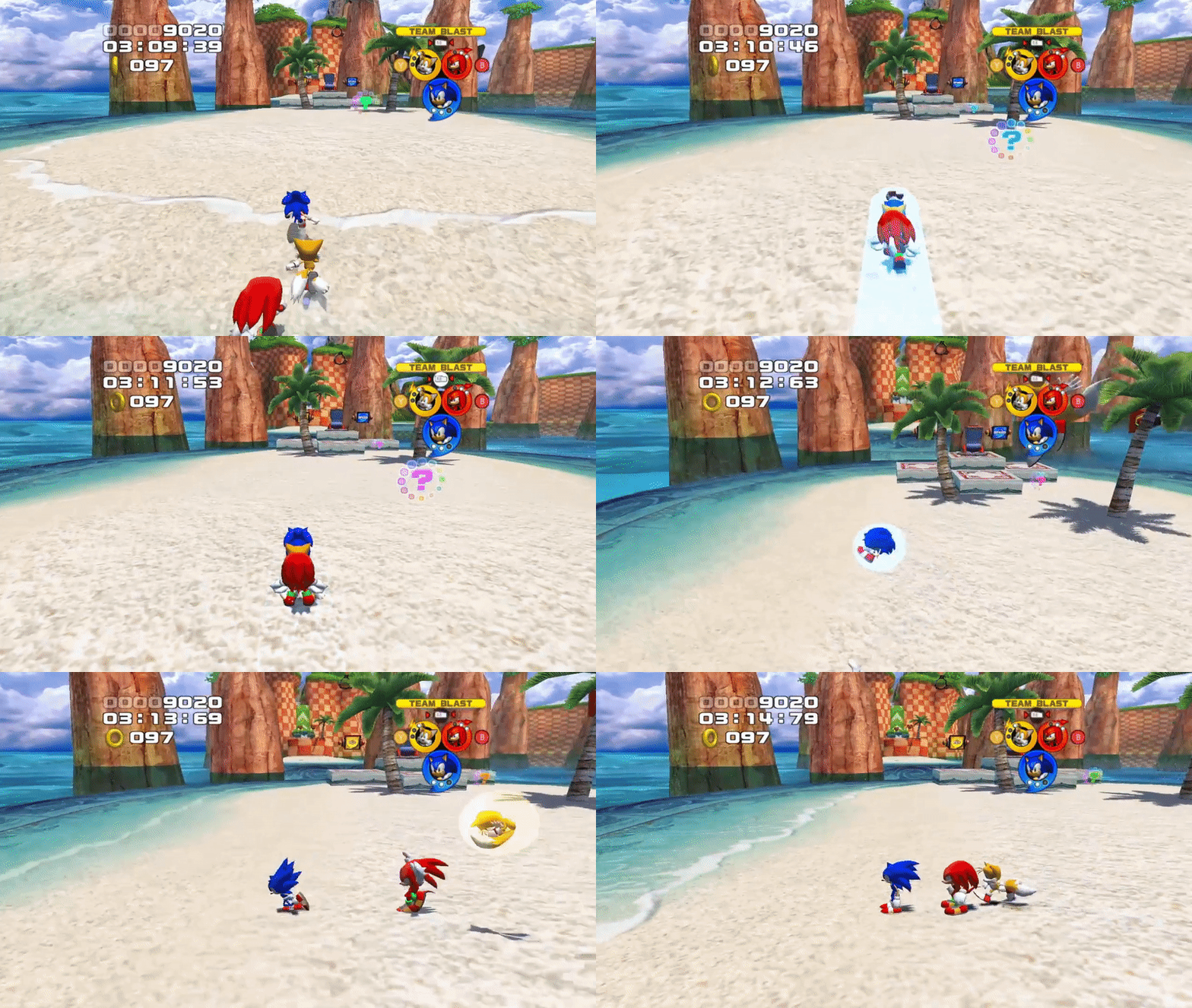
Sonic, Tails, and Knuckles from Sonic Heroes are at a tropical beach. Sonic rolls into a ball as Tails and Knuckles push him from behind, a light briefly envelopes him as he rockets off ahead, but his speed is cut down when he jumps into the air.
Unable to stop moving during the startup, and with little effect on momentum

From there, the next iteration of the spin dash features in one of the many oddities of the Sonic series, the 2005 game Shadow The Hedgehog. Here it makes its most minor appearance to date – once again it seems as though levels are not being designed with the possibilities of the spin dash in mind, and its inclusion consequently feels almost like an afterthought. One of the advantages of the spin dash was initially the ability to launch one’s player character like a projectile to defeat enemies along a chosen path, but Shadow The Hedgehog is a game that perplexingly immerses itself in sprawling shootout scenarios, with guns everywhere. An alternative to projectiles seems rather redundant – were that the gunplay of Shadow were near as nuanced as Adventure‘s spin dash, but alas. 

About the actual mechanics and physics of the Shadow spin dash, it’s back to being a little more like it was in Adventure, with a stationary startup animation and the ability to precisely turn toward your desired trajectory, although only “precise” to the level that anything in Shadow The Hedgehog could be described as “precise”. The startup for this one is terribly sluggish, however, taking up to nearly two full seconds before a full-powered spin dash can be performed. The turn rate of the startup is incredibly slow, making any “precision” you can glean from it come at the cost of something very disruptive to game flow. One of the main advantages of the spin dash is how it can be used to quickly plan a trajectory. What’s more, Shadow’s basic acceleration is so potent in this game that the spin dash isn’t really needed for quickly getting up to speed either. And finally Shadow, being built on essentially the same engine as Sonic Heroes, shares its momentum-killing jump, so the aerial utility of the spin dash is lost as well. As a child I found myself hardly ever using what used to be my favorite move in the speedster hedgehog playbook. 

Sonic The Hedgehog from 2006, colloquially Sonic 06 is infamous for its disagreeable player interface and wonky movement systems, but how does its spin dash handle? Well, not great. Like everything else in this game, it is so bizarrely disconnected from every other component of Sonic’s moveset, it hardly has a use case. It is based on the Adventure mechanic, but it does not fulfill the same advantages. For one, you cannot jump while dashing out of a spin dash. The game simply will not allow it. The jump button does nothing while Sonic rolls around (at the speed of sound). Rotary function has been restored, turning Sonic while he revs up the spin is no longer painfully slow, but the dash itself doesn’t reach a particularly impressive top speed. So the poor mechanic is still missing its once great utility.
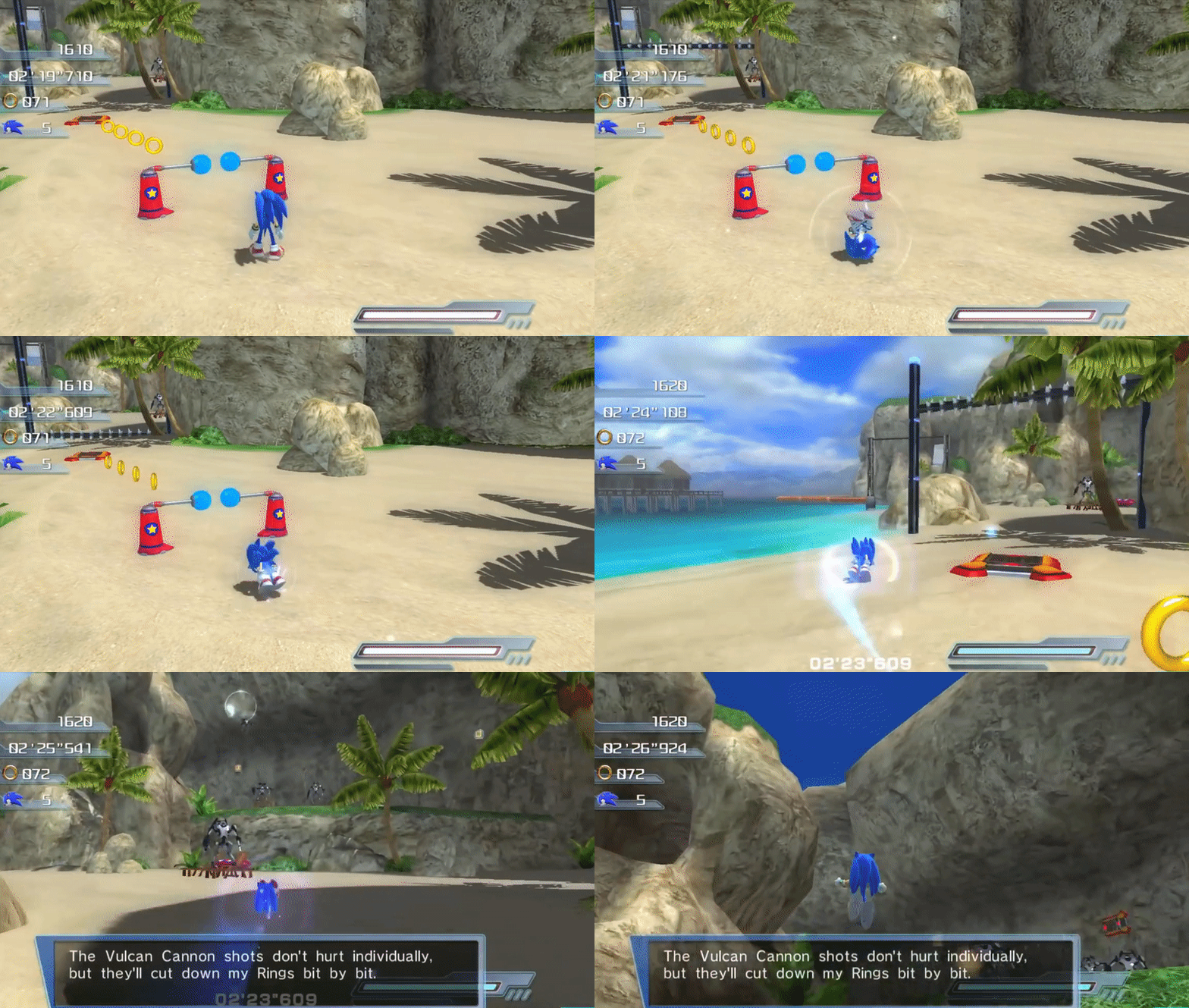
Sonic the Hedgehog from Sonic the Hedgehog (2006) rolls into a ball with an intense pulsing light around him on a beach, before launching out toward some hostile robots.
No precision, no utility, and no OOMPH

Starting with Sonic Unleashed, the series begins to de-emphasize traditional precision platforming in favor of high speed, almost race car-like tracks of long linear terrain, with a peppering of obstacles, but very little of the exploration that characterized the Adventure Games in favor of a more narrow approach. No disrespect. What these games, the “boost games” do, they do very well, usually. They’re not platform games in the same way traditional Sonic games are though, and as such the spin dash simply didn’t fit. There’s no real reason to ever stop, or sharply pivot in these games. Forward is your chief concern. They handle the maintaining of momentum in their own way. Some of the less standardized Sonic titles such as Sonic Lost World would continue to feature the spin dash, and its position in the 2D and ‘classic’ Sonic games is quite enshrined. Sonic Colors, Sonic Generations, and Sonic Forces however, essentially follow Unleashed‘s lead and decentralize the need for a spin dash in any 3D settings. They are all mechanically competent games, though focused away from certain qualities of Sonic I’d like to see return. On the other hand, it leaves Sonic the character in an odd place where he lacks one of his most memorable abilities which stylistically played off his status as a rodent that rolls into a ball. Sonic has spikes on his back, but in these boost games he mainly dispatches enemies by running headlong face-first into them. Mega Man has a cannon on his arm, so it’d be a bit odd if he never used it to shoot anything, and it’s a bit odd that while Sonic can roll into a ball and go fast, he can’t roll into a ball to go fast. 
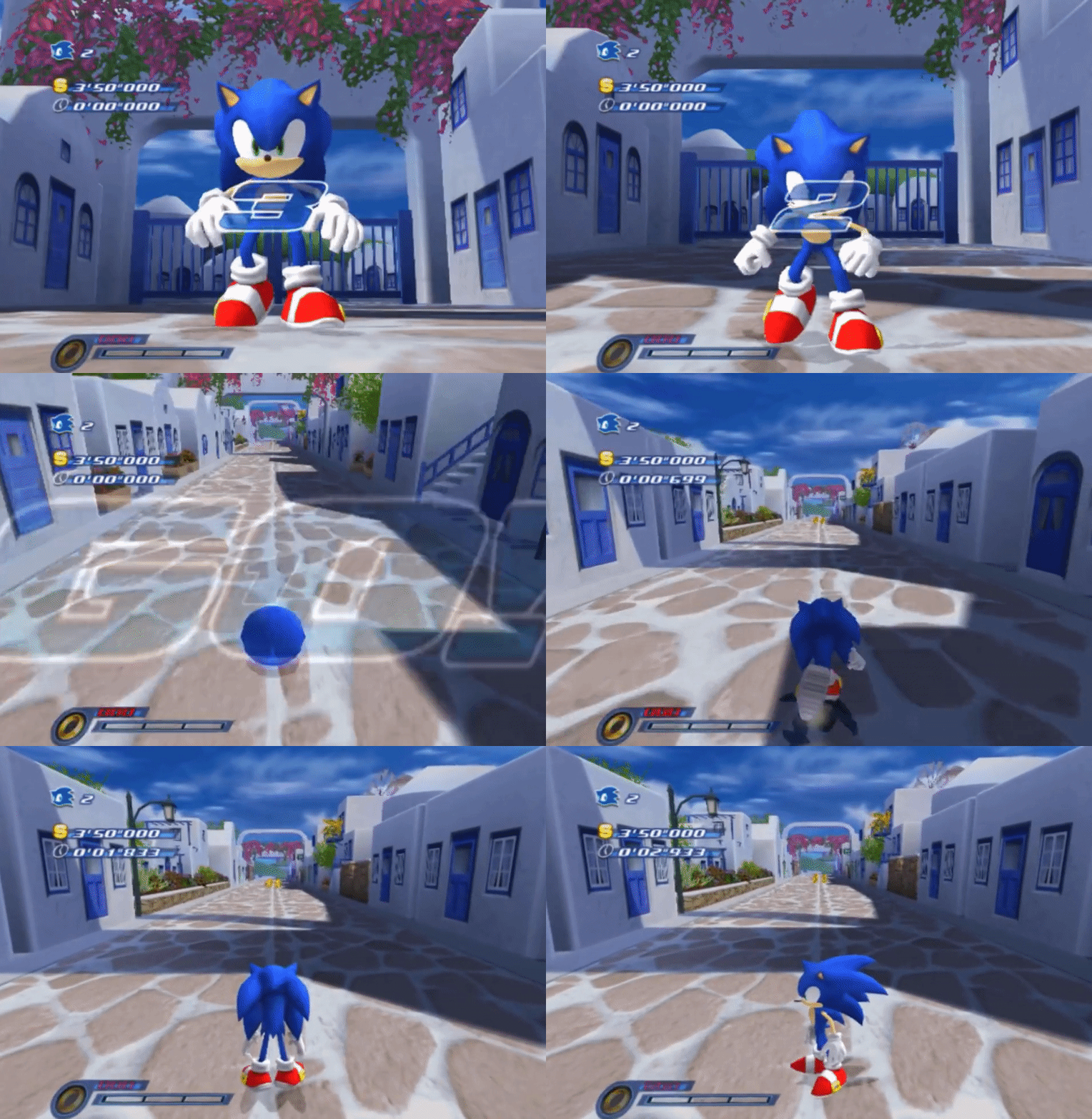
Sonic the Hedgehog from Sonic Unleashed gets ready during a racing countdown, then rolls into a ball briefly before slowing to a stop.
This can hardly be described as the same mechanic

I cannot hide that the apparent lack of the spin dash in Sonic Frontiers is deeply disappointing to me. One would think, in a game that apes so much from its open world contemporaries, that interesting and nuanced methods of exploration would be a chief concern in designing Sonic’s move system for this game. The boost games don’t care much for physics-based momentum or complex acrobatics, and they seem to be the blueprint for Sonic Frontiers as well. There’s a fundamental incongruence, though, in dropping a move system designed for running down long, straight corridors into an open world map. There’s a lot that concerns me about that game to tell the truth. The spin dash in particular though was such a natural fit to the expansion of Sonic’s field of traversal to three dimensions that any iteration upon it since Sonic Adventure 2 has only served to make Sonic less suited to his environment. By the time Frontiers began development, the spin dash was so far fallen from its former importance to the hedgehog’s gameplay that I’m not sure it was even in a position to be executed well were it included. In an ‘open zone’ concept game, as they’re calling it, I cannot help but feel as though the ability to stop and start with a precision speed boost on a dime would be invaluable for a game that puts increased emphasis on exploration. “Imagine if you could just see a landscape on the horizon, and run straight there” I’d see people say day after day, every time the speculative discussion of open-world Sonic came up. That’s the appeal. Do you want to know what the Sonic game mechanic is for fulfilling such an experience? You know already it’s the spin dash. After such a long time of distancing Sonic’s more exploration-heavy roots, I had truly hoped that an open-world Sonic would reconsider the design context of this once-ubiquitous ability. Perhaps the spin dash can be unlocked in some capacity, but that still leaves it as a niche in the design, not a central defining mechanic like it used to be. Sure a regular old dash is still present, but hopefully I’ve illustrated to you why the spin dash is so much more than that. 
Sonic the Hedgehog from Sonic Adventure 2 nimbly launches himself across great gaps of water, from scaffolding to scaffolding on a metal harbor platform, rolling up each time to build speed before each launch.

Rolling around at the speed of sound…
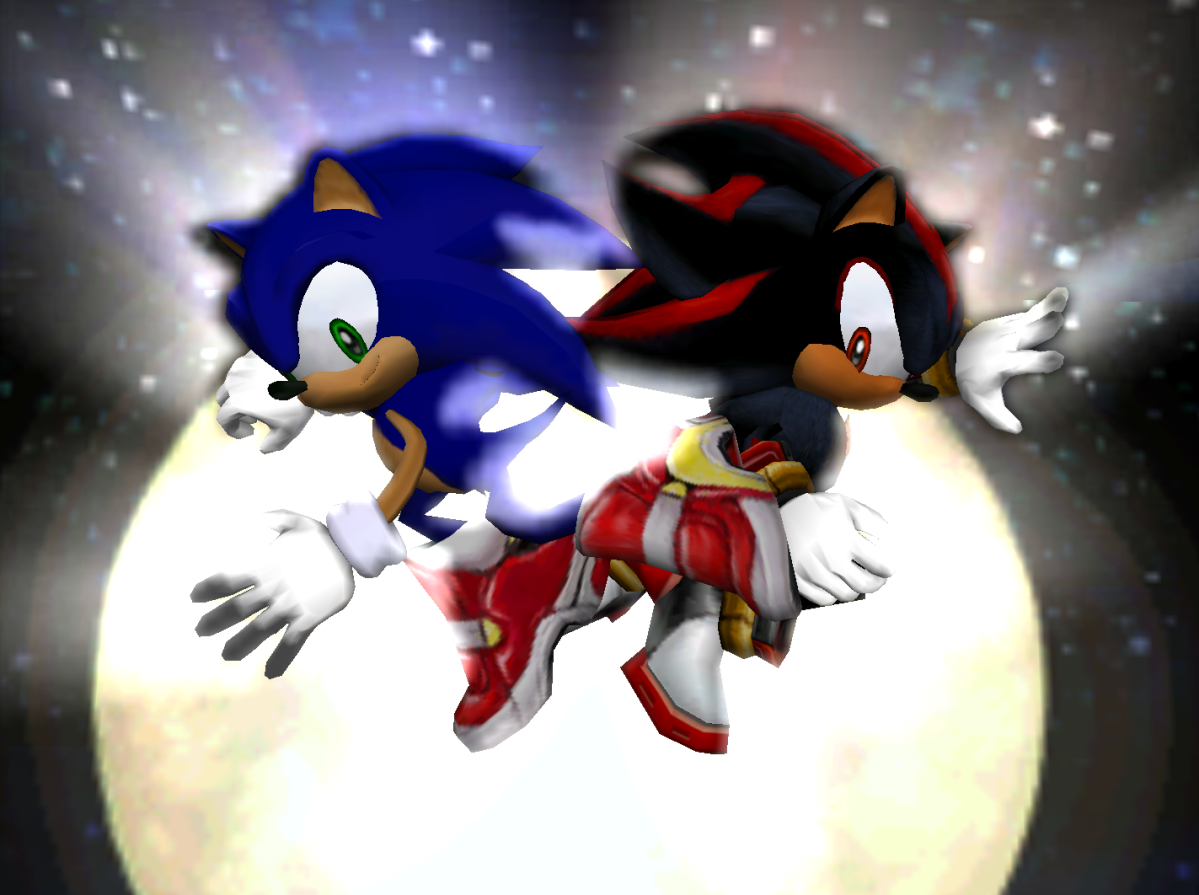
Sonic vs. Shadow Boss Breakdown: A Case Study

It’s April 2022, I just came back from the movies, and it’s got me in a Sonic mood. Sonic Adventure 2 was Sonic’s second major 3D outing and personal favorite of mine, warts and all. The big gimmick of this game was ‘hero versus dark’, or in other words two concurrent stories centering on our familiar heroic blue hedgehog Sonic, and the new dastardly red and black hedgehog Shadow, who has all the same powers that Sonic has!

The Sonic and Shadow showdown that’s built up across the game’s story was always a highlight for me as a child. It’s aesthetically and narratively well-realized, a great moment of tension and catharsis for one invested in the wacky world of Sonic. So it works on a number of levels. Taking an older and more analytical eye to it though, it is far from an ideal example of boss design in motion. Like much of Sonic Adventure 2, it has its share of flaws. So for this boss breakdown, I’m going to approach things a little differently, and go through an alternating list of the boss design’s pros and cons, trying to glean where this boss succeeds and where it falls short.

Sonic the Hedgehog stands in a long starship-like hallway. He is surprised when Shadow the Hedgehog walks up from behind him and begins to speak "You never cease to surprise me blue hedgehog. I thought that the capsule you were in exploded in space." 

Sonic replies, "You know, what can I say... I die hard!"
The motion-captured cut scene animations are still pretty comically bad, though.

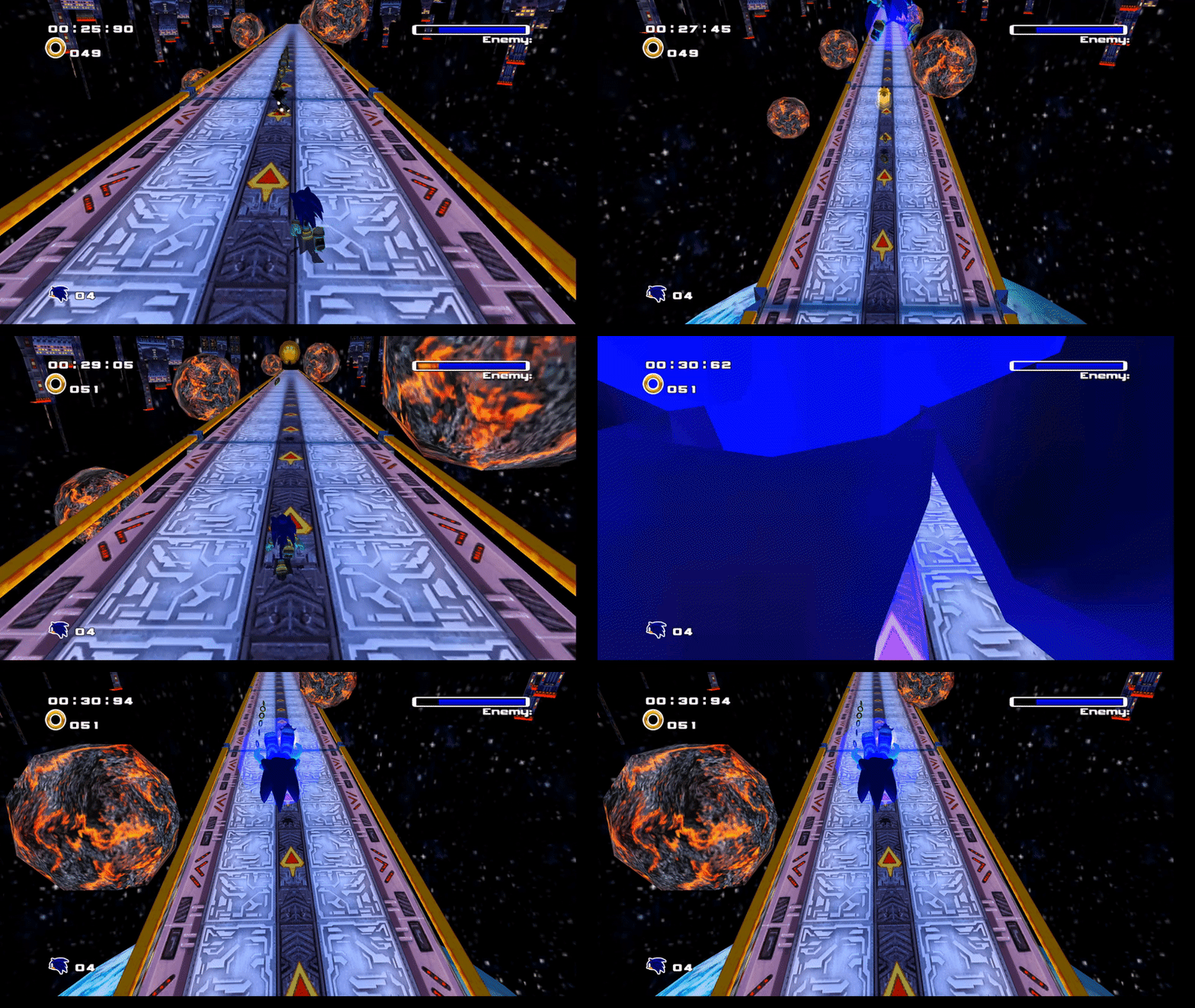
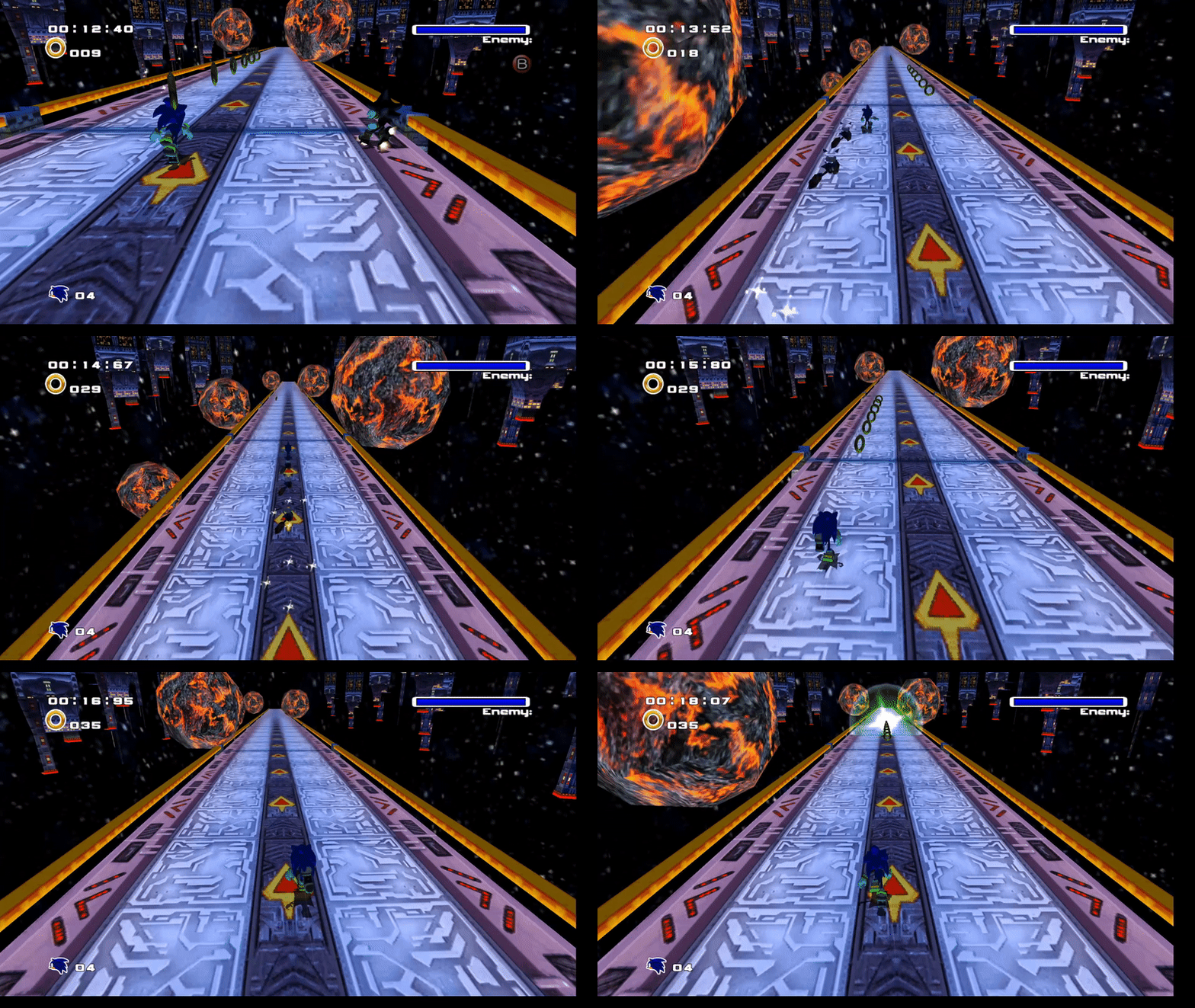
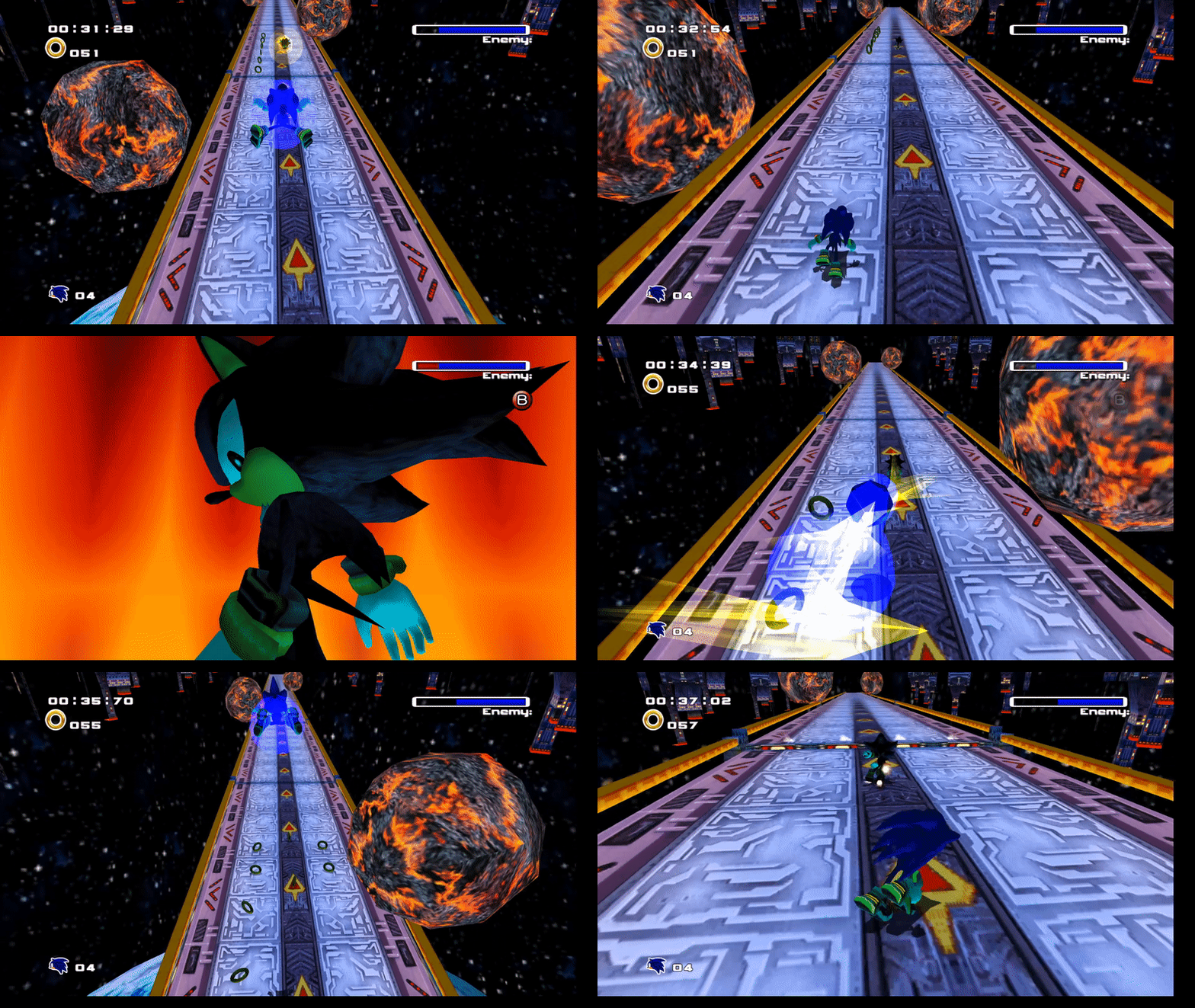
First, a quick overview. The player takes the role of Sonic or Shadow, depending on which story path they chose. Their opponent is whatever hedgehog they’re opposed to. In either case, the fight is identical, as both characters share identical movesets as players and as AI bosses. The two hedgehogs run along an infinitely long looping pathway suspended in outer space. Pieces of it fall out from under them if they run too slowly. If the enemy boss hedgehog falls off the path, they teleport back to the stage ahead of the player’s position. If the player does the same, they fall to their death. The enemy will occasionally use a homing attack on the player, which can be deflected by jumping, which produces a protective spin-shield on the hedgehog. The enemy can do the same, however, meaning most homing attacks will be deflected unless the player can make an opening in the enemy’s defenses.

These openings, as far as I can tell, take three forms. First, if the player lags behind the enemy by too great a distance, the enemy will come to a halt, and launch a screen-wide super attack, which can be avoided with a well timed jump. During this moment, the enemy is vulnerable to attack. Second, if the player runs too far ahead, or the enemy falls off of the arena, they teleport back onto the road ahead of the player, after which they are vulnerable for a brief moment, although this window of vulnerable seems to narrow as the boss’s health gets lower. Finally, timing an attack such that it hits the boss in the short window of time they are on the ground after landing from a jump, they are vulnerable.

With that out of the way, let’s get to some of the particulars.

Pro: We Framed The Camera

So Sonic Adventure 2 (and a lot of 3D Sonic games of this era for that matter) has a bit of a reputation with its camera. So this one might come off as somewhat of a backhanded compliment, haha. To be fair, I think the direness of the state of SA2‘s camera is often vastly overstated, when compared to other 3D cameras of the time, or even other Sonic games. Point is, sharp turns and elaborate level geometry could be let’s say… challenging for the hard working early 2000’s 3D camera, so Sonic Team played to their tech’s limitations and its strengths and placed this boss fight on a seamless, infinitely long straightaway.

With no turns, nor obstructions, the player always has a clear view of the action and the goal- defeating that enemy hedgehog. This has the added bonus of creating a series of dynamic set pieces visually between Sonic and Shadow’s fight, with the camera being centered on the highway path.

Sonic the Hedgehog outruns Shadow. A moment later, Shadow teleports in front of Sonic in a flash of green light.
Nothing but you, me, and the cinematic cameraman following behind us

Con: Rings, Rings Everywhere

Someone once did a write up on Sonic The Hedgehog’s traditional health system that utilizes its collectible coins. This system has a lot of flaws, in my eyes. The simple version is, that because having even one ring on Sonic has nearly as much advantage as having a billion rings, while having zero rings leaves Sonic in a drastically more vulnerable state, it is very difficult to build a consistent level of challenge with this health system. The battle between Sonic and Shadow takes place on an infinitely long looping pathway. It would be very possible, even likely, that most players upon taking a hit from Shadow or Sonic simply kept running, missed picking up their rings, and were left with a crushingly difficult unreasonable encounter.

This is obviously not desirable in a game marketed to children, and so to counter this eventuality, it was decided that the infinite path contain infinite rings. This is also a problem. So long as you keep collecting these readily available, plentiful rings, it is essentially impossible to lose this boss fight that is an alleged death battle between super powered titans. It doesn’t matter how many times Shadow strikes Sonic with a chaos spear, or how often Sonic homing attacks Shadow. If the player can collect more rings, and they can, they’re in no danger. It kind of takes the wind out of the tension-sails when you realize this.

Pro: The Game Does Not Tell You What To Do

There’s a certain appeal to to the idea of just being placed in an arena with a hostile opponent and… going at it. No rules, no holds barred, no ifs ands or buts. Of course, there are rules, such boss designs simply give the impression that the player can control the pacing of the fight, and can achieve progress against the opponent with mechanisms entirely driven by their own ability, not by arbitrary timers or enemy behavior tables. Someone once did a write up on the subject using The Legend of Zelda as an example.

When fighting Sonic or Shadow it is not initially entirely clear how one is meant to deal damage to them. They have a health bar indicating damaging them is the goal, but not much else. There’s very little indication of the boss’s weakness. The player’s standard methods of attack up to this point, homing attacks or the spin dash, have no effect in most situations. For a final confrontation, this makes sense. Shadow and/or Sonic stand as an imposing ultimate challenge with no clear exploitable point. It’s up to the player to decide how best to approach the enemy supersonic hedgehog, as their opponent has all manner of ways to deflect incoming attacks, such as rolling into a ball, homing-attack the player in retaliation, or using one of their screen-wide super attacks. This bare-knuckle brawl kind of boss design works well in establishing the tone of two co-equal rivals finally duking it out and giving it their all. If Shadow or Sonic had a big glowing ‘attack this to kill me’ button somewhere it would certainly diminish the effect.

It’s also worth mentioning, this is the second such encounter between Sonic and Shadow. The first, in an enclosed square arena, is a lot less exciting to play and talk about. I bring it up because it does begin to engender some of the concepts of how to fight the enemy hedgehog that you see here, but that fight also suffers from not being entirely clear on its mechanics, so the player will likely not have learned a definitive approach to fighting Sonic or Shadow by this point.

Sonic the Hedgehog repeatedly homes in on Shadow the hedgehog, but Shadow rolls up in midair to protect himself, deflecting the attacks.
Standard methods of attack don’t work. Figure out a way past his defenses!

Con: The Game Does Not Tell You What The Heck To Do

Yeah okay, so there are advantages to unstructured boss fights, but Shadow and Sonic’s weakness does exist, and it is largely arbitrary. The game gives little to no indication at all how best to damage the boss, and as a result, even for players who’ve defeated this boss before, it may not be entirely clear how they did it, and reproducing those results may require a lot of fiddling around with the boss’s behaviors. There is a method to consistently damaging Shadow or Sonic in this encounter, but to get there you really have to do some meandering experimentation. The investigative nature of this isn’t without its fun but it does feel kind of weird and incongruous, like a puzzle whose pieces fit together, but do not form a picture of anything.

Why is it, for example, that Shadow will only use his super move ‘chaos spear’ when Sonic has let him run far ahead down the path? Why does he stop dead in his tracks when chaos spear is used, leaving him vulnerable? This might have made a lot more sense if Shadow had a special animation to indicate he had to slow down to concentrate when using chaos spear, which would also explain his vulnerability and why he’d wait until he got some distance from Sonic before using it, but the player is left to essentially fill in these blanks themselves. Given the loose, fiddly nature of the boss’s behaviors, it’s also very possible to simply mash buttons and attacks against them until the encounter is won. Combined with the ring systems, there’s really no way to enforce a failure state to dissuade this, which in my eyes is an issue. The player should feel like they accomplished something even it’s an easy, so the possibility of a largely accidental victory is undesirable.

Sonic the Hedgehog and Shadow the Hedgehog repeatedly roll up into balls and bounce against each other, until Sonic lands on shadow's head and he dies
I can barely tell what happened here, and this is my gameplay footage

Pro: Forward Momentum

Sonic’s the name and, you may have heard, speed’s his game. If that’s the case it’s kind of wild that a ton of Sonic boss battles have nothing to do with the aforementioned. The premise of Shadow the hedgehog as a character is that he’s a dark mirror to Sonic the hedgehog, capable of all the same feats of speed and agility. Since that’s the big selling point here, we want our boss fight to illustrate that, thus the long straightaway.

Infinitely looping paths along which to run whilst fighting a boss would eventually become a halmark of the Sonic the Hedgehog franchise. It was actually kind of a rarity at the time of Sonic Adventure 2, though. The advantages are obvious. With an unobstructed pathway Sonic is free to run at full blast, the most fun thing to do in a Sonic game, while Shadow matches the speed, and the spectacle of a high-speed superpowered battled is nearly realized right there. Bits of the looping pathway collapse, leisurely, as they are cycled off-screen, gently encouraging the player to not stop running, keeping the pace of the fight breezy. It all works very well to construct the scenario they were going for.

Sonic Adventure 2 also iterated on the lightspeed dash, in which Sonic can quickly move across a path of rings with a well-timed button press, which gives an excellent and rewarding avenue for expressing player skill. Stringing together dashes along the many paths of rings is a blast.

Sonic zips across a series of paths made of gold rings at incredible speeds.
God I love this game

Con: The Enemy Is Not Proactive

I did praise this boss for being rather player-driven, allowing the player to decide the pace of the fight. However, the fact that the boss will do very little to actually attack you is a major problem for me. Shadow and Sonic are in a dire situation involving the fate of the earth and an orbital laser beam capable of blowing up half the moon. Things need to be tense, and the danger needs to run high. The hedgehog being controlled by the AI, though, just doesn’t feel especially desperate to kill the player. They will happily run alongside you, but never really do much to harm you unless you position yourself in a specifically vulnerable spot. The enemy homing attack is especially easy to deflect. If you run too far behind they’ll do that super attack I mentioned earlier. I feel as though a lot more could’ve been done to establish that the boss is very motivated to defeat you, and I would’ve included some more regular attacks and obstacles that the player has to maneuver to keep up. A lot of what makes running fast in Sonic, after all, is the satisfaction of skillful execution in avoiding hazards.

Pro: Timing and Execution

As unclear as the ‘rules’ of the boss’s behavior are, they do exist, and executing on them can be a lot of fun once you understand them. One of my favorite strategies for damaging the boss is to hang back, causing them to use their screen-wide super, then rush ahead and use the ring-dash to dash straight through the vulnerable enemy. These interactions are actually very compelling, requiring a reasonable bit of skill and control to execute on. It’s actually so fun to land hits on the enemy hedgehog once you understand what is actually going on in their behavior table, that it makes it even more frustrating that a lot of this is not clearly communicated.

Shadow the hedgehog stops running for a moment to shoot orange energy projectiles at Sonic, but Sonic dodges them and homes in on Shadow to damage him.
Baiting the enemy into an attack and retaliating does feel pretty good.

Pro Again: Aesthetics

Alright this article has been pretty critical of my blood brother Sonic Adventure 2, so I’ll end with one last pro that’s less to do with the gameplay design, but still an essential feature. If you didn’t know, aesthetics deal with all the principles of beauty, not just visuals. It’s an overall feel. A style, if you will. And man, does this game have style coming out of its comically large cartoon hedgehog ears. Shadow and Sonic are under-lit with an eerie green light that accentuates the alien environment and makes Shadow look positively menacing. The techno-electronic music blares with strange bell samples with some of the edgiest lyrics you’ve ever heard in your life. You can see the earth frames against the black sky. Meteorites and pieces of the space colony zip by as you run across this collapsing sci-fi highway. The fight has a lot to be desired in terms of gameplay depth, once you really deconstruct it, but it is an absolute juggernaut of presentation, for the year it debuted. Sonic has always done spectacle well, and the promise made by this game’s marketing: an epic showdown between an unstoppable force and an immovable object in the form of two equal superpowers of opposing worldviews, is fully realized through the aesthetics. Aesthetics can elevate an experience, and Sonic Adventure 2 leans into this hard.

Sonic the Hedgehog runs alongside the menacing Shadow the Hedgehog as "Shadow" is spelled across his image. The two speed down a scifi highway amidst meteorites and space colony towers against the black of space.
This is one of the coolest things ever produced and I will entertain no dissent on the subject

It’s been a lot of fun reliving this fight, one of the longest-held in my memories, with the benefit of many years of design knowledge. The ‘rival’ fights in Sonic Adventure 2, in which the boss is a player character from the opposite story path, were heavily limited in what they could do, as they exclusively utilize the player character assets, animations, movement systems, etc. That said, it’s clear that this climactic battle was trying really hard to do a lot with a little. Not everything about it is stellar, but I think it’s still commendable they managed to make a pretty fun boss encounter that at least heavily delivers on the narrative promises of the game, if nothing else. I still find so much value in looking back at design of games like Sonic Adventure 2 that shaped my childhood, even with all of their flaws.

Sonic The Hedgehog celebrates over the unconscious defeated body of Shadow the hedgehog, standing on a sci-fi skybridge in the black of space, surrounded by inverted skyscraper-like structures.

That blue hedgehog again, of all places…

Sonic Adventure 2: Combat as Traversal

Sonic Adventure 2 is loved and it is hated. As an early adaptation of the 2D platform game star Sonic the Hedgehog it is rife with both 3D growing pains and extravagant, outside-the-box ideas. I find it notable for a great number of things. I’m particularly fond of how the game integrates its main gameplay attraction of momentum-based platforming- going fast, in so many words – with enemy encounters. More precisely, how this enemy encounters do not intrude upon the traversal gameplay, as the combat itself becomes a form of traversal.

Specifically I am talking about the Sonic and Shadow Action Stages, as they are relevant to what I’m getting at here, with the treasure hunt and mech stages being their own beasts. The Action Stages as such involving running across long, winding highways filled with deadly robots and ridiculous loopdy-loops. The first thing to note about these enemy robots is that they barely attack Sonic. Maybe a laser or bomb or two will be launched every few seconds. The thing is that Sonic stages need obstacles for there to be a game. Speed is meant to be a reward for performance, and if there’s nothing to overcome there’s no way to perform. An excess of obstacles though, quickly grinds down the experience to one of attrition, with frequent starting and stopping that strips away the core gameplay. In other words, Sonic has to have a very low skill floor and barrier to entry. Complicating this with more involved combat breaks the flow of Sonic that is one of its staple selling points.

Sonic (Sonic Adventure 2), in a tropical jungle environment, rolls into a ball and dashes straight ahead at high speed, blasting through a robot and running ahead as if the obstacle was nothing.
Yeah, that robot did not put up much of a fight.

So enemies in Sonic Adventure 2 are barely obstacles, and will generally be destroyed in one strike. They’re more like platforms in and of themselves, as the act of attacking them can propel Sonic forward and allow him to bridge gaps. By making the act of combat also an act of traversal, it blends more seamlessly with the main gameplay of traversing at high speeds. Sonic doesn’t have to stop and build up any sort of combo or other combat-centric mechanic to deal with enemies. He can simply vanquish them as he runs by, they’re more like a speed bump than a wall.

Sonic (Sonic Adventure 2) spins into a ball and launches into the air in a San Francisco-like cityscape, bounces off three flying robots, destroying them, then jumps off a hapless humanoid robot as it jumps out of a hidden spot.
Being able to careen past this humanoid robot at the end is hilarious, and fun. Stupid enemies can be a feature!

By necessity, this is also somewhat an article about the homing attack, introduced in the original Sonic Adventure. The homing attack was a pretty clever solution to adapting Sonic’s primary method of attack, which is to say jumping into things as a spinning ball, from his 2D genesis games to 3D space. By pressing the jump button in mid-air, Sonic will do an air dash with a burst of speed, and home in on a nearby enemy, destroying it, if there is one. It’s still possible to precisely jump into enemies as Sonic in Sonic Adventure 2, but it is cumbersome, a pain, and more pertinently, slow. That’s the real undercurrent here, that every time the Sonic franchise has endeavored to include more complex or involved combat into its gameplay it’s operated mostly to slow down gameplay or distract from the core fantasy of playing as Sonic The Hedgehog. Obviously, to go fast, or in a more practical game design sense, to build and maintain momentum and feel powerful in doing so.

Sonic is at its best when speed is an expression of skill that gives the player power over their environment. The homing attack essentially compensates for the third axis of a 3D game in a way that makes using a homing attack comparable to jumping Sonic into an enemy on a 2D plane, in terms of complexity. What’s more, if there is no enemy is available to home in on, the attack operates more as a normal air dash, giving Sonic a degree of momentum in the direction he is facing with little to no ending lag. With the homing attack as Sonic’s primary method of attacking, combating enemies because an integrated part of movement itself. You’re always moving while attacking, and almost always attacking while moving as well. Part of the reason I chose Sonic Adventure 2 in specific to cover this topic is because the homing attack’s lack of ending lag is not always the case in every Sonic game. I feel as though the evolution of the homing attack across the series is something that could fill out its own write up.

In a grassy urban park, Sonic (Sonic Adventure 2) spins into a ball and dashes ahead at high speed, bouncing off a humanoid robot, destroying it, and bounding over a fence. He then speeds across the grass to two flying robots, which Sonic bounces off of and destroys in one smooth motion.
The homing attack would never feel nearly as satisfying as this again.

The game implements some clever ideas with the homing attack too. It allows strings of enemies to act as a sort of make-shift bridge to get to hard-to-reach areas. It allows Sonic to climb up more vertical surfaces if they’re lined with targets. Common elements in Sonic that need to be interacted with, like powerups and bounce pads, are less easily missed with the homing attack. If every one of these targets needed to be precisely collided with, Sonic’s own speed could make the process disruptive, and the homing attacking does away with that awkwardness as well.

Sonic (Sonic Adventure 2) swings through the air of a tropical jungle on a vine, then briefly runs across a grassy platform before rolling into a ball as he jumps and homing in on two flying robots, destroying them, then homing in on a red bounce spring.
No stopping to fight, fighting is going, because this is a game about going!

All of these advantages Sonic Adventure 2 rings out of the use of simplified combat are things that later Sonic games double back on at various times, that I feel makes them overall weaker. Sonic Heroes and Shadow The Hedgehog populate their levels with slow combat encounters full of enemies that will take multiple, repetitive attacks before allowing the player to return to the main gameplay loop of high-speed platforming. Sonic The Hedgehog (2006) and many of the later “boost” style games like Sonic Colors sport a homing attack with greater ending lag and less seamless momentum, making them clunkier and less generally useful for traversal. When combat is an end onto itself, rather than an element of the greater gameplay which adds to the overall experience, the combat itself has to be extremely engaging. The problem with putting extremely engaging combat into a game primarily about traversal, is you’re now overloading your design overhead with two very complex, very essential systems that need to not only both have a great deal of depth, but also not interfere with one another. It can be done, but it’s not something to be undertaken lightly. When Sonic attempts to flesh out combat in this way it has thus far for me invariably fallen flat. If there’s any point I was trying to make here, I think it’s that combat does not always have to be an end onto itself, and can be simplified to serve a greater design purpose. That from a guy who has an embarrassing number of hours in the sorts of high-complexity combat games that are the antithesis of the homing attack. Sometimes less is more.

Sonic Adventure 2‘s weakness, when it comes to combat encounters, I feel is largely in its boss fights. The game is not without some fun to be had in boss encounters, but this is definitely one area in which the Sonic franchise has usually improved over time. If the unity of combat and traversal is the game’s strength, as I have claimed, then the scarcity of boss battles that take place while Sonic is running a distance is pretty alarming. Later Sonic games would have Sonic running down an infinitely long highway as the boss keeps apace with him and the two exchange blows that way. It seems a natural fit to Sonic’s gameplay, so the question of a lack of this sort of encounter in Sonic Adventure 2 may have been a technological one. The game includes precisely one boss encounter of this type, but it is rather simplistic compared to what would come later.

Combat in the Sonic series never felt so satisfying to me as when it was merely a tool of traversal. It had its place, populating the Action Stages with obstacles that were not too intrusive to the overall experience. Often I find games, especially platforms, shoehorn combat into spaces where it does not belong, and this intrusion can disrupt the flow of a game, which can be dire for a game like Sonic, so dependent as it is on that flow state. Sometimes the best way to design a system is knowing when to simplify, and knowing when to hold back, knowing the proper place for each element. The prospect of the upcoming Sonic Frontiers is an exciting one, following in the trend of open world games inspired by The Legend of Zelda: Breath of The Wild, itself a game primarily about traversal, but applied to the momentum- based platforming of sonic. The synthesis of those unique gameplay styles could be something really special. I hope the design keeps its emphasis where Sonic really shines – on the traversal – with combat not intruding too much on the fantasy of gliding across vast landscapes with super speed.

Sonic (Sonic Adventure 2) runs along metal scaffolding over an artificial bay. He spins into a ball then launches into the air, destroying several flying robots before landing on another scaffold.

Talk about low budget flights! No food or movies? I’m outta here…

Sonic’s Famous ‘Health’ System, The Rings

Sonic The Hedgehog is an exquisite corpse of a franchise with a history as deep, interesting, and confusing and some of earth’s mightiest empires. You could fill volumes on the ins and outs of this thing. I cannot deny, I love this weird little rodent and his weird little world immensely. Yes, I’m as excited as anyone for Sega’s next absurd windstorm of a Sonic title, despite all the, uh, feedback, I’m about to unleash. Sonic has had some very high highs for me, and it’s a series that does certain things in gameplay that have never quite been captured elsewhere. There’s a laundry list of things people like to complain about in regards to this series, and I’d probably agree on most fronts too. Instead of the usually suspects, though, I want to complain about something I haven’t seen brought up before. It’s something that’s been with Sonic since the beginning, actually.

I don’t know if this is something that only bothers me. Perhaps that’s why I feel the need to get this jotted down and explore my feelings about it, but the Sonic The Hedgehog franchise’s rings system is weird, right? In Sonic The Hedgehog, and near every sequel and spinoff to that game since, rings have acted as the primary collectible – a sometimes currency, sometimes score counter, and almost always a barrier against the failure state. While rings in Sonic games frequently have some use within the game that make them valuable, their primary purpose is to prevent a Game Over. When Sonic is hit by an enemy or obstacle, he’ll lose all the rings he’s collected, spilling them out into game space, where they can be re-collected. If Sonic is again hit without any rings, the failure state engages, and Sonic is returned to the last checkpoint.

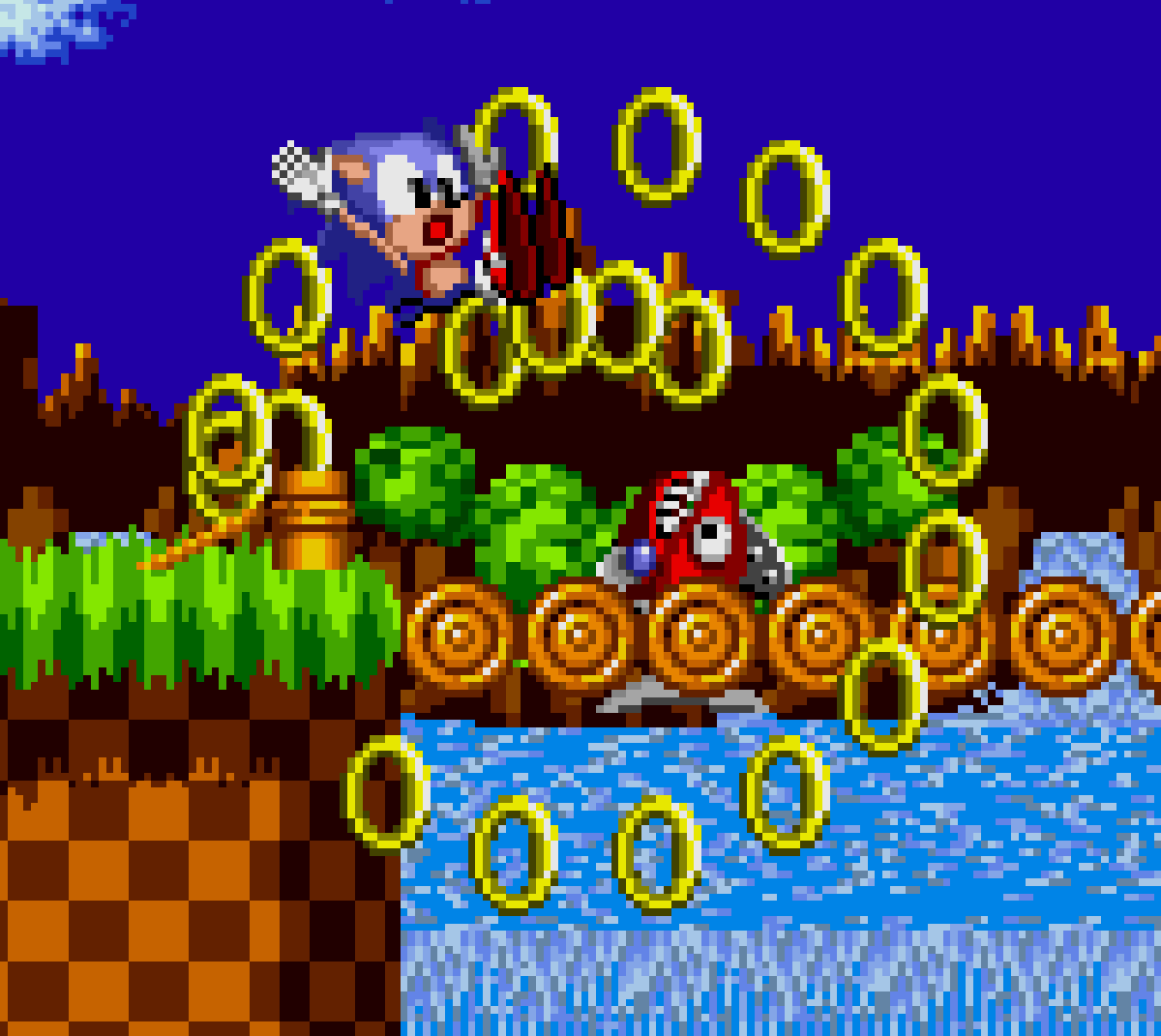
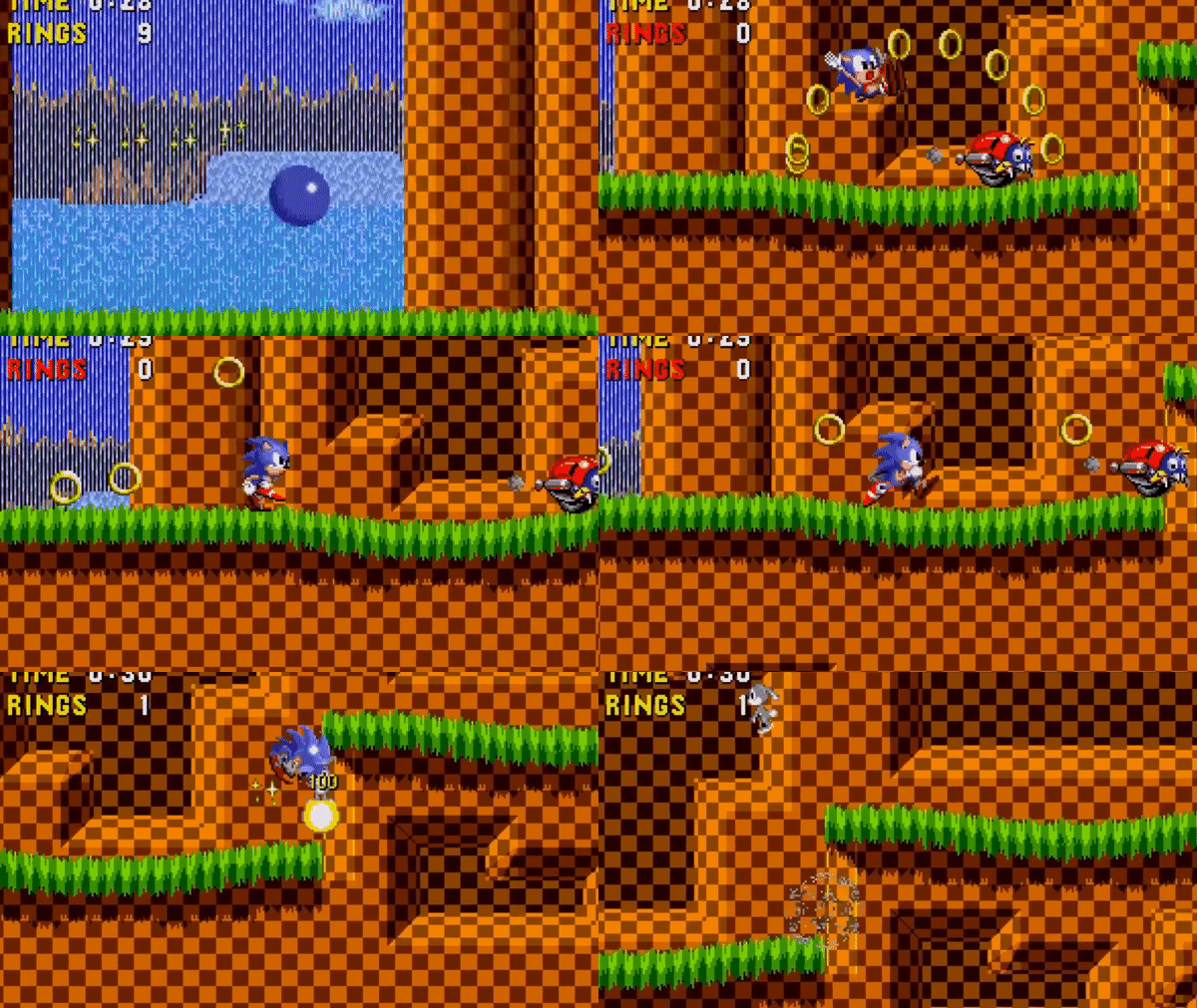
Grassy Cliffs. Sonic The Hedgehog walks into a beetle robot, losing rings, which scatter out in a circle from him. Sonic then destroys the robot by spinning into a ball. (Sonic The Hedgehog)
Gameplay this week sourced from Evolution of Sonic getting hit and losing rings (1991-2021)

To elaborate on what bothers me about this system I went and tried to elaborate on what makes a compelling health or damage system in general. To me, there are three things to guide the design of a successful player health system. A successful health system may include one or all of these. First, the health system provides a balance knob by which the designer may tune how many mistakes a player can make before incurring a greater failure state like a Game Over. It makes for a pretty simple tool to balance the game. If it’s too hard, players can simply be given more health or ways to restore their health. Furthermore, this balance can change as the player collects upgrades and gets stronger, or encounters more deadly enemies. It’s good for tuning the interest curve. Secondly, health systems can create a sense of tension or danger, to shore up the threat of the player’s opposition. Instant death makes for threatening enemies too, but that little bit of anticipation a more graduated health system provides, as the player slowly watches their strength wane with each hit they incur, it exaggerates and emphasizes that danger. Third, health systems can be used to incentivize players in interesting ways to guide the gameplay, by tweaking how it is that players regain or maintain their health through specific behaviors. Doom 2016’s glory kills, which reward aggression when the player is low on health, comes to mind.

So how does the blue blur do on all of these fronts? Well, the ring system is rather limited in that having rings only prevents Sonic’s defeat through a single mistake, before more rings have to be collected. In this way it doesn’t do much for balance. By virtue of how the system works, rings are always available when you get hit, unless you’re over a bottomless pit and will just die from the fall regardless. Rings are also plentiful enough in the world that tense moments of danger are few and far between. This is a good thing in a sense, Sonic is a game about flow and freedom, less one about oppression or danger. The result, though, is often that getting hit is just annoying – a disruption to that flow- more than anything else. Sonic gets a lot of its somewhat undeserved reputation of excessive simplicity from this. It’s hard to fail (instant death traps aside), and very easy to get annoyed.

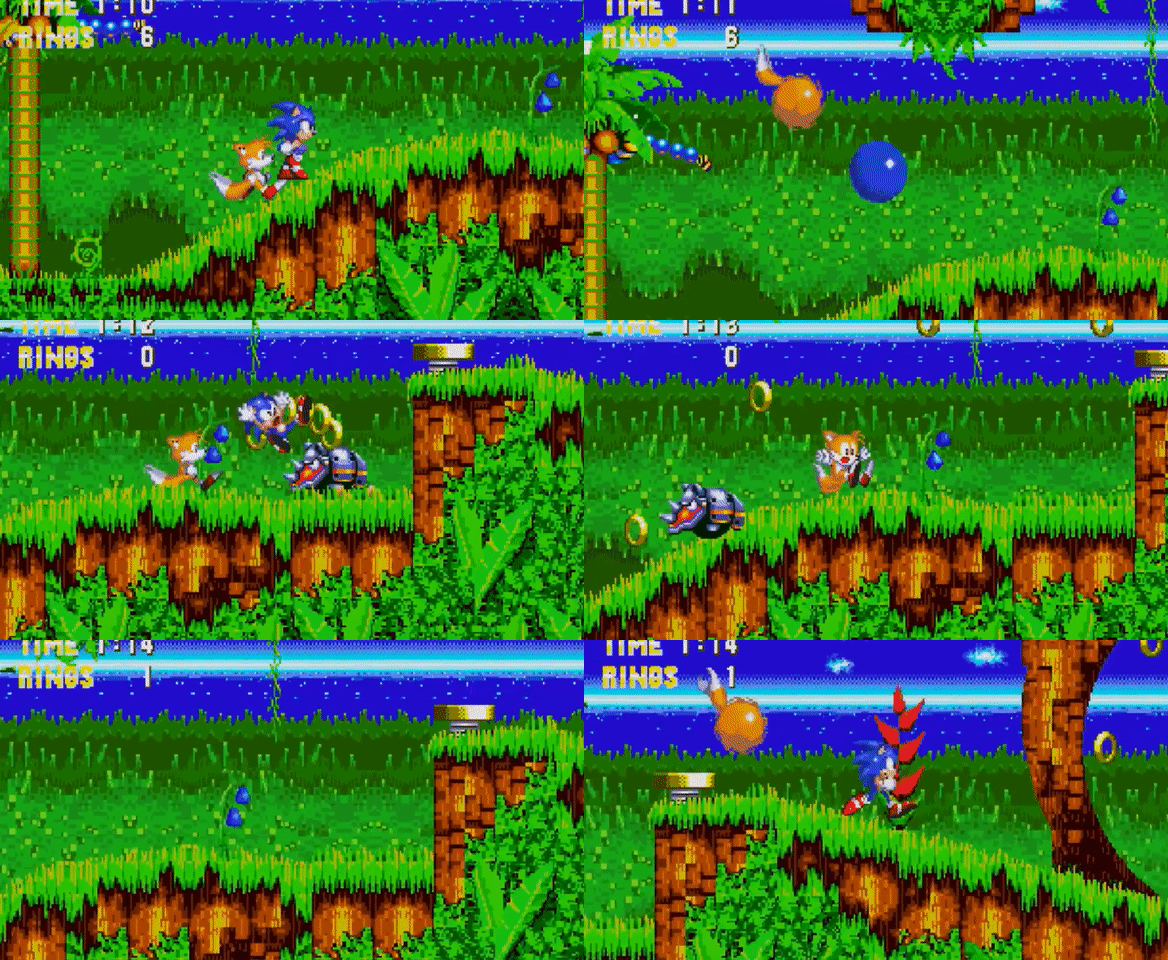
Grassy Hills. Sonic The Hedgehog walks into a moving robot and loses rings, which fall into the foreground and off the screen. (Sonic The Hedgehog 2)
I feel like this ‘scattering rings everywhere’ thing works better in the 2D games, generally. With one less axis to worry about, it feels less restrictive.

Finally, rings are indeed a highly incentivizing aspect of Sonic games, especially those of which have a store in which rings can be exchanged for prizes, although this brings up an important point. I feel as though rings are desirable more for their excellent audio-visual design and feedback. It’s fun simply to hear and see the cheery, shiny sound and sparks of collecting them, and watching the ring counter go up, rather than for any practical gameplay reason. The reason for this is that collecting an excess of rings does very little to contribute towards the player’s success. Sure, having a certain minimum number of rings makes it far less likely you won’t be able to pick up another ring before it disappears, once the player gets hit. However, there is a maximum number of rings that can actually be displayed on screen before any excess rings simply evaporate. You get no real advantages having 200 rings over having 20 rings. So, Sonic‘s health system doesn’t do much to incentivize interesting gameplay. On the contrary, actually, since having a single ring can theoretically keep Sonic alive indefinitely, the player isn’t really incentivized to learn about their obstacles or enemies because getting hit doesn’t have much of an impact or consequence. Some Sonic games have attempted to address this, by having Sonic only lose a fraction of his ring total on hit. The results are a similarly toothless health system, in which hoarding large numbers of rings essentially trivializes any threat enemies could possibly pose, without addressing any of my other issues with the system.

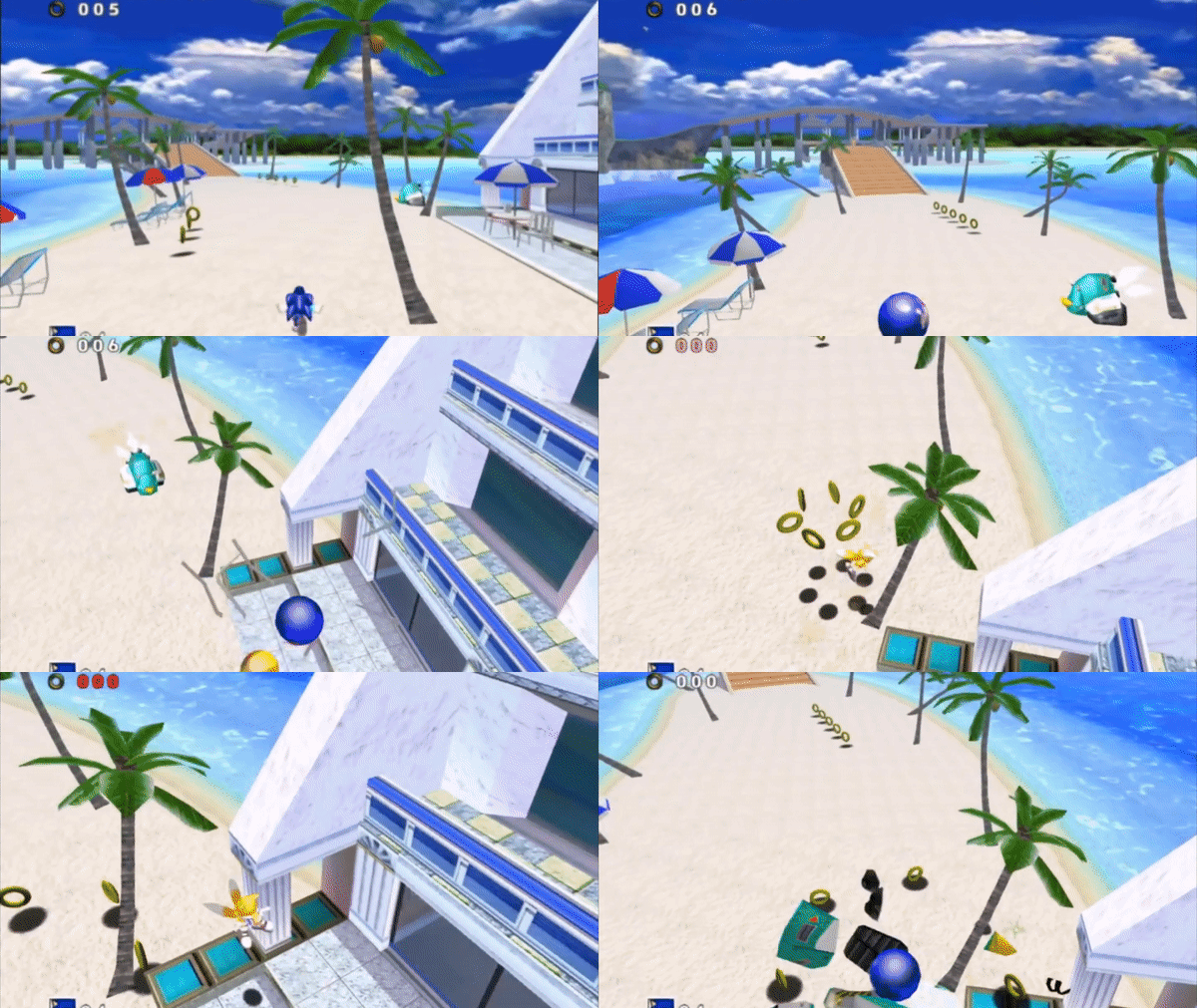
Sunny Beach. Sonic The Hedgehog dashes through the air, but is hurt by a tank-like robot, losing rings which scatter on the ground. (Sonic Adventure)
Stop to pick them up, or ignore them and keep going. Kind of just pointless or disruptive.

One thought I’ve had on it is how starkly getting hit in this game kills momentum. I get it, it’s kind of the point. In lieu of a persistent tracker for how many mistakes the player makes, getting hit simply means halting forward motion, which means you don’t hit that all important state of flow that makes Sonic games so enjoyable. That annoyance is your incentive to get better at avoiding obstacles. At the same time though, if that’s what we assume the player wants – to go fast- then it is odd that rings are scattered around the player when they’ve bit hit at random, or in the case of the 3D games, in every direction on the floor. Surely, we only want to incentivize the player to go in one direction – forward. If a player wants to re-collect some of their lost rings, as they surely would, then they can’t immediately continue their forward momentum where they left off, they have to take a moment to mill about collecting the rings. It’s just a bit odd. Elsewhere in Sonic games, free-floating rings are used as signposts to guide that sense of forward momentum for the player. If you see a path of rings, it’s generally a clear and safe path forward to gaining speed.

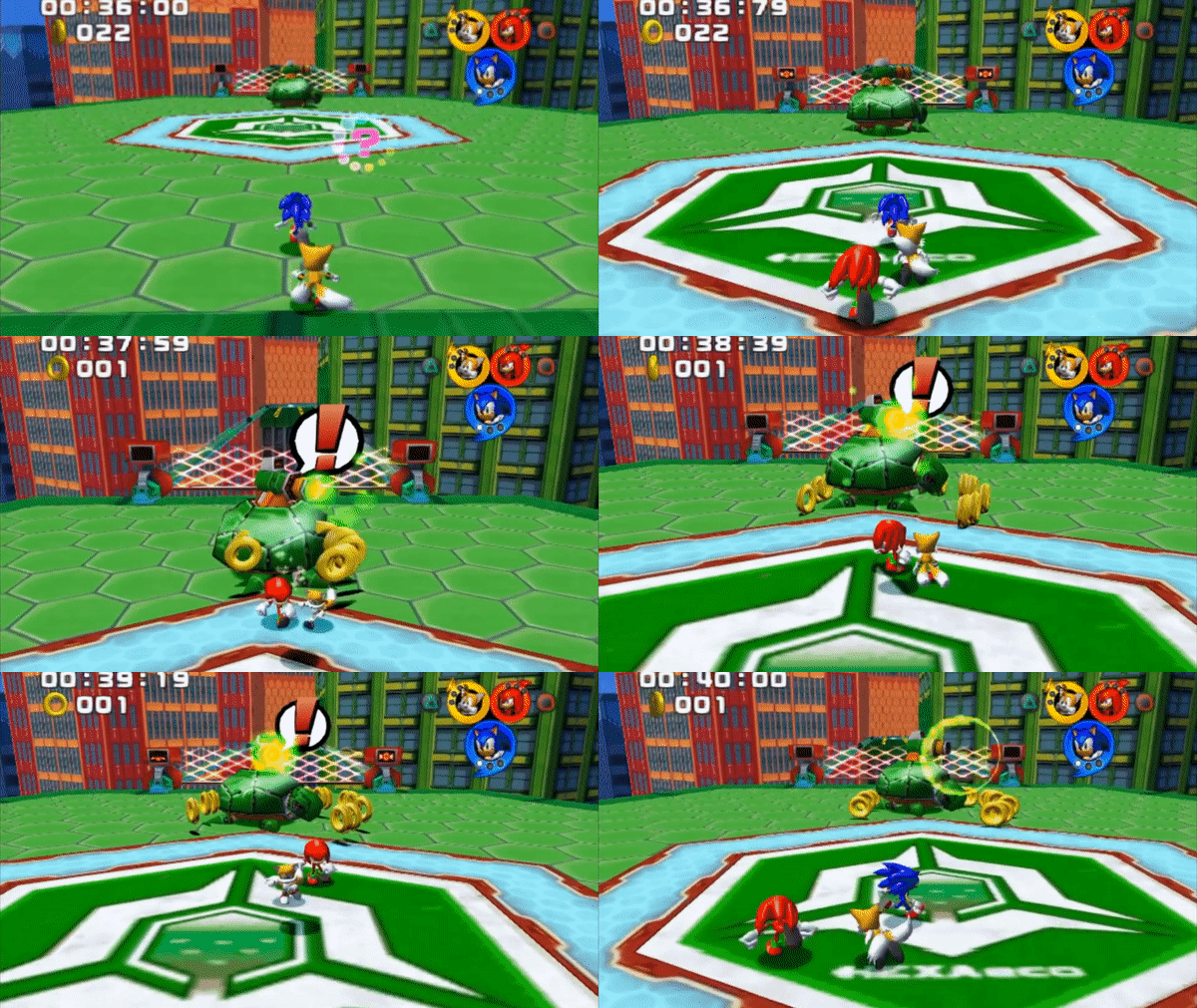
Sci-Fi cityscape. Sonic The Hedgehog, Knuckles, and Tails run into a robot turtle, getting hurt and scattering rings on the ground. (Sonic Heroes)
Sonic Heroes loves to kill forward momentum. It’s basically its favorite thing.

Losing rings normally does not create much of a sense of tension for me either. Getting hit in a Sonic game rarely creates any palpable danger for Sonic, outside of falling into instant death pits. This all-or-nothing approach makes enemies in Sonic games rather toothless, until they aren’t in very specific scenarios, which can often feel cheap – as though the difference between losing some rings and having to start over is outside of the player’s control. You lose any sense that dangerous things in the world are actually dangerous, and more like the environments are dangerous in a way that’s almost arbitrary.

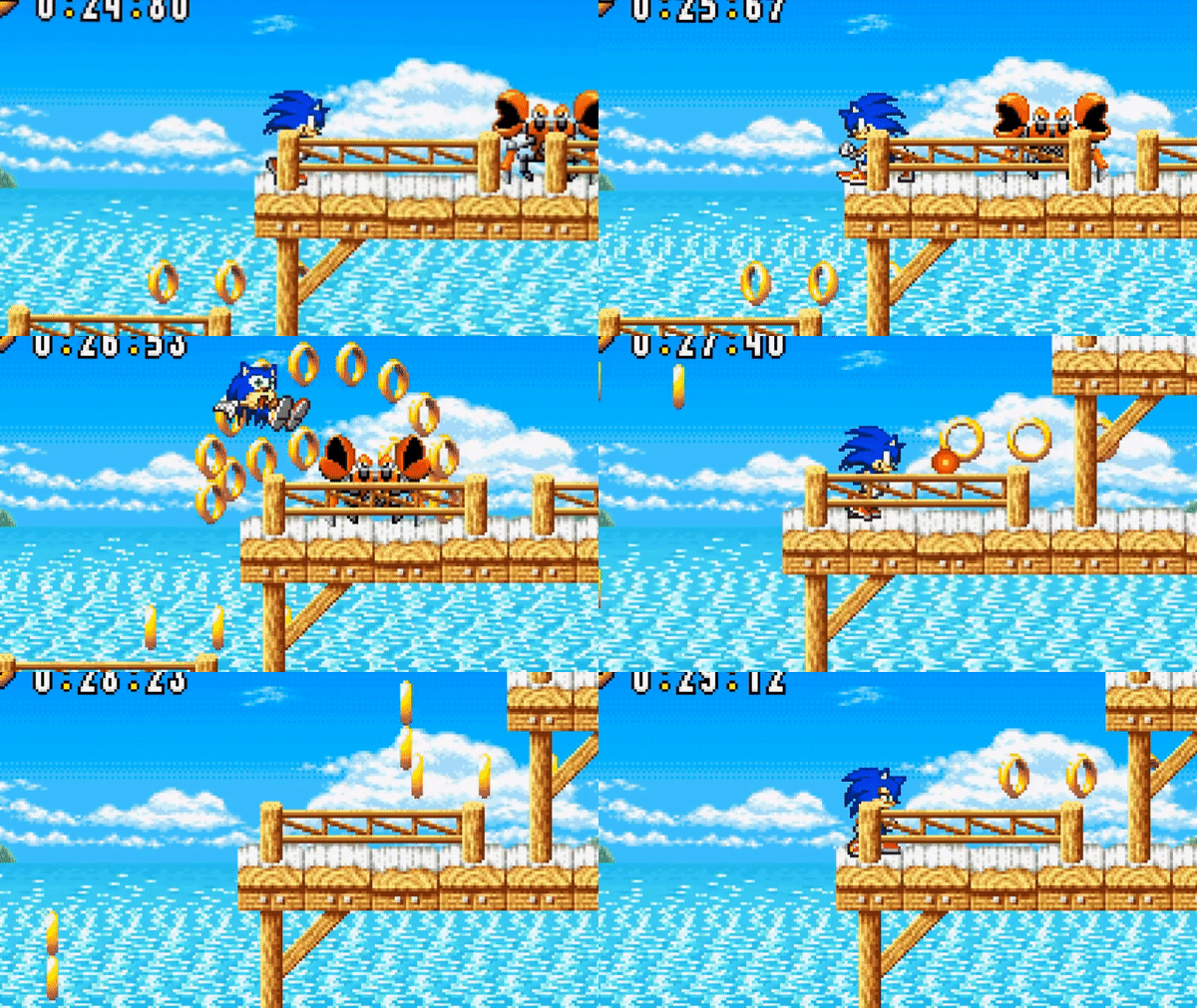
Beach Pier. Sonic The Hedgehog walks into a robot crab, getting hurt and scattering rings everywhere. (Sonic Advanced)
Are we really expecting the player to double back and chase those rings here?

What if, instead of spraying rings in every direction, when Sonic is hit, rings fly out ahead of Sonic relative to the direction he’s moving, so that when it comes time to re-collect rings, Sonic needs to keep moving forward in the direction he was going? He needs to regain his lost speed to regain what was lost. First of all this make sense. If Sonic is losing speed and letting go of his rings at the same time, they should logically pour out in front of him as they retain their previous speed. That’s a secondary concern, but not an unimportant one. I think making the rings behave realistically that way could contribute to keeping the gameplay flow even when Sonic gets hit, which is my primary concern here. The main thing this would accomplish is keeping the re-collection of lost rings as a harmonious part of simply playing the game, which is to say, running forward. Sonic is all about doing things while running forward – defeating enemies while running, avoiding traps while running, and yes, collecting rings while running. In this scenario not only is there a greater challenge, a greater uncertainty of re-collecting what was lost that calls on player skill, but it’s far less disruptive, not requiring the player to behave in a less fun and interesting way as punishment for being hit. On the contrary, your punishment for being hit is a momentary increase in intensity and demand of skill, or in other words, a heightening of tension.

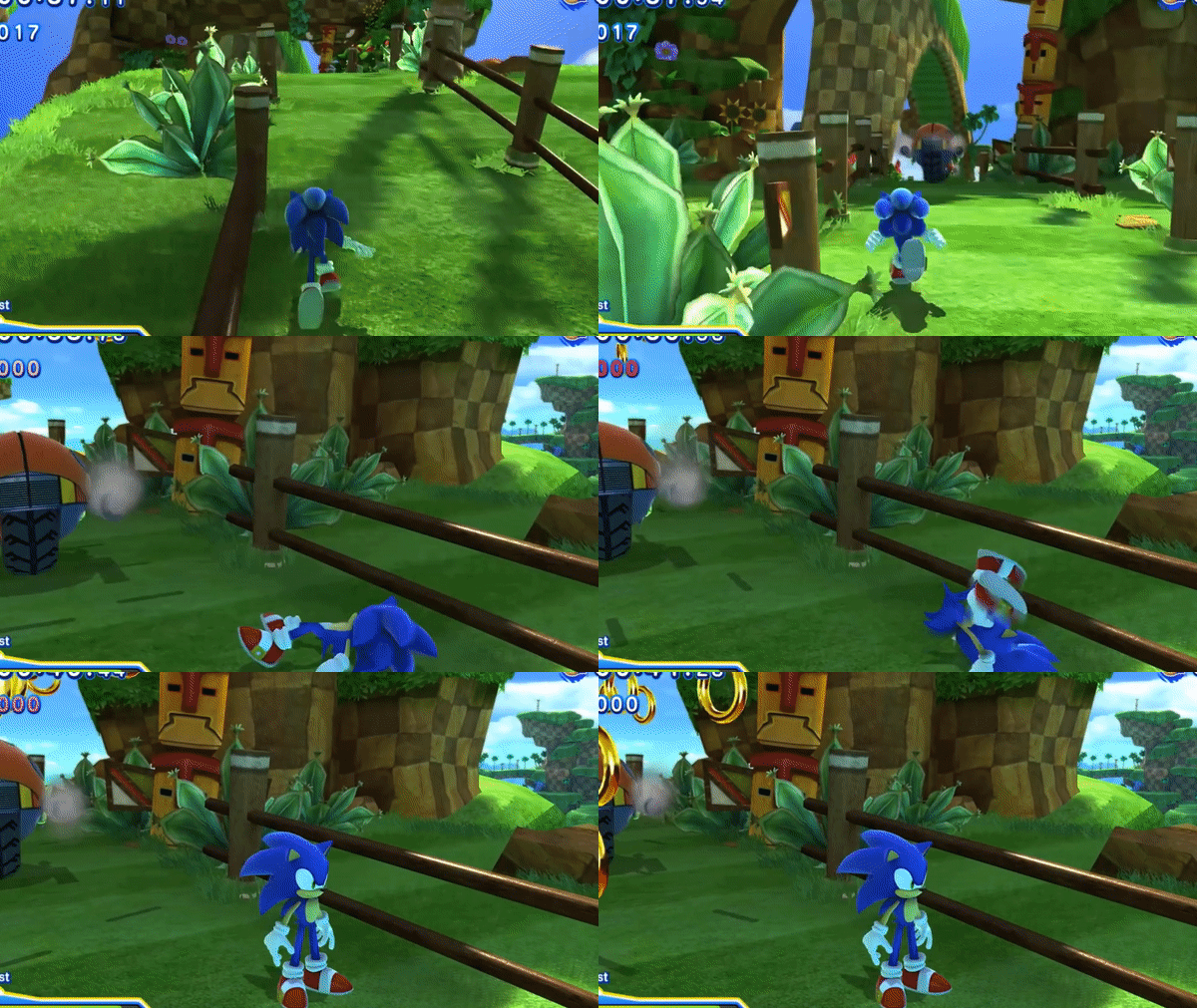
Grassy Hills. Sonic runs into a beetle robot, getting hurt and scattering rings a small distance ahead of him. (Sonic Generations)
When I say ‘fly out ahead of sonic’, I mean send the rings into the distance, so you have to like, build up speed and run after them. Maybe we could even ease up on the ‘knock Sonic on his ass’

Sonic is as inseparable from his rings as Mario is from his coins, which was the point, of course, when Sonic was invented in the 90s. Sonic was meant as a counterpoint to Mario, to stand out as different. He’s younger, faster, and has an attitude. His game is about speed, and his collectibles serve as health, in a way. It’s certainly novel enough to have survived about a billion iterations on Sonic games, but I’ve never totally understood how it fits in a game that’s about speed. Everything good that I love about the Sonic franchise is somewhat apart from this one odd yet oddly persistent gameplay mechanic. The classics like Sonic can provide a useful lens to see how certain design goals can be successfully executed. However, I’d never want to design something in a way just because that’s how it’s always been done. The weird ring system has its advantages, like near any mechanic in the right circumstances, but I’m still skeptical it’s the best solution for what Sonic is and could be.

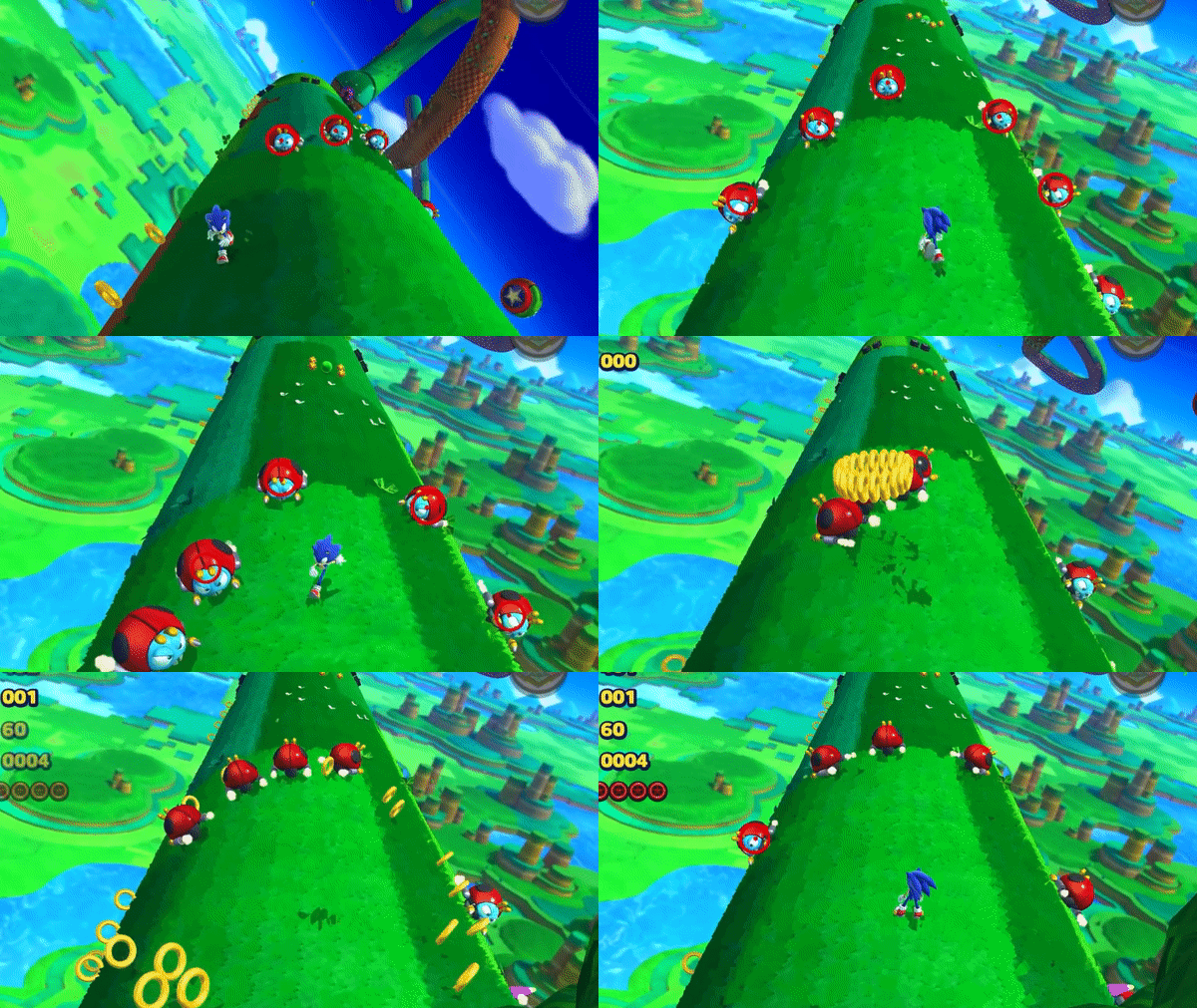
Grassy tube-shaped planetoid. Sonic The Hedgehog walks into a beetle robot, getting hurt and scattering rings in a circle around him. (Sonic Lost World)

Don’t give up on the sun. Don’t make the sun laugh at you…

Yes, that is a real Sonic quote.