There’s a specific design ethos that I’ve noticed runs through a lot of roguelike games such as Risk of Rain 2 and The Binding of Isaac: Rebirth. These are action games in which the player collects a myriad of various weapons, powerups, and augments to enhance their combat capabilities. These items often do weird and wild things that greatly change up the gameplay, and yet, they all almost always work together in ways that never cancel out. Every item you collect remains significant throughout your run of the game, and adding new powers on top of it only further enhances your abilities, and often, these items even synergize in exciting ways that multiply your capabilities. Risk of Rain 2 and The Binding of Isaac: Rebirth adhere to this design philosophy almost religiously.
A lot of games have cool effects and weapon qualities that augment your combat abilities, but tend to lean toward special exceptions, edge cases, and fuzzy inter-connectivity between combat abilities. For example, I play a Dark Knight character in the online RPG Final Fantasy XIV. The Dark Knight can spend the resource MP on special abilities which deal extra damage, allowing them more attacks in the same amount of time than they’d normally be able to do . The Dark Knight can also activate an ability called Blood Weapon to restore some MP with every attack ability they land for a few seconds. I’d often find myself wondering if I can generate MP with the same abilities that spend it, as they are technically attack abilities. Through experimentation, unfortunately, the answer is no. I feel as though storing up MP to spend before using Blood Weapon to get in more hits is a cool ability synergy I’m missing out on because of this arbitrary lack of inter-connectivity. Blood Weapon also specifies in its description that extra MP is not awarded for using AoE abilities which hit multiple enemies, another case of non inter-connectivity of abilities. A lot of RPGs do this, Final Fantasy is just one example. This can not only cut off cool synergies that reward exploration of ability interactions, but also makes systems more difficult and complicated to read, as the player needs to parse sometimes very complicated layers of exceptions when it comes to understanding how things work. Being able to critically strike with normal attacks does not guarantee one can critically strike with special attacks, etc.
Something that a lot of roguelike games such as The Binding of Isaac and Risk of Rain have embodied, is a system of interconnected combat abilities which do not interfere with one another, and coexist with very few special exceptions. I never find myself asking the question ‘do these two things work in concert?’ while playing Risk of Rain 2, as pretty much invariably, they do. Sometimes this happens in ways you may not even expect, but are a welcome synergy when you realize. For example, Risk of Rain 2 features an item which will spray razors at nearby enemies when you take damage, and even these razors will apply any attack effects the player has, like bleed and critical strike, among others. This opens a world of possibilities, where things like building a loadout in which taking hits is a viable method of destroying enemies, may be plausible.
Here my tears (bullets) are capable of blocking enemy projectiles, shooting out of the back of my head, and inflicting fear on enemies, all-in-one!
There are a couple of big advantages to this strategy. As I explained above, it allows for a much grander scope of variety when it comes to player loadout, which often translate to a grander variety of playstyles. Variety is always an excellent tool for increasing replayability, expanding your games appeal, and just generally enhancing interest. Another advantage is a clarity and unity of combat attributes when it comes to the player’s loadout. You’re demanding less parsing of systems, rules, and exceptions on the part of the player if it can be assumed that any advantage they obtain from an item or powerup can be applied universally.
Notice that the arc of lightning, itself a powerup, originates from the missile, another powerup. Powers in Risk of Rain can be nested, and synergize in this way.
To be clear, there are also advantages to making exceptions to ability interaction, even beyond the technical overhead. Design wise, lots of games have made interesting decision making out of a specific separation of abilities. One of the most common forms this takes is separate magic and physical ability types, wherein each set of abilities have their own advantages and disadvantages that don’t intersect, which leads to compelling strategizing on the part of the player. Sometimes having to choose between one advantage and another is a good thing, both for strategic depth and for fun. Another advantage to compartmentalizing game mechanics in this way is simplicity for the designer’s sake. Making sure everything in a very large pool of game mechanics mix and mingle in an organic way can be a daunting task.
The disadvantages, however, become apparent when abilities do not combine in ways that feels like they should. If a special item exist that causes your bullets to split on impact and hit multiple enemies, and there’s another item that causes your bullets to bounce between enemies, it stands to reason having both my allow your bullets to split as they bounce between targets. In The Binding of Isaac, this is the case! Although I’m sure you can imagine a fair few games with similar scenarios in which these items are mutually exclusive, and that cuts off a lot of interesting gameplay opportunity!
Passive damage is one of my favorite ways to play Risk of Rain 2
I love how in this clip, my passive lightning-emitting item is launching missiles and spraying lava at enemies. I have an item that causes me to do so when damaging enemies, and indeed that means all damage I deal, no matter the source. This comforting reliability, that any special bonus to attacks I pick up applies to all forms attack allows me to play the game in whatever way I want. If I prefer to use the shotgun, I can. If I want to focus on passive damage, I can. If orbital strikes are more my thing, that works too.
I do love those orbital strikes.
Another example of this from Risk of Rain 2 that I love are the mobility items. The Hopoo Feather allows your character to perform a double jump, or in other words jump a second time in midair before touching the ground. If get multiple Hopoo feathers… you just get more midair jumps. In fact, I was lucky enough on my last run to get three Hopoo feathers, meaning I can jump a total of four times in one. This insane level of mobility is something many games would shy away from, the fact that Risk of Rain 2 does not makes all of its systems feel a lot more organic and reactive to the player.
Get enough items in this game, and you can basically fly.
Overall, I tend toward preferring this sort of game mechanic parity that allow unambiguous and universal interaction between mechanics. When every stacks with everything, I find it all much simpler to understand as a player. I also find it affords a lot more room for creativity in playstyle by allowing a multitude of interesting and often bizarre combinations. There’s a lot of design overhead necessary to make sure everything works together seamlessly and without jank, and not every gameplay system will be conducive to this level inter-connectivity of gameplay mechanics
Sonic The Hedgehog is an exquisite corpse of a franchise with a history as deep, interesting, and confusing and some of earth’s mightiest empires. You could fill volumes on the ins and outs of this thing. I cannot deny, I love this weird little rodent and his weird little world immensely. Yes, I’m as excited as anyone for Sega’s next absurd windstorm of a Sonic title, despite all the, uh, feedback, I’m about to unleash. Sonic has had some very high highs for me, and it’s a series that does certain things in gameplay that have never quite been captured elsewhere. There’s a laundry list of things people like to complain about in regards to this series, and I’d probably agree on most fronts too. Instead of the usually suspects, though, I want to complain about something I haven’t seen brought up before. It’s something that’s been with Sonic since the beginning, actually.
I don’t know if this is something that only bothers me. Perhaps that’s why I feel the need to get this jotted down and explore my feelings about it, but the Sonic The Hedgehog franchise’s rings system is weird, right? In Sonic The Hedgehog, and near every sequel and spinoff to that game since, rings have acted as the primary collectible – a sometimes currency, sometimes score counter, and almost always a barrier against the failure state. While rings in Sonic games frequently have some use within the game that make them valuable, their primary purpose is to prevent a Game Over. When Sonic is hit by an enemy or obstacle, he’ll lose all the rings he’s collected, spilling them out into game space, where they can be re-collected. If Sonic is again hit without any rings, the failure state engages, and Sonic is returned to the last checkpoint.
To elaborate on what bothers me about this system I went and tried to elaborate on what makes a compelling health or damage system in general. To me, there are three things to guide the design of a successful player health system. A successful health system may include one or all of these. First, the health system provides a balance knob by which the designer may tune how many mistakes a player can make before incurring a greater failure state like a Game Over. It makes for a pretty simple tool to balance the game. If it’s too hard, players can simply be given more health or ways to restore their health. Furthermore, this balance can change as the player collects upgrades and gets stronger, or encounters more deadly enemies. It’s good for tuning the interest curve. Secondly, health systems can create a sense of tension or danger, to shore up the threat of the player’s opposition. Instant death makes for threatening enemies too, but that little bit of anticipation a more graduated health system provides, as the player slowly watches their strength wane with each hit they incur, it exaggerates and emphasizes that danger. Third, health systems can be used to incentivize players in interesting ways to guide the gameplay, by tweaking how it is that players regain or maintain their health through specific behaviors. Doom 2016’s glory kills, which reward aggression when the player is low on health, comes to mind.
So how does the blue blur do on all of these fronts? Well, the ring system is rather limited in that having rings only prevents Sonic’s defeat through a single mistake, before more rings have to be collected. In this way it doesn’t do much for balance. By virtue of how the system works, rings are always available when you get hit, unless you’re over a bottomless pit and will just die from the fall regardless. Rings are also plentiful enough in the world that tense moments of danger are few and far between. This is a good thing in a sense, Sonic is a game about flow and freedom, less one about oppression or danger. The result, though, is often that getting hit is just annoying – a disruption to that flow- more than anything else. Sonic gets a lot of its somewhat undeserved reputation of excessive simplicity from this. It’s hard to fail (instant death traps aside), and very easy to get annoyed.
I feel like this ‘scattering rings everywhere’ thing works better in the 2D games, generally. With one less axis to worry about, it feels less restrictive.
Finally, rings are indeed a highly incentivizing aspect of Sonic games, especially those of which have a store in which rings can be exchanged for prizes, although this brings up an important point. I feel as though rings are desirable more for their excellent audio-visual design and feedback. It’s fun simply to hear and see the cheery, shiny sound and sparks of collecting them, and watching the ring counter go up, rather than for any practical gameplay reason. The reason for this is that collecting an excess of rings does very little to contribute towards the player’s success. Sure, having a certain minimum number of rings makes it far less likely you won’t be able to pick up another ring before it disappears, once the player gets hit. However, there is a maximum number of rings that can actually be displayed on screen before any excess rings simply evaporate. You get no real advantages having 200 rings over having 20 rings. So, Sonic‘s health system doesn’t do much to incentivize interesting gameplay. On the contrary, actually, since having a single ring can theoretically keep Sonic alive indefinitely, the player isn’t really incentivized to learn about their obstacles or enemies because getting hit doesn’t have much of an impact or consequence. Some Sonic games have attempted to address this, by having Sonic only lose a fraction of his ring total on hit. The results are a similarly toothless health system, in which hoarding large numbers of rings essentially trivializes any threat enemies could possibly pose, without addressing any of my other issues with the system.
Stop to pick them up, or ignore them and keep going. Kind of just pointless or disruptive.
One thought I’ve had on it is how starkly getting hit in this game kills momentum. I get it, it’s kind of the point. In lieu of a persistent tracker for how many mistakes the player makes, getting hit simply means halting forward motion, which means you don’t hit that all important state of flow that makes Sonic games so enjoyable. That annoyance is your incentive to get better at avoiding obstacles. At the same time though, if that’s what we assume the player wants – to go fast- then it is odd that rings are scattered around the player when they’ve bit hit at random, or in the case of the 3D games, in every direction on the floor. Surely, we only want to incentivize the player to go in one direction – forward. If a player wants to re-collect some of their lost rings, as they surely would, then they can’t immediately continue their forward momentum where they left off, they have to take a moment to mill about collecting the rings. It’s just a bit odd. Elsewhere in Sonic games, free-floating rings are used as signposts to guide that sense of forward momentum for the player. If you see a path of rings, it’s generally a clear and safe path forward to gaining speed.
Sonic Heroes loves to kill forward momentum. It’s basically its favorite thing.
Losing rings normally does not create much of a sense of tension for me either. Getting hit in a Sonic game rarely creates any palpable danger for Sonic, outside of falling into instant death pits. This all-or-nothing approach makes enemies in Sonic games rather toothless, until they aren’t in very specific scenarios, which can often feel cheap – as though the difference between losing some rings and having to start over is outside of the player’s control. You lose any sense that dangerous things in the world are actually dangerous, and more like the environments are dangerous in a way that’s almost arbitrary.
Are we really expecting the player to double back and chase those rings here?
What if, instead of spraying rings in every direction, when Sonic is hit, rings fly out ahead of Sonic relative to the direction he’s moving, so that when it comes time to re-collect rings, Sonic needs to keep moving forward in the direction he was going? He needs to regain his lost speed to regain what was lost. First of all this make sense. If Sonic is losing speed and letting go of his rings at the same time, they should logically pour out in front of him as they retain their previous speed. That’s a secondary concern, but not an unimportant one. I think making the rings behave realistically that way could contribute to keeping the gameplay flow even when Sonic gets hit, which is my primary concern here. The main thing this would accomplish is keeping the re-collection of lost rings as a harmonious part of simply playing the game, which is to say, running forward. Sonic is all about doing things while running forward – defeating enemies while running, avoiding traps while running, and yes, collecting rings while running. In this scenario not only is there a greater challenge, a greater uncertainty of re-collecting what was lost that calls on player skill, but it’s far less disruptive, not requiring the player to behave in a less fun and interesting way as punishment for being hit. On the contrary, your punishment for being hit is a momentary increase in intensity and demand of skill, or in other words, a heightening of tension.
When I say ‘fly out ahead of sonic’, I mean send the rings into the distance, so you have to like, build up speed and run after them. Maybe we could even ease up on the ‘knock Sonic on his ass’
Sonic is as inseparable from his rings as Mario is from his coins, which was the point, of course, when Sonic was invented in the 90s. Sonic was meant as a counterpoint to Mario, to stand out as different. He’s younger, faster, and has an attitude. His game is about speed, and his collectibles serve as health, in a way. It’s certainly novel enough to have survived about a billion iterations on Sonic games, but I’ve never totally understood how it fits in a game that’s about speed. Everything good that I love about the Sonic franchise is somewhat apart from this one odd yet oddly persistent gameplay mechanic. The classics like Sonic can provide a useful lens to see how certain design goals can be successfully executed. However, I’d never want to design something in a way just because that’s how it’s always been done. The weird ring system has its advantages, like near any mechanic in the right circumstances, but I’m still skeptical it’s the best solution for what Sonic is and could be.
Don’t give up on the sun. Don’t make the sun laugh at you…
I love parrying things in video games. You might have already guessed that. I’m always looking for how and why things work or don’t work in games, so I have a particular interest in one of my favorite gameplay mechanics, the parry. So what is a parry? In the context of an action game, I’d define it as a maneuver the player can execute on the fly to nullify incoming damage and disarm enemy defenses, which requires an acute execution of timing to succeed. Commonly, it’s a button press that initiates a short window of animation during which, if an enemy attack connects with the player character, the parry activates. After considering how to approach the design of this gameplay mechanic, I’ve decided there are three pillars of a good parry mechanic: usability, versatility, and impact.
Usability describes the practicality, from the player’s perspective, of actually using the parry at all. How restrictively difficult is the timing necessary to succeed in using one? Is the risk of using the parry worth the reward? How necessary is the use of this parry to succeeding within the game? Are there other specific considerations like spacing that make the parry more or less practical?
Versatility describes the frequency of general use cases for the parry. Can the parry be used to deflect any attack encountered in the game, or is it limited in some way? Can even large and powerful enemies be parried? Do you need a specific weapon or in-game skill to use the parry? Is the parry’s reward worth forgoing a more straightforwardly offensive approach?
Impact is at the center of what makes me want to use a parry. A parry can be powerful, but ultimately I am motivated to use it by how fun it is. What’s the audio-visual feedback of a successful parry like? Do I get a rush from disarming my opponent, or is the reward for parrying barely noticeable? Does it make me feel powerful? Does it make me feel skilled?
FromSoftware or FromSoft is a Japanese game developer well known for their popular action games, all of which in recent memory include a parry of some kind. I want to run through three of their flagship titles, the original Dark Souls, Bloodborne, and Sekiro: Shadows Die Twice, and analyze their respective parry mechanics through this lens I’ve come up with to see how it can be applied to specific cases.
The parry mechanic in Dark Souls is an interesting beast. A favorite of the game’s more hardcore fans but, in my experience, one that new and even many veteran players ignore completely. It’s powerful, and it’s fun to use once you get the hang of it, but that’s kind of the problem, it’s not very fun to learn to use, and many players will not bother with it, as it is far from essential to completing the game. I’ve found most friends I’ve introduced to the game simply ignore the utility of parrying, or try it once and discard it in favor of the game’s more developed mechanics.
Though powerful, the parry in Dark Souls is stiff, restrictive, and difficult to master
The parry in Dark Souls suffers severely from a lack of usability and versatility. Usability, as I explained, is my concept of how practical it is for a player to actually execute your parry maneuver consistently and successfully. Firstly, this parry is not universally available – the player must be wielding a small or medium sized shield in their off-hand. Given the wide and varied options of character customization in this game, it’s possible a player won’t be using a shield at all. I think the greatest source of dissuasion for using this mechanic, though, is how difficult it is to succeed with it. Dark Souls has a very specific and narrow window of time at which a parry will succeed. An enemy’s attack must connect with the player character during this 6 frame window – that’s one fifth of a second. Needless to say, it is a difficult mark to hit. Now, with practice one can hone in on Dark Souls‘ very consistent and reproducible rhythm. Not every enemy attacks with the same timing, but they all share a fairly general pattern of wind-up, swing, and follow-through. Once you get it, you’ll find parrying a pretty consistent tool.
Failing to parry can result in incurring massive damage, and its timing is excessively strict
However, the skill floor to reaching this point of consistency is restrictive, even by this game’s standards. Given how great the risk is of failing a parry in this game, and how the game itself trains players to be extremely risk-averse with enemies that deal massive amounts of damage when interrupting player actions, players are naturally disinclined to even take those risks. Thus, they’ll not learn the parry timing. What’s more, most enemies can be thoroughly dispatched, with far lesser risk, by simply striking them down with your favorite weapon or spell when the foe’s defenses are down, between their attacks. I conclude that the parry in Dark Souls is not entirely practical, or usable without a great deal of personal investment, time, and effort most players will find better spent in learning the nuances of movement, dodging, and attacking. These options are far more practical, realistically, even if the parry becomes very powerful once one masters it.
The impact of this parry is intense, and intensely reward, so it’s a shame it’s so hard to use
This would be enough turn off most players from the mechanic on its own, but the move also struggles in the versatility department, meaning the frequency of its general use cases. Dark Souls is filled with enemies that can be parried – essentially any enemy that can suffer a backstab. I’d always say that any enemy with an obvious spine that your player character can reach can probably be backstabbed and parried, as a general rule of thumb. Not every enemy matches this criteria though, and nearly none of the game’s 25 boss encounters do either. Boss encounters are a major part of this game, and something players will be spending a lot of time on. They’re also notoriously among the game’s most difficult and high-intensity segments. Since parrying is useless in those encounters, it further disincentivizes paying the mechanic any time or energy. If you can’t use a move for a game’s greatest challenges, what worth is it? Any real world skill building towards parry mastery is, objectively, better spent on other things, if finishing the game is your goal.
I like using the Dark Souls parry – it’s got excellent impact. A harrowing low boom sound effect accompanies its successful use. Parried enemies reel in a wide, exaggerated swooping animation, soon to be followed by a riposte that drives a weapon straight through them, gushing comical amounts of blood (if the foe has blood). It all really accentuates the player’s power and superior skill over the opponent. The totality of the audio-visual feedback here is excellent, it’s just a shame so few will ever get to actually see it. The move is simply not useful to a significant portion of the player base.
When a mechanic like this goes so underutilized by your players, the designer might ask themselves what’s causing this discrepancy, and what can be done to address it.
In Bloodborne, FromSoft wanted to shift to a more action-oriented system, less about patient and considered movements, more about reaction and aggression, as compared to Dark Souls‘ more traditional RPG inspired roots. As part of this shift, the parry in Bloodborne was made to be more of a central mechanic than in Dark Souls, something to be expected of the player regularly throughout combat encounters. So that means getting players to actually use it. First, FromSoft needed to address usability. Bloodborne‘s parry is unique in that it takes the form of a projectile. This accomplishes two things. One, it makes accounting for space exceedingly easy for players. Dark Souls was fairly strict about where player and opponent were standing for a parry to successfully work. In Bloodborne, if an enemy is shot during the tail end of its attack animation, it will be parried, no matter its distance from the player. Two, this means the player does not have to put themselves in direct danger to parry, as an enemy can be parried even if their attack is very unlikely to actually hit the player. The risk to parrying now feels much more proportional to the benefit, making it a valid alternative to just wildly attacking.
Even when incurring damage, it’s possible to parry in Bloodborne, the mechanic is forgiving
As the timing for Bloodborne‘s parry is now timed to the enemy‘s attack, and a moving projectile, rather than lining up the player’s parry animation with the enemy’s animation, the player really only has to track one movement, the enemy’s. Together, these elements remove a ton of cognitive blocks on actually using Bloodborne‘s parry system, so its usability is extremely effective by comparison. Bloodborne‘s parry is also extremely versatile. When looking at the 30 or so bosses in the game, about 15 of them can be parried, roughly half, making mastery of the parry a far more effective tool in way more situations than it was in Dark Souls. Bloodborne doesn’t shirk in the impact department either. The same familiar boom sound effect accompanies a success, and can be followed up with a violent and beastly visceral attack that grabs the enemy’s insides, twists them, and rips out a huge gush of blood, knocking the foe to the ground and stumbling nearby enemies. The player hunter’s sense of superiority over their prey is the focus.
Even the biggest and burliest can be parried, and at a distance too!
The Dark Souls parry had another issue I didn’t mention; if you did master it, and made it a consistent tool in your arsenal, many enemies outside of boss encounters become exceedingly easy to deal with, even if they are still fun to beat. Nevertheless, this runs the risk of the move becoming too powerful, especially if it’s easier to use. FromSoft’s solution to this was to make parry attempts a limited resources. This elegantly maintains the risk of attempting a parry, while assuaging the frustration of losing one’s own progress as a result of said risk. There’s still some risk of injury to a failed parry, but it’s much less likely than in previous games, most of the risk is the parry-centric resource of quicksilver bullets.
If Bloodborne made parrying a more central mechanic, then Sekiro made parrying a core mechanic, one of the primary action verbs of the game. Parrying is most of what you do in combat. Formally, the Sekiro move is called ‘deflection’.
To accomplish its design goals, Sekiro‘s parry is made to be even more accessible and low-risk than Bloodborne‘s. A deflection can be directly transitioned into from a block (which itself nullifies incoming damage), and a block can be transitioned to directly from a deflection. Both ‘block’ and ‘deflect’ are activated with the same button, block is simply the result of holding it. Deflections are initiated when the button is compressed, not when it is lifted, so erring on early deflections makes the maneuver even safer – deflections that fail for being used too soon simply result in a block. No damage is taken either way. The limiting resources of Bloodborne are gone here, at least for parries, so player’s will often find themselves using the deflection move even more than they attack, but this was the goal. Sekiro aims to evoke the back-and-forth clanging of cinematic sword fights, and the game is built around the interest of deflecting a series of attacks in quick succession. Any one given deflection is easy, but the difficulty can be smoothly ramped up by stringing a sequence of them together.
Sekiro conditions the player to use a series of parries as a defensive, and offensive tool
We’ve come a long way since Dark Souls, with a skill floor that is extremely approachable, without sacrificing the skill ceiling. Where the parry window of Dark Souls was only 6 frames, one fifth of a second, Sekiro‘s deflection window starts at the extremely generous, by comparison, half-second. This deflection window decays in size if the player abuses the deflect button. Deflecting rapidly and repeatedly causes the window to shrink down to only a small fraction of a second. The goal is to make any given deflection easy, but the player is encouraged to use their own powers of reaction and prediction, rather than relying on spamming the button. Even still, this window decay is also generous, as the deflection’s full capability is restored after only a half second of not using it.
All this to say, Sekiro has extremely generous usability for its deflection mechanic. It has to, as deflection is the primary tool for defeating enemies in this game. Were it as restrictive as the parry in Dark Souls or even Bloodborne, it would be an exercise in frustration. To counterbalance this, the individual reward for one Sekiro deflection is much lesser, and you need to do a lot of deflections to add up to a bigger reward.
Sekiro is a masterclass in parry versatility. The deflection maneuver is applicable to nearly every encounter in the game. It’s extremely generally useful, so much so that exceptions, attacks which cannot be deflected, are unlikely to be deflected, or require other special maneuvers to deflect, are given their own glowing red UI graphic to further make them stand out. Outside of that, if it deals damage, it can be deflected by the player’s sword, near-universally. Formalizing what can and can’t be parried in this way is also helpful for usability, as it removes guesswork on the part of the player.
When deflecting successfully, right orange sparks fly like a firework cracker was set off as a cacophony of metal sounds clang in satisfying unison. The audio-visual feedback for a successful deflection is actually kind of subtle, compared to simply blocking. It is merely a heightened, more intense version of the block visuals, just distinct enough to unambiguously be its own separate function to ensure players know when they’re succeeding, but similar enough to not be distracting. This makes sense, as players are expected to deflect a lot of attacks in any given encounter. A series of successful deflections looks and sounds like a larger-than-life battle of master swordsmen, with sparks showering about amidst the metal clanging. When an enemy has finally been deflected past the limits of their endurance, Sekiro will delight players with some of the most lavishly animated executions in video games, anything from the tried and true gut-stab, to decapitating a gorilla with a hatchet the size of a refrigerator, to gingerly extracting tears from a dragon’s occular injury. The impact of Sekiro‘s parry system is not only good, but usually proportional to each situation, even though the overall impact of any one given deflection is not super intense.
It’s clear somebody at FromSoftware loves parrying things almost as much as I do. It’s a common mechanic for a reason, giving players an area of skill to strive for mastery over, which reinforces a sense of power. Few things can make a player feel more powerful than successfully turning enemy attacks against them. Over the course of these three games, FromSoft has made parrying more and more central to the experience, to the point of it becoming the main point of focus for Sekiro. It’s clear there was an awareness of how neglected parrying was in Dark Souls among casual players, and even some veterans. They needed to find ways to make using it more attractive, without sacrificing the sense of power it imparted, the thing that makes it fun in the first place. While the Dark Souls parry has its flaws, I’m glade they persisted in iterating on it. I think Sekiro and bloodborne have two of the most consistently fun combat systems out there, and the excellence of their respective parry mechanics are a huge part of that, in Sekiro especially, which deserves its own write-up, eventually. The metrics I’ve come up with here to assess parry mechanics are just the way I look at things, though. It’s useful to look at design through a variety of lenses. So the next time you stab some zombie in the face after battering its arm away like you’re in a kung-fu movie, think about why and how that maneuver works the way it does.
This is part two of an analysis on the boss design of The Legend of Zelda: Majora’s Mask and its remake. Part one can be found here.
Something I’d like to talk about while reviewing these last two bosses is the utility of bosses in general. Rather, what design goals are you fulfilling by including a boss? People love bosses, but why? They tend to be notable spikes in gameplay intensity marking the end of a chapter, level, or other extended segment. Bosses can serve a number of functions be it as a narrative component, accentuating a certain gameplay mechanic, simply being a restrictive challenge, among many others. Considering the design goals of a boss helps keep the experience focused and in-line with what you’re trying to design. I’m going to look at these next two bosses through this lens.
Gargantuan Masked Fish Gyorg is next on the chopping block. As his name implies, this beast will fight you primarily from his home in the water. The fight takes place in a large, deep pool with a single round platform in the center raised just above the water’s surface for the player to stand on. At this point in the game the player will also have access to the Zora form, a power which allows them to breathe and maneuver adaptably underwater by running along the pool’s bottom or swimming at high speeds like a dolphin. I’d definitely call Gyorg the weakest of the original N64 Majora’s Mask boss fights. With very little going on, and a rather disruptive camera, I never find myself looking forward to fighting him.
Get ready to see a lot of this
N64 Gyorg’s fight is kind of confusing, to be honest. While the fight is completely player-directed, it’s also not always clear exactly what you need to be doing in this fight. If you stand on the central platform, Gyorg flails about and tries to knock you off, indicating clearly that you’re meant to fight him in the much more spacious pool, although blind-firing arrows at him with your bow from dry land is also possible. The camera is not very kind when it comes to this method, however. You seem to be punished for not being in Zora form, and once in Zora form Gyorg still just seems to swim aimlessly, occasionally going for a bite at you. There’s so little structure to this fight that one can just sort of… try things out, most of which will only kind of work. What I think you’re supposed to do is use the Zora form’s boomerang ability to stun him.. Then use it again while he is stunned to damage him. He has a weak point you need to hit, but it is targeted automatically if you use the targeting mode. A little odd, a little unclear. If you get the timing right, you can stun lock Gyorg forever and there basically is no boss fight. Get it wrong, and you’ll be seeing a lot of the inside of Gyorg’s mouth in rather frustrating fashion. The problem is, while the targeting mode tries to frame the camera, Gyorg’s wildly moving body will swing it around in an abrupt fashion. Unfortunate, since using the targeting mode is the ideal way to attack him. After he takes some damage, he will release a swarm of small fish to attack you, though they can be largely ignored as one continues to stun-lock Gyorg.
Uhm. Uh. Did… Did I get him?
The total lack of structure in this fight makes me wish it was more environment-directed, and makes me question what the design goals with this fight are. It does not utilize this dungeon’s item at all, nor is it very friendly to using most of the Zora’s powers. Swimming at Gyorg can potentially harm him, but I wouldn’t recommend it. It’s not very fun or effective to do. Since actually swimming is not much involved in this fight, it doesn’t really serve as a capstone to the mechanics of the dungeon its found in either. Gyorg is a bit of a low point for me in Majora’s Mask, not providing much by way of narrative, challenge, or mastery for the player. The most effective strategy “throw boomerangs at him repeatedly”, does not make much intuitive sense, and goes to show how some environmental-direction, either through the boss’s actions or the area they are fought in, can help make a fight’s design goals clearer and more effective.
No, really. When does the fight start?
3DS Gyorg sees a lot more structure and direction by the environment in his boss fight, to become a much more effective boss in my opinion.
This is already a lot more exciting.
Once again we have that obvious orange eyeball-weakspot, but also a notable change to Gyorg’s design. Before his body was a continuous color but now his face is a notable stony gray in contrast to a softer looking red-orange body. The structure of the fight is being communicated. On the 3DS it’s a lot more clear what you’re actually hitting; anything besides Gyorg’s mask. It’s the mask that’s armored, but not his body, indicating it is vulnerable. The camera has been improved immensely when it comes to shooting Gyorg with the bow and arrow. He now jumps into the air or swims along the surface of the water like a shark, framing his bright orange body nicely against the blue arena for some bow shots. It’s a lot more satisfying already. It works so well it seems as though fighting Gyorg from the land is the intended method, although the Zora also still works like in the old game.
This still looks so incredibly silly to me.
This time, once Gyorg has taken enough damage, the land disappears, forcing the player to engage as a Zora. The implementation of the Zora’s gameplay mechanics are still not stellar in this part of the fight, but it’s a marked improvement over the original game. Here, the Zora’s swimming ability is incentivized to quickly release sea mines, whose very presence is a good clue as to what the structure of this fight is. Gyorg will often open his gullet to try and suck you in, but will suck in any stray mines instead, stunning him and opening him for attack.
Hey-hey! Swimming to fight him actually.. kind of works now.
This phase is a little janky as the timing for getting Gyorg to start inhaling and releasing a mine is rather narrow and doesn’t feel as smooth as the mechanics of many other Zelda bosses. Still, overall the changes to Gyorg make him feel like a much more complete experience that actually utilizes mechanics from his dungeon such as the Zora swimming. There’s a lot more variety and feedback for what you should actually be doing. If the design goals here were to engage the player to think about how to adapt to an aquatic foe, it succeeds on that front. I’d give the 3DS version of Gyorg a solid thumbs up over his predecessor.
By janky I mean… well it’s a little disorienting to even figure out what’s going on here.
The final boss I’ll be talking about from Majora’s Mask is the Giant Masked Insect Twinmold. With a somewhat misleading yet somewhat appropriate title, Twinmold is actually two giant masked centipede… worm… things, plural.
The original Nintendo 64 version of this boss fight is extremely open ended, extremely player-directed. There is a special dungeon item you obtain in the hours leading up to Twinmold’s confrontation, but it, like many such items before it, in Majora’s Mask is entirely unnecessary to defeating its dungeon boss. Although you are clearly intended to use it. In fact, Twinmold’s boss room is the only location in the game in which that special item, the giant’s mask, can be used. It grants the player titanic proportions, using some visual trickery to transport the player to a scaled-down version of the boss arena inhabited by scaled down Twinmolds that can be much more easily reached with your now colossal sword.
Wow, this is suitably terrifying.
Whether you decide to don the giant’s mask or not, the concept of this boss fight is extremely simple; Twinmold is invulnerable everywhere along its long body except at the head and tip of its tail. The player’s goal is to strike the head and/or tail of each Twinmold until they die, while avoiding their sharp, undulating bodies. If the player is using their limited magic to do so, such as in utilizing the giant’s mask, they must keep on eye on this magic resource and shrink back down to normal size in order to replenish, risking some greater threat to their health in the process. It’s a straightforward rule set borrowed from previous 2D Zelda games where fighting a giant worm meant aiming for its constantly-moving tail, but adapted to 3D space. It works really well! Rarely are you required to keep exact stock of the player’s sword in 3D space in this way, so it’s refreshing and interesting.
I quite like this iteration of the Twinmold fight. It’s simple, but after the difficult and daunting experience that is their home dungeon, it’s a bit refreshing to just stroll up with this huge amount of power in the giant’s mask and let loose. It seems that, along with spectacle, power fantasy was a major design goal of Twinmold, specifically the power fantasy of gaining the might to outmatch an overwhelming evil, as is often the case with Zelda. It’s a bit of relief from the high-intensity part of the interest curve that makes up much of Majora’s Mask’s later stages. Twinmold is not very difficult, but it is very satisfying and momentous. With the final of four major evils stricken from the world, it feels as though the player has truly accomplished something great. Giving them the freedom to completely direct the boss fight helps reinforce this, by making it a labor of their own agency.
And now… I’M TERRIFYING! Hahaha!
3DS remake Twinmold works quite a bit differently. The fight is now a two-phase affair. In the first phase, the player will not have access to the giant’s mask. On the Nintendo 64 this mask was obtained within the dungeon itself. On the 3DS, the mask is obtained after defeating one of the two Twinmolds. This first Twinmold prefers to fly overhead, and has those large orange eyeball-weakspots on its underside. Shooting it with light arrows will take it down. While shooting, the player must be cognizant of the other Twinmold, which will shell the ground with fire balls.
Really, it kind of feels like he’s asking to get killed
Now, fighting Twinmold without the giant’s mask on the Nintendo 64 is very fun but very daunting. It’s difficult, requiring the player to be constantly aware of their surroundings to quickly position themselves such that they can reach Twinmold with their attacks. The concept of having to defeat one Twinmold against all odds as a tiny normal-sized person before getting the giant’s mask and unleashing overwhelming force against the second is an appealing one. It builds tension and anticipation of the fight to come, adds some nice challenge to this late-game boss, and makes that ultimate power fantasy all the sweeter. It’s a good change in isolation, though I do wish this first phase on the 3DS was more player-directed, with less reliance on those eyeball-weakpoints, which at this very late stage of the game feel somewhat passe. Having to defeat Twinmold in the same fashion as both a human and a giant would better highlight the contrast between the experiences.
ENBEEGEN!
3DS Twinmold’s biggest problems come in the form of the changes to the giant form. Giant form on the N64 controls exactly the same as normal form, you’re just now giant, with reach to match. On the 3DS, however, you become lumbering, slow, and very limited in your moveset. You no longer have access to your sword, instead punching the air in front of you with each press of the attack button. This form on the 3DS just does not feel good to play. It’s cumbersome, difficult to position correctly, and frustrating to hit your targets with. Twinmold is no longer vulnerable on the head and tail, and instead punching it anywhere along its body is viable, presumably because positioning the giant form is so difficult that were the old vulnerabilities in play it would be nigh-on impossible to connect any attacks with Twinmold.
No- yeah, okay. I’ll just… wait here on the ground. You can let me hit you when you’re ready.
Since the player can barely move as a giant, the fight is almost the antithesis of the open-ended fight of the N64, with the player constantly waiting for Twinmold to swing by in a fashion that will allow the player to hit them without accidentally meandering into Twinmold’s spiky body and getting knocked onto the ground. There are also some boulders the player can throw, but you will once again have to wait for Twinmold to hold still in order for them to do anything, and once those boulders are gone, they’re gone. The result is a fight whose exceedingly sluggish flow is determined by the environment, where the player is stuck in a frankly frustrating and unwieldy control scheme unlike anything else in the game.
Gonna go make a sandwich while this is happening.
The fight also lasts forever. This is just a tuning problem – Twinmold clearly has too much health – but I nonetheless became exceptionally bored by the time I had swung Twinmold around like one of those fuzzy worm toys for the fourth time. Where the previous Twinmold’s design goals were clear the 3DS version’s seem somewhat muddied and confused, with good ideas being overshadowed by frustrations and missteps. There’s no power fantasy here, and little sense of awe either. The first Twinmold’s weakness is too obvious, and the second Twinmold is too frustrating.
Good riddance
A mixed bag is how I would describe the remade Majora’s Mask bosses, ultimately. In my estimation, Odalwa is a bit of a step back, Goht has some improvements and some awkward changes, Gyorg is a clear improvement but by no means perfect, and Twinmold is an overall inferior experience despite some good ideas. Aside from my opinion of quality, however, I hope comparing and contrasting the surprisingly different ways all the versions of these bosses were designed helped highlight some of the things to be thinking about when designing bosses. How in control does the player feel? What design goals is your boss meant to fulfill and do they make good on that? Odolwa made me feel the rush of a life or death battle against a swordsman wielding inhuman powers, but some of that is lost if you make the methods by which you can fight him too restrictive. On the opposite end, Gyorg’s confused and meandering original boss fight was markedly improved by the introduction of some structure and environmental cues. Boss design is a deep and broad topic that I’ve only scratched the surface of, but looking at all these different boss designs have given me a lot to think about.
You’re the bad guy. And when you’re bad, you just run. That’s fine, right?
Alright, time to talk about one of my favorite games of all time, The Legend of Zelda: Majora’s Mask. It’s an odd one in the Zelda canon, a direct sequel to the seminal Legend of Zelda: Ocarina of Time developed in only a year, known for its oppressively somber atmosphere and mature themes. It’s a game where an ominous title card greets you at the start of each day, counting down to the end of the world. It’s a weird one, which is probably why I love it so much. I was lucky enough to see one of my favorites receive a total remaster, featuring a big leap in hardware from the Nintendo 64 to the newer, portable, Nintendo 3DS. Remakes and remasters are always a fun topic. What actually gets changed in such revisions? What’s sacred and cannot be touched? I wanted to specifically take a look at the boss battle designs of these two versions of the game as Nintendo made some notably significant changes in this area in particular, while much, though not all, of the game’s other mechanics remain faithfully identical between the two versions. I’d like to breakdown a few of the boss designs to see where the design goals of the versions diverged, while thinking about a concept I’ll call player-directed vs environment-directed boss fights. There’s a lot to go over here, so I won’t be breaking down every single mechanic of every fight and what those elements accomplish (Although, that sounds like a lot of fun. Maybe for another time). Moreover, I want to see how the changes made affected my experience with the bosses. Let’s get started.
This is what I see every Thursday morning
The first major boss of Majora’s Mask for the Nintendo 64 is the Masked Jungle Warrior Odolwa, a demonic swordsman who commands swarms of carnivorous insects. So I mentioned that Majora’s Mask is a weird game, and even its debut boss is proving this true. Traditionally, Zelda boss fights work in a pretty standard fashion. You receive some new item or weapon, and you utilize it in a specific method to exploit a well-marked weakness the boss has. In this way you progress the encounter, like solving a puzzle. Zelda boss fights are usually not very open-ended. This is not universally the case, but it tends to be the norm. That would be an environmentally-directed boss, where it is aspects of the game’s behavior and scripting that dictate the pace of the fight. One can’t shoot the big-eye monster until it opens its big-eye. Boss encounters that can be progressed at the player’s agency, such as where the boss enemy is always vulnerable, are more player-directed. This is not a binary, and there’s a lot of fluctuation on a spectrum between these two styles of boss design. Zelda partakes in both from time to time, sometimes within the same encounter, though I’d say trending more toward environmental-direction.
This boss attack leaves an intentionally designed opening, where striking Odolwa is easy
Odolwa bucks this trend entirely. You can hit Odolwa at any time with a number of implements. In fact, the weapon you find in Odolwa’s dungeon, the Hero’s Bow, is entirely unnecessary for defeating him. It certainly is advantageous to use it, but entirely optional. Odolwa has no obvious weakness, he has no obvious repeating pattern. He has a collection of patterns and behaviors that respond to the player, of which some leave him open to attack, and others less so. Even still, it’s possible to damage him during times that don’t seem like obvious openings, so long as you can connect sword to swordsman. The sum of this is that ‘openings’ are not taken for granted, not guaranteed progress. There is an element of execution and performance required of the player, instead of just following a script.
This attack leaves an intentionally designed opening, where striking Odolwa is- “Insects? Oh god fire!? AHH!”
During the fight Odolwa will summon beetles to hound you from the ground, and butterflies to swarm you from the skies. The beetles can be easily dispatched with sword strikes, while the butterflies need to be more carefully maneuvered around. What I find so distinctive about the Odolwa fight for a Zelda First Boss is how firmly the player directs the pace of the fight. I’m never waiting for anything specific to happen, never just nodding along with Odolwa’s preplanned script. Much more than many other Zelda fights, Odolwa’s encounter on the N64 can go in a wide variety of directions very quickly. He’s basically always vulnerable to attack, and so fighting him becomes a skillful test of how the player can handle an increasingly complex bevy of spacial information. So long as I’m willing to risk it, and I have the finesse to get around Odolwa’s shield, I can deal as much damage as I want as quickly as I want, and even end the fight quite promptly.
In the 3DS version of the game, Odolwa’s been altered quite a lot. Immediately attention is drawn to his new, glaring orange eyeball weak spot. I must compliment the animators for how elegantly it’s conveyed in its intro, much more so than such eyeballs will be in later Majora’s Mask 3D bosses, as it does communicate the new direction the design this fight has taken rather well.
Hmmm… I wonder where his weak spot could be.
On the other hand, while his weakness is clear, a lot of the aspects that made Odolwa unique, if somewhat intimidating, have been dummied out. For one, it is now impossible to deal sword damage to Odolwa while he is brandishing his sword at you. A bit baffling, to be honest, seeing as how Odolwa is a swordsman. It seems rather obvious a player would want to go blade-to-blade with him, yeah? Whereas in the N64 version, Odolwa would use his shield to make hitting him with the player’s sword more troublesome, here it’s all for show. Odolwa is completely immune to sword strikes period.
Blue sparks = no damage. Why does he even need that thing?
Odolwa is once again vulnerable to a variety of attacks, but now they all seem very restrictive, and kind of arbitrary. It seems the goal here was to make the fight more environmentally-directed. One can only damage Odolwa when he presents his new eye, which demands use of the dungeon’s Hero’s Bow item, or the Deku Mask. Perhaps this was in an effort to make the boss more approachable – one advantage of environmentally-directed boss fights is that the player is given a more definitive answer to the problem of how to take down an obstacle, making it more of a puzzle than an actual fight, which is naturally somewhat less stressful. I think there is something to be said for establishing the monsters of Majora’s Mask as these intimidating, aggressive and stress-inducing beasts, however. Some of Odolwa 3D’s changes work against this.
Ooooh, the eye, okay I get it
For example, 3D Odolwa suddenly becomes very passive when the player is utilizing a flower with the Deku Mask power, as this is another ‘correct’ answer to the problem of hitting Odolwa’s glowing, orange, eyeball-weak spot. It makes Odolwa seem kind of… stupid, and less of a threat. He stands around patiently to be pelted in the face with an aerial bombardment. It highlights the artificiality of the encounter and could potentially draw a player out of the all-encompassing atmosphere Majora’s Mask is known for. Some of Odolwa’s tricks have also been removed, seemingly, such as his ability to summon a ring of fire to entrap the player. If it seems as though I am being overly harsh on poor Odolwa, it’s just that I really want to highlight the difference in design ethos here. I suspect the 3DS version of this game was meant to be more generally accessible, as Majora was always a niche as far as Zeldas go. These changes seem to be made toward making the experience more familiar to standard Zelda games.
You gonna… You not gonna try and stop me Odolwa?
There are games with much more environmentally-directed boss fights than Zelda, where the boss’ behavior is entirely divorced from anything the player does, where the player just has to wait and act as they are meant to, or fail to progress. As I said, there’s a lot of variation out there. Ultimately, a lot of the changes to Odolwa are an issue of presentation. The big eye, the initial immunity to sword strikes; it all builds up this sense that you have to be very specific about how you approach the encounter, where in reality a lot of the same strategies work between both versions of the game. The N64 version is just a lot more free-form, and open to more experimentation, while the 3DS version excels in clarity of its intentions.
From N64 Odolwa I felt the malice of a monster in fighting him. Things got chaotic toward the end as I was engulfed in a ring of fire, my enemy gleefully taunting me from just beyond sword’s reach. Then I realized; I could skewer the arrogant warrior with the bow I found in the dungeon! But I’d have to be careful, man-eating butterflies and beetles swarmed me. It really felt like a struggle for survival. 3DS Odolwa gave me the feeling of solving a puzzle. It’s more like dissecting a more strict set of rules, as Odolwa behaved much more predictably.
One down.
Masked Mechanical Monster Goht, our second major boss enemy, sees much less drastic changes than his little brother in the jump from Nintendo 64 to Nintendo 3DS, but there are still some noteworthy ones. Goht is a giant mechanical, erm, goat of sorts with the face of a man. His fight involves chasing him around a circuit in the form of a rolling goron wheel at high speeds. The player’s goron wheel takes some time to rev up, and requires a magic resource to maintain its speed, but once it does, it protrudes spikes that can be used to damage Goht by ramming into him. Hitting his legs deals damage, but hitting his back by going off of a ramp and landing on him knocks him down, allowing the player to strike him directly with powerful punching attacks.
Butt slam for style.
This fight is almost entirely player-directed, entirely open-ended. Chasing Goht is the name of the game, but how you go about this is wholly up to you. Goht is vulnerable at any time, and the pace of the fight is determined by how well the player can execute on the chase. Knocking Goht down is advantageous, but by no means necessary, and the methods to do so are rather open ended, with the complex mechanics of the spinning goron wheel offering a number of options. If ever the player runs low on resources, it is up to them to decide when and how to replenish by hitting the magic jars speeding by on the circuit, and what risks they are willing to take to do so.
Daytonaaaa!
As I said, 3DS Goht is mostly the same, but the changes he does have are significant. For one, Goht can now be knocked down by repeatedly hitting his legs, or by landing on top of him. The ramps lining the circuit are now regularly shaped, and require much less speed to initiate a jump. Since Goht can be knocked down either by landing on his back or by clipping his heels now, and since landing on his back is now much easier in this version, the entire decision is less significant. Both options are still there, but neither provides any clear risks or advantages.
What’re you looking at?!
The reason for this is that knocking Goht down is now required to deal direct damage to him. When grounded, Goht reveals a huge eyeball weakspot, in a rather goofy and incongruous fashion. At this point, the player must remove their goron power and take out the dungeon’s item, the Fire Arrows, to deal damage to the eye. This makes the fight simultaneously more stiff, moving away from that more loose player-directed design ethos of the N64 boss fights, if only slightly in this case, while also adding an extra step. It’s a little strange, as though the eyeball only exists as an excuse to make the fire arrows relevant to this boss fight. It also disrupts the pacing of the fight, forcing the player to change from a goron to a human with a slow animation, and then shooting this fast-running monster while standing completely stationary. For N64 Goht, hitting him while knocked down blends seamlessly from chasing him, as one does not even need to change out from being a goron.
The original N64 Goht is such a strange fight for a Zelda game. A high-speed car chase, essentially, complete with bombs, electric gunfire, falling debris, the works. The ability to strike Goht from any angle with the goron wheel adds such an intense dynamism. Thankfully, that’s more or less maintained throughout all versions. The 3DS version of Goht managed to feel mostly reminiscent of the original, which for a remake I think is usually a good thing. Making the ramps for pulling off aerial jumps in the 3DS version more consistent and easier to use may lower the skill floor a bit, but it also lets you do cool fun things more often, so it’s a fair trade. I mean this is only the second boss, after all. The need to pull out the fire arrows occasionally felt like an unnecessary road-bump, and made me roll my eyes a bit (as well as Goht’s, hardy har), but it’s a very minor thing and ultimately the two fights are nearly equally fun.
Two down.
So it seems the Majora’s Mask 3D remake is going for a lot more environment-direction for its boss fights as opposed to player-direction. In presentation, at least, it gives the impression that the fights are more rigidly defined, with less room for exploratory play. The advantages of such an approach can be a more quantifiable end experience that the developer has more control over, but there are also drawbacks such as the loss of that sense of exploration, experimentation, and realism in the experience. Drawbacks that I’d argue Majora’s Mask wasn’t entirely in need of. I don’t want to give the impression that Majora’s Mask 3D didn’t improve upon the old in some ways. Some accessibility considerations like making the jumps in Goht’s fight easier to pull off will probably make it more fun for most. The heavier involvement of dungeon items in the boss fights make them feel more congruent with the dungeons they’re in, if not necessarily the greater atmosphere of the world. And still, these are only two of Majora’s Masks‘s bosses, but this is running pretty long. I think next week we’ll take a look at the remaining two bosses of the Majora’s Mask superfecta (that’s a trifecta, but four, I just learned). There are definitely some positive changes there that I’m excited to talk about, including ones that exploit the advantages of environment-directed boss design. Hope to see you there.
Certainly, he had far too many weaknesses to use my power…
Risk of Rain 2 is a roguelike action game developed by Hopoo Games and published by Gearbox Publishing. It was released in early access for PC and consoles in 2019 before fully releasing on August 11, 2020. The gameplay premise of Risk of Rain 2 is as follows: You are a space-faring adventurer exploring a hostile alien world, overrun with monsters that will appear in order to kill you, in greater and greater numbers the more time you spend on the planet’s surface. You can collect various weapons and artifacts to empower yourself as you go to the face the ever greater challenges that intensify with time.
There’s a lot going on with Risk of Rain 2 design-wise that’s very interesting, but I’d like to focus on the game’s elites system, particularly how it was designed efficiently to accomplish a lot within a relatively manageable scope by utilizing the fundamentals of how an action combat system works, at the most basic level. I want to answer how those pieces fit together, how they create a compelling experience, and how they were utilized in this particular instance for Risk of Rain 2.
Man, there certainly is some… Game Design,, happening here. I mean just. Just look at it go.
The elite monsters in Risk of Rain2 are randomly generated normal enemies, the likes of which you will see in droves, but with specific extra attributes along with slight changes in appearance to signify this. They are rarer than normal enemies, and thus their appearance is a bit of an event, something to take notice of. Their incidence becomes more frequent the longer a game session goes on. There are five main archetypes of elite monster. Blazing, Overloading, Glacial, Malachite, and Celestine. These archetypes can each be randomly applied to near any enemy that normally spawns. While an elite monster will have enhanced offensive and defensive capabilities, their unique traits also seem to be very deliberately chosen to complicate matters in a much more subtle way. Nearly all of them concern the player’s relative position to the elite enemy, the spatial relationship between them.
When you get down to it, there are some fundamental factors to be thinking about when developing a real-time combat system for a game. One of the ultimate goals in design should be encouraging the player to be making meaningful decisions, decisions that feel, to the player, as though their involvement is having an important and material impact on their experience in the game. Making complicated or fast-paced meaningful decisions is where challenge comes from. Having a variety of ways to answer such meaningful decisions is where player expression and play-styles come from. It keeps the player paying attention, keeps them engaged. One of the main avenues to accomplish this in a real-time combat system is to keep the player thinking about the main variables unique to real-time combat: space, time, and their relation thereof.
When fighting in real-time, the player’s position relative to any danger such as an enemy will be constantly shifting. Meanwhile the time investment of their own actions, compared to the time an enemy takes to execute an action, works in concert with these spacial relationships to determine essentially every outcome combat can have. No matter how complex the system, these two basic pillars of spacial relationship and timing are the building blocks of how it all works. A sword slash creates an area of threat for a set amount of time that damages an opponent if they intersect with it. If the opponent has a defensive action whose duration lines up with that sword slash they can protect themselves from harm. Attacks have limited reach, dodges have specific timing, and thus mastering the way these timings and positions relate to one another is how the player manages their own risk, and is essentially always the way to master this sort of combat system. For a designer, knowing your tools is how you can design for those meaningful decisions, to make the process of mastery a fun and engaging one. Space and Time are two of the most primary tools for designing real-time combat.
In the case of Risk of Rain 2‘s elites, nearly all of them create specific considerations of space for the player. The glacial elite is a good example. Upon death, they leave behind a conspicuous sphere of frosty air and ice particles that, after just a moment, burst with ice, freezing any players present within the sphere in place for a couple seconds, leaving them vulnerable. Perhaps you are already seeing how this situation works with the basic pillars of real-time combat to promote some active decision making on the part of the player. Normally enemies can be cut down with no heed in this game, but when a glacial appears, suddenly there are more decisions to be made. When should they be killed? How will I escape their ice bomb once they are? What are the consequences of how I approach this? Risk of Rain2, as its name implies, is a high-stakes game where players can die easily, losing a lot of progress in the process. Something as simple as being frozen for a few seconds can mean death depending on the situation. Other times, it’s just an inconvenience. This variability keeps the player thinking and promotes that meaningful decision making. One player might play it safe and always destroy glacial elites from a distance. One player might consciously keep a movement option available to escape the ice bomb.
As the ice bomb forms, my priorities quickly change, I make the snap decision to get clear of it.
The blazing, malachite, and celestine elites work similarly, creating specific and dynamic areas of threat that players must play and plan around. They do different things – blazing monsters leave behind trails of fire as they move, malachite monsters can suppress the player’s healing, and celestine monsters hide the presence of other nearby monsters, making them totally invisible. However, the principle is the same. By creating these areas of threat at somewhat random intervals that all work in different ways, and can even overlap when several elites are on screen, the player has more to consider in their positioning and how they tackle the situation, upping the challenge, and promoting the player’s expression through gameplay. These periodic moments of higher-intensity decision making is one of Risk of Rain2‘s most interesting aspects.
Blazing monsters and their trail of fire is of particular concern to melee-oriented player characters, as opposed to ranged-oriented ones. They help to differentiate and individualize the different roles and play styles the player can take up. It’s far more dangerous for a melee character to engage a group of blazing monsters, and this affects their decision making when they crop up.
Keeping my foe at sword’s length, hitting it only with the tip of the blade, is an effective strategy.
The overloading elites work with the other pillar of timing. Normally, any damage dealt to enemies is permanent and persistent, meaning the player can at any time retreat, recover their own health, and return to finish an enemy off. The top half of an overloading enemy’s health, however, will regenerate if left alone for too long, making finishing them off somewhat of a priority, another interesting decision to consider. Some of the other elites have elements of timing in their special qualities as well, such as the blazing elites dealing damage-over-time, and the malachites’ healing suppression.
Overloading enemies leave a lasting effect when they hit you, and will keep coming back if not dealt with fast.
Celestine monsters are rare but very disruptive. The principle of hidden vs nonhidden information in games is its own topic, but I hope it’s obvious how completely hiding all the visual behaviors of enemies shifts the dynamic of the player and enemies’ spacial relationship drastically. The player will definitely want to reconsider how they approach such a scenario. Each of these are just a wrinkle; a small, minor change to the dynamic between player and enemy that completely re-contextualizes how they approach the situation.
Not pictured: invisible enemies
The result is a player who is constantly on the look out for these wrinkles, these unexpected developments. The surprise and the added danger is invigorating, exciting, and novel. In a word- engaging. A lot can be done with a little, and using the combinative potential of these elite archetypes, there are theoretically unlimited novel scenarios the player might find themselves in. Elites could come from any angle. Above? Below? They could take the form of any enemy. Enemies that shoot from a distance, enemies that rush you down. These elite archetypes can even be applied to bosses, creating a ridiculously hectic and dangerous challenge for hard core players to overcome later in the game.
So these elite monsters accomplish a lot. Periodic moments of high intensity created by manipulating the player’s relationship with space and time lead to a more engaging interest curve. This is all accomplished with some pretty simple mechanics that can be overlaid onto essentially any monster in the game. Risk of Rain 2‘s already impressive menagerie of monsters that all behave in unique and interesting ways is essentially multiplied in number by five. Instead of the art, tech, and design overhead needed to create dozens of more monsters, a huge variety of gameplay situations were achieved by mixing and matching these archetypes, of which only a handful needed to be designed. It seems to me this was achieved through a thorough understanding of positioning and timing in real-time combat and how to manipulate those pillars to organically produce interesting and compelling situations. Understanding the basic building blocks of your gameplay systems, and how they affect player behavior is a really good way to begin understanding how to design efficiently and effectively.
Alright, let’s get down to business with something simple – the dodge roll. One of my favorite examples of the form, to be exact, the dodge roll found in Dark Souls 1. It’s a common gameplay mechanic, particularly in action titles, that’s well loved for the simplicity of what it accomplishes for the player and for the designer. What the dodge roll is, in the simplest terms, is a snappy maneuver your player character in Dark Souls can do at almost any time to quickly traverse a short distance in a short time, briefly becoming invincible during the maneuver to, well, dodge things. It feels great to do, it’s useful, and helps the player feel agency over the flow of combat. How does it accomplish this?
One of the main strengths that this particular dodge roll has going for it is the quickness and responsiveness of the action. You’ll notice when playing Dark Souls that the dodge roll begins almost immediately when the game detects a dodge roll input- when the dodge button is released quickly from a press, in this case. There is little to no anticipation in the dodging animation, and the dodge maneuver’s invincibility frames, or iframes, the frames of character animation during which a character cannot take damage, start almost immediately. The dodge roll is used in combat as a reaction to danger- the player will see a monster wind up their attack, and dodge in response. The player is already entirely focused on their own, real-life response time, the response time of their digital avatar to input needs to be negligible, lest the player lose that agency over gameplay.
iframe highlight is approximate
This allows the player to react to dangers in real-time without having to make unnecessary extra considerations for their character’s limitations. If you dodge, you dodge, no preparation necessary. This is important to establishing a sort of player-avatar harmony that helps shore up the illusion of play, and immerse the player in their role (or maybe in their roll). The player *is* the knight on screen, so they can dodge whenever they want, as quickly as they can react. This was so important to Dark Souls‘ design that even the heaviest, slowest, clunkiest version of the dodge roll, the one used for characters over-encumbered by heavy armor, executes almost immediately on input. Like the other versions of the dodge, the vulnerable frames of animation are almost entirely back-loaded on the action. It’s the recovery time where the player places themselves at risk. If they reacted poorly, it’s during that recovery time when they will take damage.
Fall out of the way if you have to, just do it quickly!
The iframe window is extremely brief, and so demands timing and precision of the player, further reinforcing the need to watch one’s opponent, to know exactly when and how to dodge. The dodge roll also has a traversal component, moving the player character in a burst of speed much greater than their typical walk. Any combat action will normally be some sort of an investment or risk. Once the action is called on, it will run through a preset amount of time where the player has little to no control. Using a dodge roll poorly can potentially place the player in an unwanted position, encouraging an awareness of one’s environment. Having a reliable tool like this with the general use of ‘make me momentarily invincible’ puts the onus of taking damage and therefore failure almost entirely on the player. If you can read an enemy’s attacks, you can nullify them completely, just with this one simple tool. This powerful tool’s design enables Dark Souls‘ signature experience of overcoming tremendous hardship through the player’s faculties alone, using an action that maps very closely to the player’s own powers of observation and reaction. It’s that closeness that interests me most about this dodge roll.
A dodge roll is a perfect reactive answer to attacks with big windups
When examining what makes combat actions especially compelling for me, I’ve come upon a concept I call ‘immediacy’. In this context immediacy is the concept of minimizing the friction between the player and the interface, or in other words their in-game avatar. When I push a button on a controller, I expect my character to have already begun the wind up of their action. In my mind, we are acting as one entity, and the action we’re about to take began when the signal to move my finger and push a button first entered my brain. By the time that signal has traveled to my finger, through the controller, across the airwaves, into my game console, through my TV, and into my eyes, there has been an unavoidable bit of latency. There’s a natural delay there, between how I expect the action to play out, and how fast the game can actually render it. That latency has to be accounted for, in order for the action to feel responsive. This may seem obvious, but design decisions such as the time-frame of combat action, the number of frames during which it is active, its visual appearance, all have to be made deliberately. Even something as small as a few extra frames of animation can have drastic gameplay implications.
In fact, it’d be better if by the time I push the button, my character is already partially done with their action, eliminating that bit of unnatural latency that doesn’t exist in the real world entirely. This is why character actions and especially dodges, which act as one of the player’s main avenues of agency, generally crunch down the anticipation time those actions would have in reality. When I go to throw a punch, I have to pull my fist back to wind up, but by the time I push a button in a video game, the wind up has already happened in my mind. The fist should already be thrown, the dodge already rolled as it were. Or at least, it should be perceived that way.
Using animation tricks like single animation frames of anticipation can help in this regard. The player character in Dark Souls practically flops into their dodge roll with almost no transition. If there ever is anticipation for these sorts of actions, they tend to be extremely brief. If you break the sense of immediacy, you quickly create distance between player and avatar, and the challenge of player against world you designed for suddenly becomes player against player character, a frustrating wrestling match between what the player wants to do and what the system is capable of. The system needs to be able to respond to the player’s proprioception, or sense of body position – the fist should already be thrown by the time the button is pressed.
The dodge roll activates on button release, and instantly gets down to business
The Dark Souls dodge does extremely well on this front, but it’s not perfect. The dodge roll specifically comes out when its associated button is released, not when it is compressed. This is not normally an issue, as most players will be pressing and releasing their action buttons in quick presses. Dark Souls is a tense game, however. The squeezing and gripping of controllers is common, and holding the dodge button by mistake, or not releasing your compression before an attack hits you can feel unfair. Again, it’s that proprioception, the sense of body. Even if in this case it’s my virtual body. When I push the button down, I feel as though I have already initiated a dodge, and so it feels wrong if the game does not respond in kind. The reason for this is that Dark Souls has its dodge and sprint inputs on the same button. Holding the button initiates a sprint, releasing it quickly after pressing initiates a dodge. One solution to this would be putting the sprint action on a different button, which later Dark Souls entries would implement as an option. Sekiro implements another solution, where the dodge action transitions directly and seamlessly into the sprint action, if the button is still held.
Despite these issues the first Dark Souls had a laser focus on what it wanted out of its dodging action – fast, responsive, versatile. These qualities create a sense of immediacy between the player’s inputs and the character’s actions that breaks down the barrier between the two. Actions like these are at their best when it feels less like the button pushing and the dodge-rolling is separate, but rather that they are synonymous. Ideally, they would feel the same, as if there is no perceptible distance between the two. This frees the player’s attention up to focus on the game world and their own relation to it, rather than their relation to the hardware. Thinking in terms of immediacy helps for making combat more satisfying and immersive in a really straightforward way.
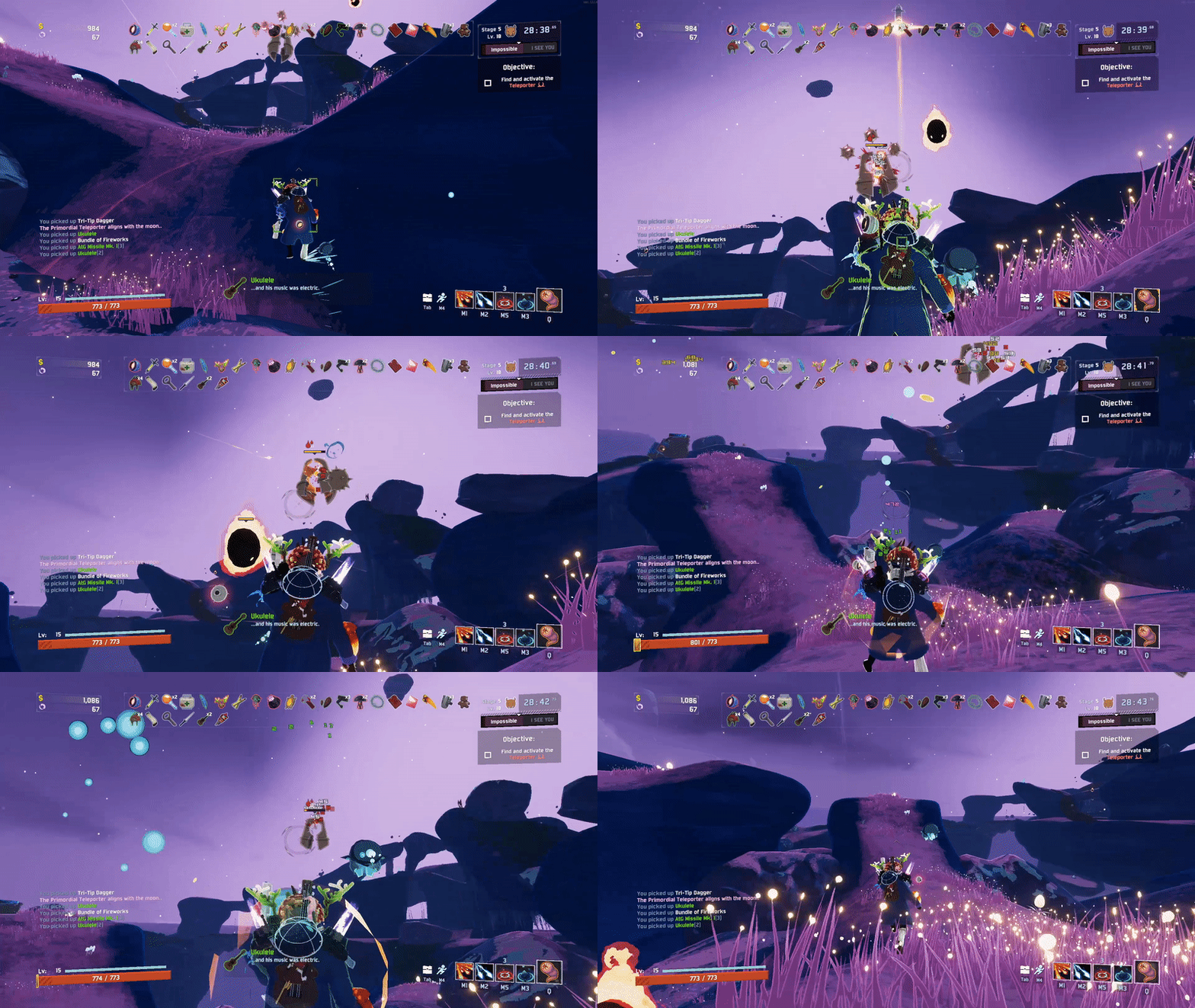
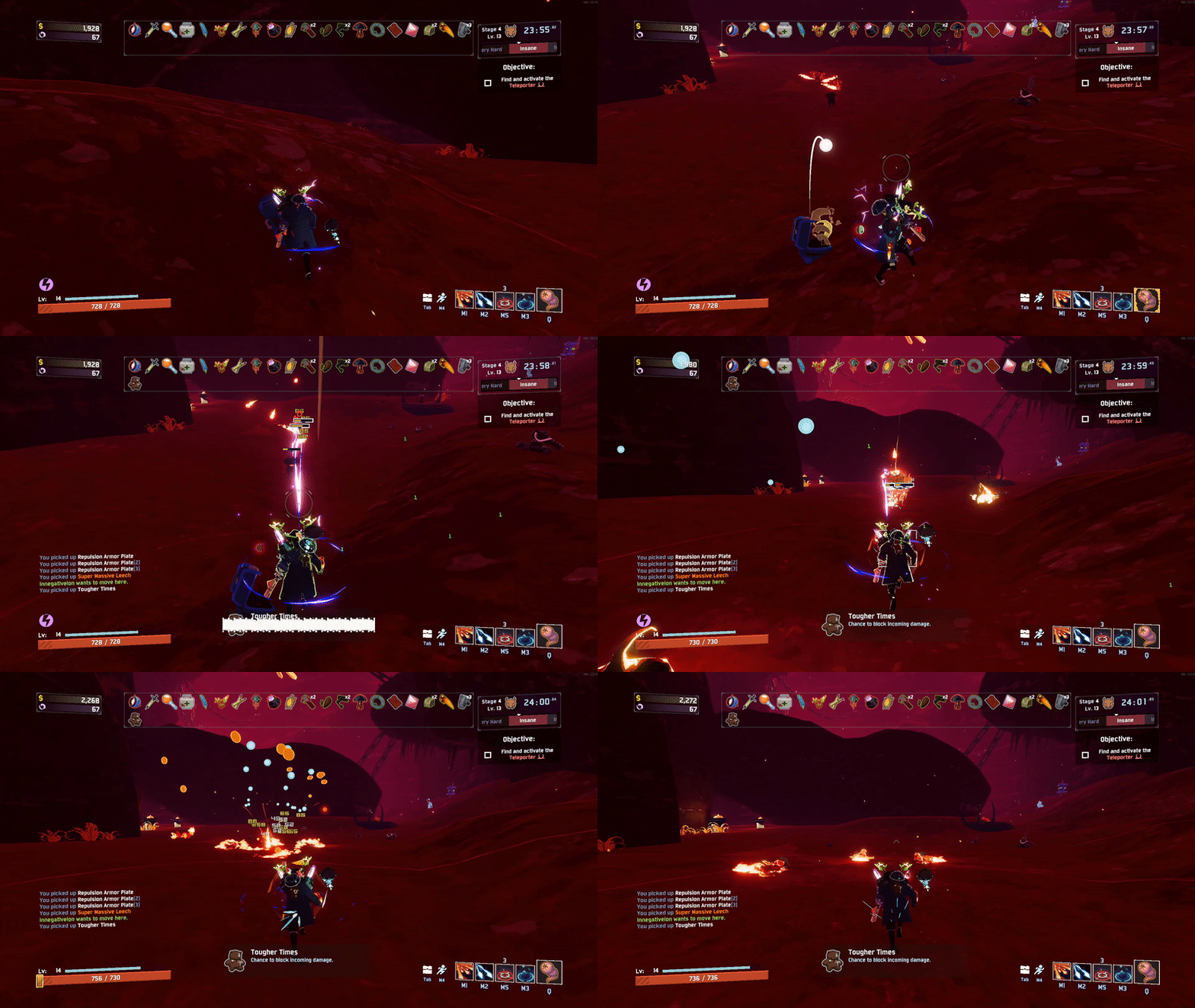
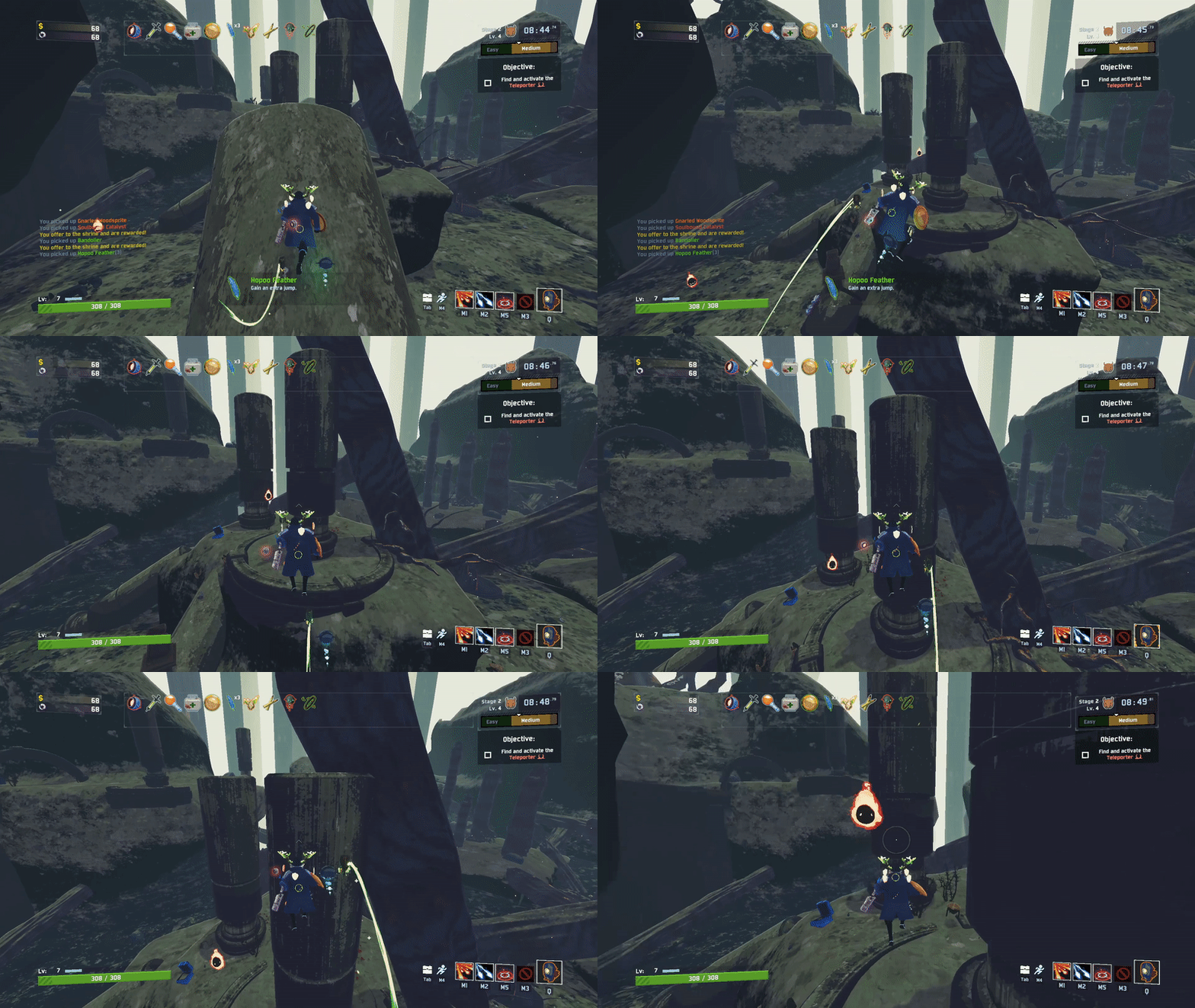

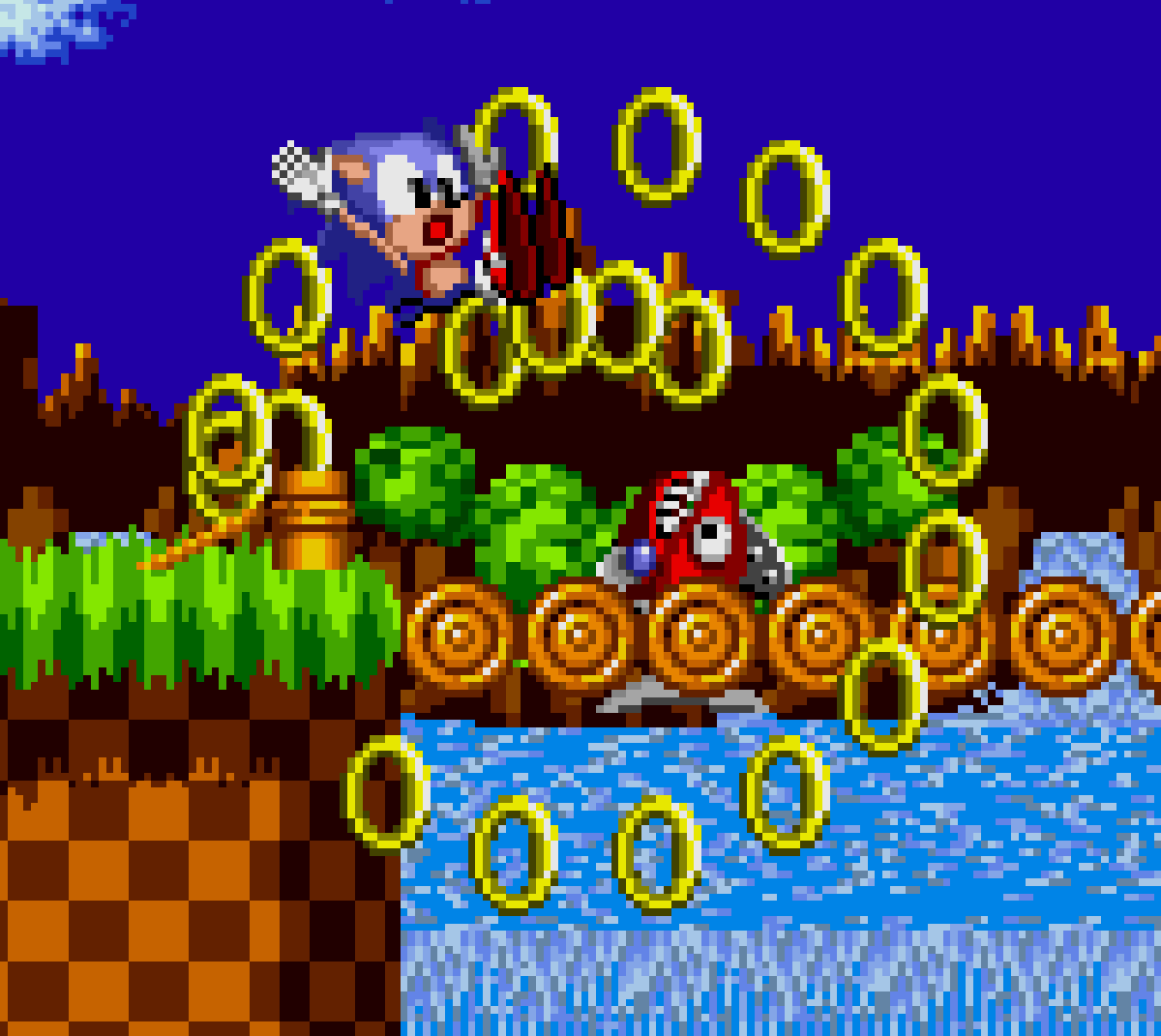
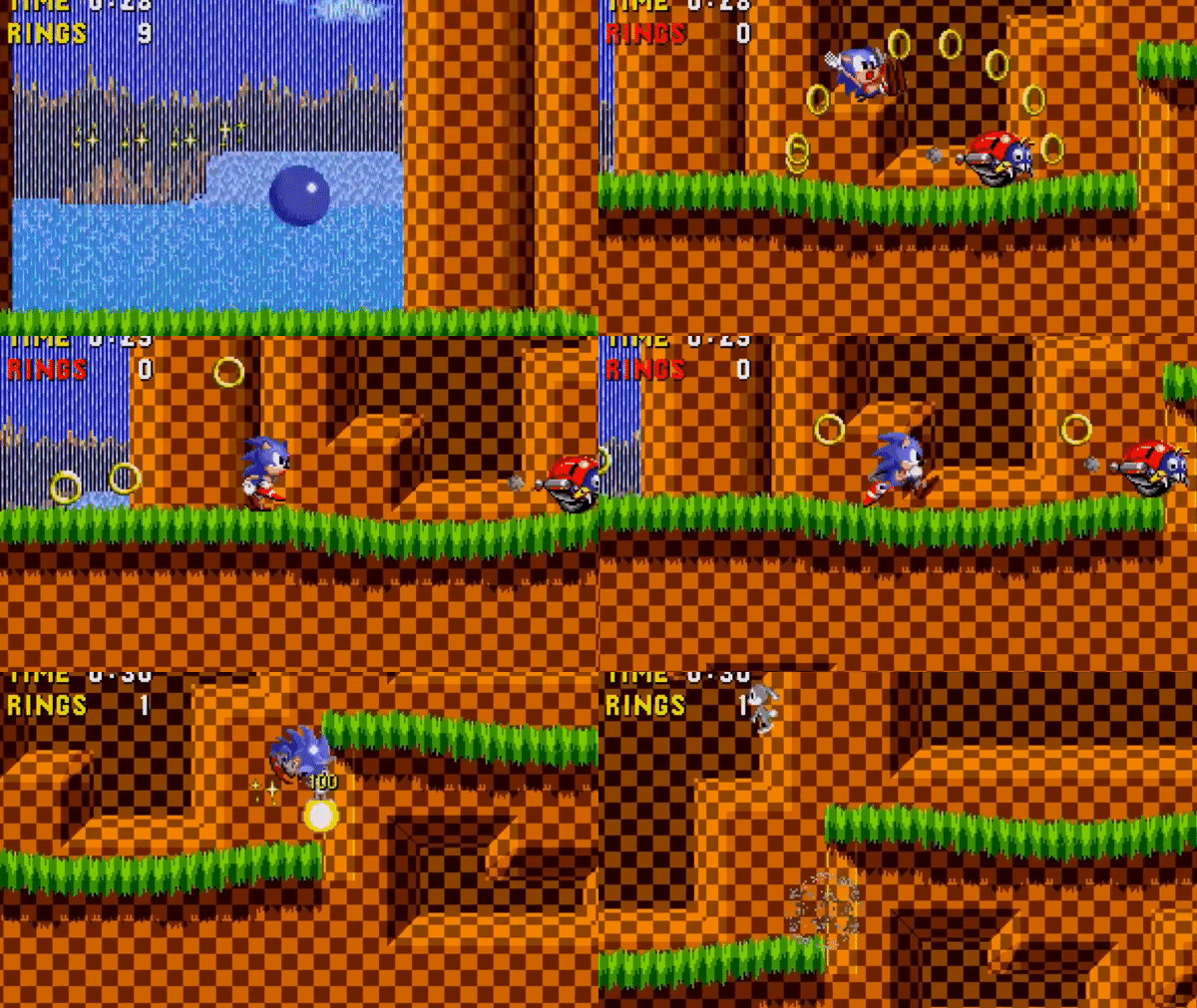
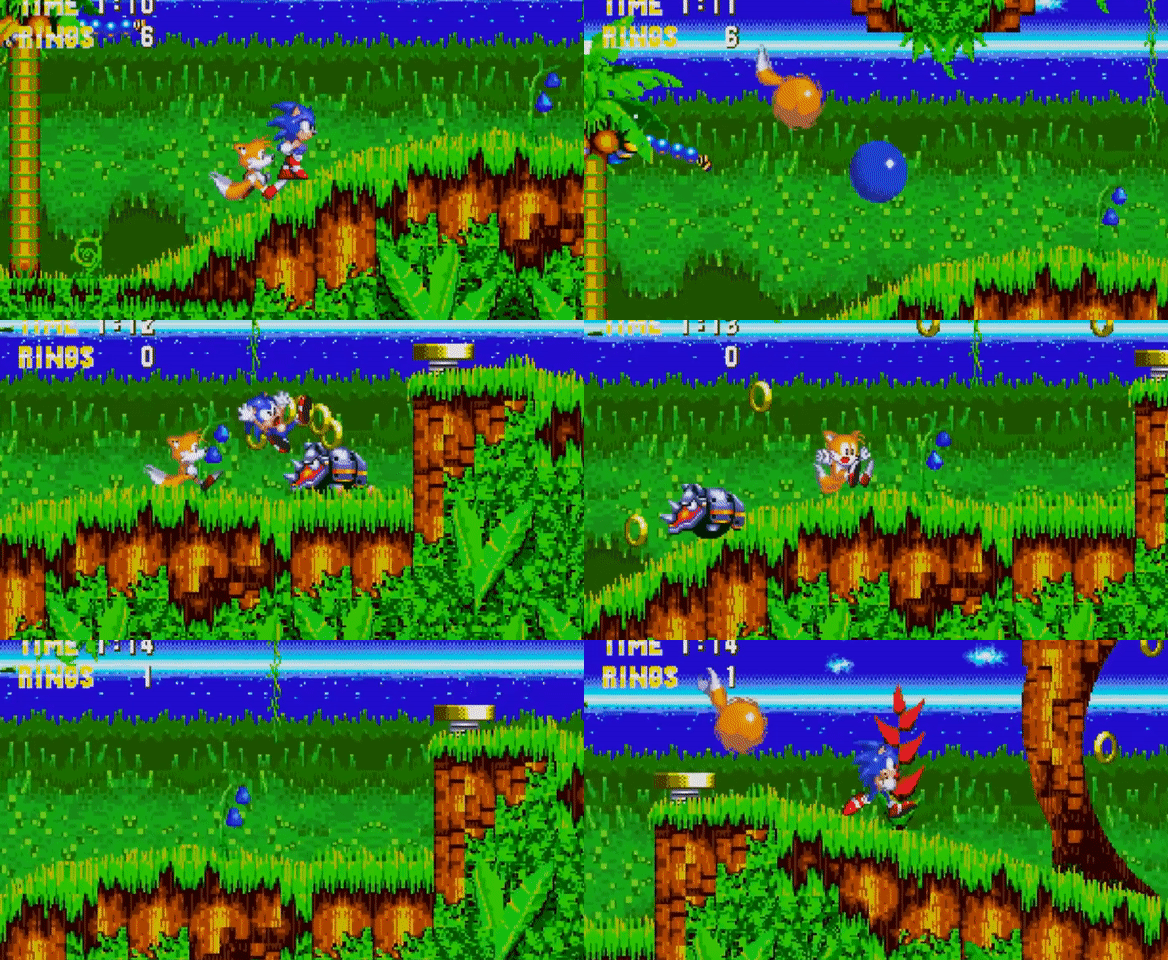
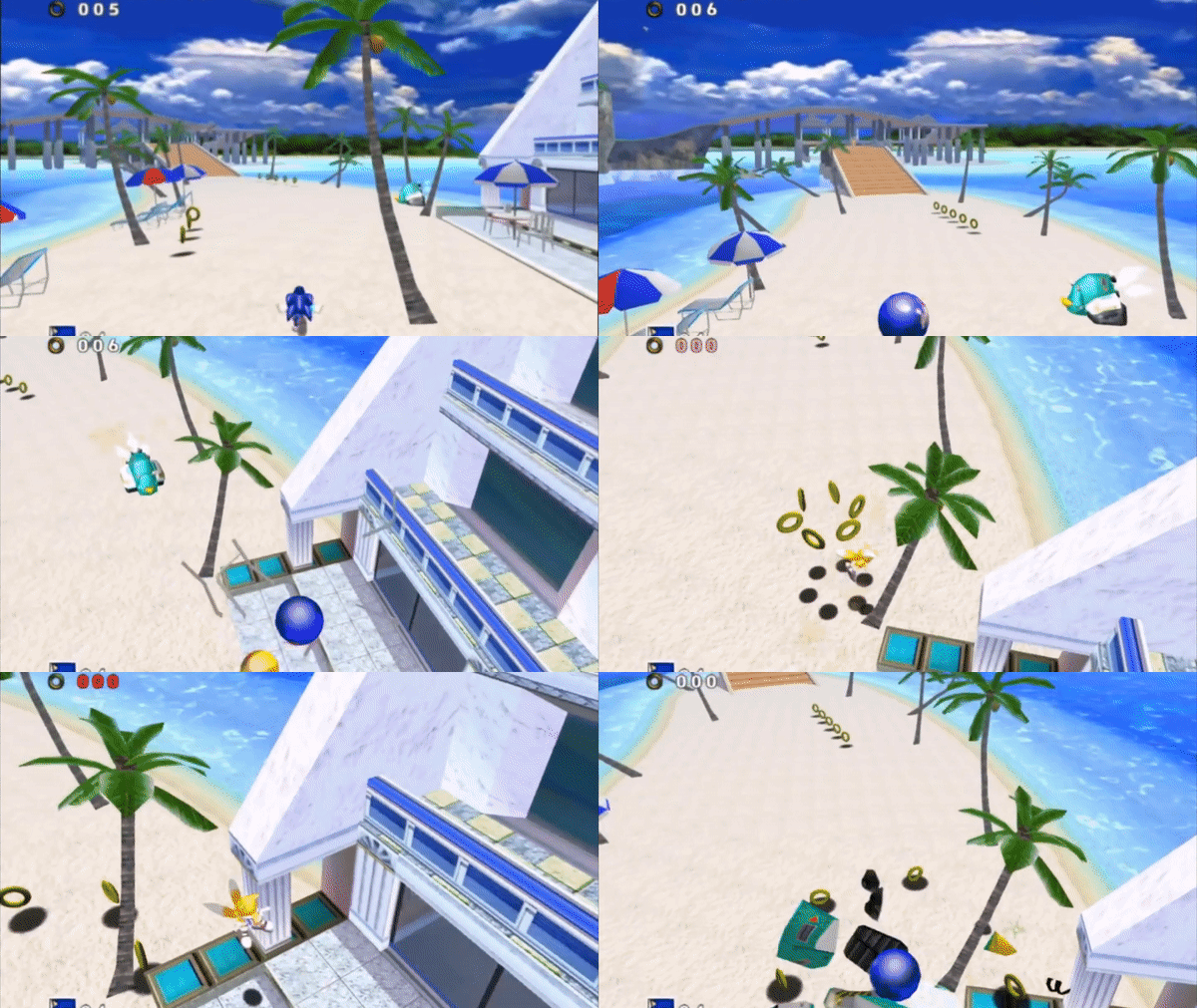
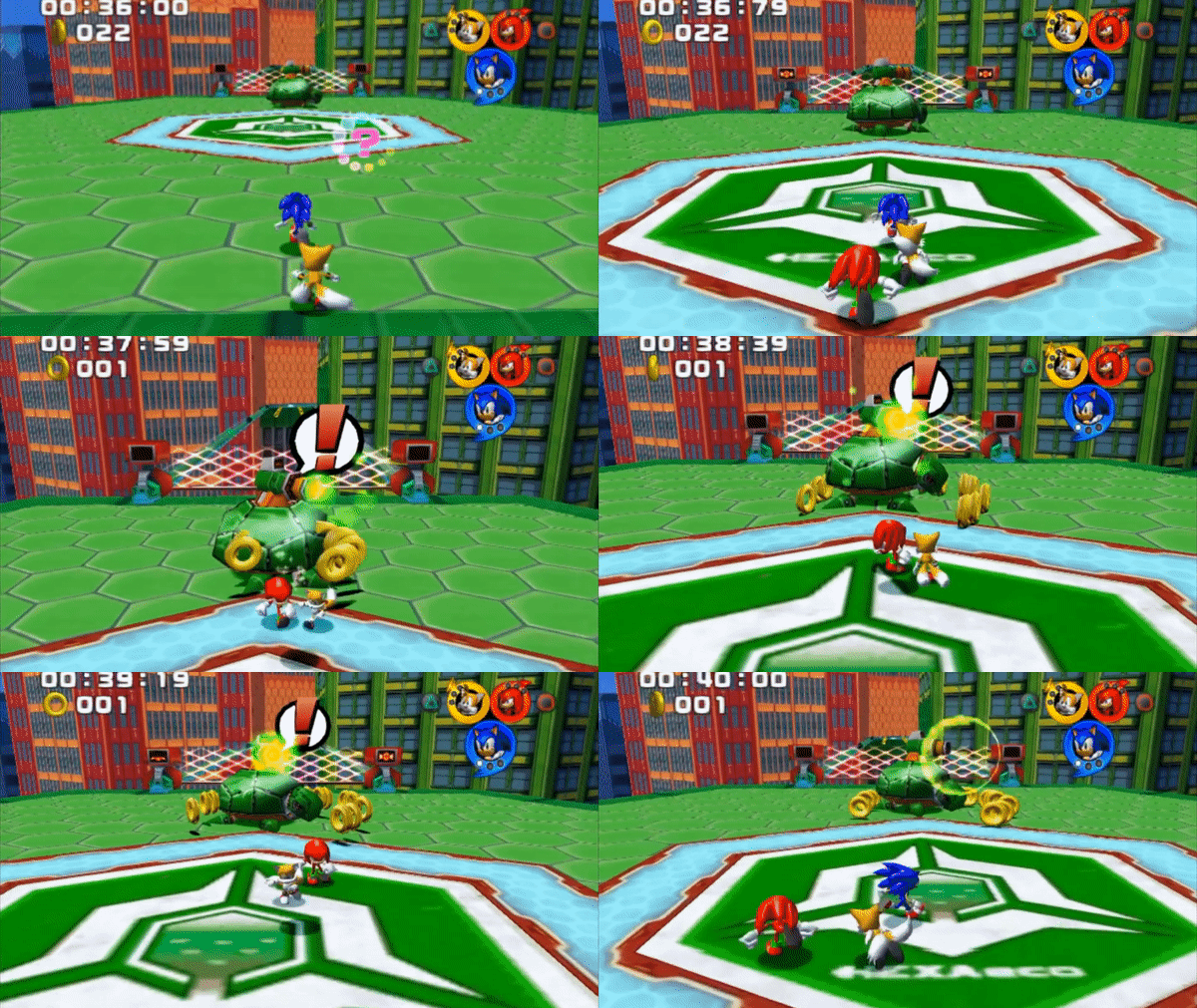
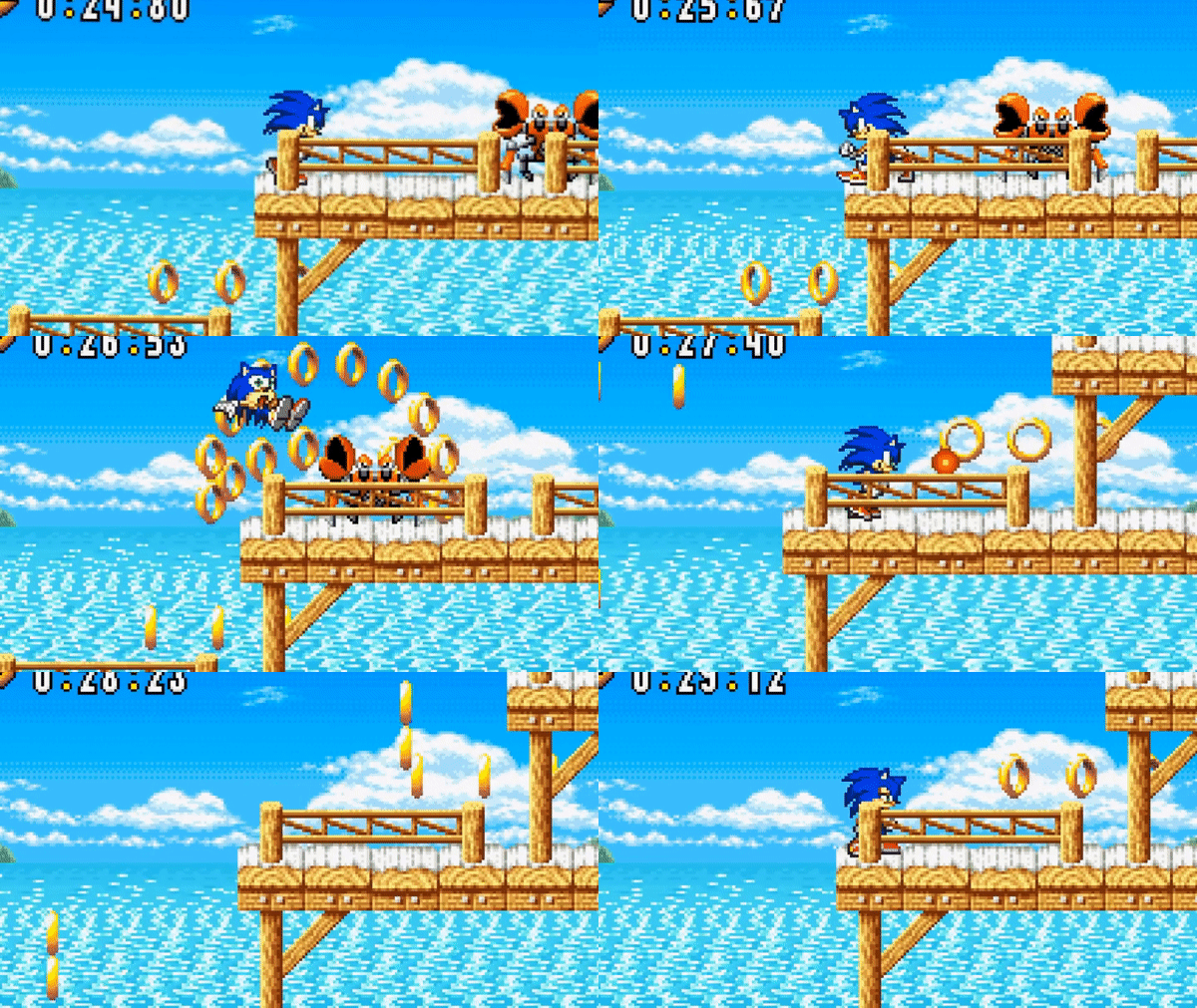
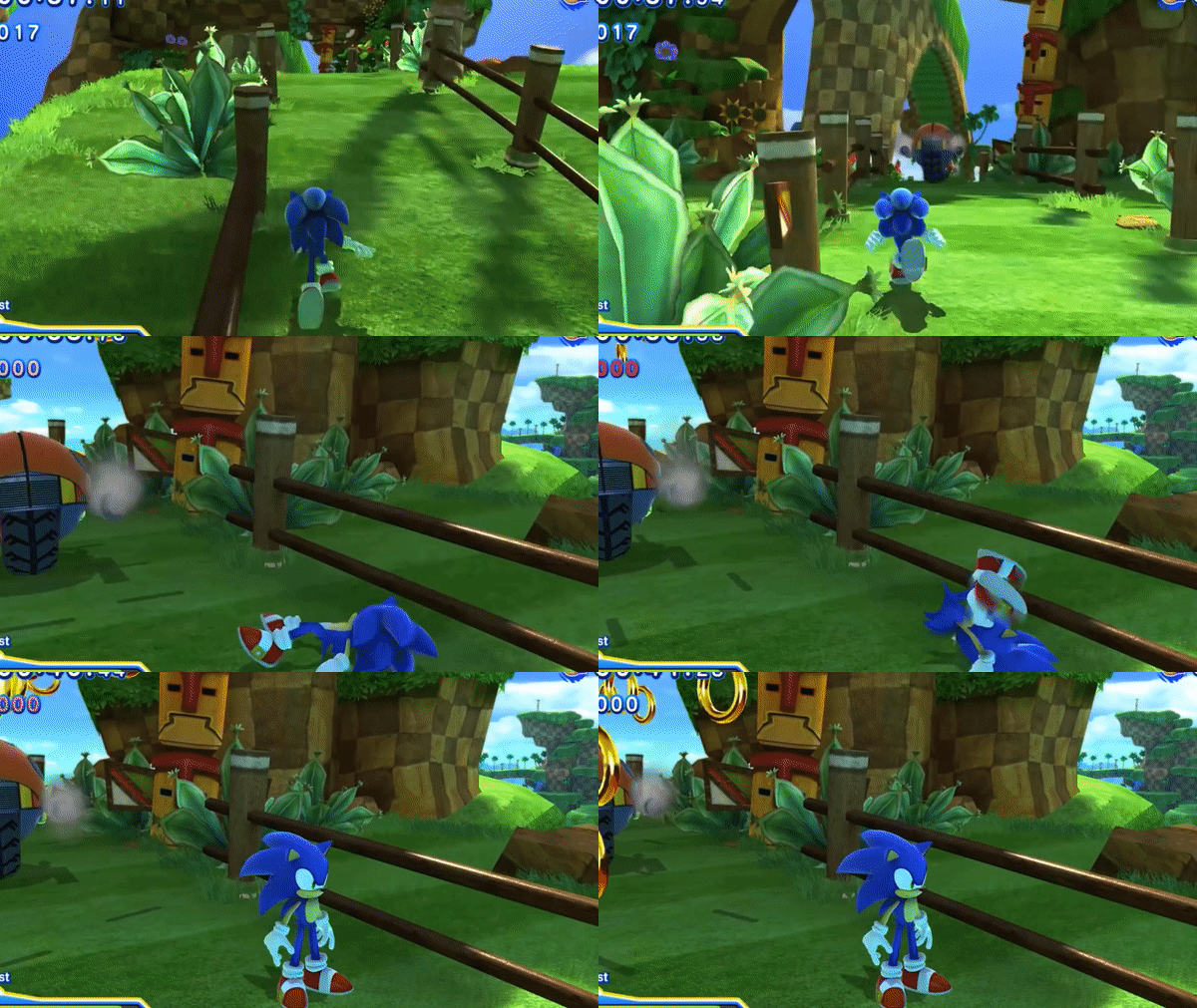
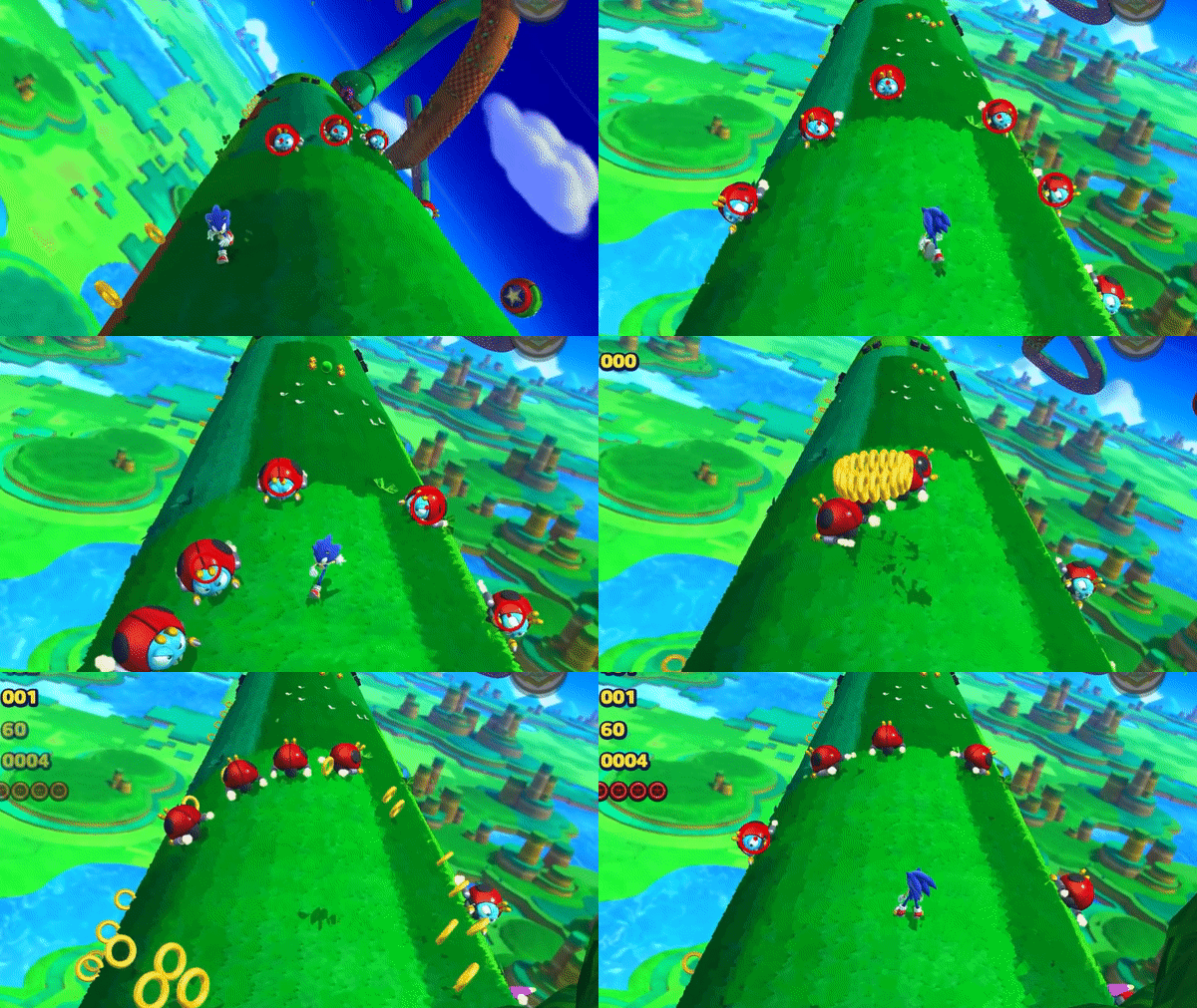

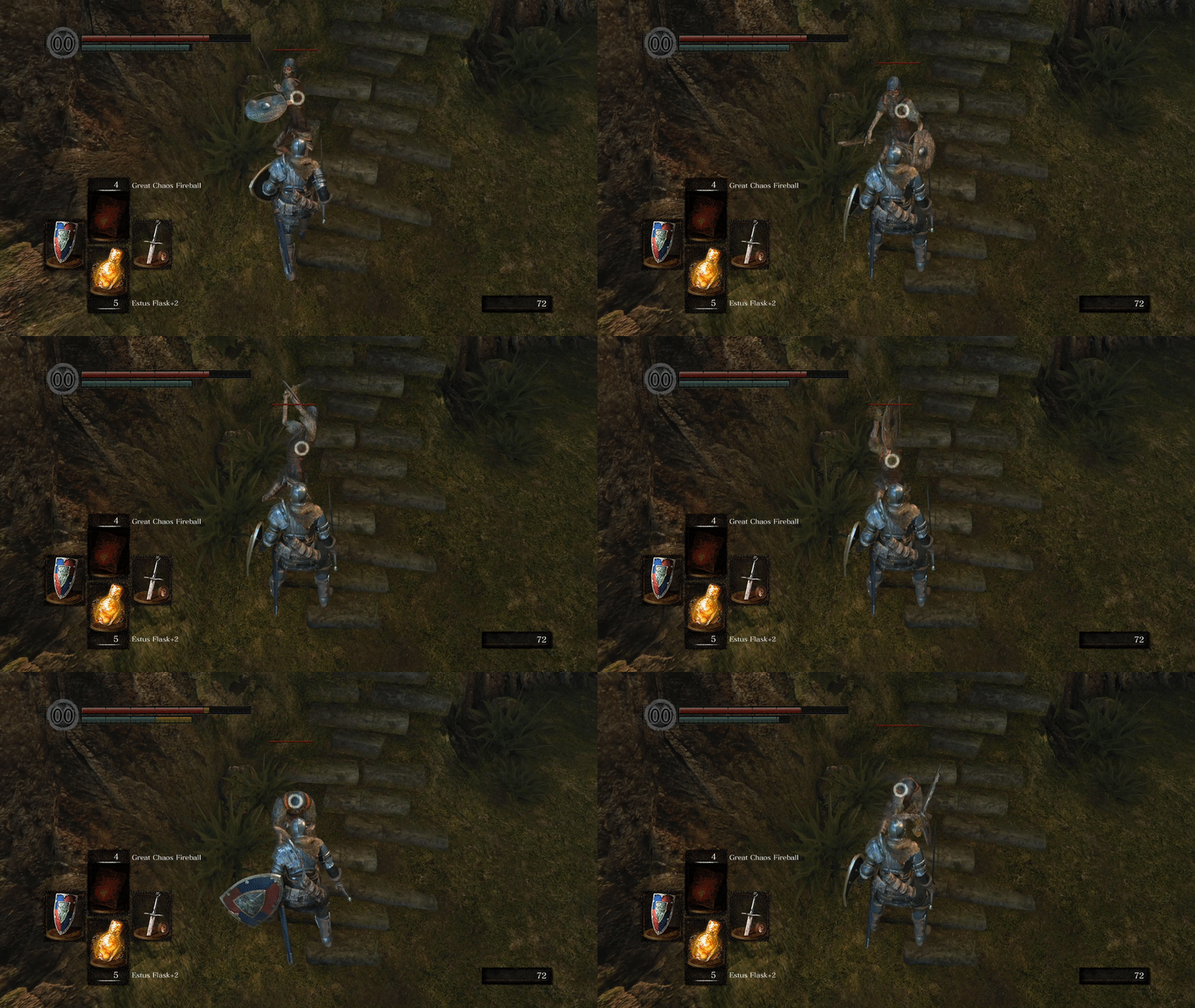



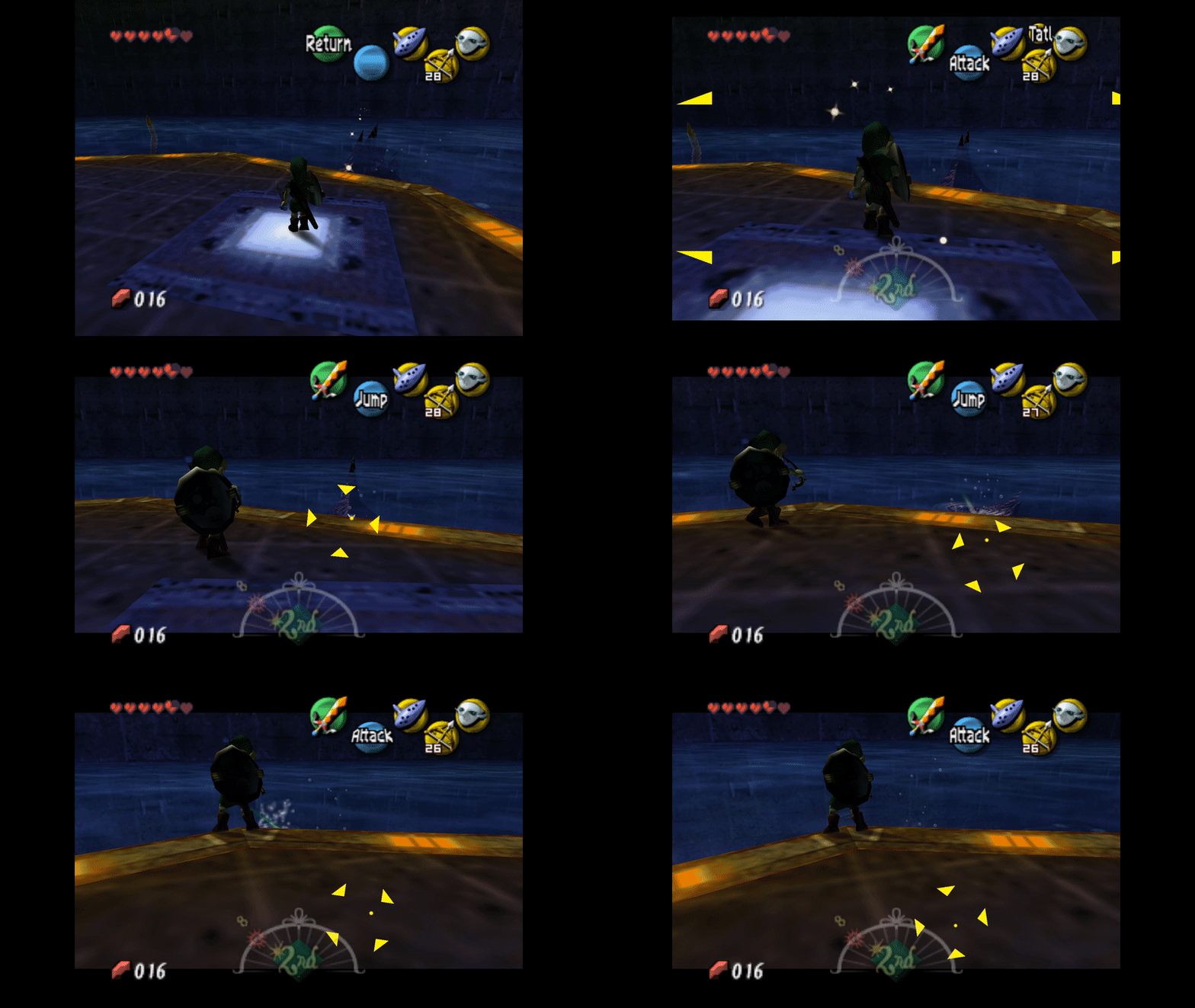

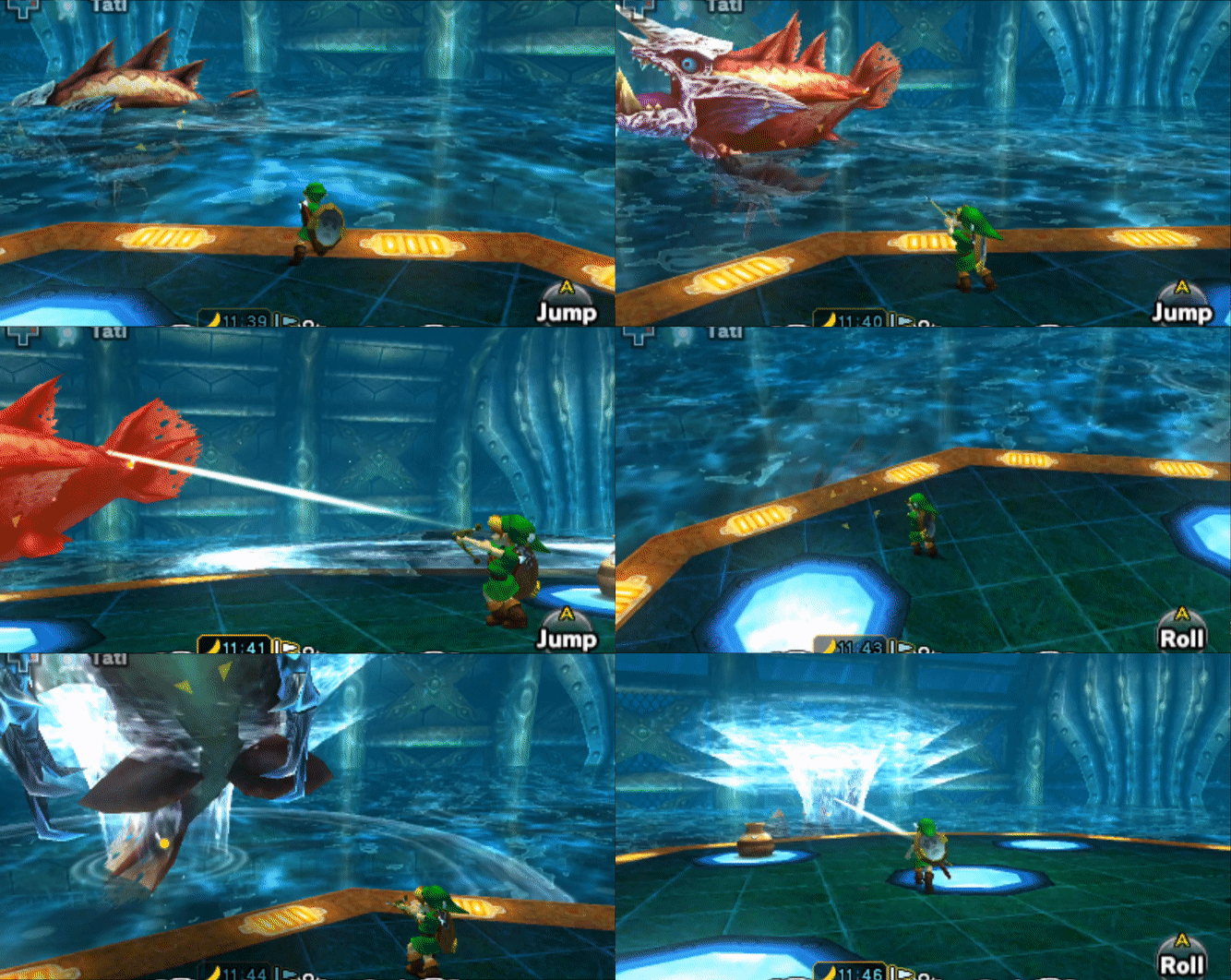

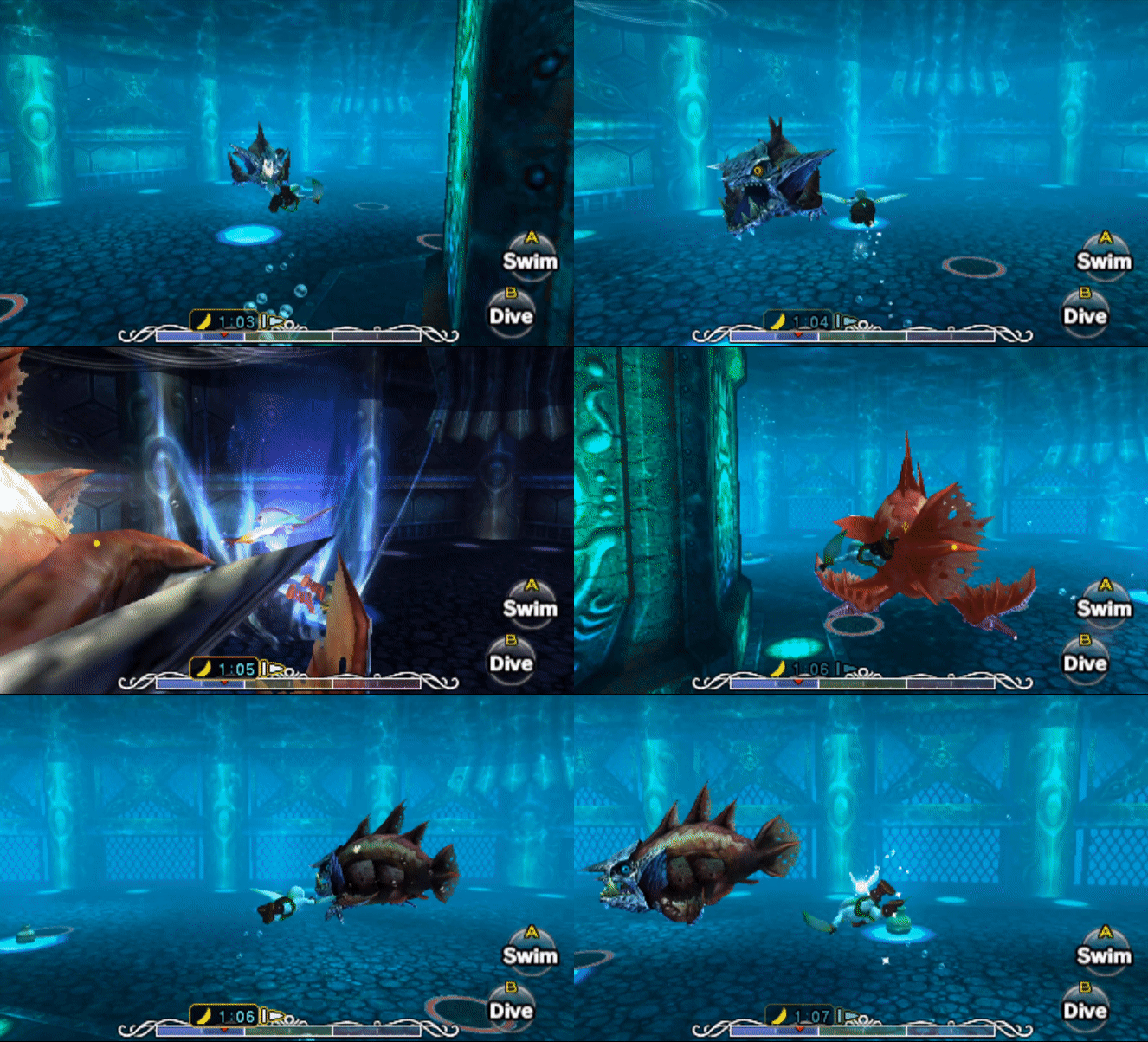
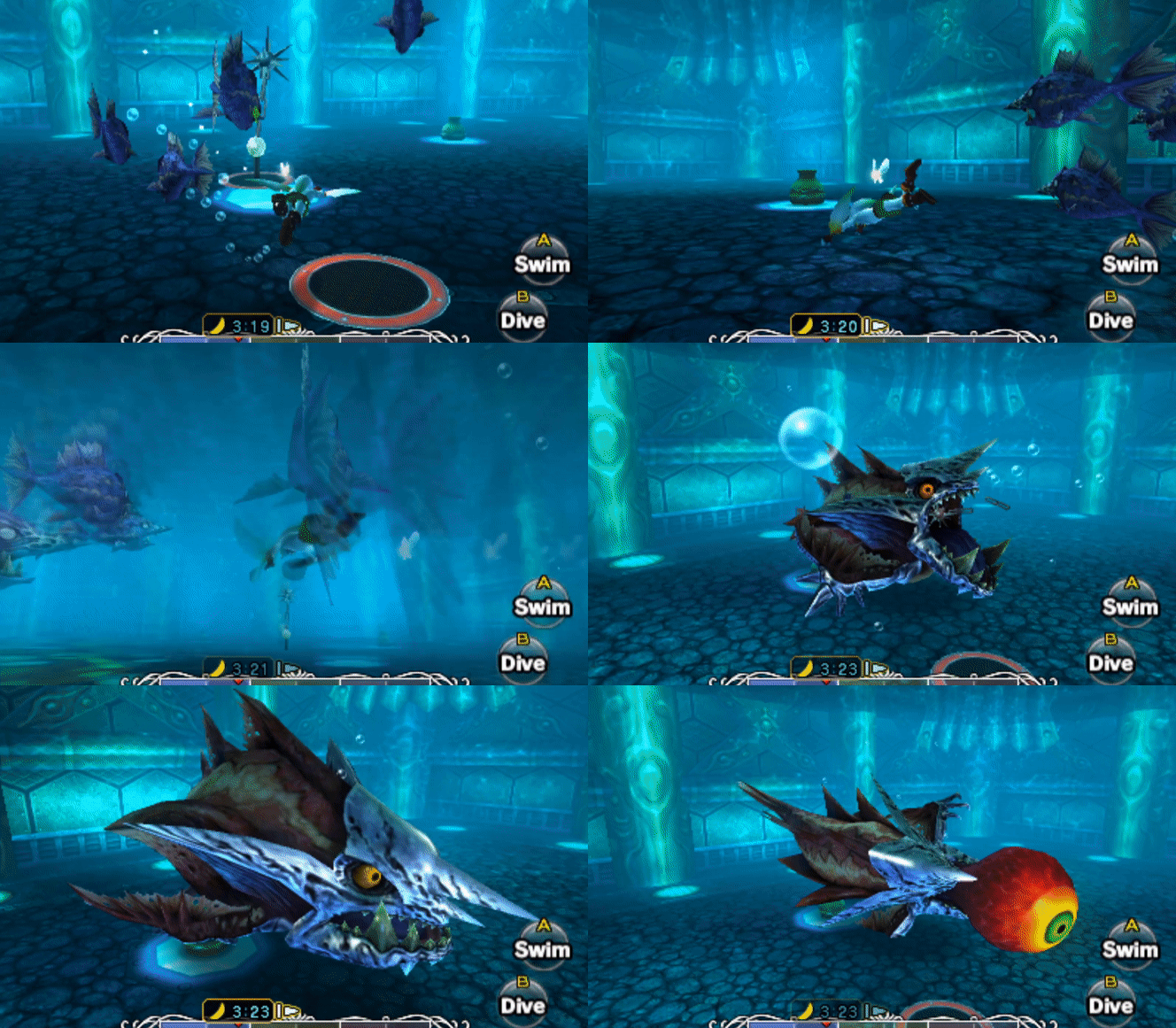
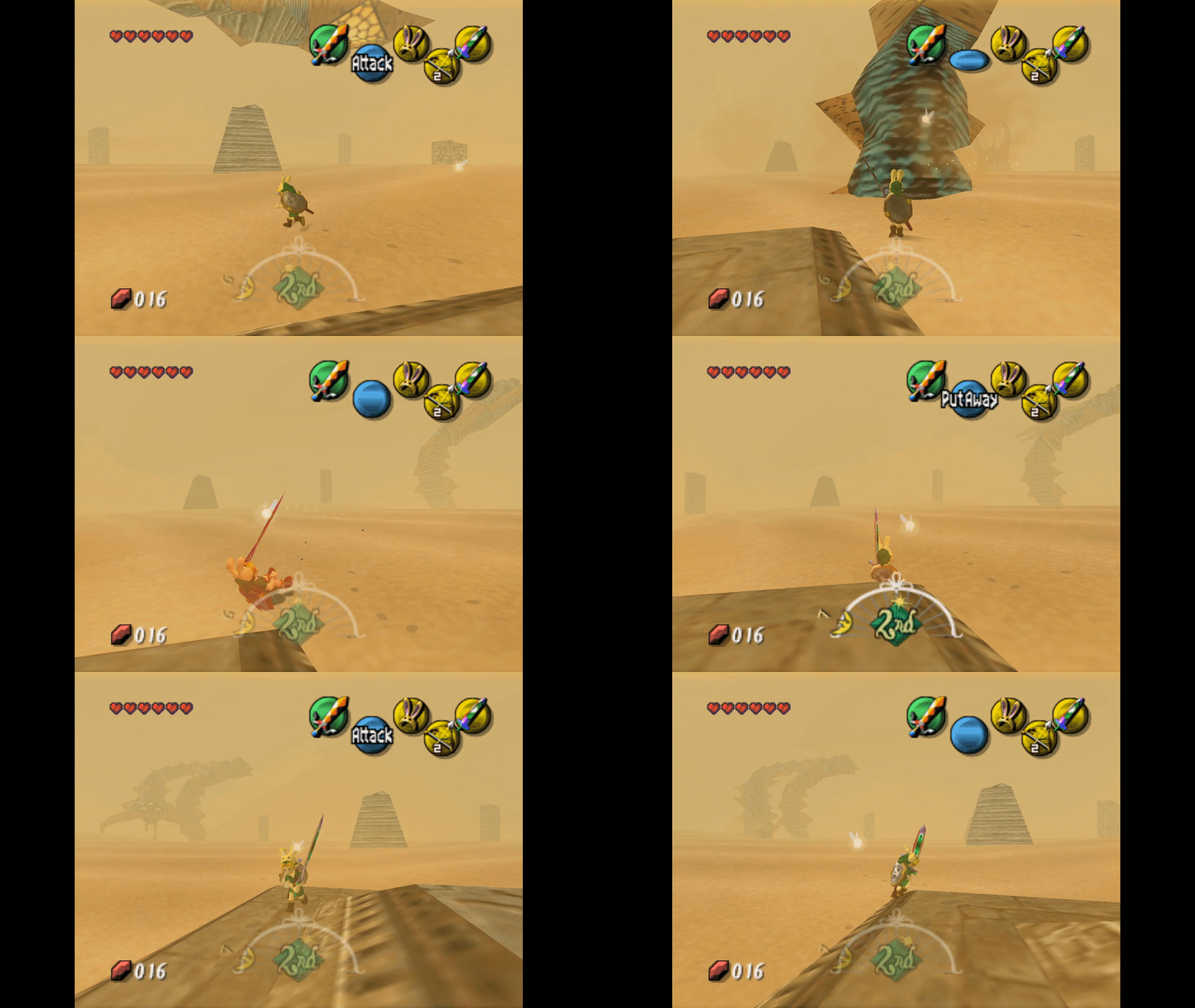
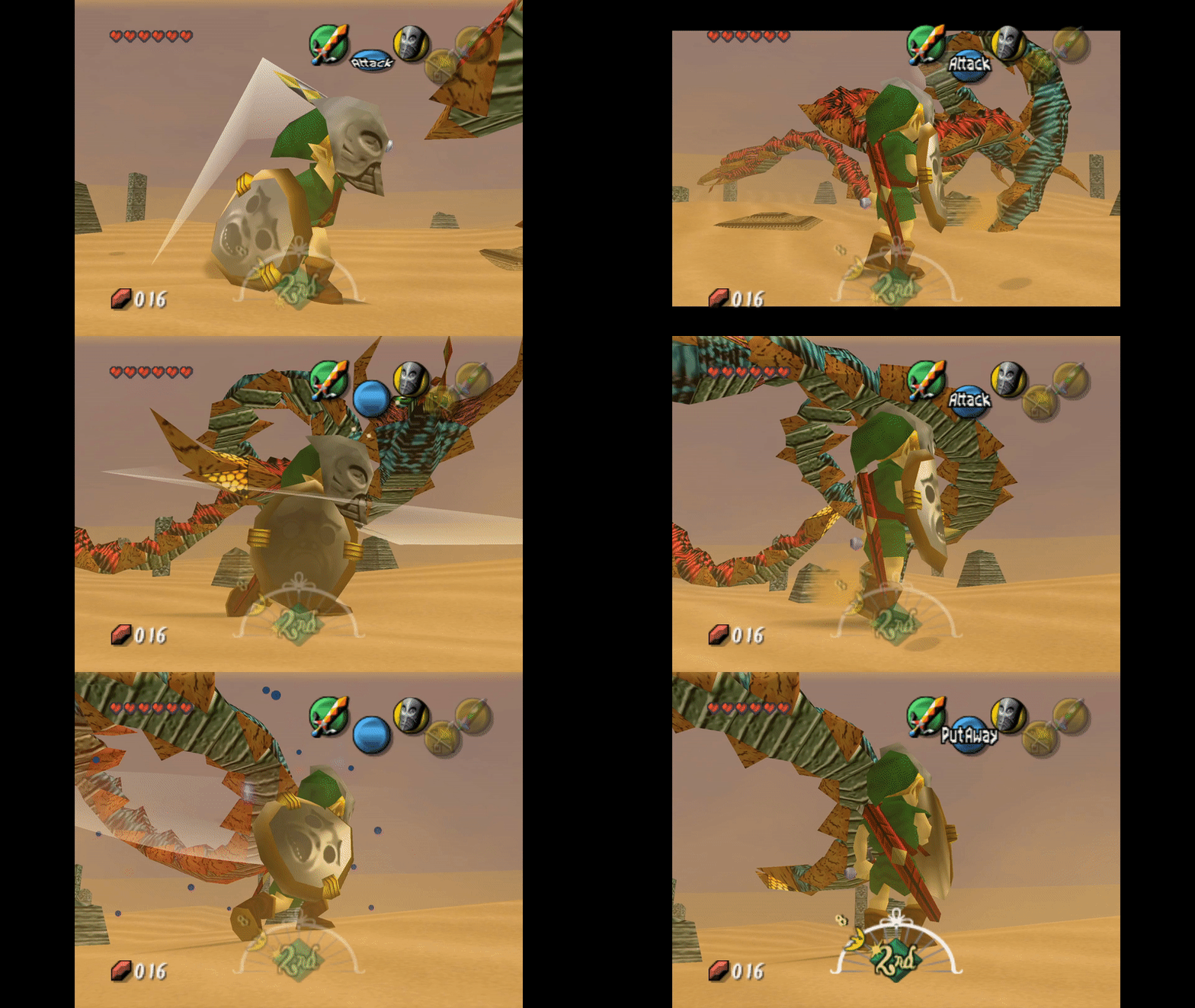
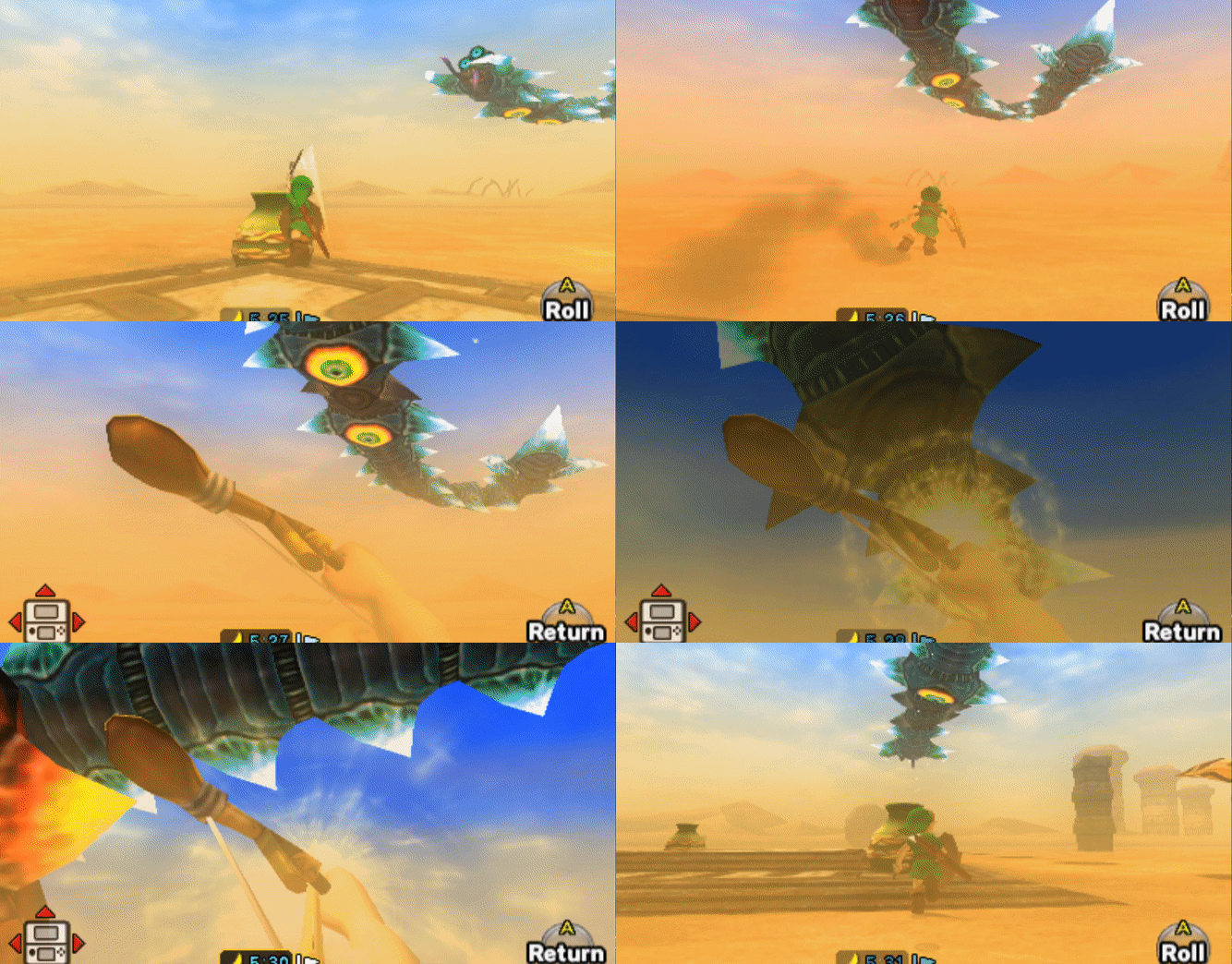
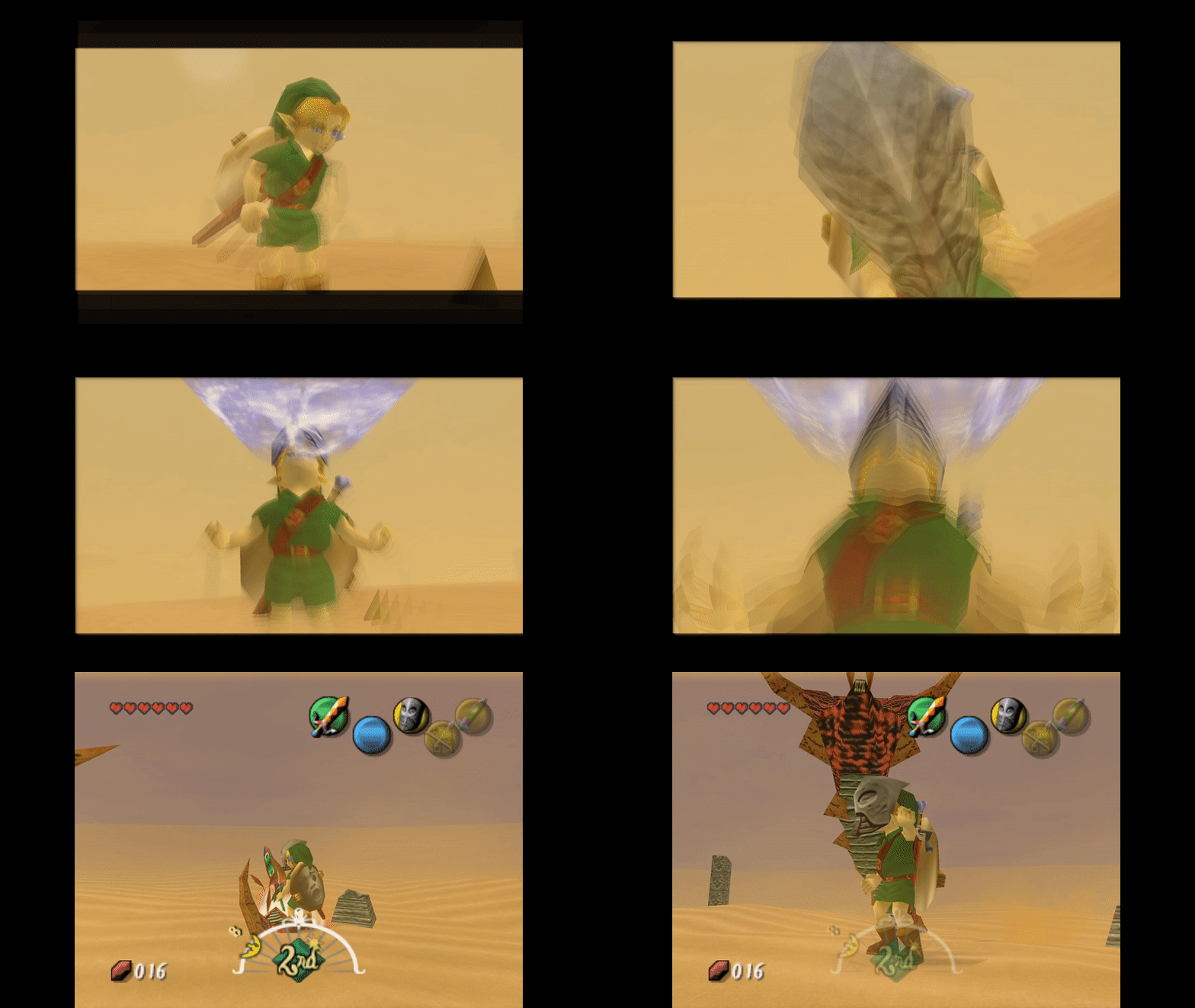
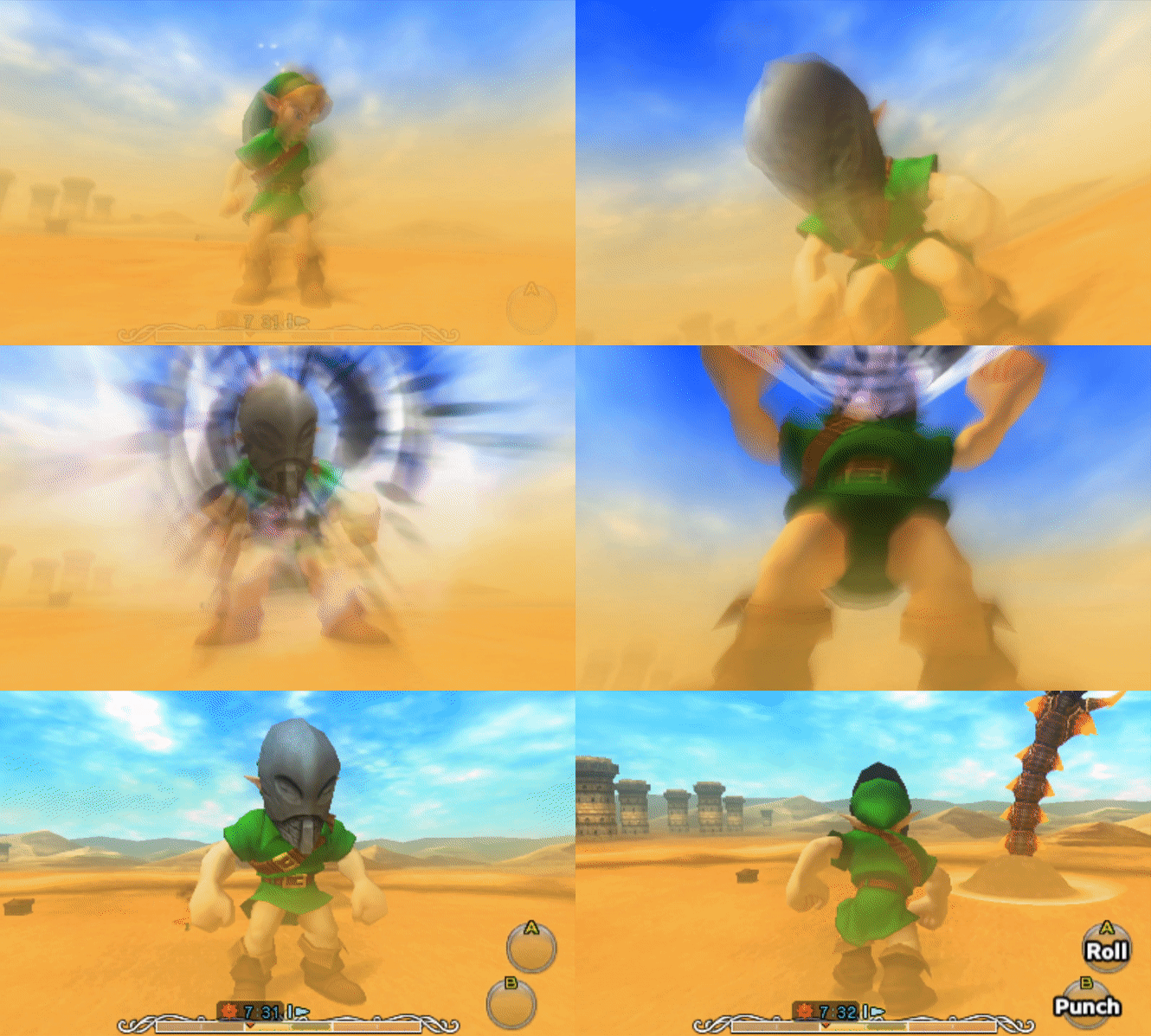


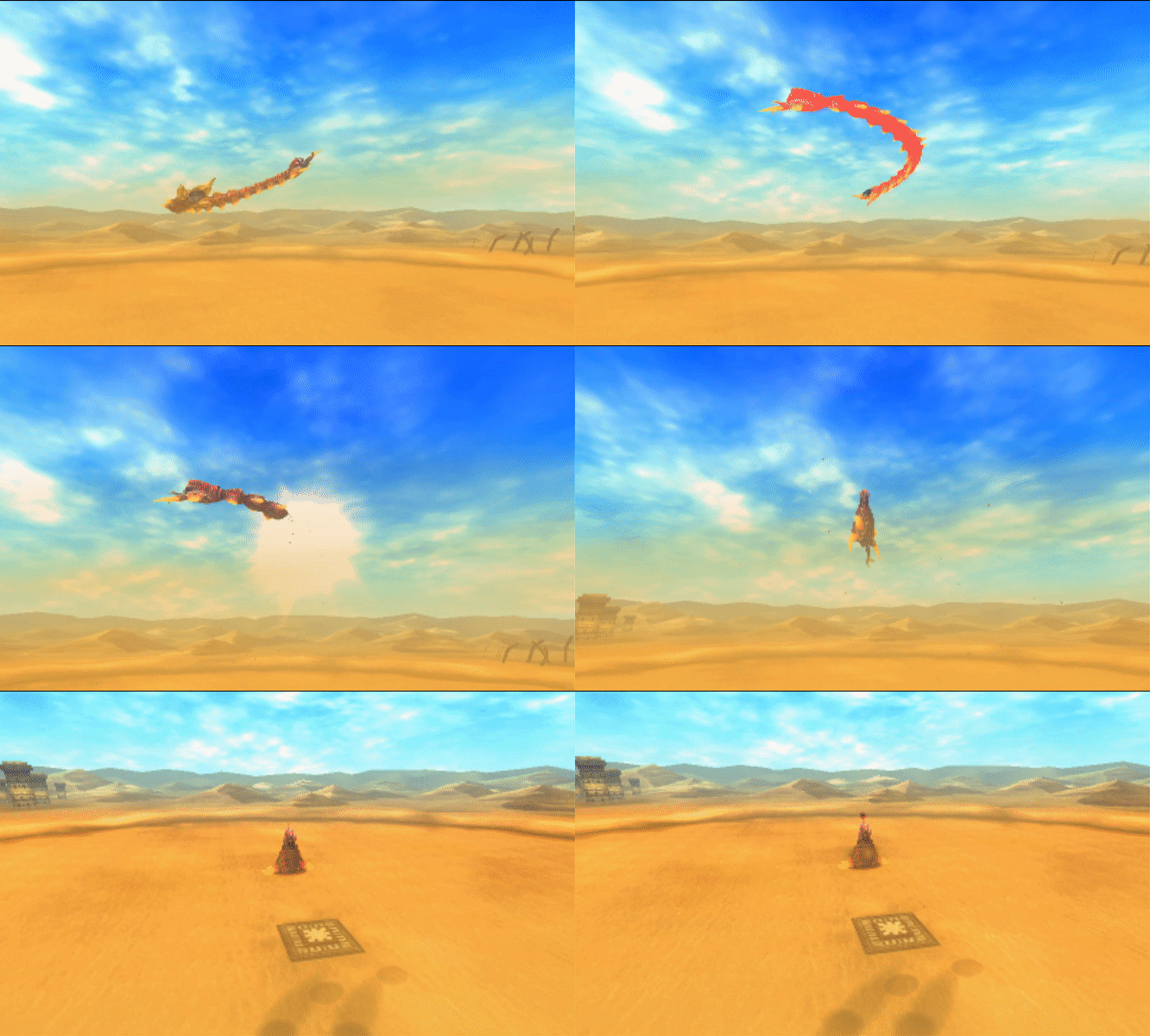



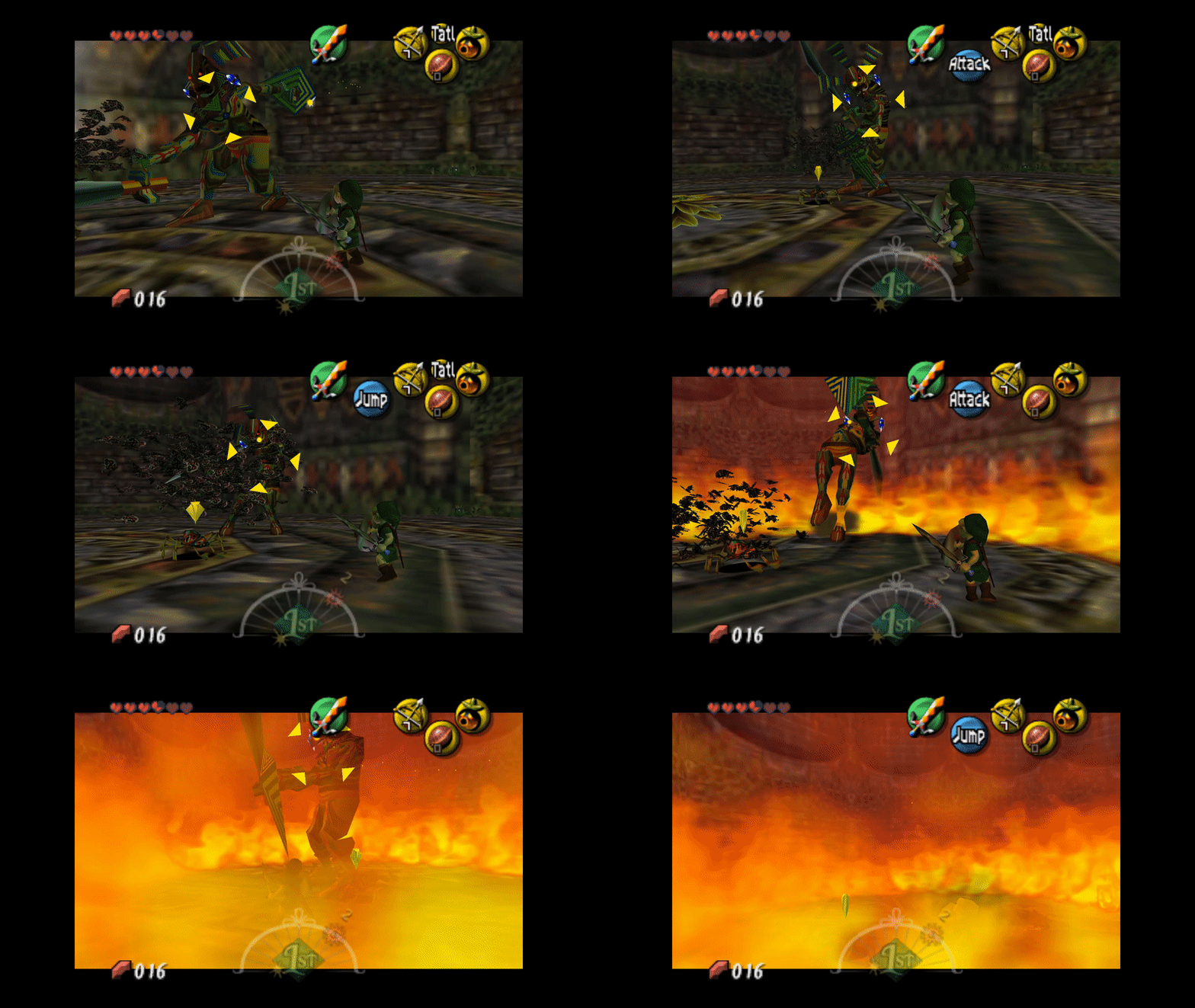
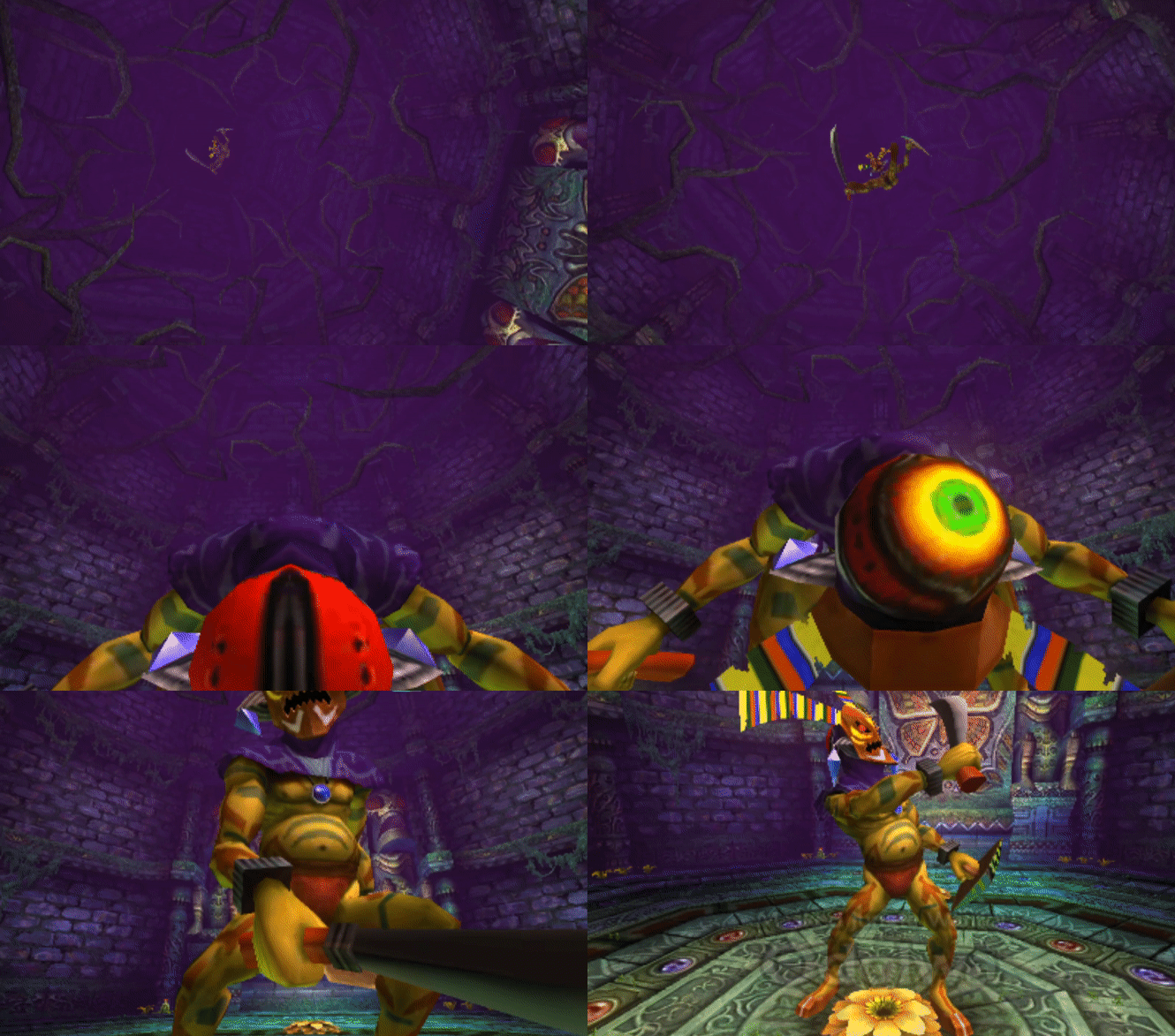




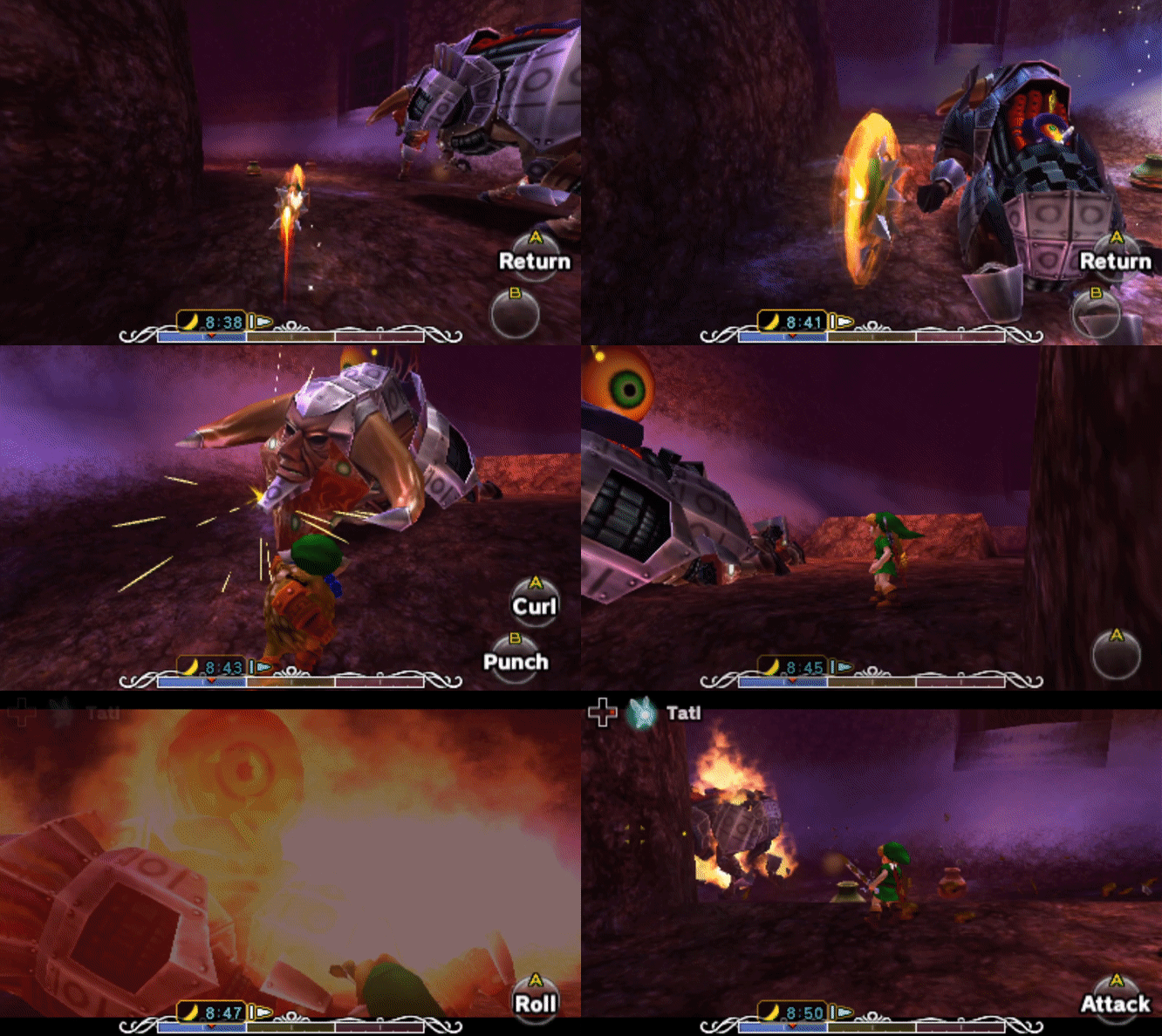

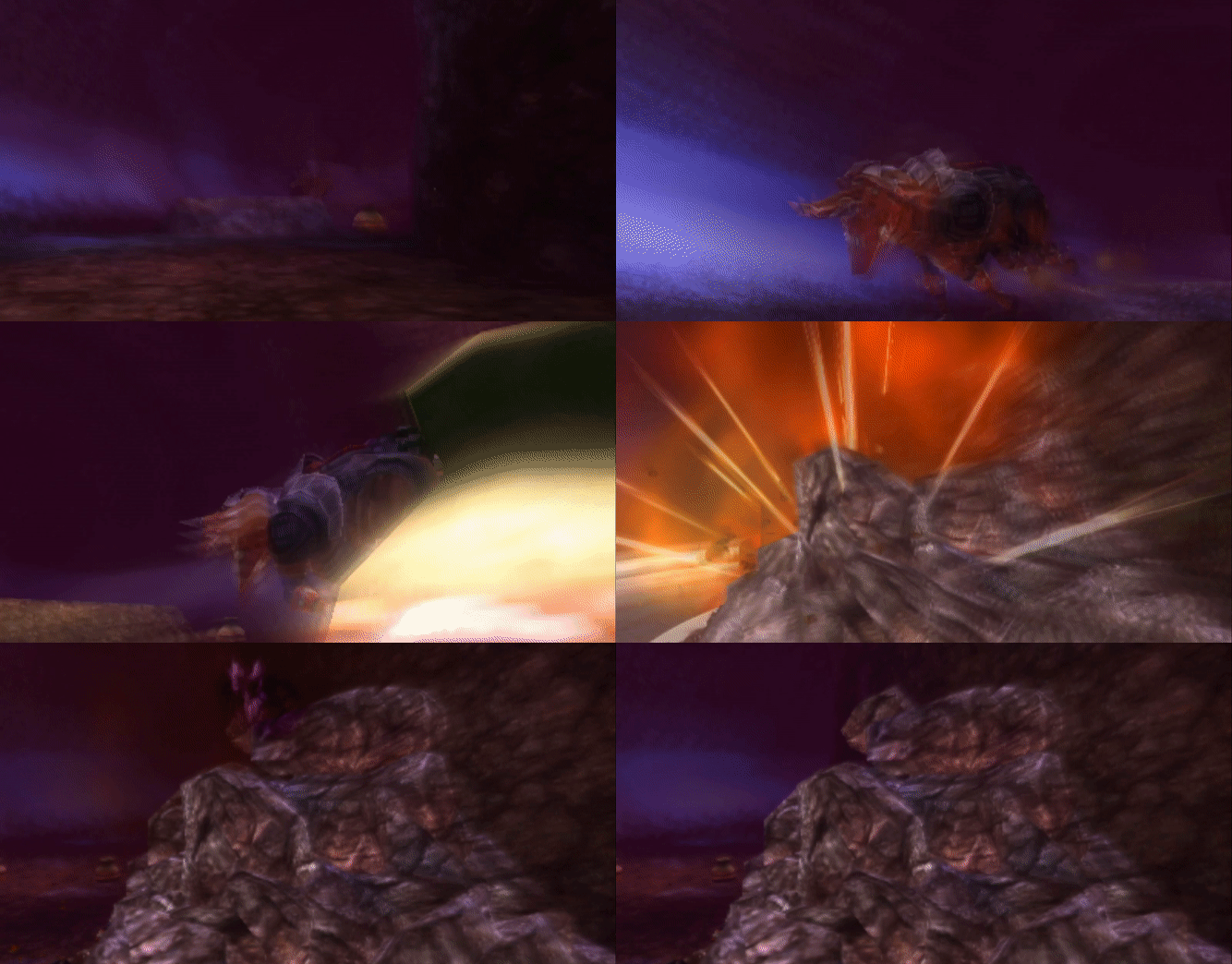



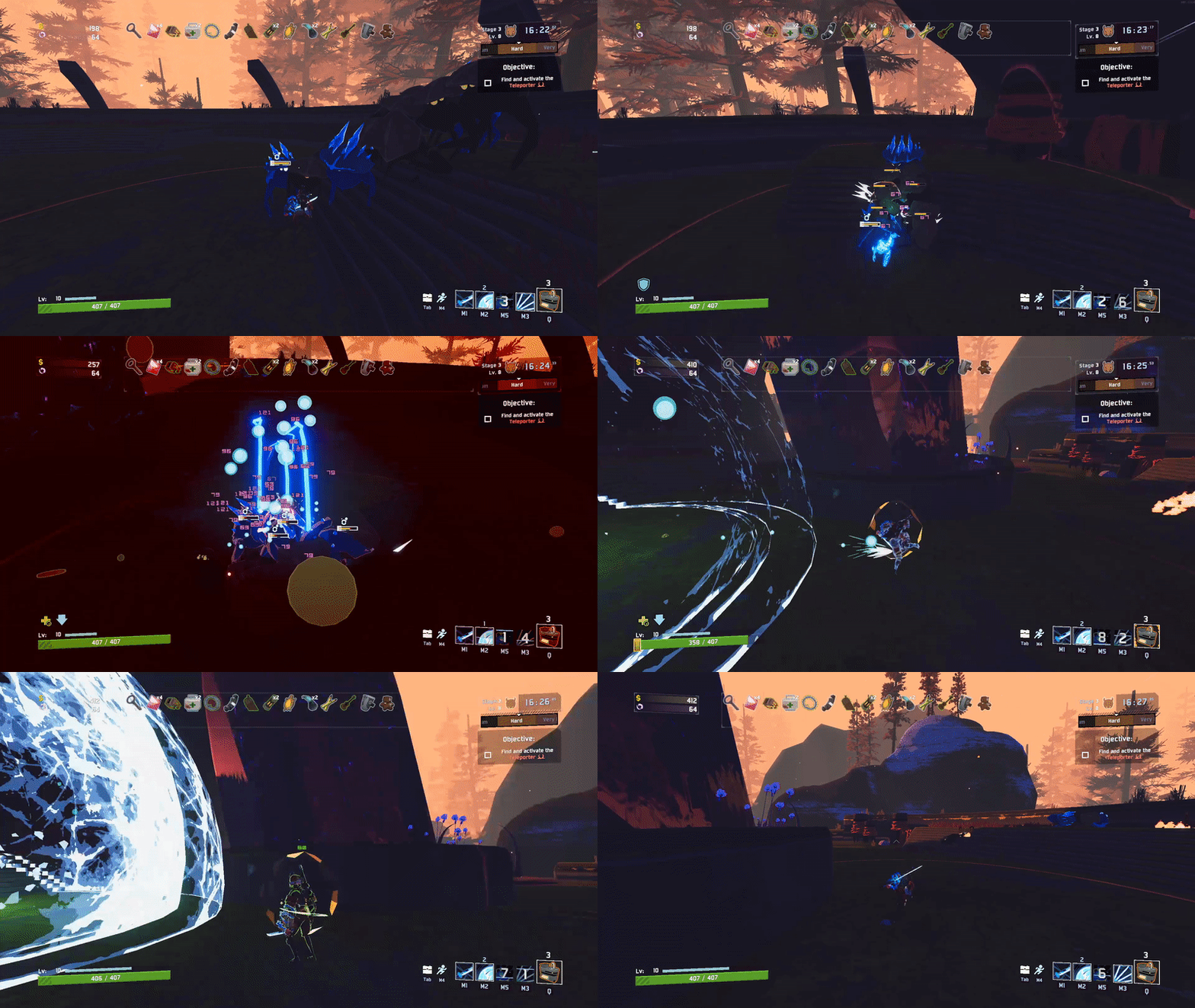
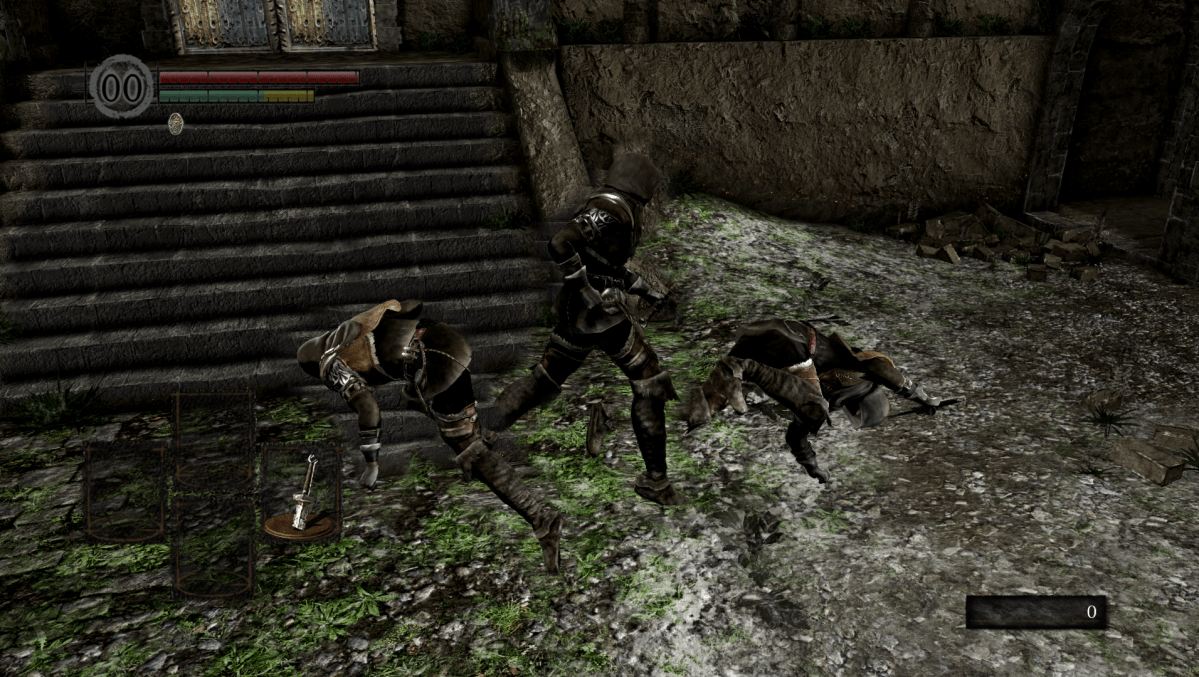


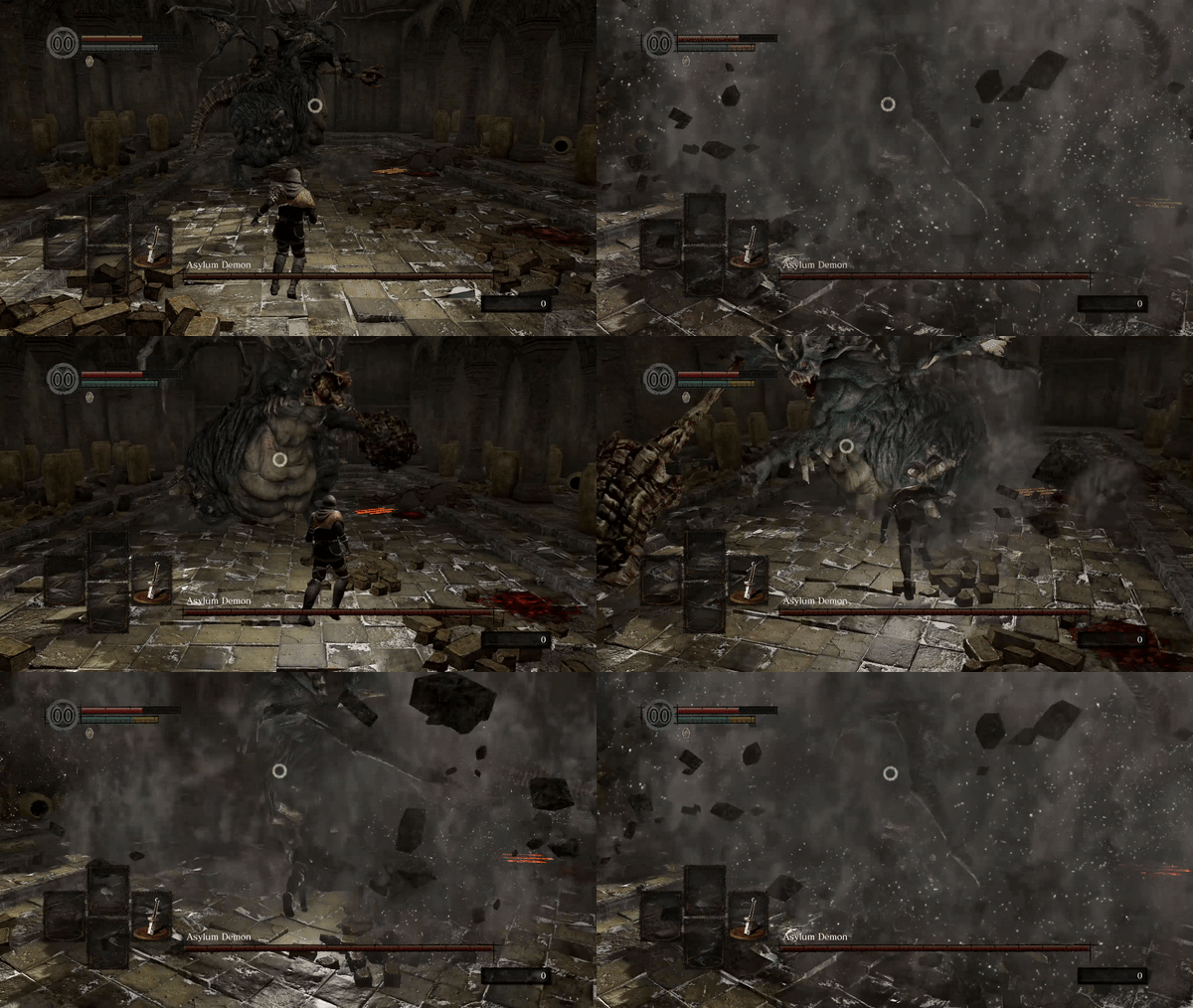
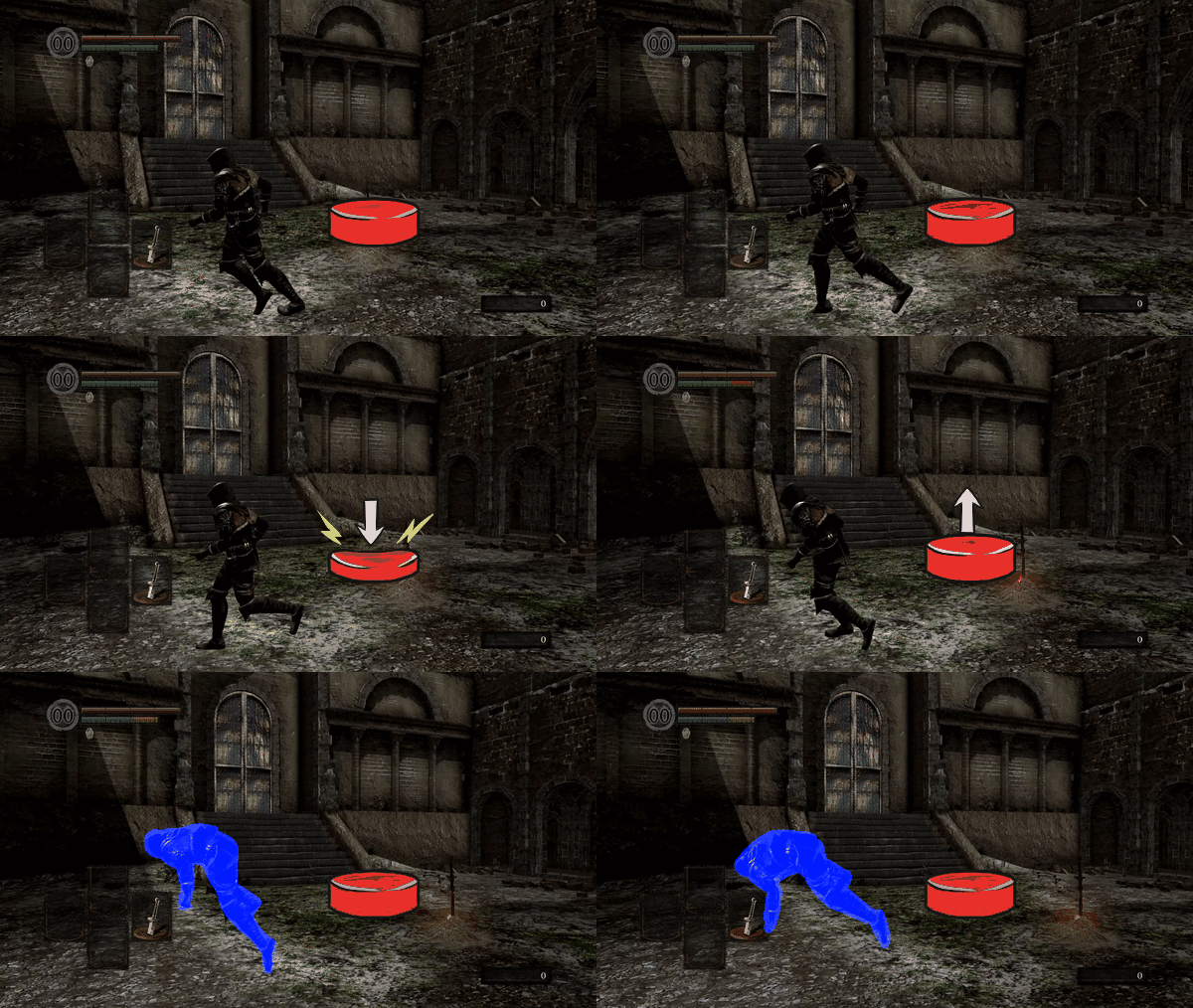

 Parry Everything