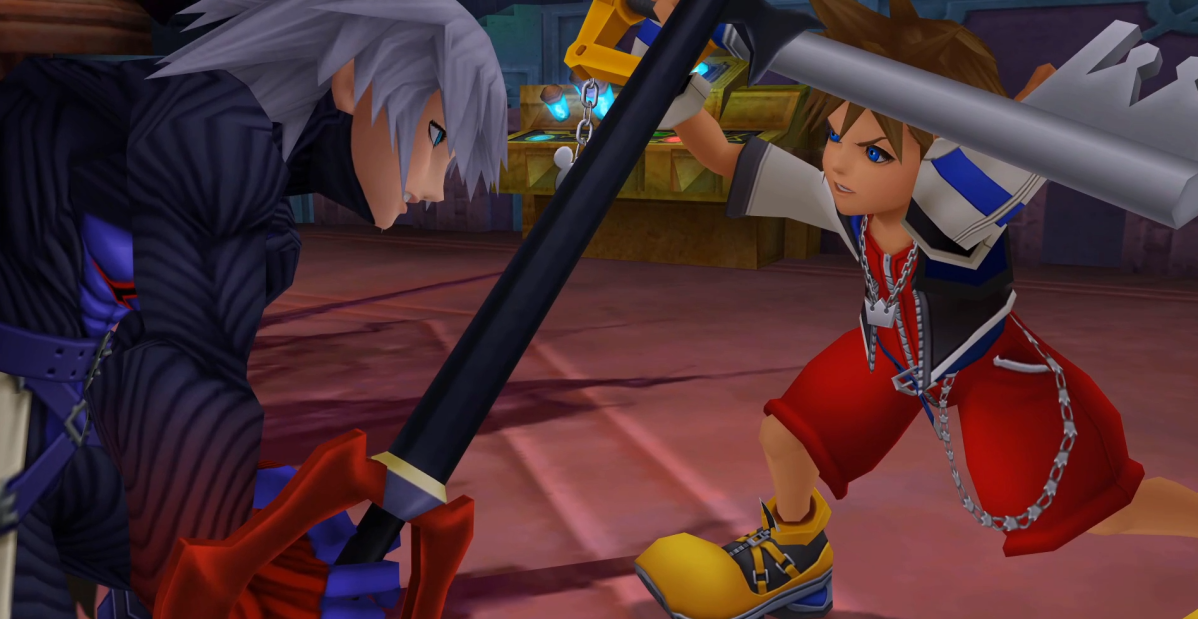
Kingdom Hearts does something interesting with Riku. He’s set up at the beginning of the game as the player and the player character, sora’s, rival through gameplay and narrative alike. His initial early-game boss fight establishes Riku as the primary barometer for the player’s capabilities within the game’s systems. That’s the set up. The punch line, coiled and poised to outstretch and clothesline the player at mach 2, is Riku’s final boss fight – Dark Riku, awaiting at the ominous castle of Hollow Bastion. Regular Riku is difficult, way more difficult than might be reasonable at the very start of a game. However, he’s optional and therefor more of a story beat for both the game’s narrative and the emotional experience the player is being primed for. Dark Riku is not optional, and Dark Riku is levels above his predecessor. This boss also represents a notable difficulty spike and more or less fulfills the role of narrative climax to Kingdom Hearts, and that aforementioned emotional experience for the player themselves. People remember this boss fight. There’s something about it that sticks with you. It leaves an impact.

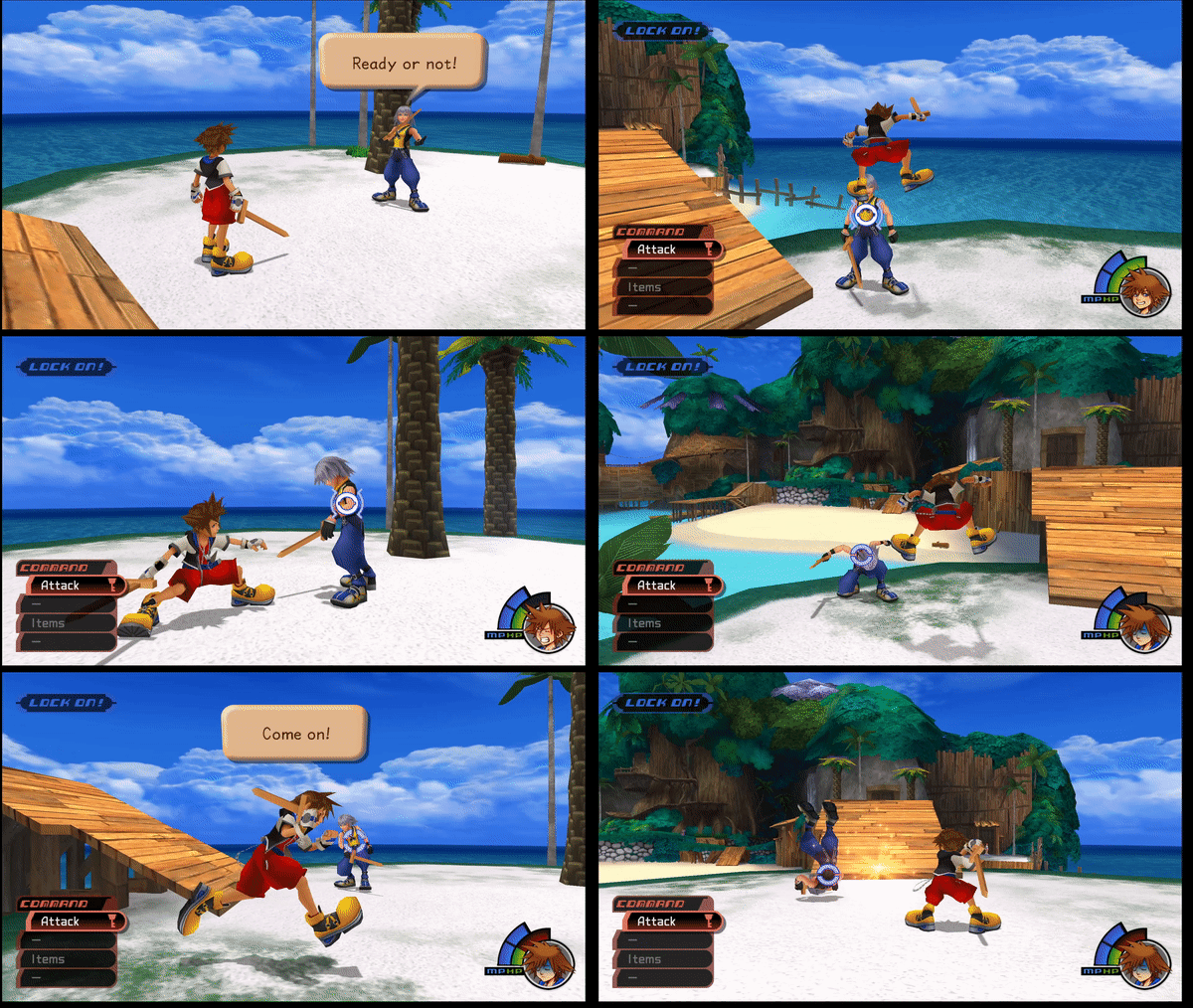
Dark Riku is a fight divided roughly into three phases. Dark Riku, as with the Destiny Islands Riku, has a pretty modest repertoire of actions to use against the player character, Sora. Riku fought defensively and passively on the Destiny Islands, almost always awaiting the player to approach or take some action. His voice lines were goading and taunting, meant to lull the player into making hasty mistakes. Dark Riku doesn’t wait. He may pace around for a few seconds before attacking, but will go on the offensive on a hair-trigger. At this point in the game, the player will have access to new defensive options compare to the Destiny Islands encounter; the block and dodge roll. They will also be able to heal themselves with cure magic.
Like clashing, in which Sora negates an oncoming attack by timing one of his own attacks to hit at the same time, the block negates incoming damage and sets Sora up to counterattack. The timing on a block is much more forgiving. However, if a block is whiffed, that is, if the block is used when there’s nothing to block, Sora has to spend a lot more time returning to a neutral stance than if he had just attacked, so there’s an interesting tradeoff between using attacks as defense and using a block as defense. One is more reliable, but more risky in the event of a failure. Using cure magic to restore Sora’s health will also have become a core mechanic by this part of the game. Sora takes a lot of damage and his health is not expected to hold out over an entire battle. The player is expected to keep on eye on their MP resource, which determines how often they can use magic. The MP bar is also another design tool for encouraging the kind of aggressive action that Kingdom Hearts is going for, as the primary way to restore MP is by attacking. Playing defensively will only get you so far. Using cure at an inopportune time can also mean getting interrupted, so the player must be aware of their surroundings and situation to heal. Riku is constantly prepared to counterattack, meaning the player will have to be more aware of how Riku will respond to certain actions, predicatively.

For example, one of Dark Riku’s attacks is a medium-ranged overhead swing. The attack can be easily blocked or clashed and then followed up on with a counterattack for a pretty safe way to deal damage to Riku. Riku likes to use this overhead after dodging or blocking Sora, so the fight will reward consciously keeping track of Sora’s actions. Being able to switch from attacking to defending and back to attacking is the surest way to deal damage without being hit. One can goad Riku into dodging, which will likely trigger this overhead attack, which can then be countered. That kind of forethought is what’s being encouraged here. For a player, being able to successfully predict and counter enemy moves is a huge signifier of personal prowess, so it’s advantageous to a combat system to be predictable to a degree, if making your player feel powerful is a goal.

Another of his basic attacks is a two-hit combo that can close the distance between himself and Sora. It comes out fairly quickly, but it’s most often used when there’s some distance already, so the first hit will rarely make contact. It’s more of a tool for Riku to discourage simply running from him, but like with the overhead it can be blocked or clashed, then countered, meaning it’s also another tool for the player to direct the fight and indirectly control Riku’s actions to making openings. That’s the gist of it, really. If you want to make a really challenging boss fight and trust in the fun of your combat system, focusing on fundamentals makes for a solid foundation. In phase one Riku is just a very aggressive, very damaging, and responsive sword fighter. Understanding of the various defensive and offensive options available to Sora will carry the player far through this fight, but Riku still has a few tricks left.
Like Destiny Islands Riku, Dark Riku may take a defensive stance and taunt Sora, though this time with his more villainous tone. This time getting behind him won’t work, as Riku will always turn to face Sora, so taking his taunt with an attack is the only option outside of waiting. Fortunately, Riku almost always responds to this with an attack that can be easily countered with a block. If Sora gets too close to Riku, he’ll do a fast spin attack to help maintain his optimal distance. This helps keep the player in danger, so to speak, which helps keep the fight exciting. This quick attack is blockable, but not easily counterable.
Riku’s third attack in this phase is the helm splitter, where he jumps high into the air and comes down with a magical shockwave on the ground. This attack is unblockable and deals significant damage, so dodging out of the way with a roll or out-ranging the attacking are the only options. Dark Riku has a few of these unblockable attacks, most likely intended to encourage the player engaging with a fuller breadth of the combat mechanics, such as the dodge roll, blocking, jumping, and clashing. Unblockable attacks don’t have a universal signifier in Kingdom Hearts, but it does a pretty good job of making them intuitive. Riku’s helm splitter is quite a bit more exaggerated than his other attacks in animation, with him jumping very high into the air before coming down. It’s obvious straightaway that it’s more powerful than his other moves. The energy his shockwave creates is given a lot of pure white in its color profile, and any attack he or his derivatives use from here on out with similar visual details are likewise unblockable.
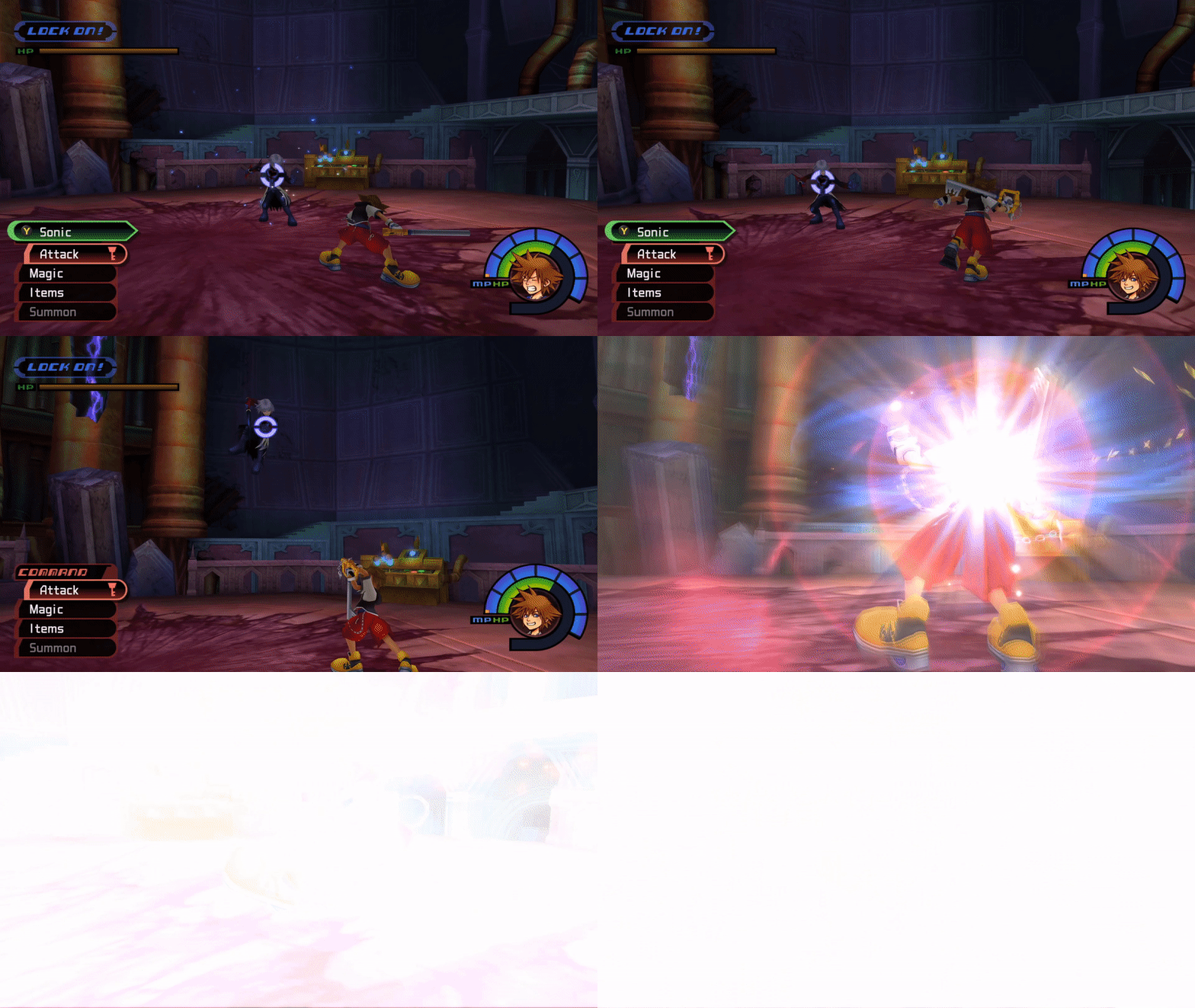
Once Dark Riku has taken a bit of damage, the warm up is over. This is phase 2. From here on out, he’ll occasionally empower his weapon with a dark aura, adding some nasty new effects to his attacks. The art and design assets of this empowered state are really just overlays on the basic behaviors he already has. It’s very efficient design, that wouldn’t have demanded too much production overhead, and yet expands the fight in very interesting ways. Every time he does his two-hit gap closer while empowered, he’ll launch an energy disc ahead of himself, which can damage Sora, or even set him up to be combo’d by followup attacks from Riku. Riku’s overhead will now also launch some unblockable energy, in two lines out to either side of him. The way these two attacks in particular are designed utilize a common trick in action games with a dodge mechanic like Kingdom Hearts. By extending out the danger area of these attacks in lines, they require a greater degree of fine control from the player while dodging. Usually, dodging just vaguely away from danger is sufficient, but if you dodge to Riku’s side during an overhead, or directly away from him during a gap-closer, you’ll get hit. Closing off specific vectors around the enemy during their attacks like this tests the player’s ability to dodge in specific ways, a straightforward step up from what is usually expected of a dodge.
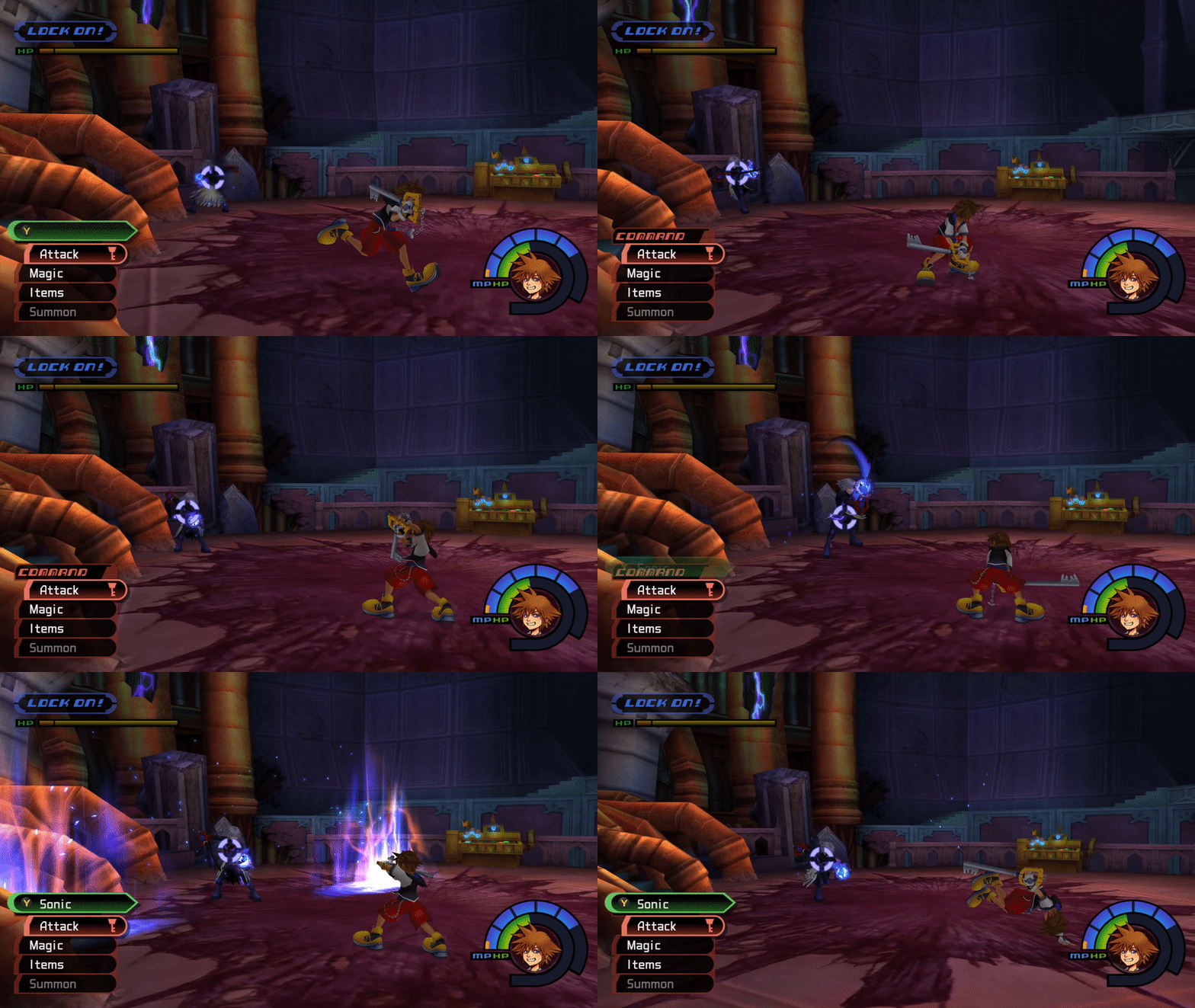
During his empowered state, Riku is extremely aggressive, moreso even than before, and will barely give the player a moment to breathe. During this state, healing is very risky, as is going on the offensive, so the challenge becomes figuring out what the player can accomplish that won’t lead to their own defeat. Riku’s gap closer is still blockable, as are the projectiles he creates from it. So essentially, Riku’s empowered state has an unblockable attack that is most effectively dodged, and an attack that is most effectively blocked, so that pattern of encouraging the player to utilize a variety of their tools and maneuvers is reinforced. Riku is much less likely to flinch during his empowered state, but it can still happen, so the player must keep an extremely sharp eye out for their opportunity to deal some damage. The longer the fight goes on, the narrower this opportunity becomes, requiring the player to take greater and greater risks to deal damage, naturally elevating the tension as it reaches its crescendo. The narrative in this fight is meant to be an underdog overcoming his greatest rival consorting with pure darkness – a symbol of overwhelming power. Demanding persistence of the player in knocking down Riku’s increasingly ironclad defenses reinforces this feeling.

Riku will finish out his empowered state with an empowered helm splitter that unleashes a wave of unblockable energy bursts. As with any enemy in Kingdom hearts, the key to avoiding this attack comes from understanding its behavior. The attack itself sort of acts like a little mini-enemy in that it has its own logic to how the energy bursts appear. They will surround Sora, and appear at semi-random locations, but there’s a bit of a predictable method to it. They seem to predicatively try to lead whatever direction Sora is currently moving, so quick changes in trajectory as Sora dodges drastically reduces the likelihood Sora will be hit. Figuring out your enemy’s behavior through observation is one of the primary skills Kingdom Hearts tries to impart, and that can also be applied to individual attacks like this.

Riku cycles between his empowered state and the attack pattern from phase 1 until he is reduced to low health. Now the final phase begins, and with the player’s competence in regular combat well-established, the game shifts somewhat to introduce feelings of desperation and survival. Riku will permanently enter the empowered state, and the player will now have to constantly deal with his empowered attacks while whittling down the last of his health. The tension is raised and the stakes are at their peak – be defeated now and lose all that progress you made fighting Riku. The player’s ability to manage risk, defense, and offense is pushed to its limit.
Every so often, and with increasing frequency as his health is reduced, Riku will initiate his ultimate attack. This is one of the earliest examples of such show-stopper, set-piece, mega powerful, screen-subsuming attacks that will become a Kingdom Hearts favorite tradition. First, how does it work? Riku will raise himself into the air, announcing his intention, then fly straight at sora in a dashing attack. A series of identical dashing attacks, this time each forming a part of a rotating danger area around the arena happen in rapid sequence. Finally, Riku does an even more empowered version of his helm splitter, sending energy bursts outward from the center of the arena towards the edge. Like the previous empowered helm splitter, the game is asking of the player here to recognize the behavior of this attack, how it works, and formulate a response. Since this ultimate attack is constituted of mostly things we’ve seen Riku do before, it also acts as a capstone to the fight’s mechanics.

The final step of the fight is, essentially, trying to squeeze in a last few good hits against Riku. You’ll notice he’s totally invulnerable during his ultimate attack. He’s also prone to using it very very frequently when his health is almost spent. I have mixed feelings on this. On the one hand I’m wary of ever making a boss completely invulnerable like this when up to this point the fight has been so open ended and player-driven. Riku is never invulnerable otherwise, even if it’s not always wise to attack him, so it can be a somewhat frustrating disruption, especially when he is using it near-constantly towards the end of the fight. I understand what the intent is here. This attack is the most difficult thing to defend against that Riku can throw at you, so it makes sense to use it consistently to up the tension at the fight’s climax. The experience of having only a small window to deal that last tiny bit of damage you need is also a compelling one – it gives the feeling of the fight becoming more and more desperate. Still, the attack is dangerous enough that it feels as though Riku didn’t need to be unassailable during it. The added danger of trying to damage Riku while he’s flying around with this ultimate attack could even be quite compelling, itself.

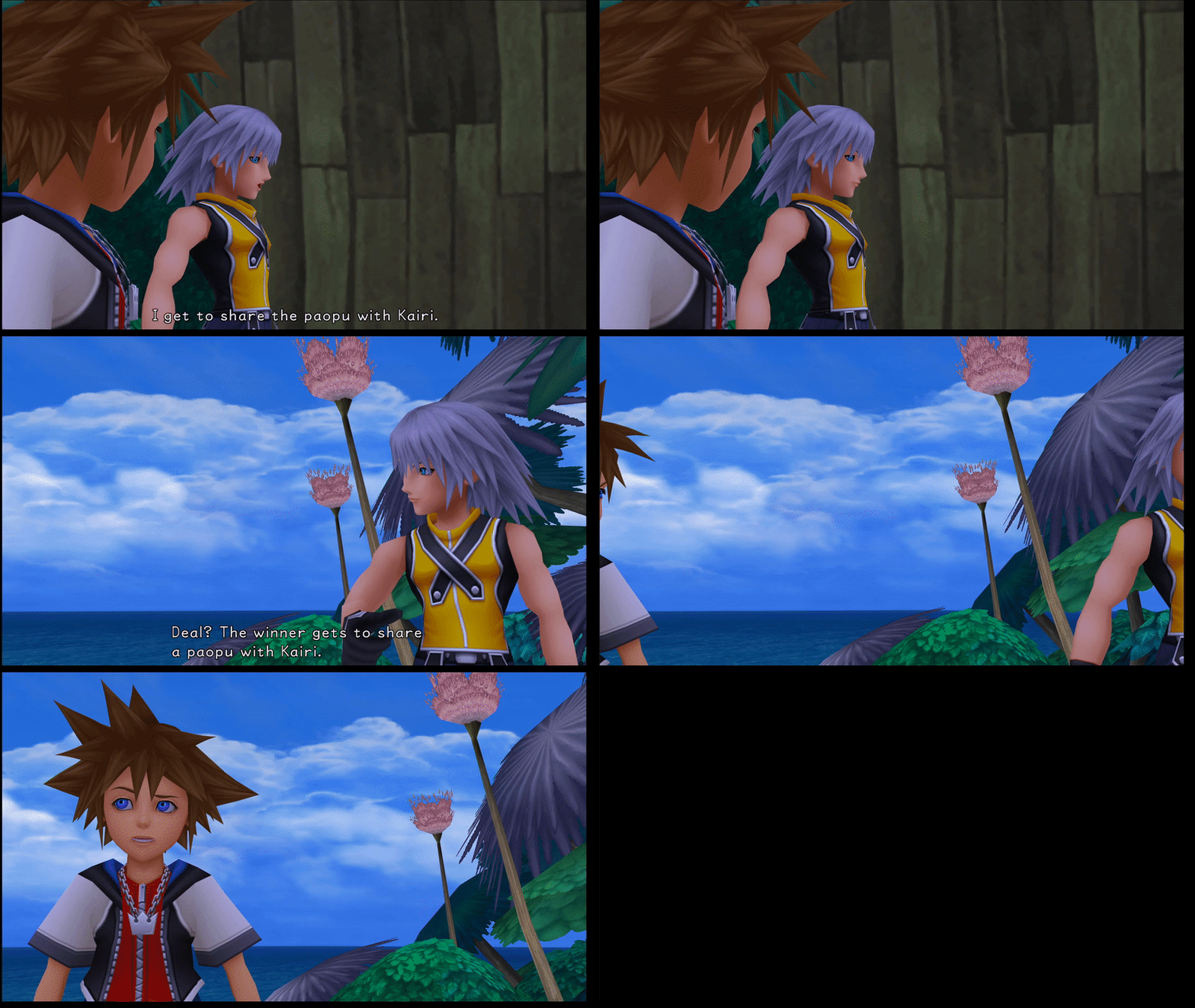
When this all started, Kingdom Hearts went out of its way to really build up the rivalry between Sora and Riku. It was a rivalry built on a childish sense of possession of their mutual friend Kairi, though that was all merely a pretense to air their own senses of inadequacy toward one another. The rivalry was only ever really about Riku and Sora. They both care deeply for Kairi, but Kairi and her feelings weren’t the real reason they fought. Now, the situation is turned on its head. Riku’s will is suppressed, the real Riku is nowhere to be seen in this dark reflection, and Kairi is in imminent danger. There’s no rivalry anymore. Sora no longer fights for himself, but only for the safety of his friends, both Riku and Kairi. The Dark Riku fight paints a stark contrast to the idyllic playful world our characters once found themselves in, forcing them to grow past the irresponsibility of their rosy childhood to own the consequences of their actions to this point. With the battle wrapped up, Riku is left to deal with the darkness he’s unleashed, and Sora has to be willing to give up his heart, his ego, to save Kairi, proving her well being more important to him than his own.
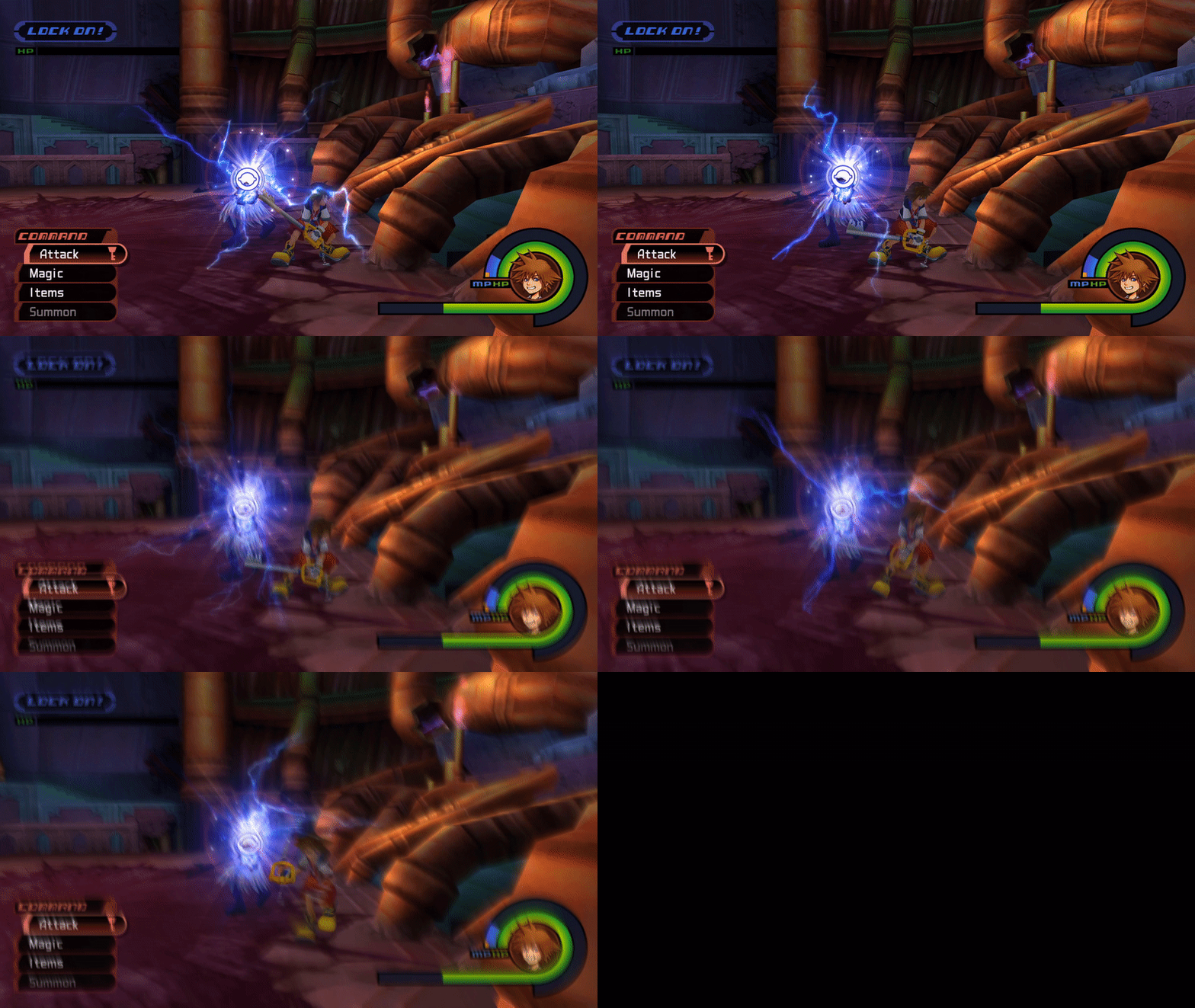
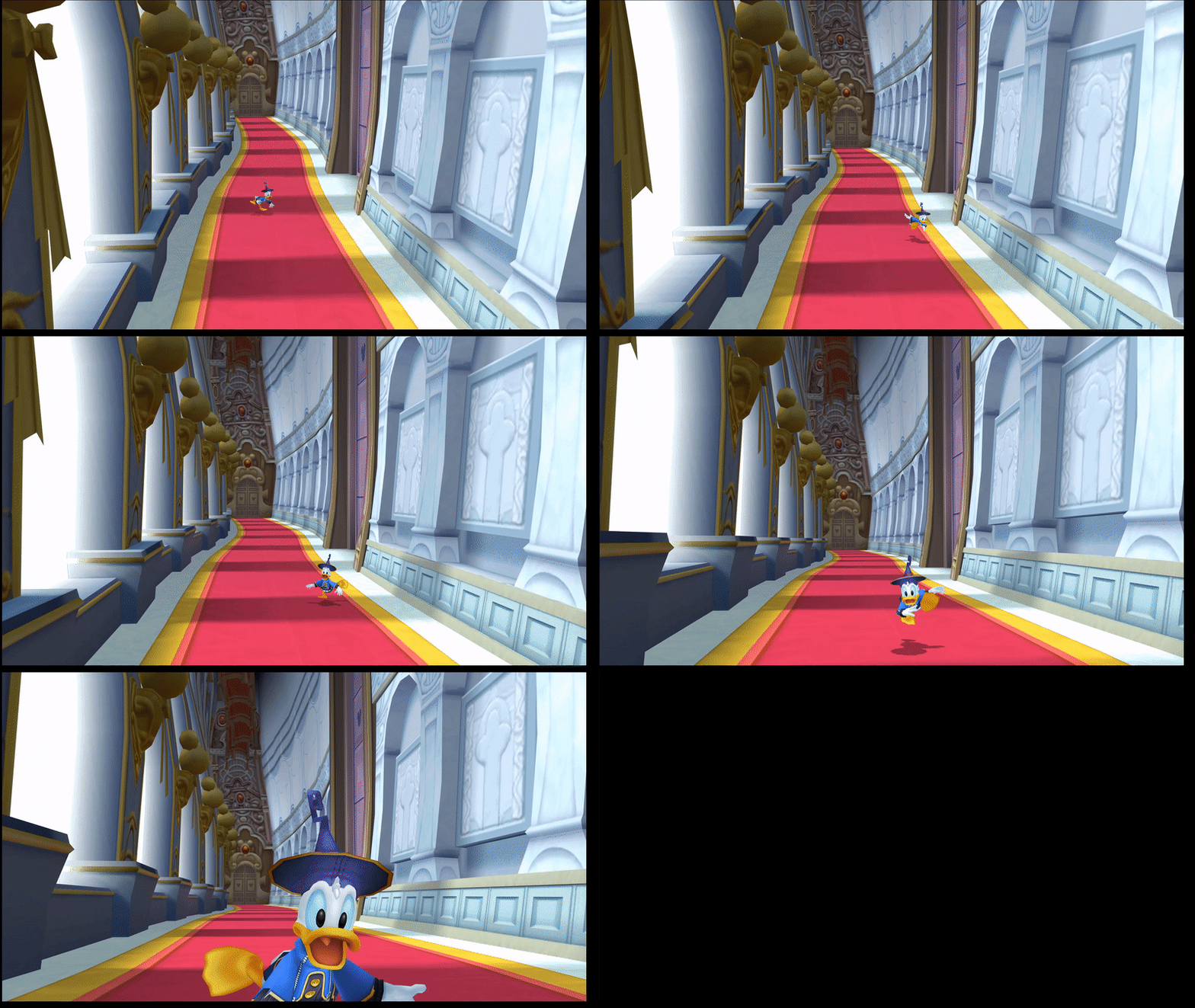
The Dark Riku boss fight is incredibly memorable. Anyone who played Kingdom Hearts in their childhood will tell you as such. It’s an excellent culmination of the skills one builds up through a long RPG like this, while capping off the central emotional through-line of the game, established all the way back in the opening minutes of the experience. It’s a great fight, but there are some pretty notable issues I should mention. Most egregious, is how the relatively small boss arena interacts with the game’s lock-on feature. The lock-on is meant to keep your enemy front-and-center for easy viewing. While dodging around Riku’s flanks, the camera has to spin and can often get caught on surrounding walls in such a way that Riku will be pushed off-screen, essentially hiding information from the player through the mechanic that is meant to do the opposite of that. It’s a pretty significant technical hitch, and a shame that it can be so readily reproduced. There’s also the repeated periods of invincibility Riku enjoys near the end of the fight, which as I said do accomplish some of the fight’s design goals admirably, but creates a bit of unnatural frustration I feel could have been designed around. While I find what is blockable and unblockable in his fight rather intuitive, that’s a bit of a gray area and I could see it unduly confusing some people. Still, all that emotional catharsis in finally defeating Riku at his best, and seeing how Sora’s matured could make one overlook some of these flaws. I mean who could forget Donald Duck tearfully running to Sora’s side as he disappears.
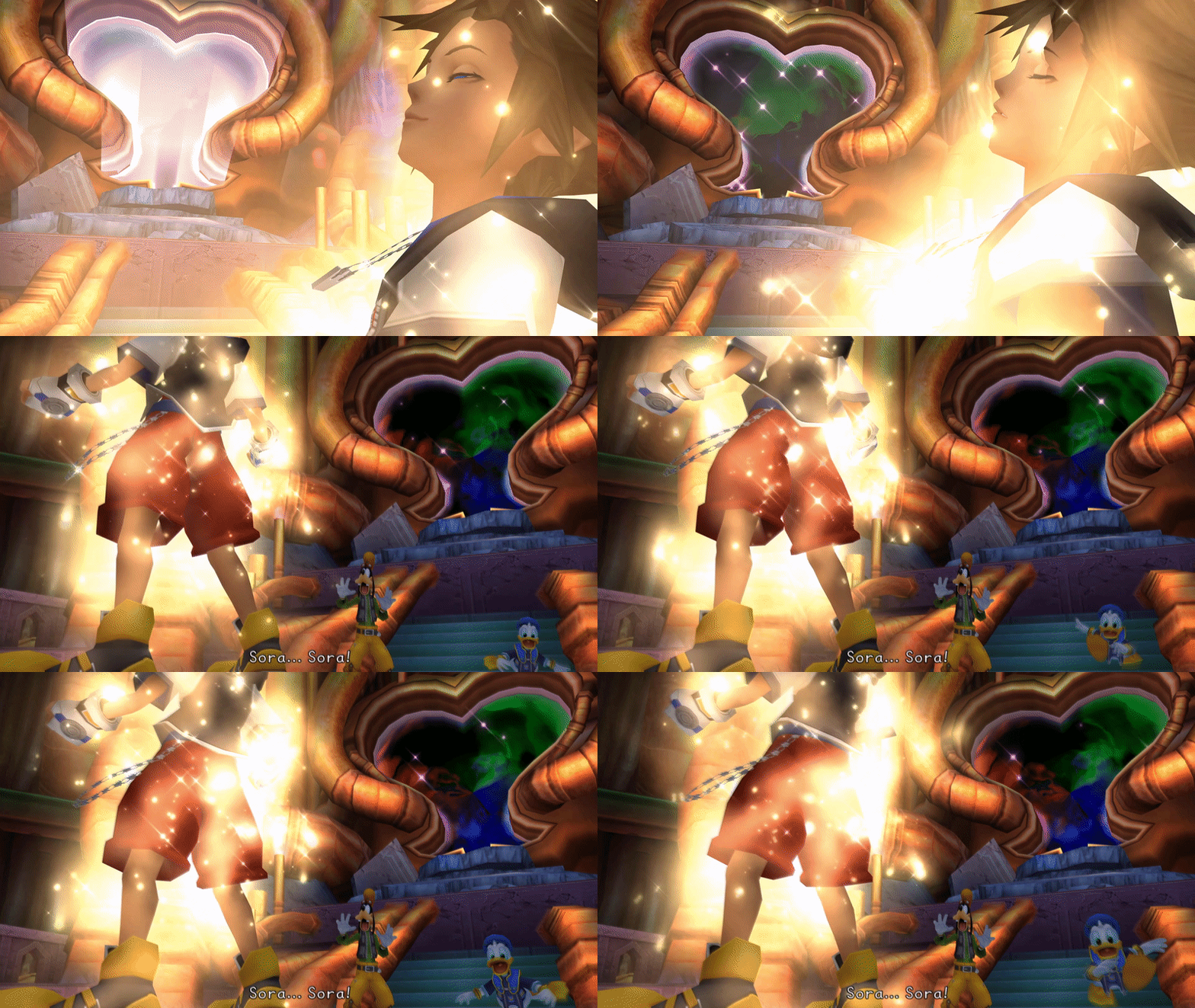
Overall, I think it’s pretty clear why this one fight sticks so strongly in people’s minds. It’s not just the narrative, nor is just that it’s incredibly hard. It’s that synthesis of gameplay and story – action and emotion that really cements moments like this for people. The emotion is heightened by the interactivity, and the interactivity heightened by the emotion.
He sought a way to cross over into other worlds. And he opened his heart to darkness…




 Parry Everything