Bayonetta’s Witch Time is Better Than Most of Its Derivatives

Man it’s been an absolute hurricane of a month for me, and I am freaking exhausted. It’s Halloween night, so I’m going to indulge myself and ramble about what else? A parry mechanic. Ramble about a parry mechanic whilst complaining and making perhaps uncharitable comparisons between vastly different games. Like I said, I’ve chosen to indulge myself. Nothing scarier than unfiltered opinions. It’ll be a good time. Let’s go.

Bayonetta is an action game from 2009 that grew to a franchise that is apparently worth $450 million. No, do I not have a source for that number. In seriousness, while the niche-ness of Bayonetta may have placed her more in the financial category of a God of War (2005) as opposed to a God of War (2018), she seems to have made a much heavier mark upon combat design, particularly in regards to action games heavy on the spectacle. ‘Spectacle Fighter’ or ‘Character Action’ were a couple of vague and unhelpful terms spun up around the time of Bayonetta‘s release to try and encompass the really different way that certain games started doing things following Bayonetta. Of course there were plenty of games that slotted into the category of ‘spectacle fighter’ before, Bayonetta herself owing much of her DNA to games like Devil May Cry which came long before. And as I said, Bayo was plenty niche, but among the melee-action hardcores, both players and designers, it seems as though she’s had a very last impact.

One of the most noteworthy features of Bayonetta, which set it apart, was the ‘witch time’ mechanic, essentially the game’s parry mechanic. In Bayonetta, if you dodge at the last possible moment, the entire game’s time scale will slow to crawl, except for the titular player character Bayonetta herself, who can the walk about as she pleases, and unleash a flurry of attacks against her hapless foes. Games like Max Payne and even some of Bayonetta‘s own predecessors like Viewtiful Joe made use of a slow-motion effect to allow players to more tactically navigate chaotic and fast-paced situations. Bayonetta‘s wrinkle of hyper-specificity, in that witch time can only be brought forth in response to player performance and situational awareness is what really made this particular mechanic special, I think.
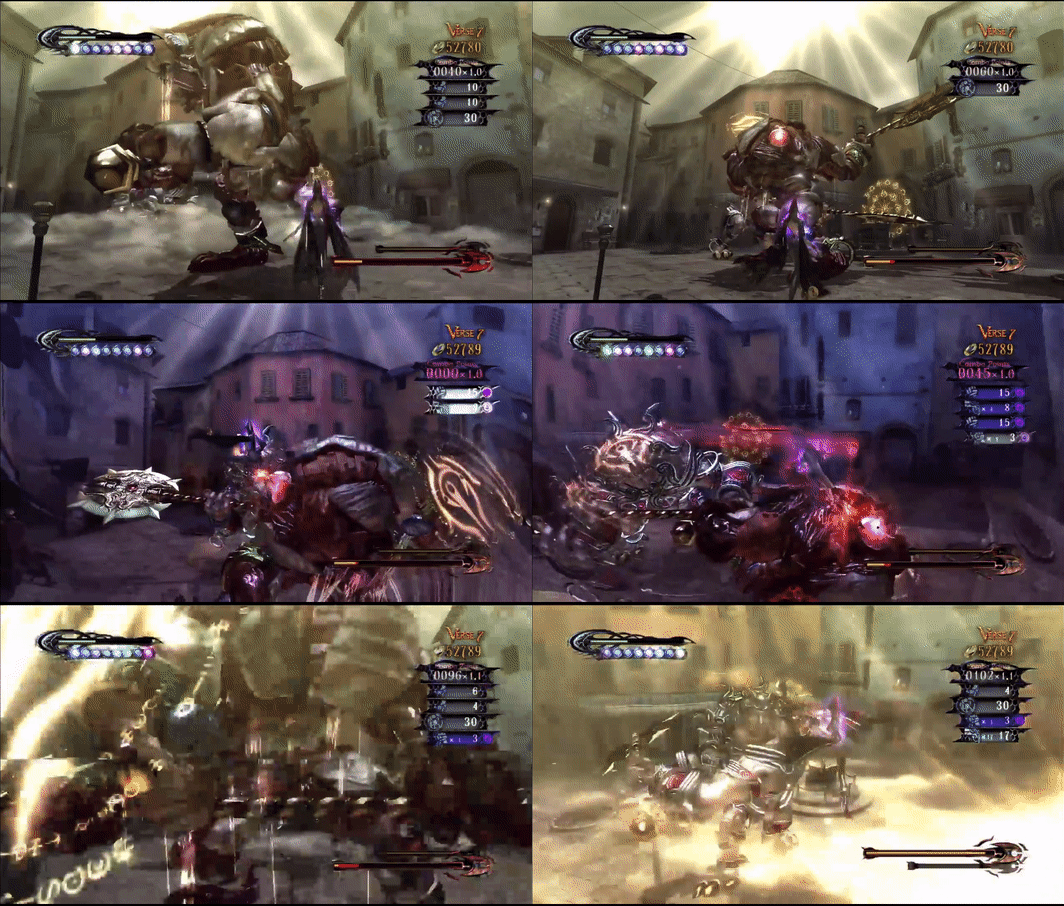
The black catsuit-wearing witch Bayonetta fights two angelic lizard monsters in a quaint yet abandoned European town. She dodges nimbly out of the way of an axe strike, as time slows around her in a purple haze. She leaps into the air and beats one of the lizards to death while he can hardly move.

Bayonetta, primarily inspired by Devil May Cry, features a robust combo and score system by which the player is expected to not just mow down hordes of monsters, but to do it in style. While other games were killing framerates, making characters run like tanks, and restricting camera controls to make games feel more cinematic, Bayonetta opted to pull its camera back and give the player the tools of an editor; the ability to slow time and navigate a mid-massacre diorama like it were an art exhibit, for snippets at a time. If spectacle was the goal, if spectacle is a design pillar of this series, then witch time gives the player the space to think through their masterwork, their fireworks show. Action games like these have big and complicated combo systems for juggling enemies in the air and performing outrageous feats of acrobatics. They can be hard enough to master on their own, let alone while bloodthirsty monsters are swarming about. Bayonetta really seems interested in on-boarding newbies despite its niche appeal, and witch time reinforces this by giving the player a pause with which to set up or practice their big combos stress-free, like a batter swinging at a teed up ball. The Bayonetta loading screens, which opt for a playable void in which you’re free to practice combos at your leisure, makes me quite confident this was one of the goals. With very little practice, witch time allows players to come to grips with the combo system in a more controlled environment, as well as looking cool as heck.

What’s more is what it does for the interest curve of a given battle. Parries in action games typically embody a kind of crescendo, where the intensity of the battle reaches its peak because the player is at the greatest risk – they’ve put themselves in harm’s way to deflect an oncoming attack. Bayonetta takes this further with an invigorating lull in the action to follow, a denouement so to speak. This creates a great rhythm of rising and falling action that allows one to navigate the battlefield in a way that’s a bit more planned and elegant, less improvisational and chaotic than in many other games, which certainly fits the bill of Bayonetta‘s atmosphere. It’s a game about an incredibly stylish witch who always seems to be one step ahead, and just a tad more confident than is warranted by any given situation.

The black catsuit-wearing witch Bayonetta fights an angelic lizard creature with a horn instrument in a gothic temple courtyard. She dodges a strike from it, causing time to slow around her in a purple haze. She then strikes the enemy so hard he is catapulted into the air, where Bayonetta juggles him about with a series of gunshots and rapid melee strikes.

I say that Bayonetta seems to have had a big impact despite it’s somewhat limited first splash because it really seems like tons of games took after it. Bayonetta‘s developer Platinum Games ran with the ‘character action’ style of game, with a slew of them to follow, including Bayonetta‘s own sequels, as well as collaborations like Nier:Automata, a game which shares a huge amount of DNA with Bayonetta including witch time as an option mechanic. As a brief aside, what I’m going to complain about with Automata is that the witch time equivalent in that game is so instantly satisfying to use, that it makes me wish it was a baseline feature of the game as with Bayonetta! Ah well.

Interestingly, I see Bayonetta inspirations in even heavier hitters like The Legend of Zelda: Breath of The Wild. I think one of the magical parts of game design is that like, even more so than in many other art forms, the practices and learned lessons of design can be studied and adopted in direct ways freely. It’s magical to see wildly different games borrowing great ideas from one another, putting their own spin on it, and creating some truly great experiences. Breath of The Wild did not do that with witch time. Oh yeah, complaining about botw let’s DO THIS. So, in BotW you can induce a slow-motion of sorts by dodging out of the way of enemy’s attack at the last moment, just like in Bayonetta. After this, you are.. permitted to spawn the attack button and unleash a pre-baked, non-interactive series of attacks. Or, you can do nothing, and the slow-mo promptly just ends. It’s, um, well it’s got the spirit anyway.

The key problem with implementations of parries like this lies in the lack of interactivity, I think. The problem starts with the dodge that initiates it. Dodging in Botw is so digital and rigid, as opposed to games like Bayonetta which have more of an analogue omni-directional approach. Then, the result of the dodge is non-interactive. The only player input is continue, or don’t. Not really much of a choice, meaningful for otherwise. Witch time allows the player to do anything they’d otherwise be able to do, but against an army of nearly paralyzed vulnerable opponents, and has so many options to bear against them at that. Imagine if Link from Breath of The Wild was able to, say, use one of his Shieka Slate gadgets during the slow-mo time, planting a bomb, bashing a foe with a big piece of metal, or even just shooting a bunch of them with arrows. To be clear, BotW does have a lot of weird glitches involving its slow-mo effect that make some strange interactions possible, but these are clearly not intended as every perfect does is accompanies with a big flashing “PRESS BUTTON NOW TO FLURRY RUSH DO IT NOW”, and these glitches are not likely to be noticed by casual players.
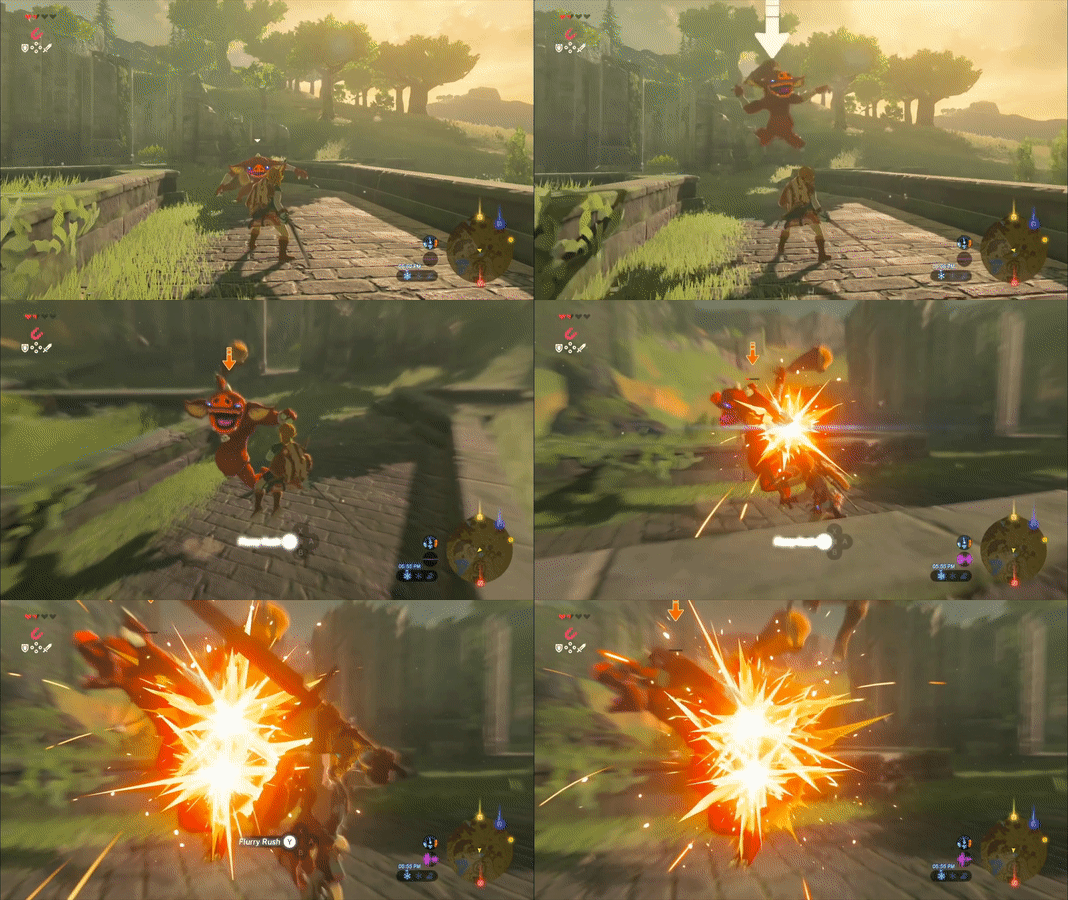
A blonde young man with a sword and shield side-step dodges a jumping attack from a pig-demon as time slows to a crawl atop a brick stone pathway overgrown with grass. The young man veeeery sloowlly does a combination attack on the pig demon.

Parries are fun, but mostly as tools of personal expression through play, and signs of mastery to enhance performance during play. In the former case, BotW is functional as a basic parry mechanic – you can choose, meaningfully whether to go for flurries or not depending on the combat situation, but it lacks the follow-through of witch time’s setting up for complex combos in a way that feels satisfying. The pre-baked combo of the flurry rush is also really long and time consuming. I said earlier that a parry should mark a big crescendo, a spark of heightened action, but the flurry rush just takes so damn long to resolve, and since enemies in BotW can often be damage sponges, it doesn’t really have the oomph I’d want. The thing could resolve in a fifth of the time and be much more effective in terms of feel, I think. Kirby and The Forgotten land does just this with its own witch time mechanic, and I feel it works much better there. Feels looser and more free-form, too.
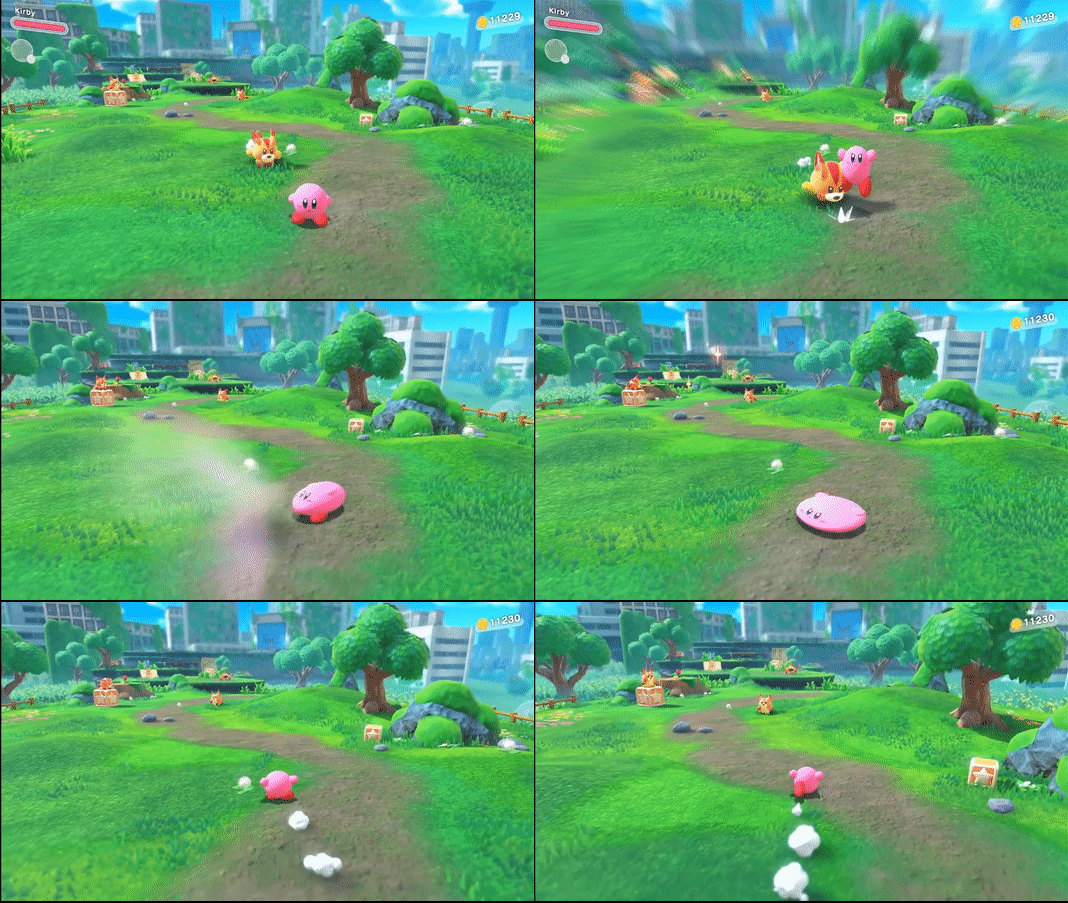
The round pink creature Kirby dodges a charging fox in an open grassy field, as time slows to a crawl. Time resumes as kirby goes in to inhale and swallow the fox whole.

In the latter case, where parries accentuate mastery, this only really matters, in my opinion, if it can be significantly felt, most often by making fights shorter. If you can parry a lot, then you can counter a lot, then you can dispatch enemies quickly, in most games that have that feature. Flurry rushes take so long that even if they technically shave time off of beating baddies, it rarely feels like it. I often feel, in BotW that I’d save more time by just wailing on dudes. The game lacks the same goals of defeating enemies stylishly, in an explicit capacity anyway, so I personally feel more compelled to dispatch efficiently, and flurry rush has friction with that.
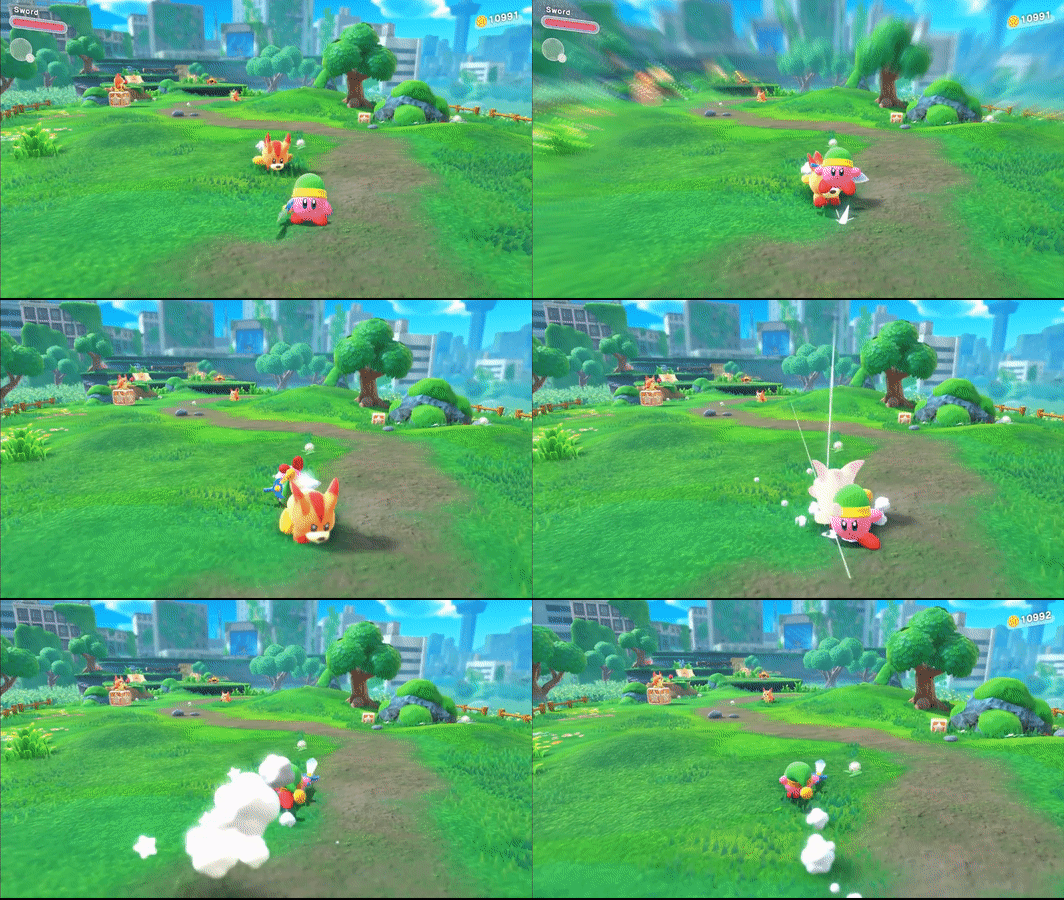
The round pink creature Kirby dodges a charging fox in an open grassy field, as time slows to a crawl. Time resumes as kirby goes in for a switch strike with his sword.

So what’d we learn from all this? Witch Time is great. It synthetically manipulates the interest curve to have natural highs and lows, but explains it away with a clever and intuitive mechanic that ties in with the style of Bayonetta the game and Bayonetta the character. Witch Time eases players in to high-intensity action games and sets up those really cool combos that everyone wants to pull off. Parry mechanics should have a material impact on gameplay so that their role as a barometer of mastery can be felt. Parry mechanics ideally can also serve as a vector of player creativity and agency during combat. I got to complain about Breath of The Wild. It’s all good here.

I hope you enjoyed this slightly indulgent Halloween special. Stay spooky and be good to each other.
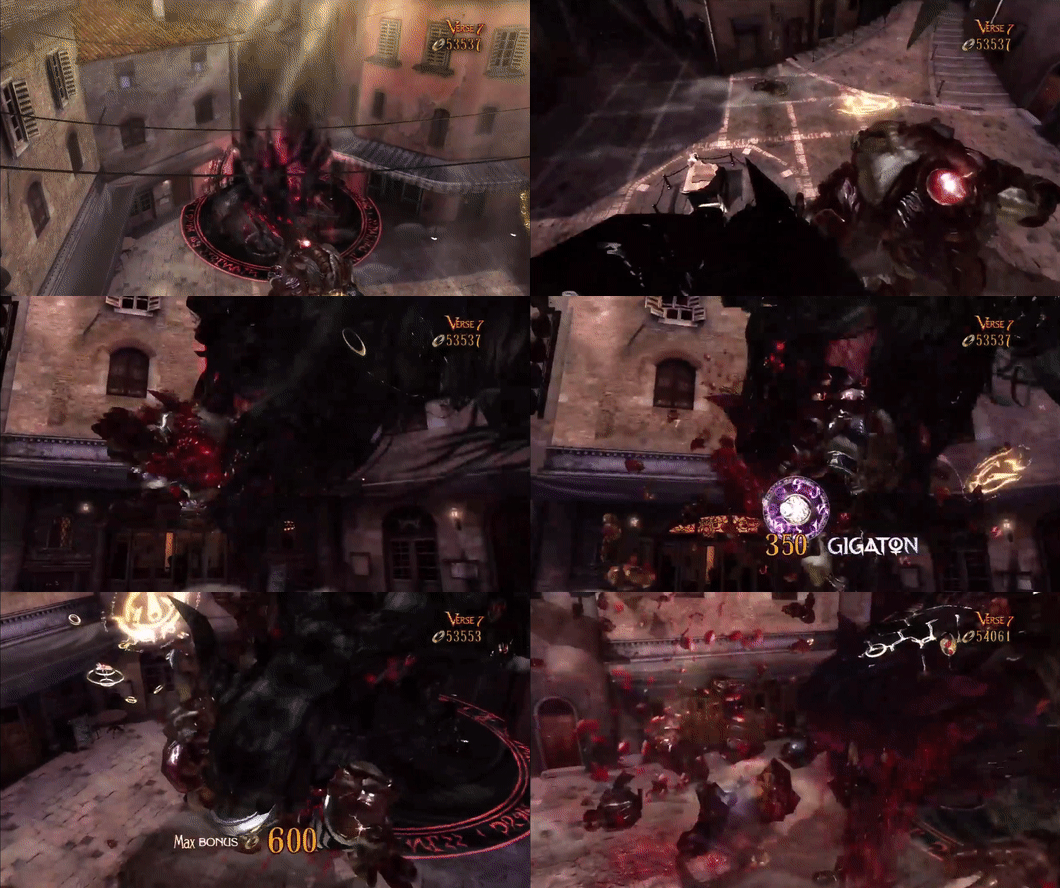
A demonic dragon head made of black hair appears from a purple portal in quaint yet abandoned European town, and violently bites into a strange reptilian creature, spraying blood every as the dragon jostles the limp creature about, before biting down hard, reducing it to spatters.

You’ve been naughty…
The Iterations of Luigi’s Mansion

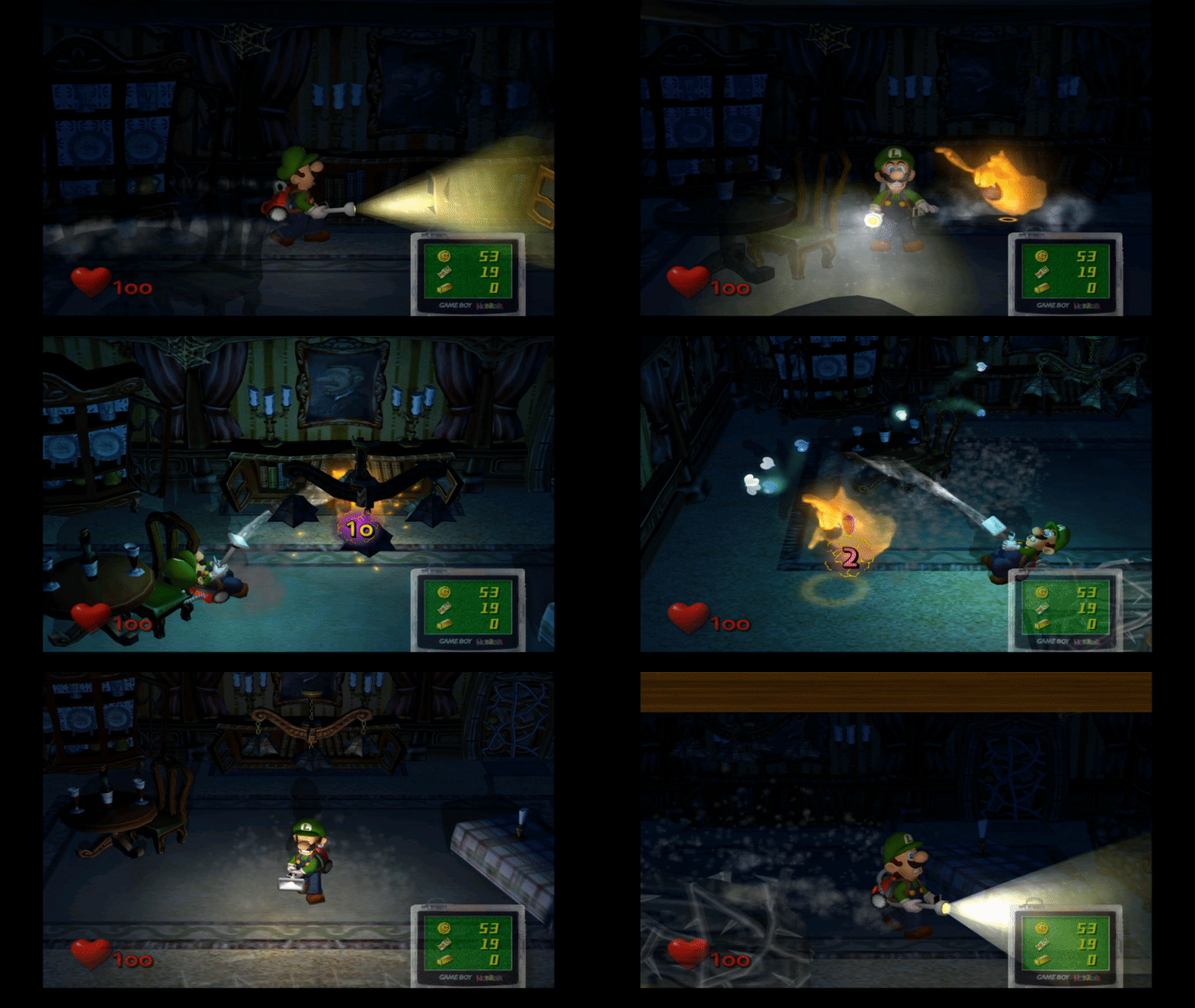
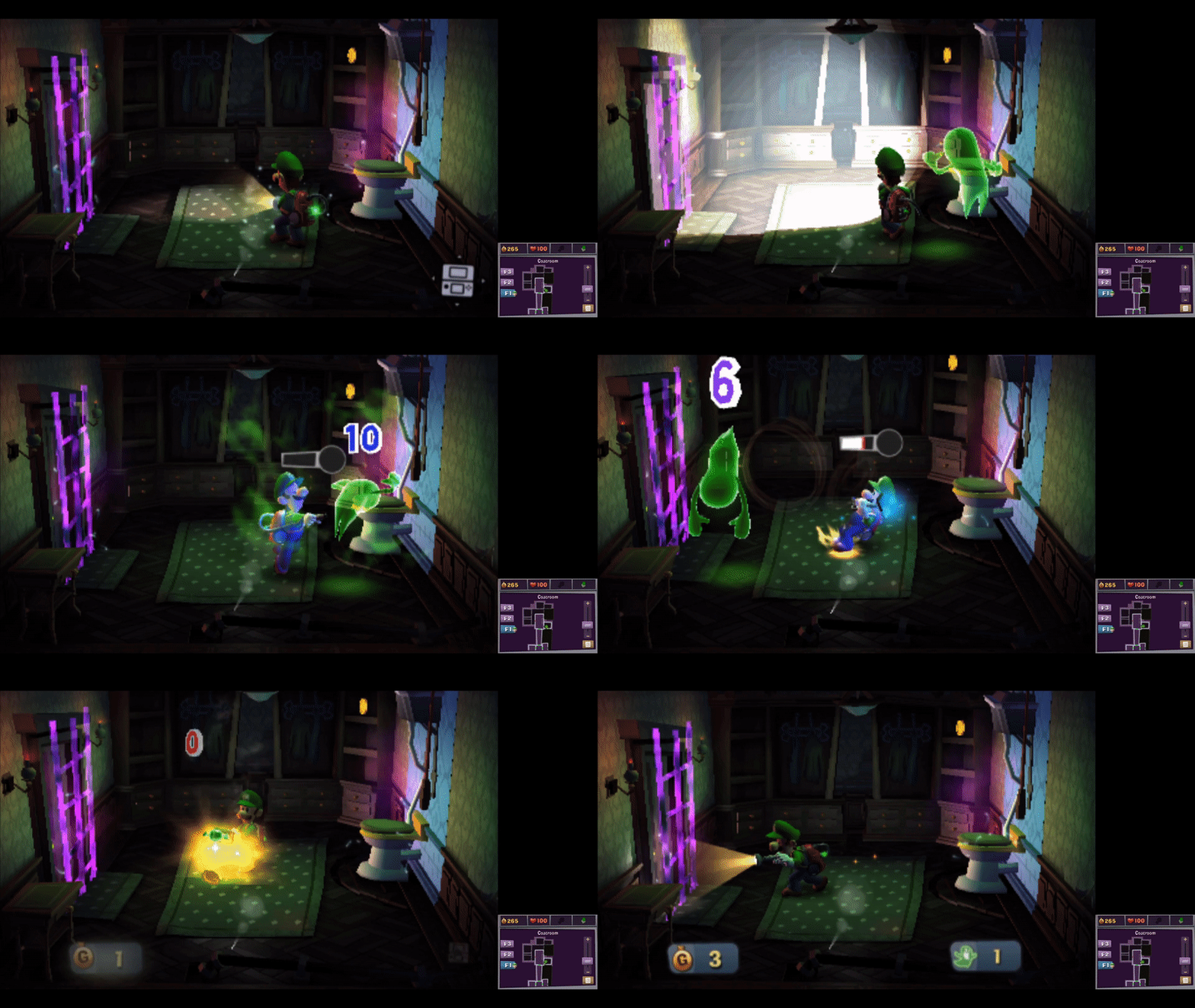
Alright to finish off Spooky Month I’ve got to talk about the spookiest game franchise there is; Luigi’s Mansion. It’s the superlative. There is no other. That’s science. Luigi’s Mansion is an action adventure game (does that mean anything?).. Luigi’s Mansion is a spooky ghost-catching action game centered around methodically exploring a creepy mansion whilst engaging in periodic encounters of high-action ghost-hunting that punctuate the gloom. It released in September 2001 for the Nintendo GameCube, received a sequel in March 2013 titled Luigi’s Mansion: Dark Moon for the Nintendo 3DS, and a second sequel, Luigi’s Mansion 3, in October 2019 for the Nintendo Switch. All the games’ action plays similar on the surface, involving a lot of running around, bumping into things while you fight ghosts in a tug-of-war scenario. They’ll drag you around the room, and you’ll suck them up by the tail with a vacuum cleaner. The player can lean Luigi around in different directions to have a limited control of his movement while the ghosts try to escape his vacuum. Leaning away from the ghosts drains their energy faster, and poor movement control might let the ghost escape. The combat of Luigi’s Mansion is easy to grasp and instantly satisfying. What I’m interested in though, is how the simple systems were iterated on in its followups. In particular, why I found the combat of Luigi’s Mansion 3 so blase so often.

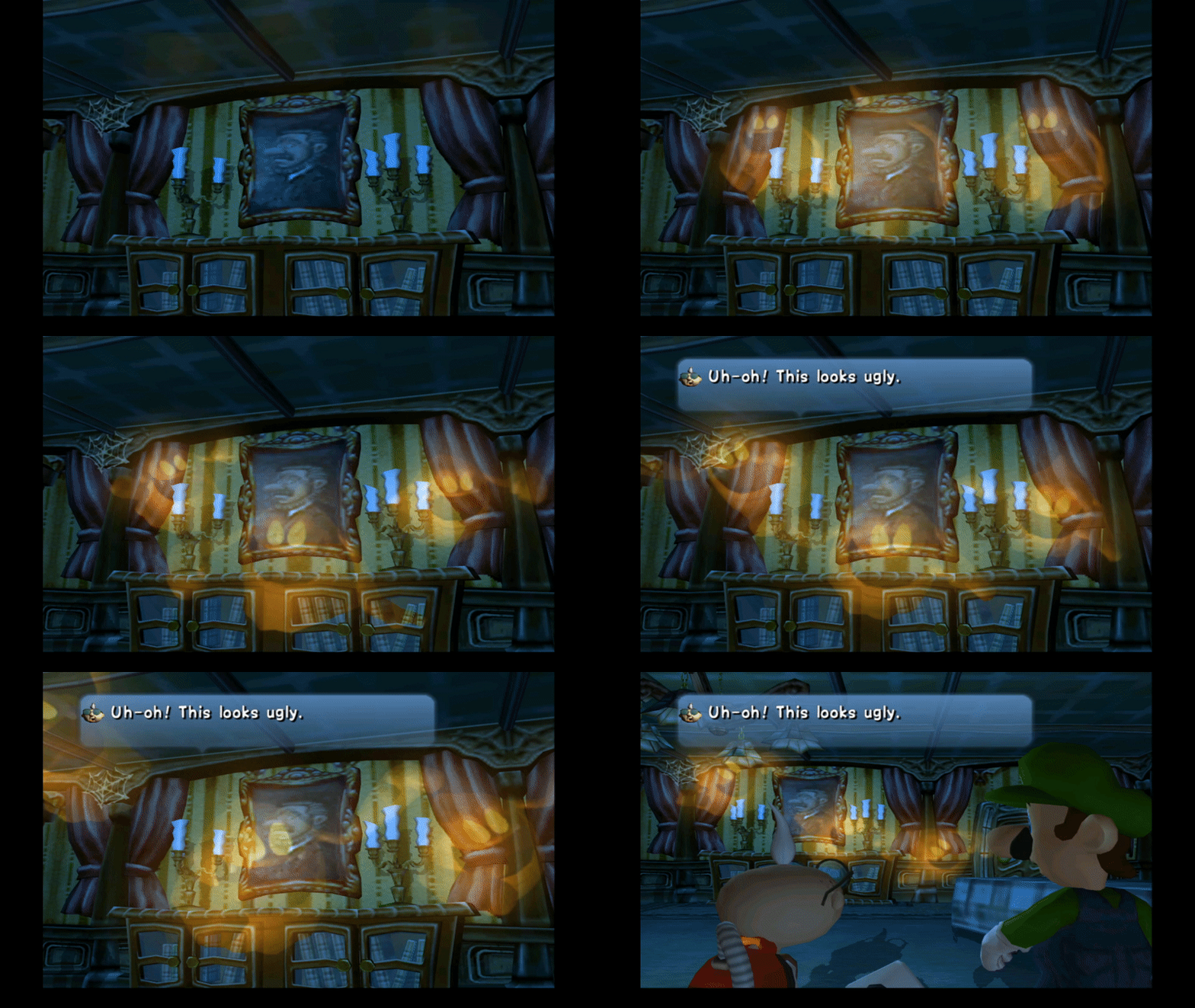
The game doesn’t look that bad for being over 20 years old. At least I didn’t use the 3DS version.

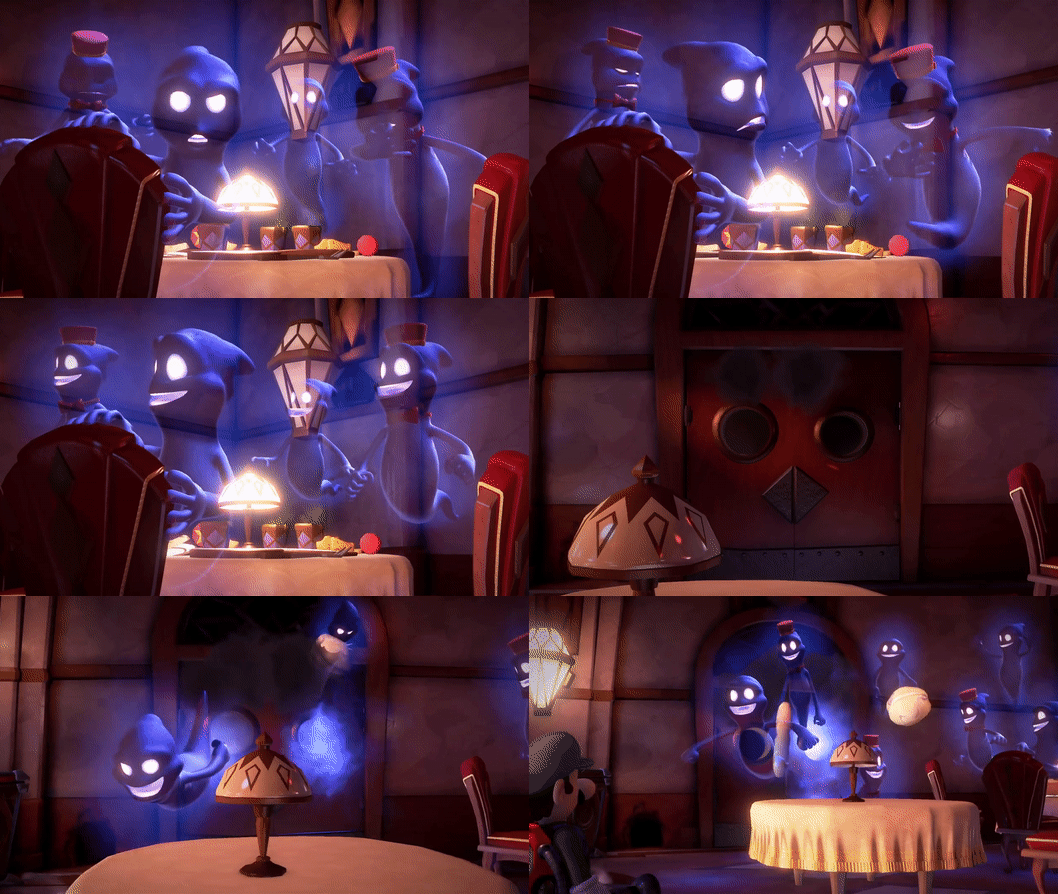
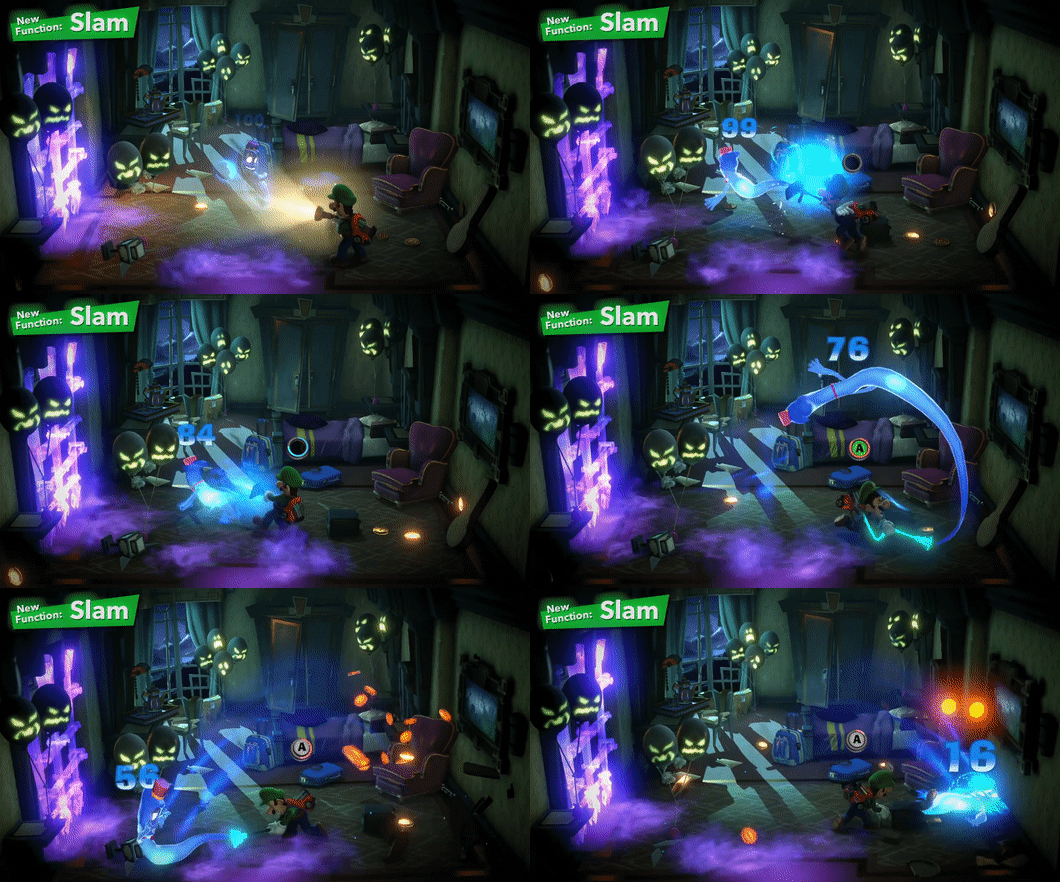
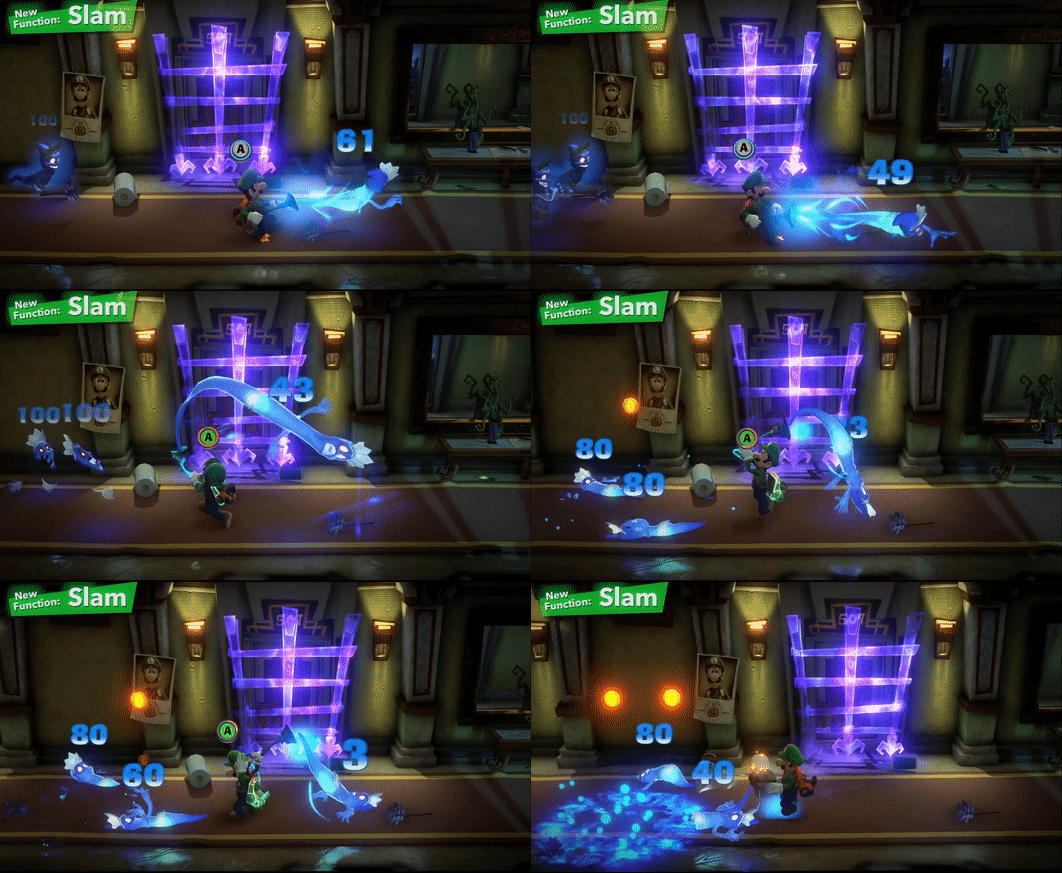
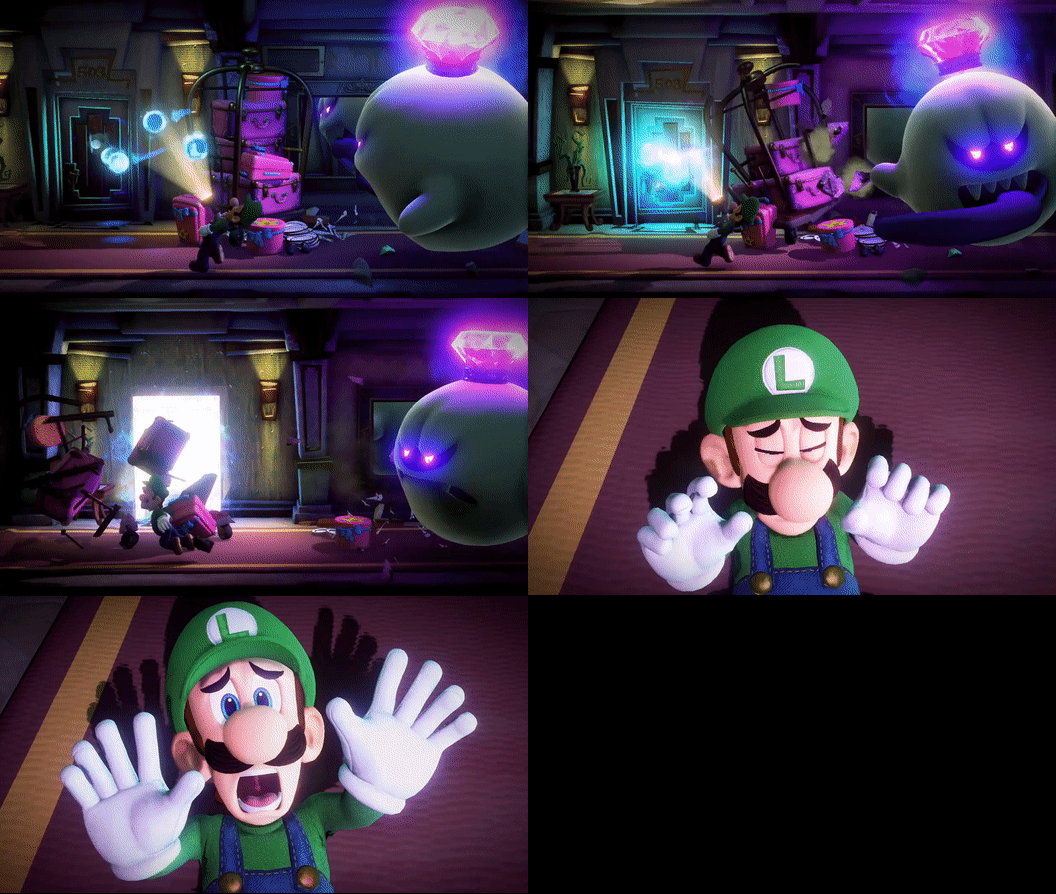
Aha, yes. Plot twist, I actually think the combat in Luigi’s Mansion 3 is pretty weak in comparison to its predecessors. The games play mostly the same, and there aren’t that many elements in play here, relatively speaking, so it shouldn’t be too difficult to suss out what’s going on here. Luigi’s Mansion 3 introduced a mechanic called the slam to Luigi’s arsenal, which allows him to, after vacuuming a particular ghost for a short time, repeatedly slam the ghost into the ground, in any direction, stunning and damaging other ghosts while annihilating his main target’s energy. It quickly becomes a one-size-fits-all solution to any ghost altercation outside of boss fights, and isn’t an especially engaging mechanic on its own.

My brain cells preparing to critique one of the Nintendo Switch’s most critically acclaimed games

Luigi’s Mansion 3 was never going to miss out on its well-earned popularity for lack of a more considered difficulty curve. Being too easy isn’t exactly the problem I have. Luigi’s Mansion 3 was always going to be popular because it is one of the most lavishly produced, polished, and animated Mario games of all time. I don’t really think Luigi’s Mansion 3 has bad combat. On the contrary, I think one among the many reasons for Luigi’s Mansion 3‘s notable anticipation was due to its less talked about predecessor’s proof of concept. It showed that the off-beat, frankly weird gameplay of Luigi’s Mansion was a formula with staying power that had room to grow as a robust system. Indeed, Luigi’s Mansion: Dark Moon doesn’t quite get the credit it deserves for what it contributed to the notoriety and design ethos of Luigi’s Mansion. Luigi’s Mansion 3‘s combat has its basis in Dark Moon and works well enough as a result. Dark Moon is where most of the changes to the formula came from and they are for the most part, positives.

The strobulb is Dark Moon‘s first prominent addition. Where in the first game, sweeping one’s flashlight over a ghost’s exposed eyes was sufficient to stun it and open it up for being captured, Dark Moon requires an active button press. The light will flash brightly, and anything caught in its cone will be stunned. The strobulb can also be charged up for a wider flash that is less likely to miss its mark, and has the added bonus of hitting many more ghosts at once. The original GameCube game made stunning ghosts in this way passive – simply sweeping the light over them is sufficient. Speaking of passivity, I liked the way the first two games in this series made defeating ghosts such a concerted effort. They would drag Luigi about the room, possibly ramming him into obstacles. The player’s own control input was the only thing stopping them. Admittedly this aspect of being dragged around a room began to be de-emphasized in Dark Moon, and that trend continued in 3.

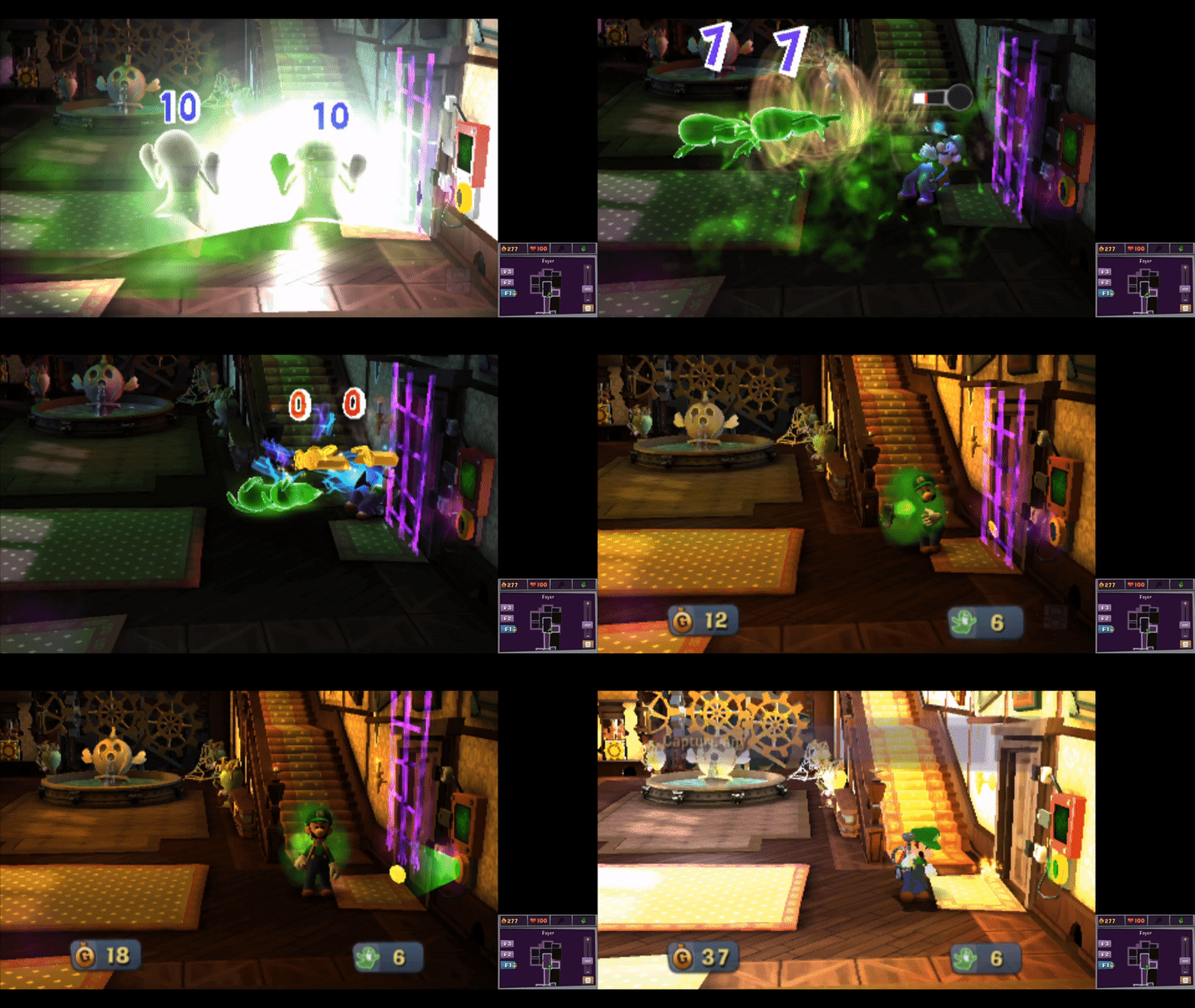
Finished in a flash … *cough*

On the flip side, Dark Moon added the power surge ability, which would let Luigi deal extra damage to a ghost he had been focused on for a certain amount of time, uninterrupted. Adding this simple additional button prompt helps keep the player feeling like an active participate, among other advantages like rewarding skilled play. The slam move is an iteration of the power surge, whereas now pressing the button after focusing on a ghost will slam it into the ground for massive damage, and this can be repeated multiple times on one charge. The move is so powerful and repetitive I often found myself passively clearing rooms of ghosts without thinking much of it.

That’s not to say that passively oriented gameplay is inherently a negative. There’s plenty of passive gameplay in Luigi’s Mansion anyway. It’s an atmospheric piece about slowly creeping through an abandoned estate. If action is half of what you do, the other half is kind of just wandering around, albeit in a extremely realized world dripping with personality. The point is, the action could stand to have some active engagement to accentuate and contrast the more low key exploration. I think something that made the original GameCube game’s spooks stand out as so, well, spooky was how legitimately threatening ghosts could be, and how that threat made a real intrusion upon the quiet tension of Luigi’s nervous wanderings. Luigi’s reactions are telling me that I should be elevating my heart rate when ghosts appear, after all. The ghosts need to pose a legitimate threat.

Ghosts’ erratic movements can reposition Luigi into obstacles if you’re not careful

Luigi’s Mansion 3 is not lacking for interesting boss fights that feel legitimately threatening, but while bosses are often a highlight of their games, moments that stick out as particularly exciting or memorable, they’re not what you’re going to be doing in an adventuring game like Luigi’s Mansion 80% of the time. If most of what you do is fighting mooks, or if even half of what you do is fighting mooks, fighting those mooks may as well be fun, or at minimum engaging. I found the slam ability’s overwhelming power and utility distracting from this. I wasn’t engaging the core Luigi’s Mansion experience like I used to. I missed those chaotic tugs of war. What’s more, the animation for this maneuver just looks… wrong. I did mention this is among the most lavishly animated Mario games ever, and it completely is. There’s some real talent and attention to detail on display here, so it’s kind of confusing how strange the transition is on this loop of Luigi slamming the ground. The way he’s leaning his weight around just doesn’t make much visual sense. It looks much more like he’s supposed to shift from slamming on one side to the other, yeah? The natural motion here would be for him to swing the grappled ghost over his head. This is fairly obvious if you go out of your way to alternate what side of Luigi you’re slamming the ghost on.

The biggest problem, though, is in how powerful the slam move is, relative to how easy it is to use. The power surge mechanic in Dark Moon only served to accentuate and accelerate the flow of gameplay as it happened. An enemy with a piddling 10 hp is probably going to be captured by a skilled Luigi pretty quickly regardless, so the addition of the power surge mechanic would let a skilled player skip that extra 5 hp at the tail end of the engagement – we all knew they’d get through it no problem anyway. In this way it’s a reward for skilled play that keeps things smooth and flowing, but it doesn’t overtake the game’s main combat mechanics, it merely augments them. The slam, on the other hand, functionally replaces the combat of Luigi’s Mansion as it had existed up to the point of Luigi’s Mansion 3. It’s not a extra tool that augments gameplay, it’s a sledgehammer that is overwhelmingly more powerful than engaging with the game’s other tug-of-war mechanics. More often that not, the goals of struggling in a ghostly suction-y duel are shuffled aside for the goal of simply reaching the point where you can start slamming which, while rewarding in its own way, gets awfully repetitive in how readily available it is. It begins to homogenize the combat encounters of the game.

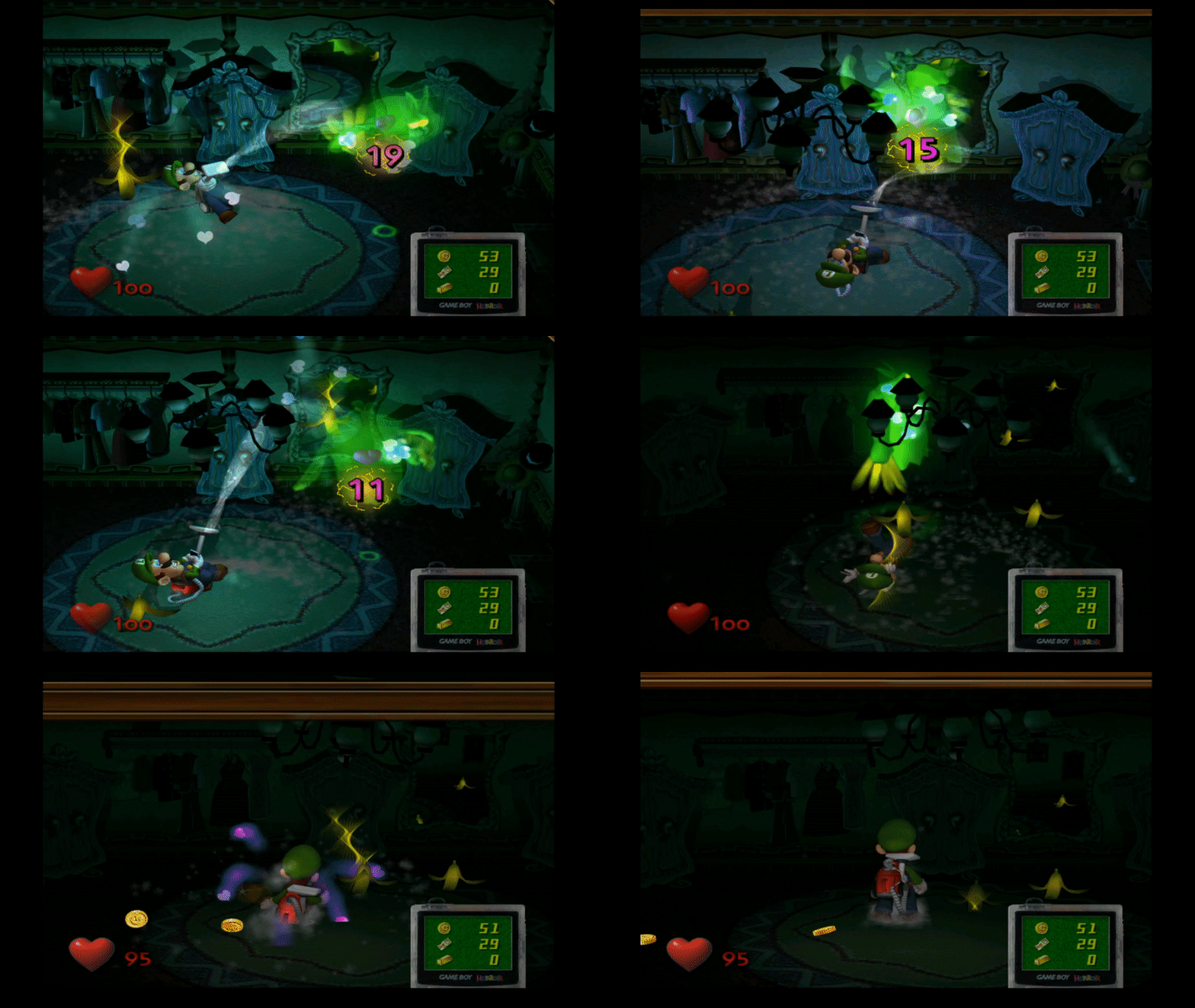
The slam animation loops really awkwardly, and IT DOESN’T SUCK UP GHOSTS WHAT?!

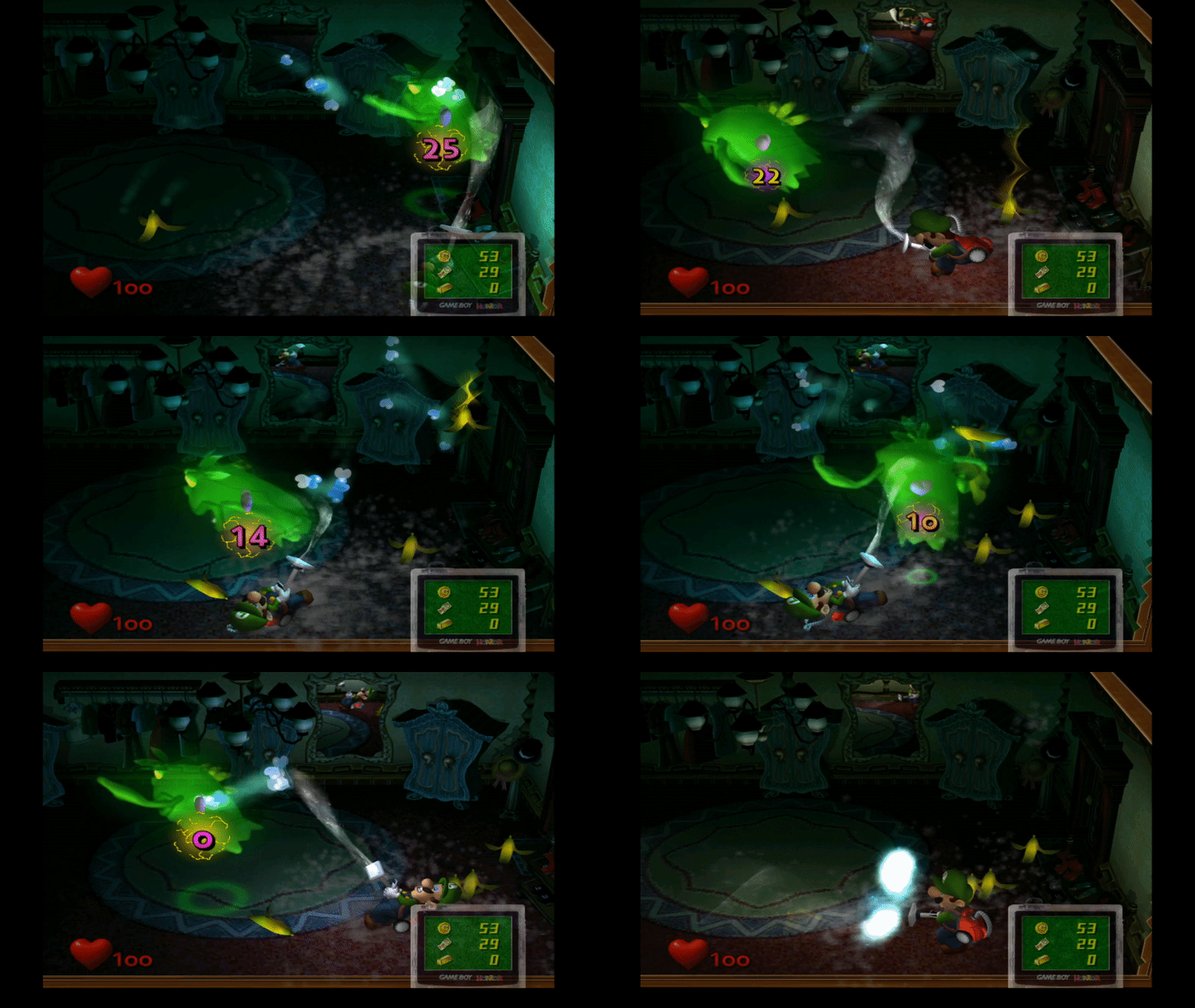
I have to touch on the fact that when defeating a ghost using the slam, it does not, I repeat, does not, get sucked into Luigi’s vacuum. Defeating ghosts in Luigi‘s Mansion near-universally results in the ghost’s malleable body getting all smushed into the mouth of the device, before disappearing into it with a satisfying slurp and *pop* sound. Delightfully expressive flails of panic from the victimized ghosts accompany. It’s the punctuation of ultimate victory over your foe. The cherry on top. The fullest realization of the fantasy of Luigi’s Mansion– being a ghost hunter. Any and all dark spirits no matter their might may be laid low before the great equalizer of an overcharged vacuum cleaner. There’s little more satisfying than that in the game. The idea that the most powerful move in Luigi’s Mansion 3 is also the only way to dispense with ghosts without that oh so sweet final animation of a ghost being sucked away into oblivion is utterly baffling to me. How is a ghost even destroyed? Is that not the point? They’re already dead, so you need to capture them with a device, right?

Ahhh, that feels better

This may seem like a minor point, but I cannot under-emphasize the importance of nailing the aesthetics of your game to work in concert with its mechanics. Would Luigi’s Mansion be as fun if everyone and everything were replaced with featureless blobs? No, I don’t think so. I don’t think its as fun if it’s missing even this one crucial animation and sound effect. Destroying ghosts just doesn’t feel right compared to capturing them in this setting. Imagine your favorite tense or emotional scene from your favorite dramatic game, or movie. Now imagine it set against the backdrop of this music. I just cannot reconcile the incongruence here. If you defeat a boss ghost with Luigi’s slam ability, the ghost-getting-sucked-into-a-vacuum-cleaner animation plays in its entirety, because of course it does. Why is this not the case for regular ghosts, whom you will be encountering far more often? It throws off the whole vibe of the game, so I have to physically restrain myself from using the most powerful tool in Luigi’s arsenal if it would finish off a foe, and that feels terrible.

Ahhhh, one more for good measure. So satisfying

Now if this sounds pretty harsh, don’t worry, because this is the part where I shower praise on the slam mechanic, as it is not a bad concept by any stretch. One of the greatest strengths of Luigi’s Mansion is its slapstick and cartoonish aesthetic. Action in these games quickly becomes outlandish and comedic as kitchenware flies off of shelves, vases are smashed, and tablecloths go whipping about in the scuffle. The thought of a struggle with Luigi escalating to the point that he’s literally slamming stubborn ghosts over his head like he’s hammering a tent peg into the ground is inherently hilarious, and perfectly congruous with the game’s general feel. Having this big and bombastic move to build up to gives every encounter a concurrent goal alongside simply ‘defeat all the ghosts’. It does potentially offer an interesting choice between slamming ghosts or simply sucking them, were it rebalanced to make the latter method more viable. The addition of an attack specifically for dealing with large crowds of ghosts also fills a niche in Luigi’s moveset that could allow for a far more varied and interesting array of encounter designs.

There are so many possibilities. Ghosts that wear armor which needs to be slammed into pieces before they can be properly captured, ghosts that can only be captured after they’ve been slammed into water, ghosts that only take damage if other enemies are slammed into them, rooms full huge numbers of ghosts that are best dealt with using the slam to thin out their tanks. The list of goes on and on. If it were just a little less frequent, if it were just a little less powerful, if it didn’t replace the more seamless power surge ability, and if it were just a little more in line audio-visual-wise with the rest of the game (by which I mean, allow the slam to suck up regular ghosts like it does bosses), I’d probably be over the (dark) moon for this addition to Luigi’s repertoire. The point is, the slam is a potentially excellent addition that fumbles in the execution.

Personally, I think a slam in this scenario would’ve been a bit excessive

What’s frustrating about this, is that Dark Moon had already figured out how best to implement this. In the game, there are instances where the power surge technique can charge up to multiple levels, by spending more uninterrupted time connected to a particular ghost. In essence, by proving you are able to keep up with a ghost for a longer period of time, you are rewarded with a great amount of damage you can ‘skip’. A longer charge yields greater damage, but also requires making a meaningful decision as to whether hanging out for a little longer for a little extra damage is worth it. Why not implement the slam in a similar way? After suctioning a ghost for a short period of time, you could power surge to get some extra damage. Useful for quickly dispatching small ghosts, or for pumping the damage on a ghost you’re not totally sure you can hang onto much longer. If you can, however, stay connected for a decently long period of time, you can instead slam them for much greater damage, and the added bonus of stunning and damaging other nearby ghosts. This implementation would be a lot less repetitive by making the slam more specialized, requiring a greater investment of time and risk to perform. By specializing the slam more, you improve the flow and perceived speed of the game, because Luigi’s tug of war action with the ghosts is no longer being constantly interrupted. The slam now acts as a crescendo to more gradual and engaging interest curve within each combat encounter, while most of the benefits of the previous version of the slam remain intact with the power surge as a replacement.

Right. I’ve gone on and on about the changes to the combat formula of Luigi’s Mansion that I didn’t care for. To be clear, I did not dislike the game. It’s gorgeous, funny, and engrossing with an abundance of creativity on display. Its polish is outstanding in almost very way, but it could’ve have been even better if all of its gameplay was as overachieving. That’s the ultimate takeaway I have here. Luigi’s Mansion 3 has almost all good ideas, but not all of those ideas are executed as superbly as they could be. The way the slam ability ironically beats the game’s own combat mechanics over the head distracts from the combat’s other strengths, and moves the game away from those strengths. Luigi’s Mansion 3 deserves a lot of praise for bringing one of the Mario franchise’s weirdest entries back into the limelight and to a bigger audience than ever before. I just hope they keep iterating on its quirky gameplay and don’t forget what great ideas all of its games brought to the table. I hope a new surge in its popularity doesn’t mask the fact that no game is perfect, and Luigi’s Mansion still has room to grow. Forgetting that, would be the spookiest fate of all. Happy Halloween everybody!

What do they feed you Mario Brothers anyway… Gullible Soup?

Boss Breakdown: Metroid Fusion’s Nightmare

In honor of Spook month, I wanted to analyze the design of Metroid Fusion‘s arguably spookiest boss, Nightmare. Certainly a spooky name. I’m fascinated by gameplay that leaves a lasting impact on people, experiences that are remembered long after the game’s last play session. Nightmare seems to be one of those special few bosses that everyone remembers, if they’ve played the game he debuted in. There’s something viscerally haunting about Nightmare in particular that sticks with you. In a game full of terrifying encounters with predatory aliens on an isolated space station, he manages to stand out as this weird, horrific science experiment gone wrong.

In Metroid Fusion you play as galactic bounty hunter Samus, once again finding herself in the unenviable position of being trapped in isolation with ravenous alien monsters that want to eat her face. Unfortunately for them, wanting to eat Samus’s face is the leading cause of death in the Metroid universe, so the player and Samus will team up to claw their way through the abandoned space station to recoup Samus’s gear, destroy the monsters within, and blow the place to kingdom come.

To give a quick rundown of Samus’s capabilities, for those who have not played Metroid Fusion, Samus primarily does a lot of running, gunning, and jumping. Samus can jump high into the air and, at this point in this game, perform the space jump – where she can gain extra height in mid-air as much as she likes, so long as the jump button is pressed just as Samus begins to fall from the previous jump. Think a standard double jump, except with no limits. An infinite jump, a space jump, if you will. She can make herself a smaller target by curling into the morph ball form, with which she can also roll around in tight spaces. Samus can shoot horizontally in basically any position except the morph ball form. She can also aim vertically while standing or jumping, but diagonally upward or horizontally while running as well. Her primary weapon is a beam that can be charged up while moving then released for extra damage, and she has a limited stockpile of missiles she can fire in place of her beam. They do about as much damage as a full charged beam, but have expendable ammo.

Very ominous, the way you keep turning your sprite renderer on and off

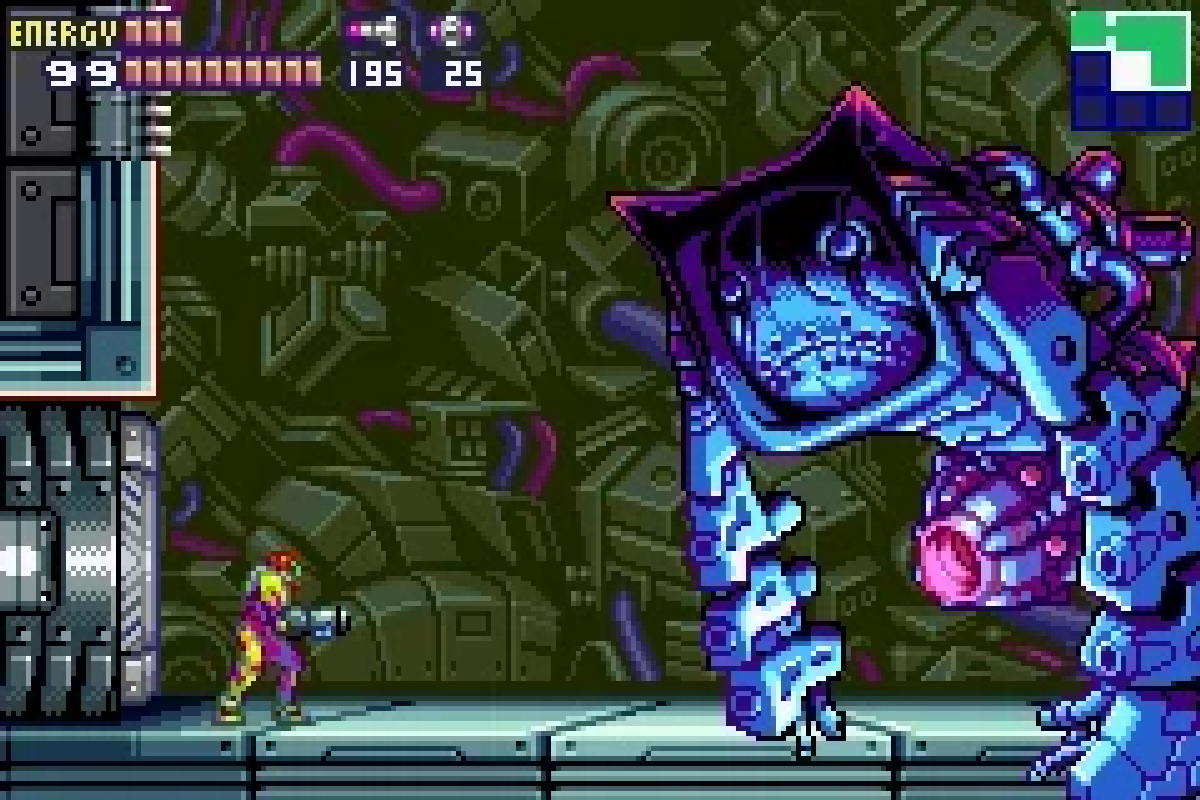
It’s hard to describe what exactly Nightmare is. He’s some sort of awful military experiment with gravity manipulation. It a bio-mechanical monstrosity hooked up to a gravity device, and perhaps some sort of life support apparatus, sealed within with an ominous mask. He has very limited animation, with basically only a few details on his arms and *ahem* face to distinguish him. He kind of just stares in one direction and floats around, but visually it works because of the kind of character he is. He’s pretty horror-themed, with his thousand yard unblinking stare and immovable stance in one direction reinforcing this sort of awful, emotionless terror-machine.

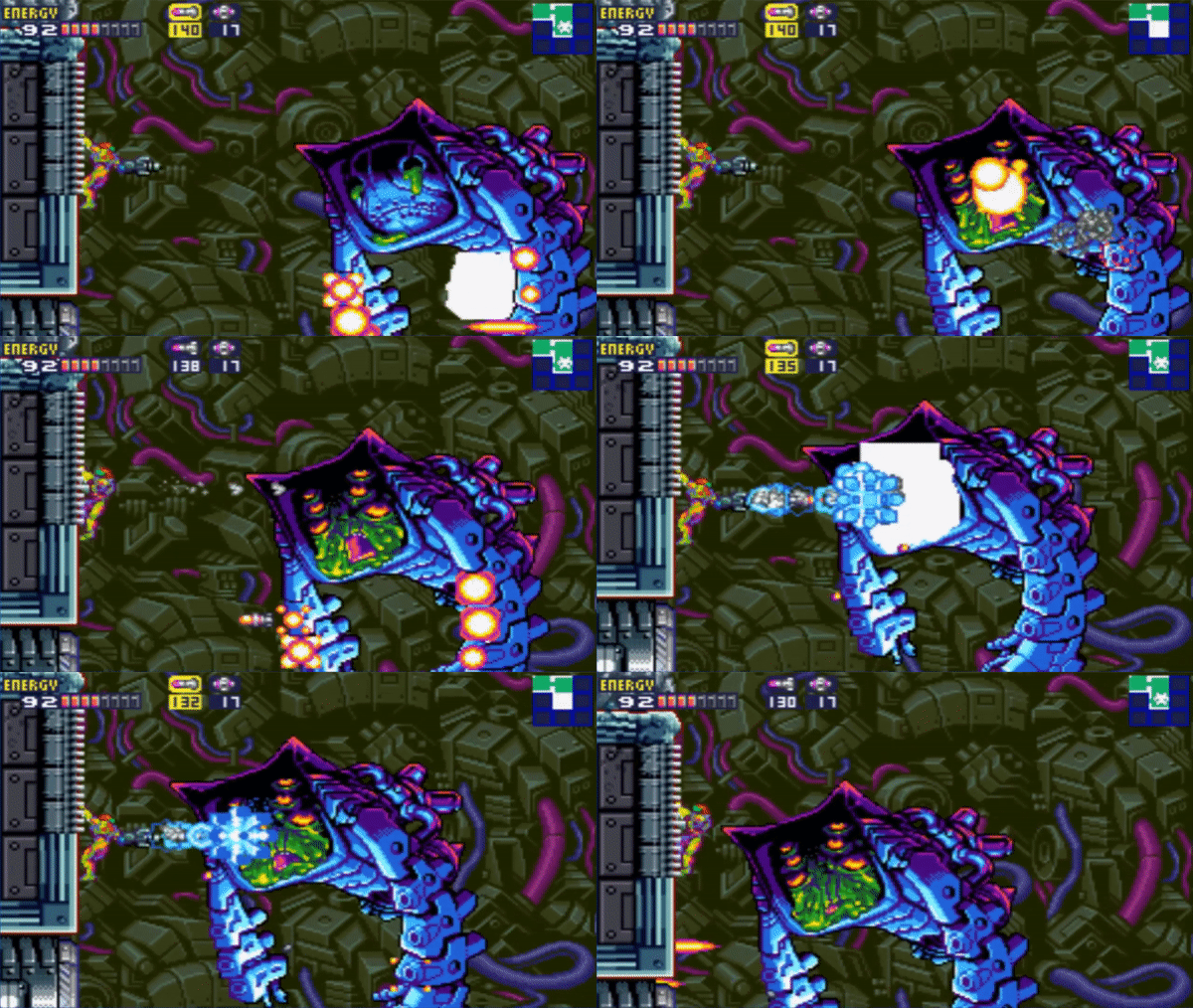
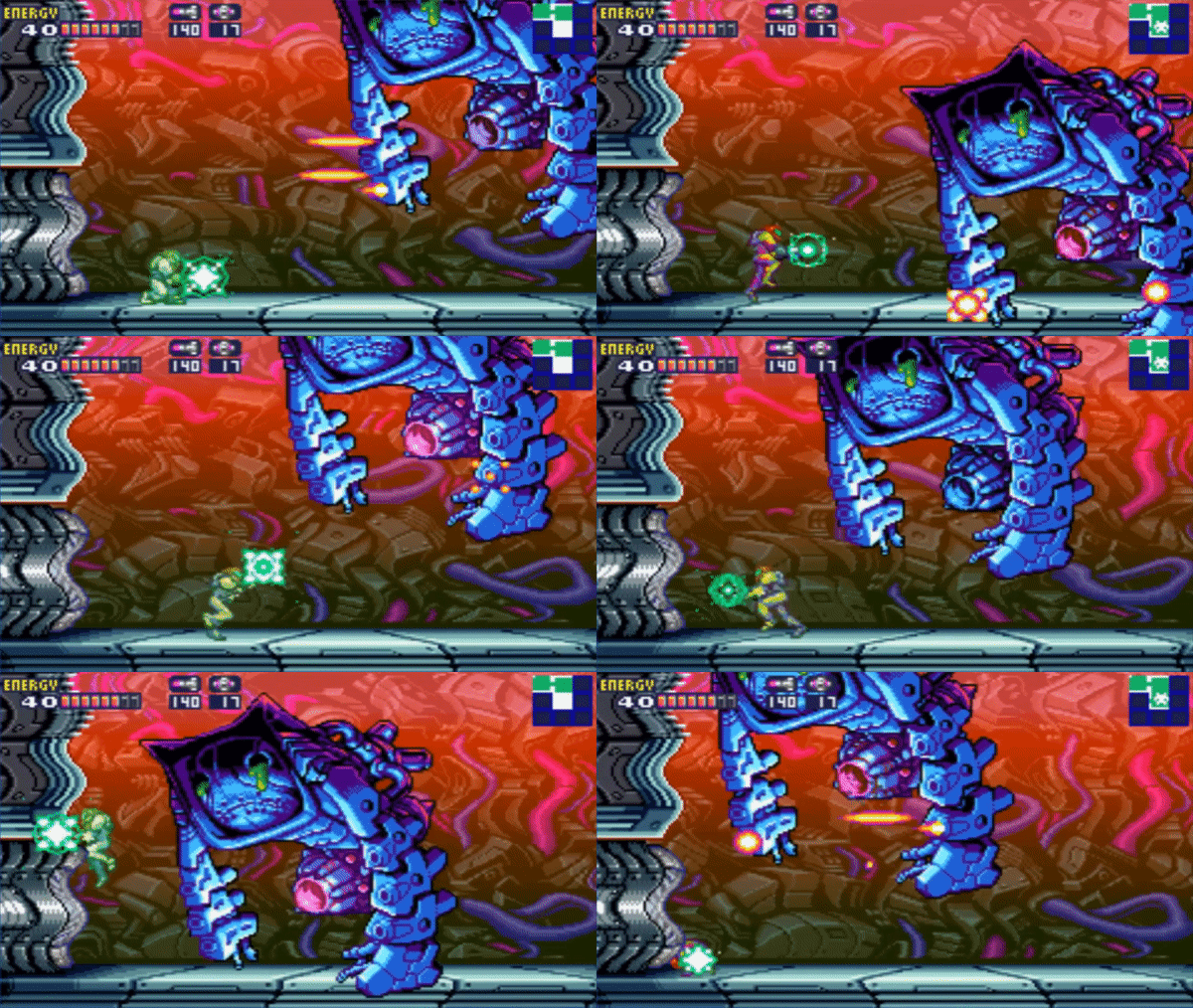
The Nightmare boss fight is made up of three distinct phases that seamlessly transition from one to the other linearly as the Nightmare creature takes damage. As is often standard for 2D action games, Nightmare’s behavior pattern is actually rather simple once you break it down. In the first phase, Nightmare will only do two things. First, he’ll fire a salvo of laser projectiles that move horizontally in a line from his arms. Several are fired at once, forming an obstacle that is just high enough for Samus to be able to jump over, if they’re fired near the ground. This is complicated by the second thing he does; he will track Samus’s vertical position with his own, levitating up and down to match her “y” position on the screen. It’s not one-to-one though, Nightmare overshoots Samus’s position, and if she quickly changes her vertical place, Nightmare will have to take a moment to reorient itself as a result.

This movement creates the sense that Nightmare is an intelligent predator going out of its way to aim its deadly lasers at Samus, although in truth they aren’t aimed as such. Nightmare is repositioning its entire body to fire at Samus. This overshooting vertical motion is a simple and effective way to convey the illusion of intelligence in enemy AI. An enemy that perfect lands its shots every time, with no room for error is even simpler to implement, but it’s not very satisfying to fight against. By having Nightmare overshoot, he seems more alive, with the capability of making error, while staying motivated and on target – he tries to shoot Samus, but does not do so perfectly. Once the player can properly manipulate Nightmare’s movement, they can defeat him much more easily. One could even say that Nightmare’s movement is an extension of the player’s own as Samus. It’s always a response to how she moves, that is then disrupted by the lasers which fire on their own time, beyond the player’s control. Having mechanics interact like this instantly multiplies the number of situations that are possible, and this simple interaction alone drives the entire first phase of the fight.

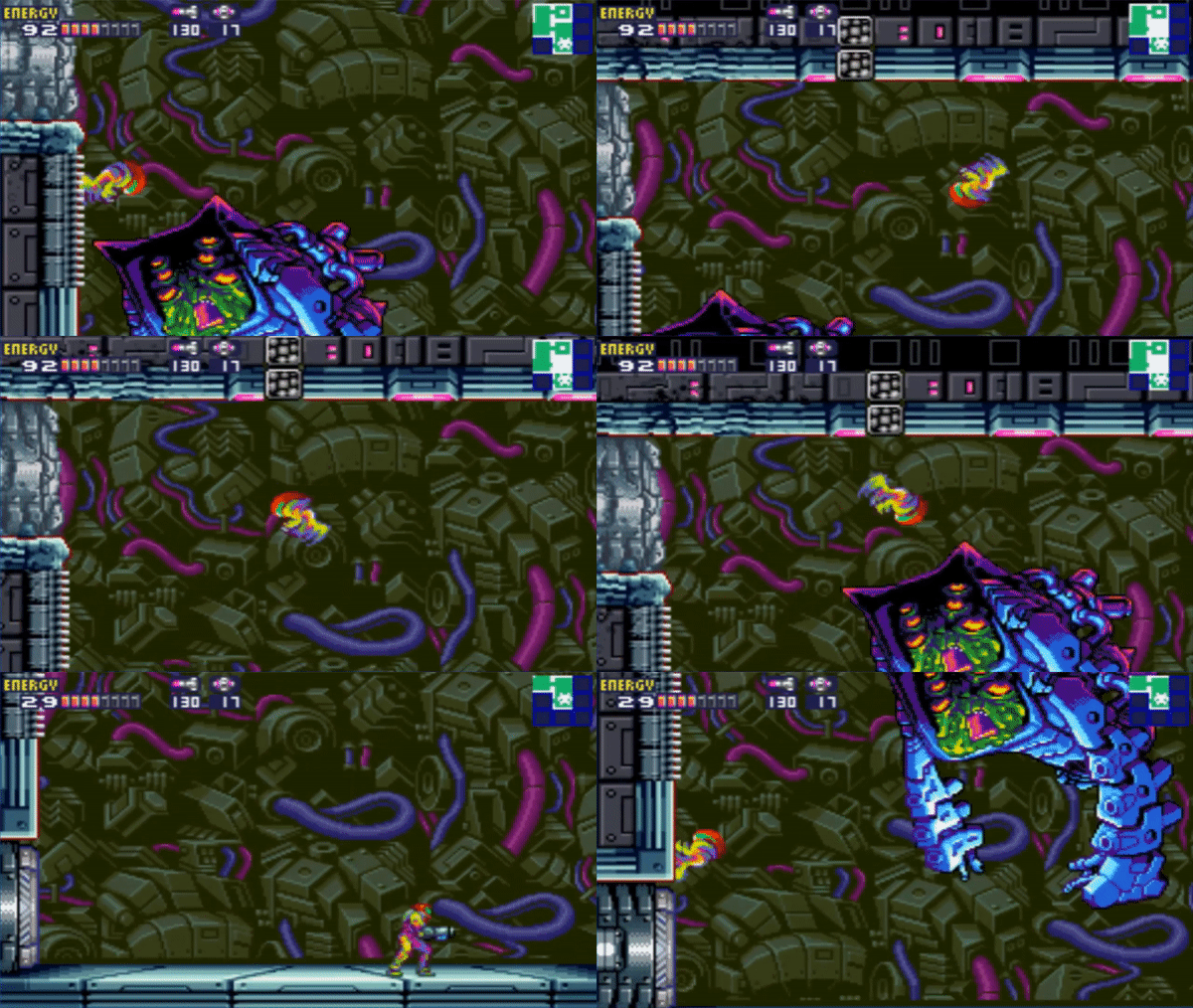
There’s one more complication, however. Nightmare is immune to Samus’s weaponry on most of his body, vulnerable only at one specific weak point – his gravity device. Dodging Nightmare’s attacks in the first phase is not a terribly daunting task, as again his movement is totally lead by Samus. The position of his weak point forces you to try to manipulate him in a certain way, though, and this may put Samus in harm’s way. It’ll be easier to understand how this work by understanding how Nightmare is shaped:

Very definitely NOT shaped like a friend

As you can see, Nightmare is made up of these four primary parts, very approximately outlined here. None of the areas marked in green can take damage, but the red gravity device can. So now first phase is a game of landing your shot in that small space between his arms, which will otherwise block your fire. Seems difficult, but is thankfully alleviated somewhat by a beam upgrade Samus will have by this point in the game, which makes her shot very wide, so damaging Nightmare requires a precision, but not pinpoint precision shot from Samus. This also means hitting Nightmare is much easier with the charge beam than with missiles, ensuring the player is taking some time to charge up, and therefor interacting with Nightmare’s attack pattern as the fight goes on, none of his mechanics can go ignored. To access this weak point, Nightmare needs to be high enough in the air, and thus the ladder on the back wall Samus can use to goad him into exposing himself. This little scenario will also give the player ample time to observe and learn about how Nightmare’s movement works. If the player can successfully repeat this cycle a few times, Nightmare will activate his gravity field, and we enter phase 2.

Shaped like an enemy, even

Nightmare’s gravity field makes Samus heavier, causing her jump to get a lot less airtime, and her running movement to be a lot slower. At the same time, Nightmare will be encroaching on Samus slowly, characterizing a very off-kilter and haunting vibe. Nightmare does not track Samus’s position here, but rather simply bobs up and down a short distance. This happens rhythmically and regularly. He notable stays in his higher position for a longer time than his lower position, designed such so that the player has time to aim a beam shot at the gravity device. His lasers now fire only two at a time, so Samus’s shorter jump can clear them, but they follow their own regular timer that is desynched from Nightmare’s movement, meaning they can fire at any vertical “Y” position, so the player will have to duck or jump the lasers on the fly. This shift to a more reaction-focused mechanic reinforces a sense of being on the backfoot, of the terrifying creature closing in you, literally forcing you into a corner.

Similar pattern, new context

The method of attack remains the same here, but it’s re-contextualized, as Nightmare now moves of his own accord, meandering around like a zombie, rather than following your lead. He reminds me of a horror-movie monster, the way he sort of just vaguely shambles toward you. The fight remains simple, but the distortion of the environment, the ooze dripping from his eyes, and the ominous humming of his gravity device, along with the subtle shift of the mechanics toward reaction-based gameplay really sets the mood. The aesthetics do a lot of work here, creating a building tension going into the third face, er, I mean phase, which starts with..

AAAAAAH DIE DIE DIE DIE DIE DIE DIE DIE DIE DIE DIE DIE DIIIIE

HOLY mother of god what IS that!? Augh, yes his mask comes off to reveal this grotesque melting abomination once you’ve destroyed the gravity device. At this point Nightmare will gradually move toward you, firing lasers in a new much more aggressive pattern, forcing Samus off the ground. If Samus tries to jump over Nightmare, he will fly off screen then back on in an attempt to ram her. Nightmare is responding to Samus’s movements again. It’s more obscure and aggressive, but still predictable. Once you understand that bosses like Nightmare are only responding to their circumstances (aka you, The Player), you can predict how they’ll react and use that to your advantage, and this applies to pretty much any AI enemy. Incidentally, this is largely how competing against real people in games works, too, although they might be a bit smarter than Nightmare. At any rate, he’s now vulnerable to missiles, so blast his exposed face to smithereens. It’s a lot easier to damage him in this phase, so it’s simultaneously cathartic as his increased aggression continues to build tension. The extra room and freedom to move about more of the arena creates a sense of a shift in tone. Samus is now in a position of greater power, and Nightmare a position of greater desperation, to match his screeching unmasked face.

Oof

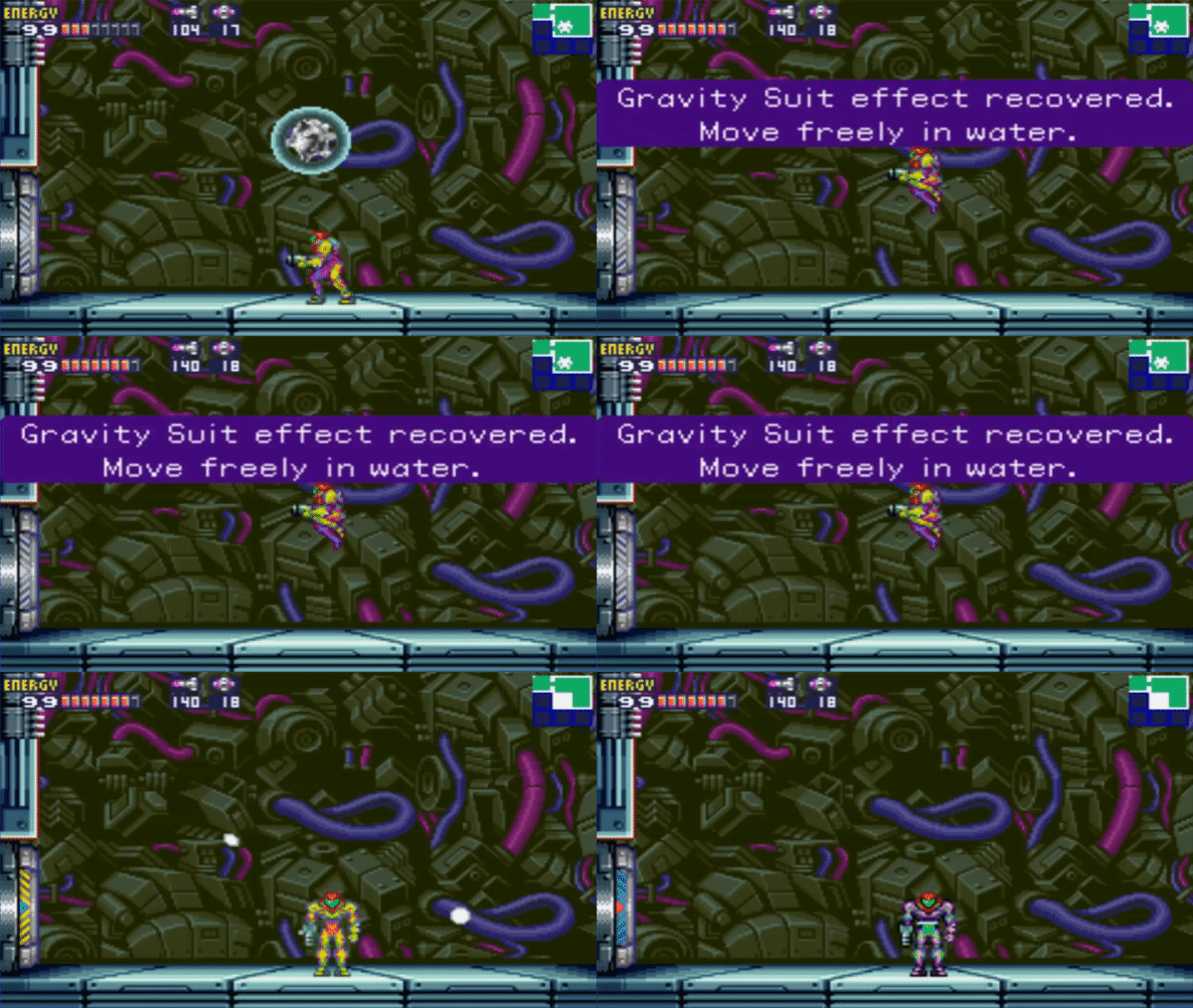
It’s worth going over here a kind of ‘soft’ phase 4 for Nightmare. Nearly every boss in Metroid Fusion, once defeated, releases its Core X, a parasitic creature that contains some of their power. Samus must defeat this as well, before she can breathe a sigh of relief. The Core X is a pretty simple floating target that can be taken down with a few missiles. Beam attacks don’t damage it, but they do release some health and ammo restoring items. The Core X’s behavior is to simply follow Samus’s current position, and move towards her to ram her. You’ll notice it uses that same ‘follow but overshoot’ technique Nightmare employed, except in both the horizontal “x” and vertical “y” positions. If you know to look for it, you’ll see this mode of movement in AI design everywhere. I always found these Core X encounters a very interesting kind of denouement to boss fights, where there’s still some danger, but not nearly so much, as the heightened tension eases out. It’s a pretty satisfying cap off to hard encounters, and not many games do anything similar. It’s unique.

Wobble wobble wobble

It seems to be the case that Nightmare’s design is intended to exercise all of Samus’s mobility options. The presence of a ladder on the back wall gives the player easy access to the air above Nightmare for some evasive space jumps, certain Nightmare attacks are best evaded by Samus’s famous morph ball, and a command of Samus’s ability to fire diagonally while moving gives a huge advantage in this fight. Nightmare is one of the first bosses in Metroid Fusion that really pulls together a lot of Samus’s various capabilities, and, even though he’s rather simple and straightforward, he does a great job of it. He marks the beginning of the endgame sections of Fusion, and can be a bit of skill check for people, so they may very well get stuck on him for a time. This coupled with the outstandingly horror-filled atmosphere that follows from his horrific design, reinforced by AI behavior reminiscent of a lumbering horror villain, and you’ve got a recipe for an extremely memorable encounter.

This thing is out of control. Hurry before it destroys the entire station…