Sonic The Hedgehog is an exquisite corpse of a franchise with a history as deep, interesting, and confusing and some of earth’s mightiest empires. You could fill volumes on the ins and outs of this thing. I cannot deny, I love this weird little rodent and his weird little world immensely. Yes, I’m as excited as anyone for Sega’s next absurd windstorm of a Sonic title, despite all the, uh, feedback, I’m about to unleash. Sonic has had some very high highs for me, and it’s a series that does certain things in gameplay that have never quite been captured elsewhere. There’s a laundry list of things people like to complain about in regards to this series, and I’d probably agree on most fronts too. Instead of the usually suspects, though, I want to complain about something I haven’t seen brought up before. It’s something that’s been with Sonic since the beginning, actually.
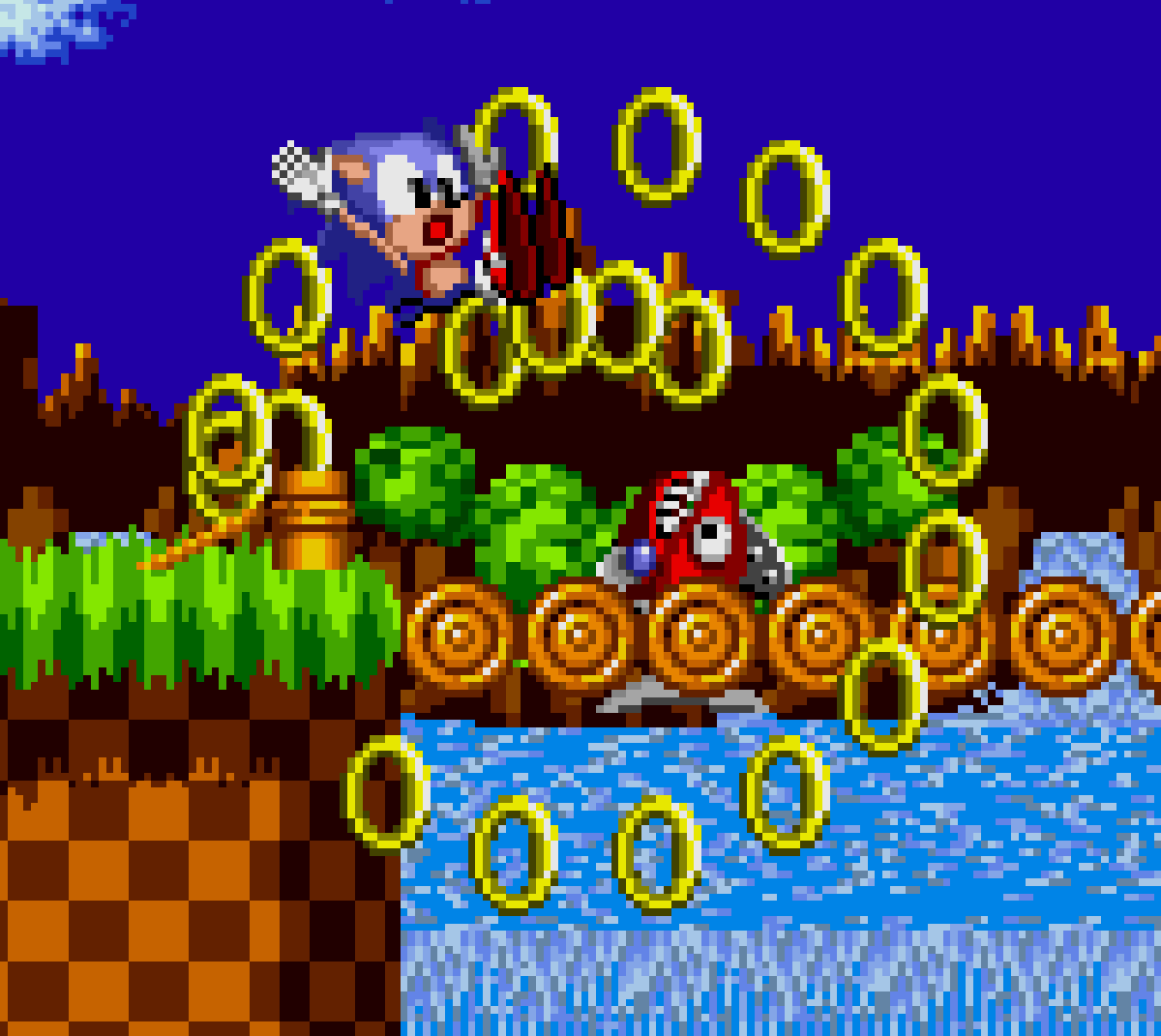
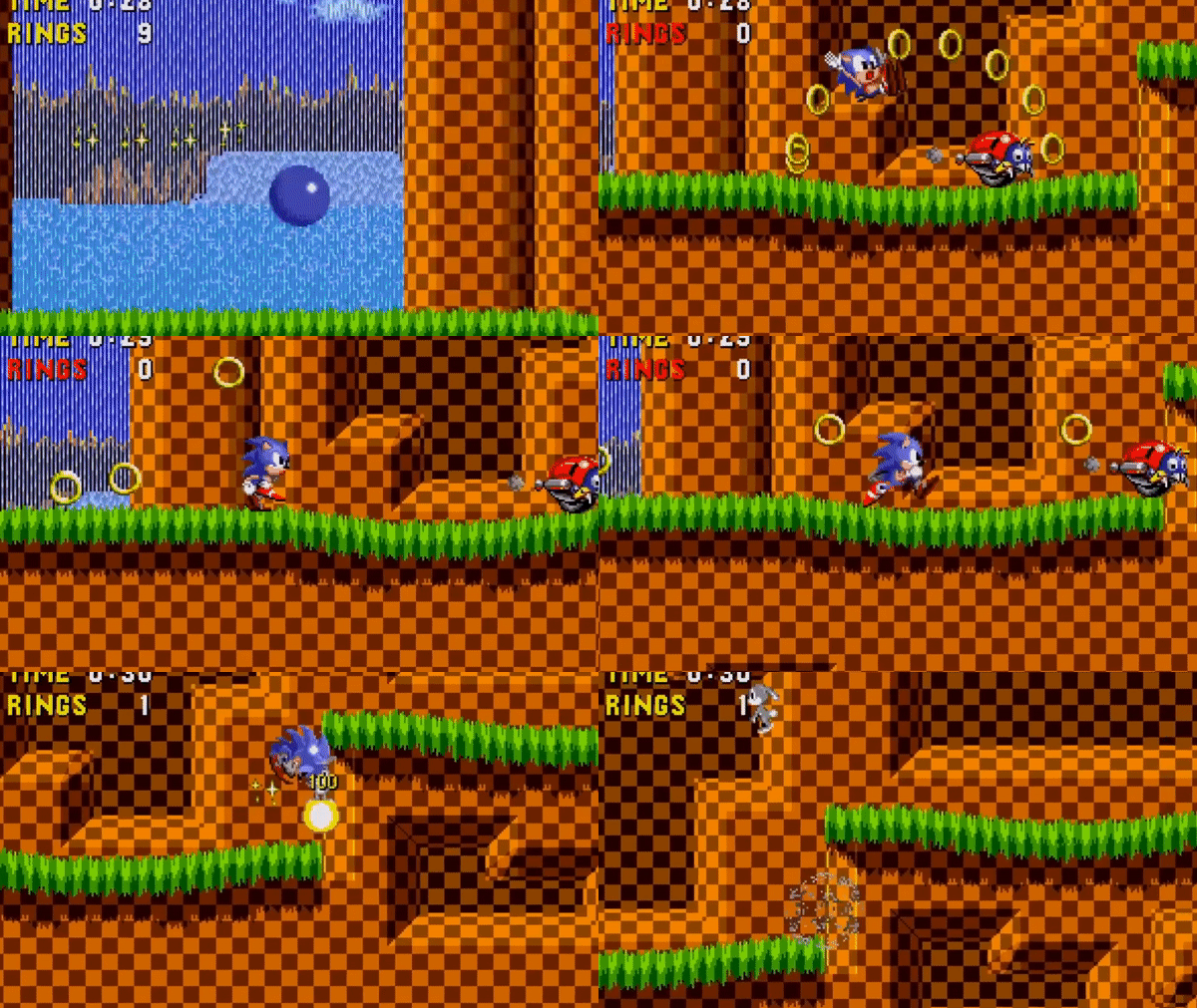
I don’t know if this is something that only bothers me. Perhaps that’s why I feel the need to get this jotted down and explore my feelings about it, but the Sonic The Hedgehog franchise’s rings system is weird, right? In Sonic The Hedgehog, and near every sequel and spinoff to that game since, rings have acted as the primary collectible – a sometimes currency, sometimes score counter, and almost always a barrier against the failure state. While rings in Sonic games frequently have some use within the game that make them valuable, their primary purpose is to prevent a Game Over. When Sonic is hit by an enemy or obstacle, he’ll lose all the rings he’s collected, spilling them out into game space, where they can be re-collected. If Sonic is again hit without any rings, the failure state engages, and Sonic is returned to the last checkpoint.
To elaborate on what bothers me about this system I went and tried to elaborate on what makes a compelling health or damage system in general. To me, there are three things to guide the design of a successful player health system. A successful health system may include one or all of these. First, the health system provides a balance knob by which the designer may tune how many mistakes a player can make before incurring a greater failure state like a Game Over. It makes for a pretty simple tool to balance the game. If it’s too hard, players can simply be given more health or ways to restore their health. Furthermore, this balance can change as the player collects upgrades and gets stronger, or encounters more deadly enemies. It’s good for tuning the interest curve. Secondly, health systems can create a sense of tension or danger, to shore up the threat of the player’s opposition. Instant death makes for threatening enemies too, but that little bit of anticipation a more graduated health system provides, as the player slowly watches their strength wane with each hit they incur, it exaggerates and emphasizes that danger. Third, health systems can be used to incentivize players in interesting ways to guide the gameplay, by tweaking how it is that players regain or maintain their health through specific behaviors. Doom 2016’s glory kills, which reward aggression when the player is low on health, comes to mind.
So how does the blue blur do on all of these fronts? Well, the ring system is rather limited in that having rings only prevents Sonic’s defeat through a single mistake, before more rings have to be collected. In this way it doesn’t do much for balance. By virtue of how the system works, rings are always available when you get hit, unless you’re over a bottomless pit and will just die from the fall regardless. Rings are also plentiful enough in the world that tense moments of danger are few and far between. This is a good thing in a sense, Sonic is a game about flow and freedom, less one about oppression or danger. The result, though, is often that getting hit is just annoying – a disruption to that flow- more than anything else. Sonic gets a lot of its somewhat undeserved reputation of excessive simplicity from this. It’s hard to fail (instant death traps aside), and very easy to get annoyed.

Finally, rings are indeed a highly incentivizing aspect of Sonic games, especially those of which have a store in which rings can be exchanged for prizes, although this brings up an important point. I feel as though rings are desirable more for their excellent audio-visual design and feedback. It’s fun simply to hear and see the cheery, shiny sound and sparks of collecting them, and watching the ring counter go up, rather than for any practical gameplay reason. The reason for this is that collecting an excess of rings does very little to contribute towards the player’s success. Sure, having a certain minimum number of rings makes it far less likely you won’t be able to pick up another ring before it disappears, once the player gets hit. However, there is a maximum number of rings that can actually be displayed on screen before any excess rings simply evaporate. You get no real advantages having 200 rings over having 20 rings. So, Sonic‘s health system doesn’t do much to incentivize interesting gameplay. On the contrary, actually, since having a single ring can theoretically keep Sonic alive indefinitely, the player isn’t really incentivized to learn about their obstacles or enemies because getting hit doesn’t have much of an impact or consequence. Some Sonic games have attempted to address this, by having Sonic only lose a fraction of his ring total on hit. The results are a similarly toothless health system, in which hoarding large numbers of rings essentially trivializes any threat enemies could possibly pose, without addressing any of my other issues with the system.
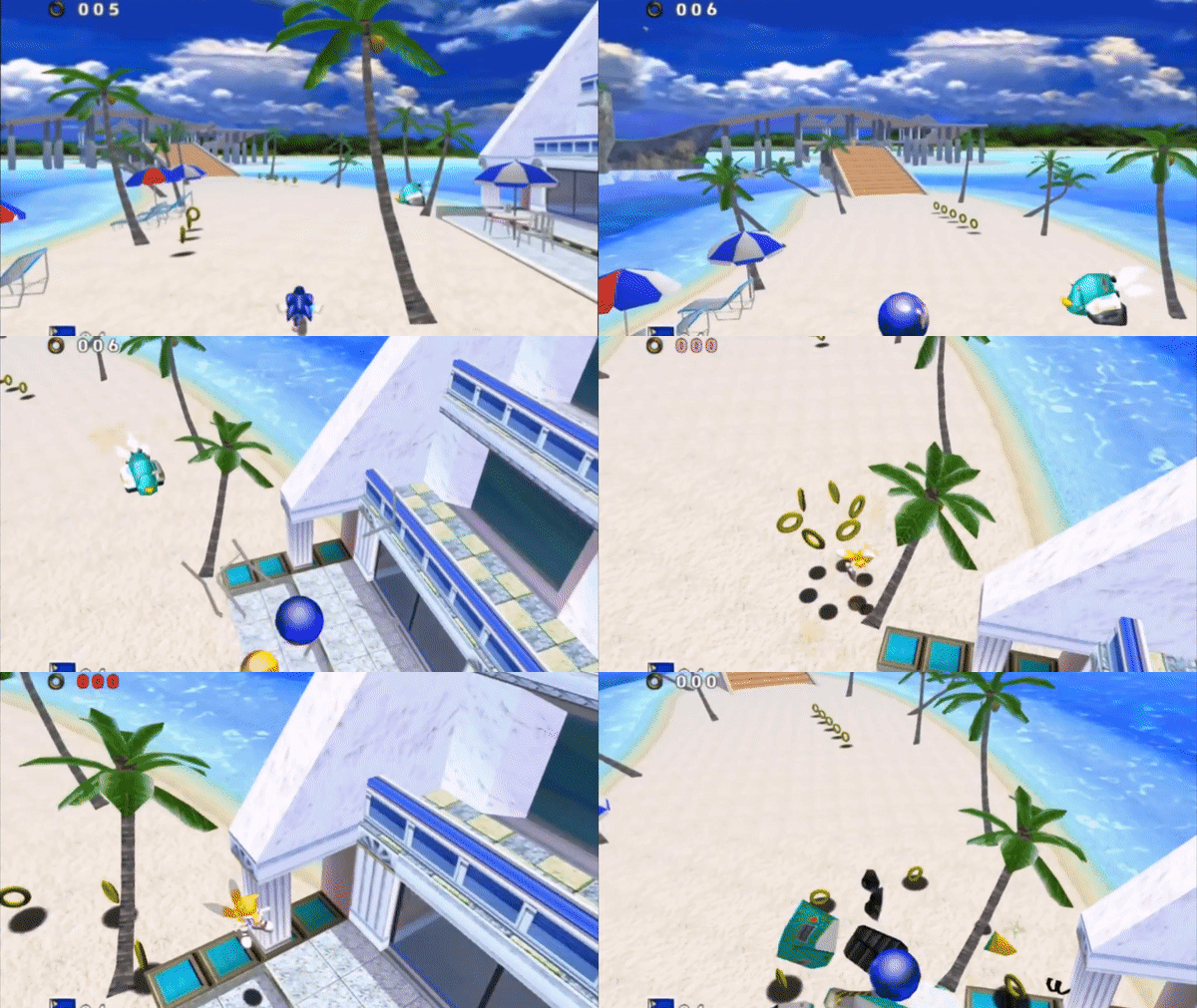
One thought I’ve had on it is how starkly getting hit in this game kills momentum. I get it, it’s kind of the point. In lieu of a persistent tracker for how many mistakes the player makes, getting hit simply means halting forward motion, which means you don’t hit that all important state of flow that makes Sonic games so enjoyable. That annoyance is your incentive to get better at avoiding obstacles. At the same time though, if that’s what we assume the player wants – to go fast- then it is odd that rings are scattered around the player when they’ve bit hit at random, or in the case of the 3D games, in every direction on the floor. Surely, we only want to incentivize the player to go in one direction – forward. If a player wants to re-collect some of their lost rings, as they surely would, then they can’t immediately continue their forward momentum where they left off, they have to take a moment to mill about collecting the rings. It’s just a bit odd. Elsewhere in Sonic games, free-floating rings are used as signposts to guide that sense of forward momentum for the player. If you see a path of rings, it’s generally a clear and safe path forward to gaining speed.
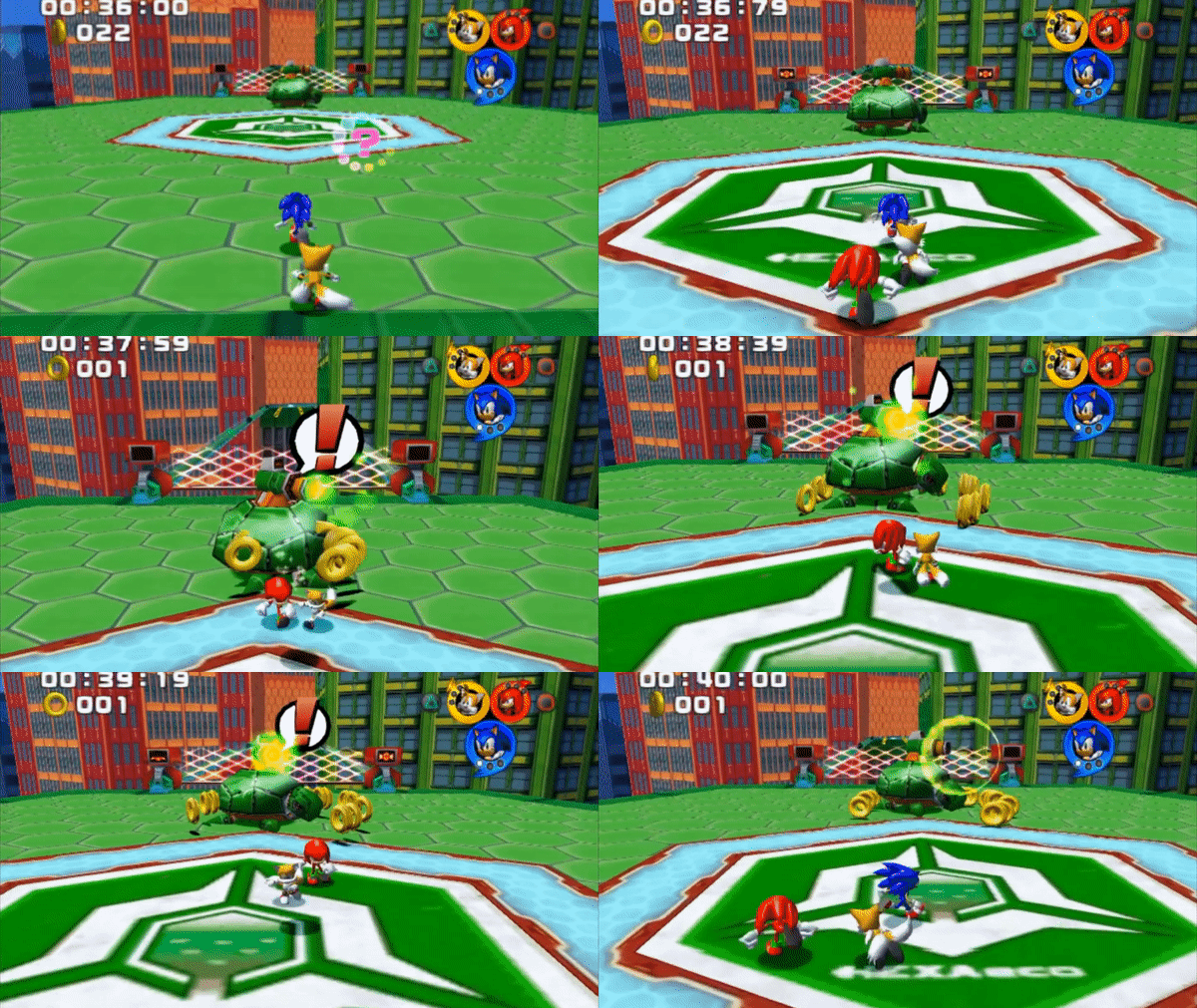
Losing rings normally does not create much of a sense of tension for me either. Getting hit in a Sonic game rarely creates any palpable danger for Sonic, outside of falling into instant death pits. This all-or-nothing approach makes enemies in Sonic games rather toothless, until they aren’t in very specific scenarios, which can often feel cheap – as though the difference between losing some rings and having to start over is outside of the player’s control. You lose any sense that dangerous things in the world are actually dangerous, and more like the environments are dangerous in a way that’s almost arbitrary.

What if, instead of spraying rings in every direction, when Sonic is hit, rings fly out ahead of Sonic relative to the direction he’s moving, so that when it comes time to re-collect rings, Sonic needs to keep moving forward in the direction he was going? He needs to regain his lost speed to regain what was lost. First of all this make sense. If Sonic is losing speed and letting go of his rings at the same time, they should logically pour out in front of him as they retain their previous speed. That’s a secondary concern, but not an unimportant one. I think making the rings behave realistically that way could contribute to keeping the gameplay flow even when Sonic gets hit, which is my primary concern here. The main thing this would accomplish is keeping the re-collection of lost rings as a harmonious part of simply playing the game, which is to say, running forward. Sonic is all about doing things while running forward – defeating enemies while running, avoiding traps while running, and yes, collecting rings while running. In this scenario not only is there a greater challenge, a greater uncertainty of re-collecting what was lost that calls on player skill, but it’s far less disruptive, not requiring the player to behave in a less fun and interesting way as punishment for being hit. On the contrary, your punishment for being hit is a momentary increase in intensity and demand of skill, or in other words, a heightening of tension.
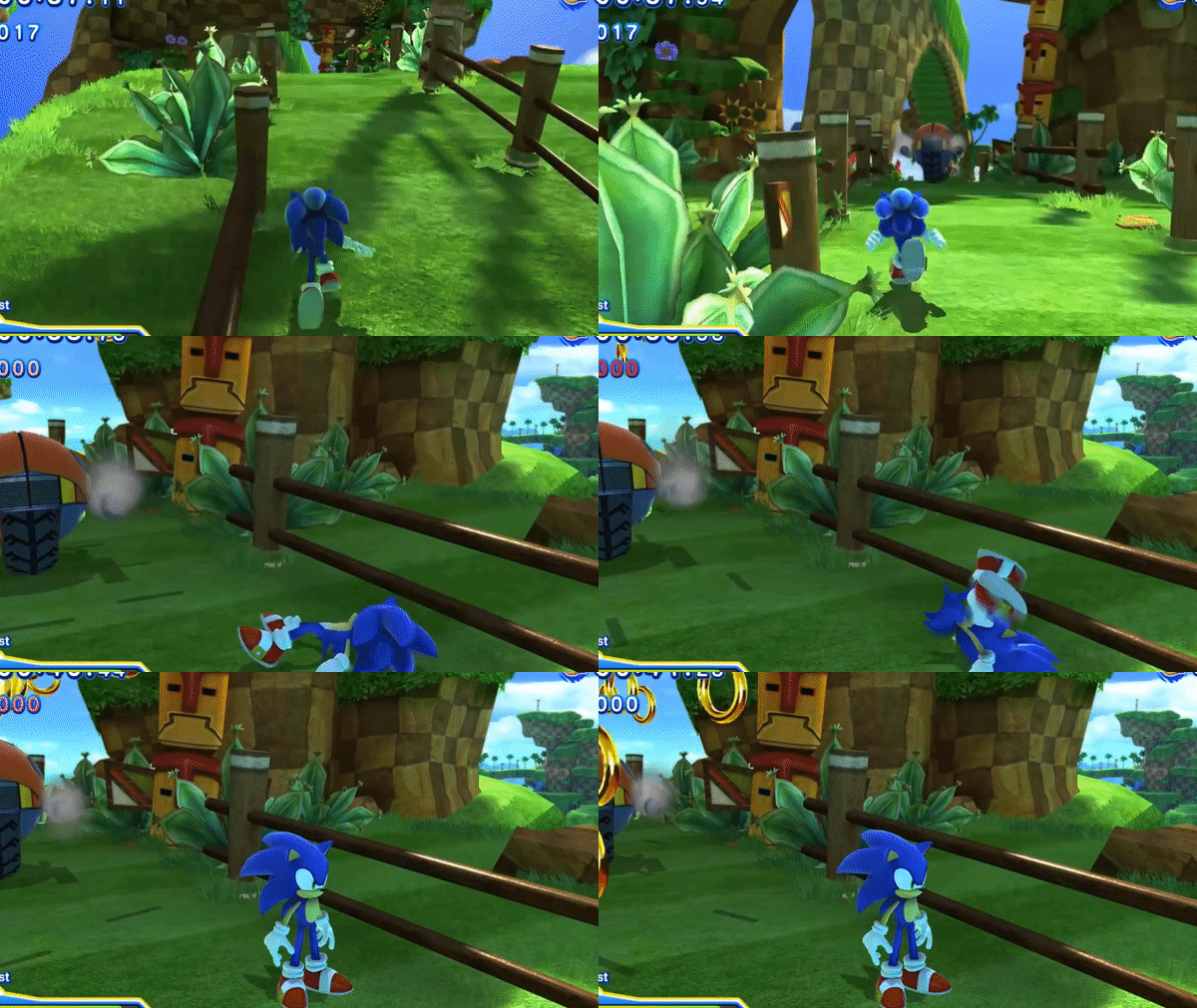
Sonic is as inseparable from his rings as Mario is from his coins, which was the point, of course, when Sonic was invented in the 90s. Sonic was meant as a counterpoint to Mario, to stand out as different. He’s younger, faster, and has an attitude. His game is about speed, and his collectibles serve as health, in a way. It’s certainly novel enough to have survived about a billion iterations on Sonic games, but I’ve never totally understood how it fits in a game that’s about speed. Everything good that I love about the Sonic franchise is somewhat apart from this one odd yet oddly persistent gameplay mechanic. The classics like Sonic can provide a useful lens to see how certain design goals can be successfully executed. However, I’d never want to design something in a way just because that’s how it’s always been done. The weird ring system has its advantages, like near any mechanic in the right circumstances, but I’m still skeptical it’s the best solution for what Sonic is and could be.
Don’t give up on the sun. Don’t make the sun laugh at you…
Yes, that is a real Sonic quote.
 Parry Everything