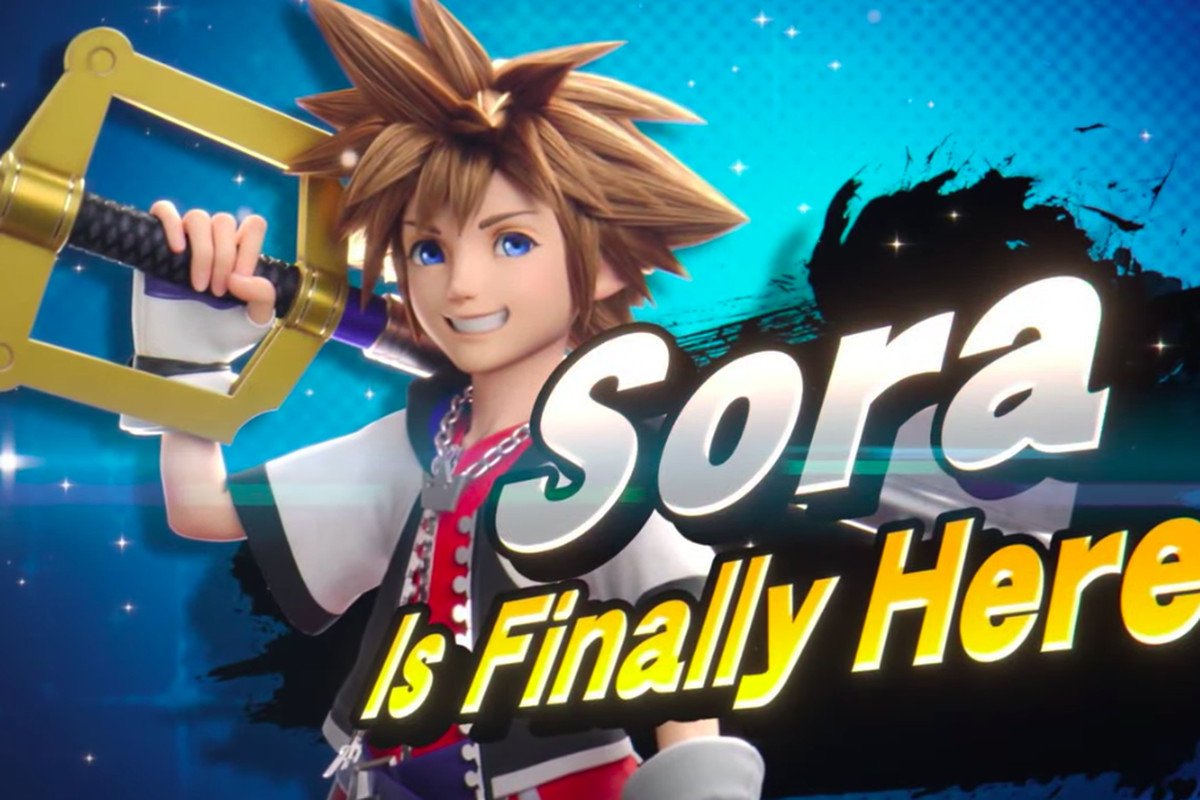
What’s that, an excuse to talk about Kingdom Hearts again? Yeah so you may have heard that Super Smash Bros. Ultimate is receiving its final playable character for the foreseeable future. I’ve long had a huge admiration for the way the Smash team is able to adapt characters from their home franchises while retaining the charm and feel of that source material. It’s why your Mega Mans (added 2014) in Smash feel more like they stepped right out of the game Mega Man than Sonic (added 2008) feels right out of Sonic. Especially in more recent years, a prominent design goal of new Smash fighters seems to be matching the experience and feel of playing the game that fighter first appeared in. In this case, KINGDOM HEARTS! Yeah, I’m a bit of a fan, so I’m just gonna gush for a minute about how Sora’s been ported from an action RPG into this platform fighting game, and analyze some of the choices that were made to do it.
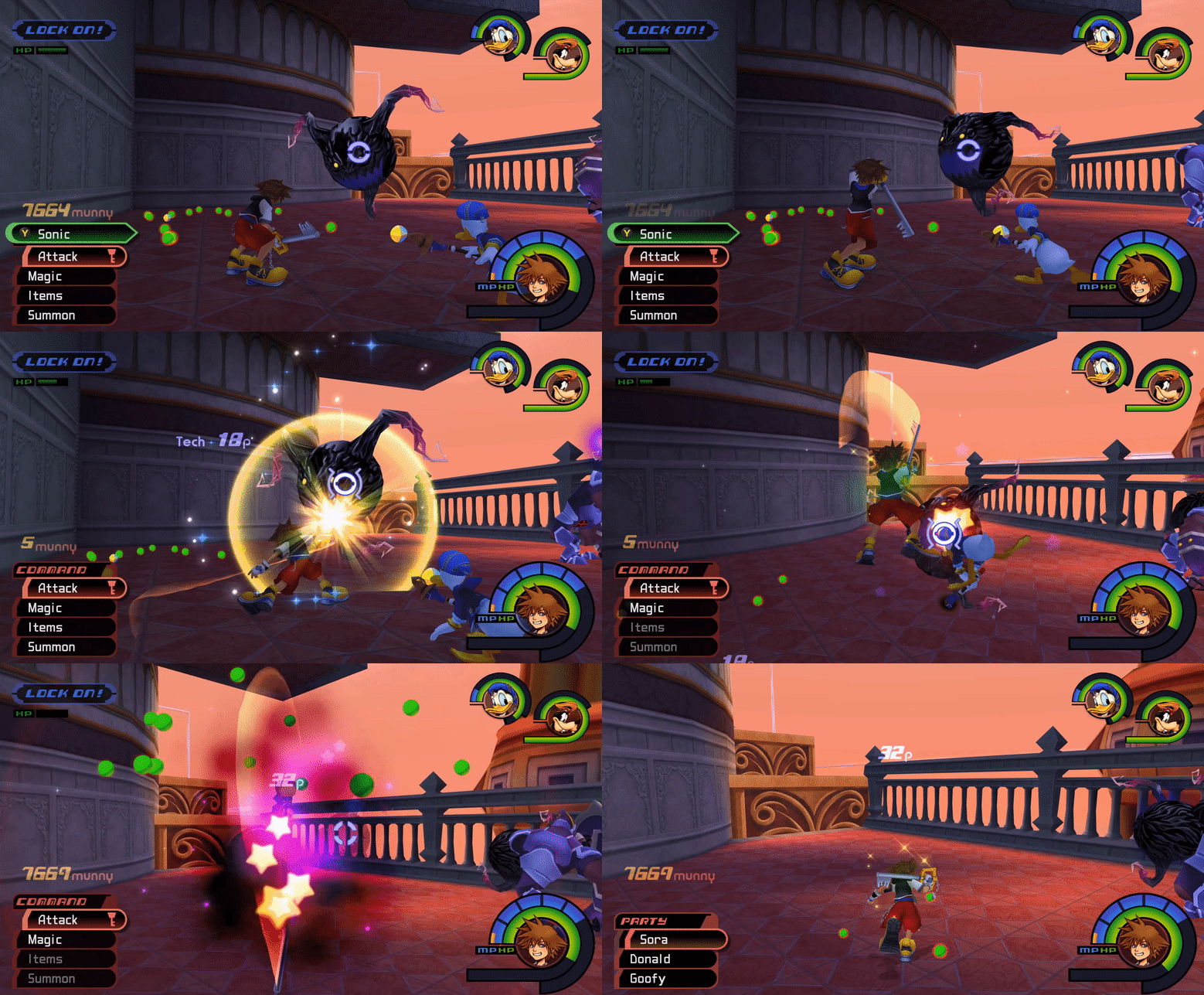
Sora is the protagonist of Kingdom Hearts, a 2002 3D action RPG in which he fights using magical abilities and an enormous key. Super Smash Bros. Ultimate is a platform fighting game, a genre essentially invented by Smash Bros. itself, in which multiple fighters compete in a 2D fighting arena with lots of platforms and aerial space. Naturally, the 3D spaces of Kingdom Hearts, such as Sora’s attack swings, had to be mapped onto a 2D plane, and you can see that was done pretty much one-to-one. Sora’s attacks feel familiar in terms of reach and timing to his original game. So immediately, you can tell somebody is a huge fan of the first Kingdom Hearts game. Although other entries in the franchise are represented through costumes, and a couple of Sora’s attacks, the lion’s share of his moves are evocative of the debut in Kingdom Hearts specifically.
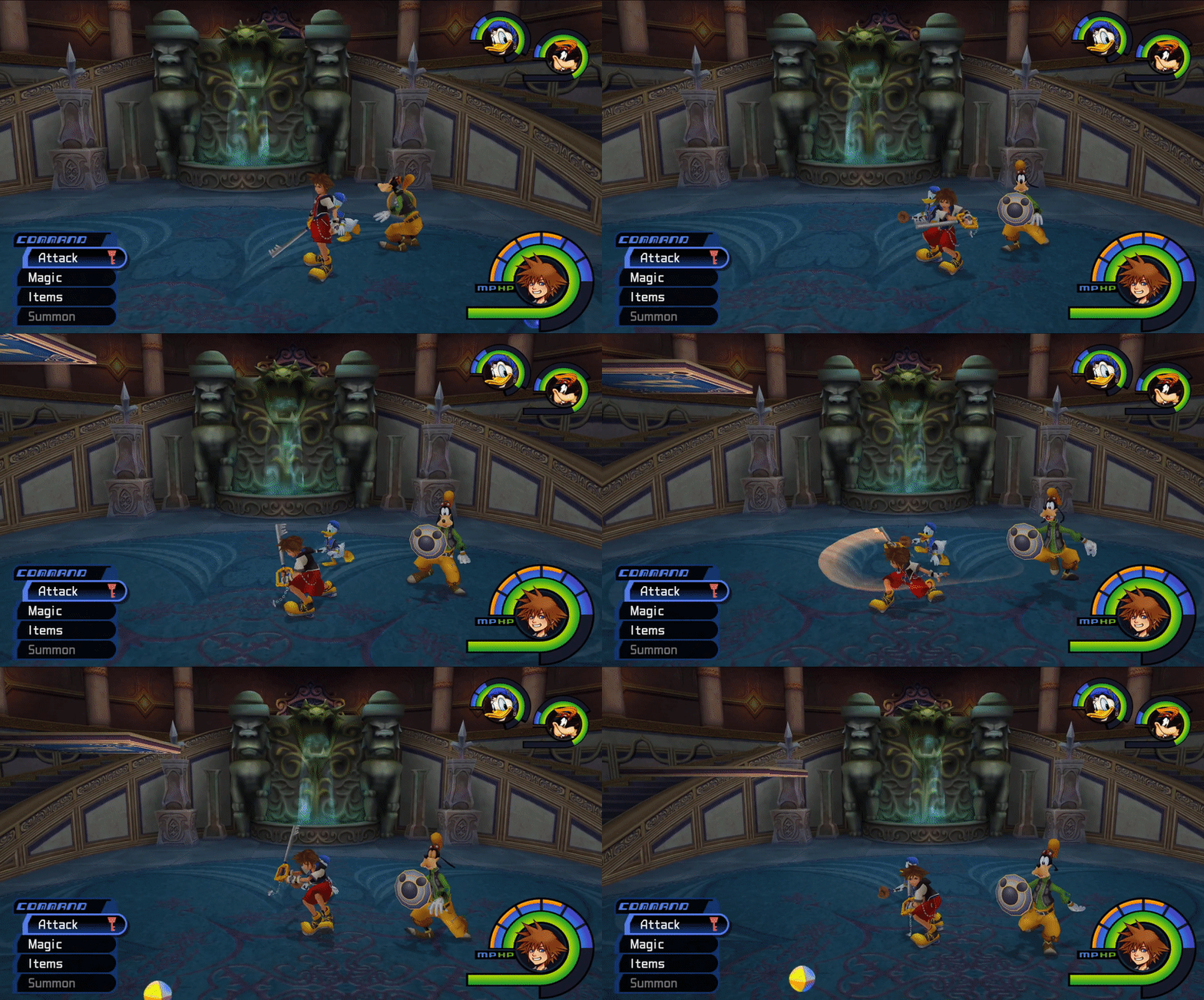
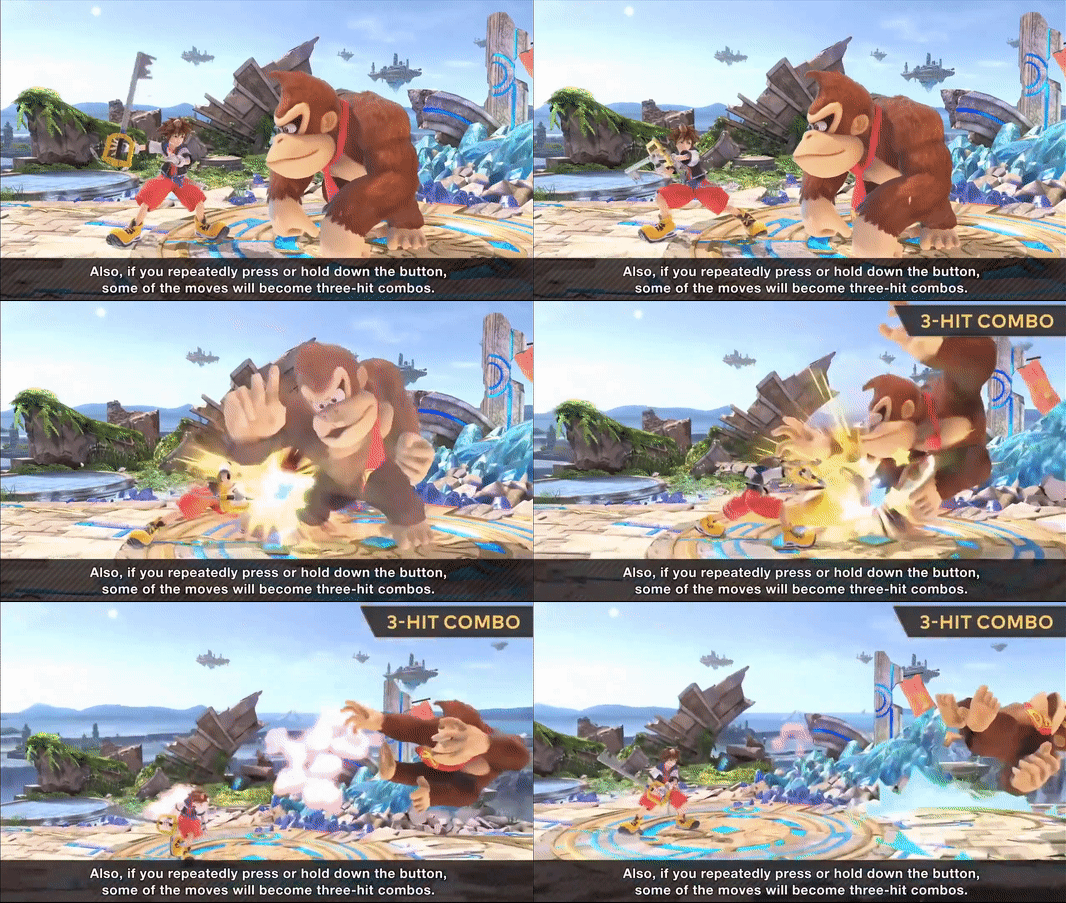
The three hit combo is one of the most fundamental aspects of Kingdom Hearts. It’s a game filled with disney characters, and as such was initially marketed to a younger audience, so one of Kingdom Hearts‘s chief design goals is the ease of accessibility to its combat. Sora’s combo attacks home in on and reliably stun enemies in his original game. Lots of action games have very complicated series of specific button inputs necessary to make your player character do cool stuff and feel really powerful. 90% of attacks in Kingdom Hearts will be triggered by one, maybe two buttons simply pushed in succession, the idea being that the minimum knowledge and prowess necessary to make Sora feel cool and powerful should be very easy to achieve, so players of all skill levels can, at least, feel cool and powerful even if they aren’t ready for the game’s toughest challenges yet. This is a design philosophy Smash and Kingdom Hearts share in common. Several of the newest fighters added to Smash have felt a bit more complicated than earlier entrants, especially as guest fighters from more traditional fighting games were added. I think it’s significant that the decision was made to make Sora notably simple to pick up and play, without any of the complicated inputs or resource management of other new Smash fighters.

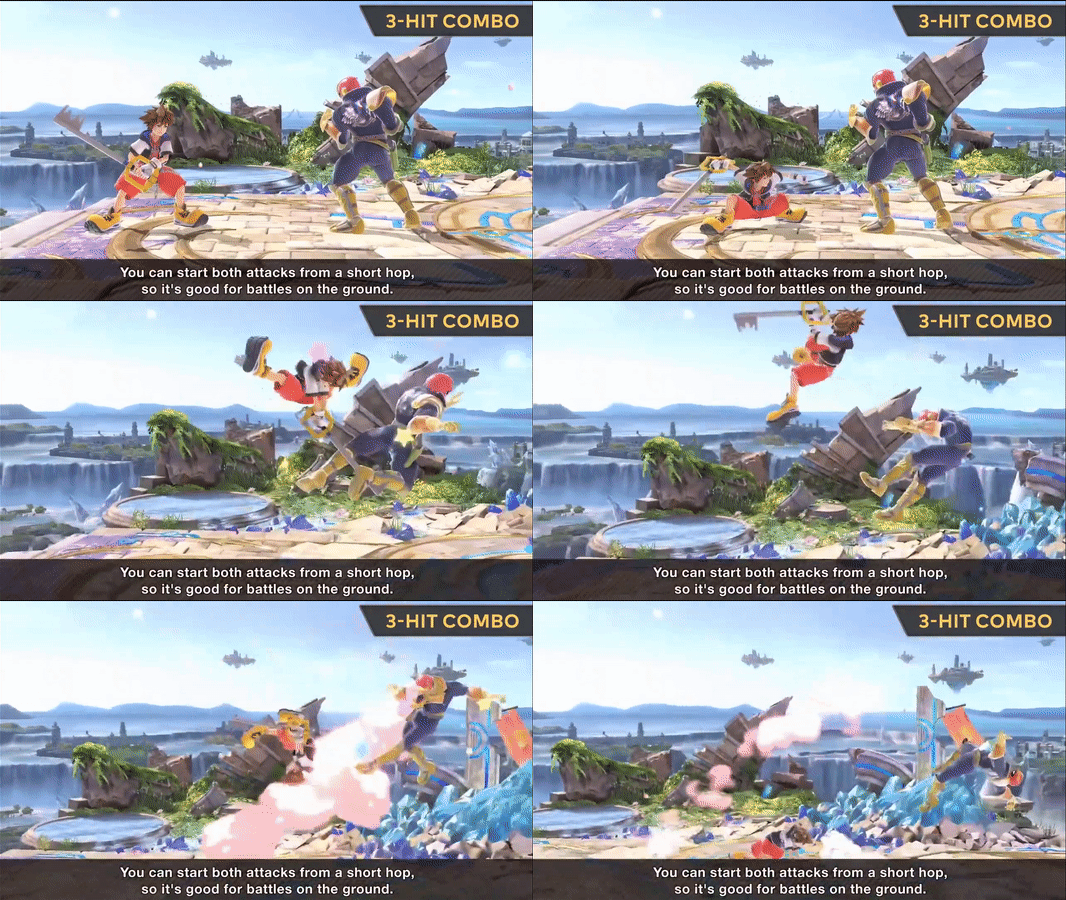
The Super Smash Bros. attention to detail really comes through in each of these new fighters. I think my favorite detail in Sora’s moveset is the aerial 3 hit combo. Stringing several attacks together from just one move like this is not something Smash fighters are normally able to do, at least not in this particular way, it’s unique to Sora. Aerial combat in Kingdom Hearts is essential. Square Enix had never really moved into the 3D space before the way they did with Kingdom Hearts, incorporating a full range of movement both horizontally and vertically. Kingdom Hearts goes out of its way to fully utilize these dimensions by giving Sora a powerful jump, and the ability to attack anywhere in the air. Gravity is just a gentle suggestion, in Kingdom Hearts. With access to the 3D space around a target, this would let the player jump into a variety of attack angles to really push what was possible in this combat system. This is true of all fighters in Smash Bros., probably to accomplish the same thing. In Kingdom Hearts 1 in particular, as opposed to its sequels, short-hop combos, in which the player would jump the minimum height and quickly hit an enemy with aerial attacks, would result in a much faster combo that can sneak through in more situations. It was a powerful and common technique you could use to push your skills in the game further, so I was absolutely delighted to see an adaptation of this highlighted in the Smash presentation, used in the exact same way.
Sora’s smash attacks borrow from various attacks he’s used throughout the series. His down smash is the finishing leap from Kingdom Hearts 2, which would replace your combo finisher on command, and propel enemies into the air for further combos. Sora’s up smash is the Ripple Drive from Kingdom Hearts 1, albeit without its magical effects. Sora lifts his keyblade above him to damage an area of foes around him. The Smash version actually retains this ability to hit multiple enemies at once.

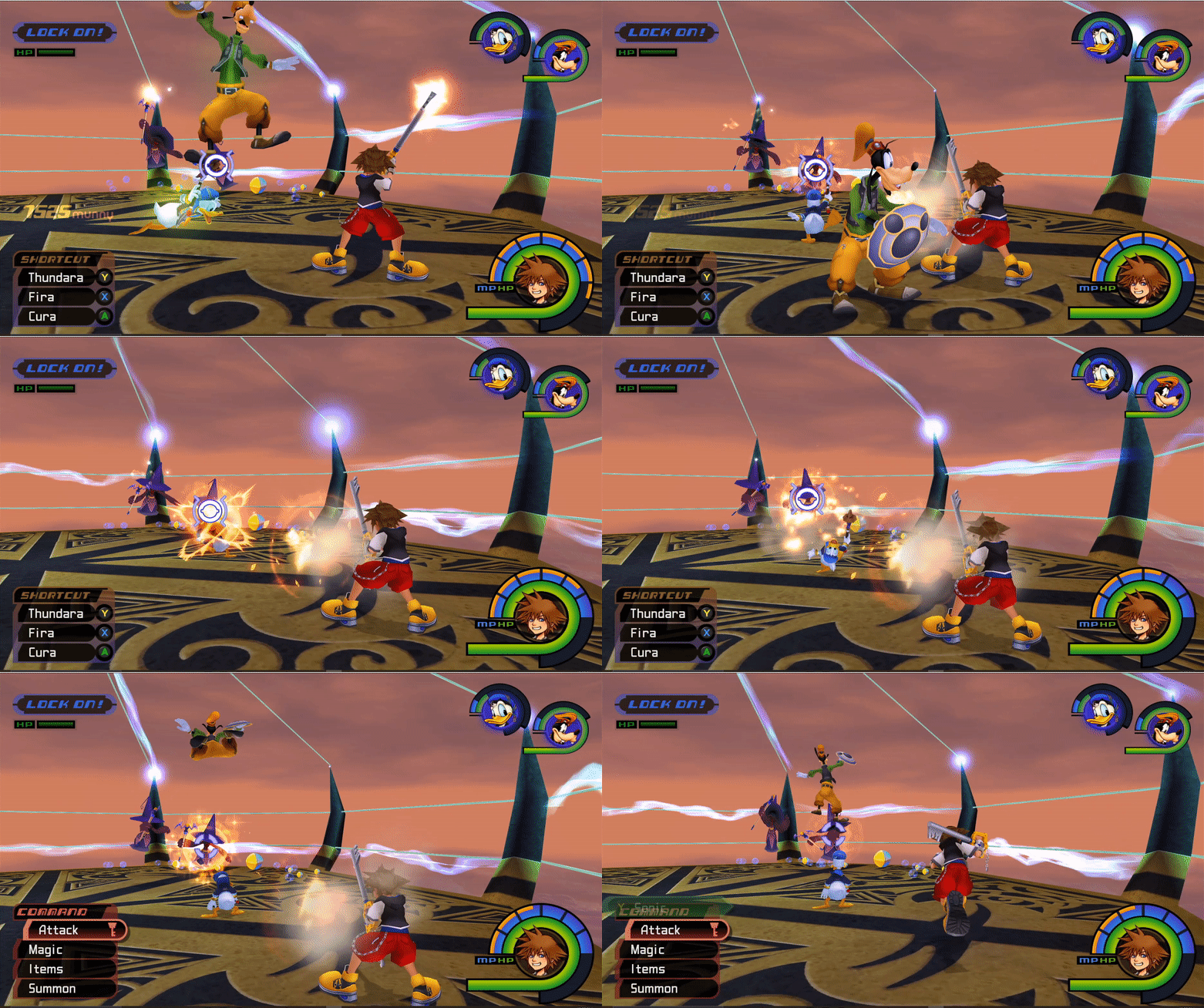
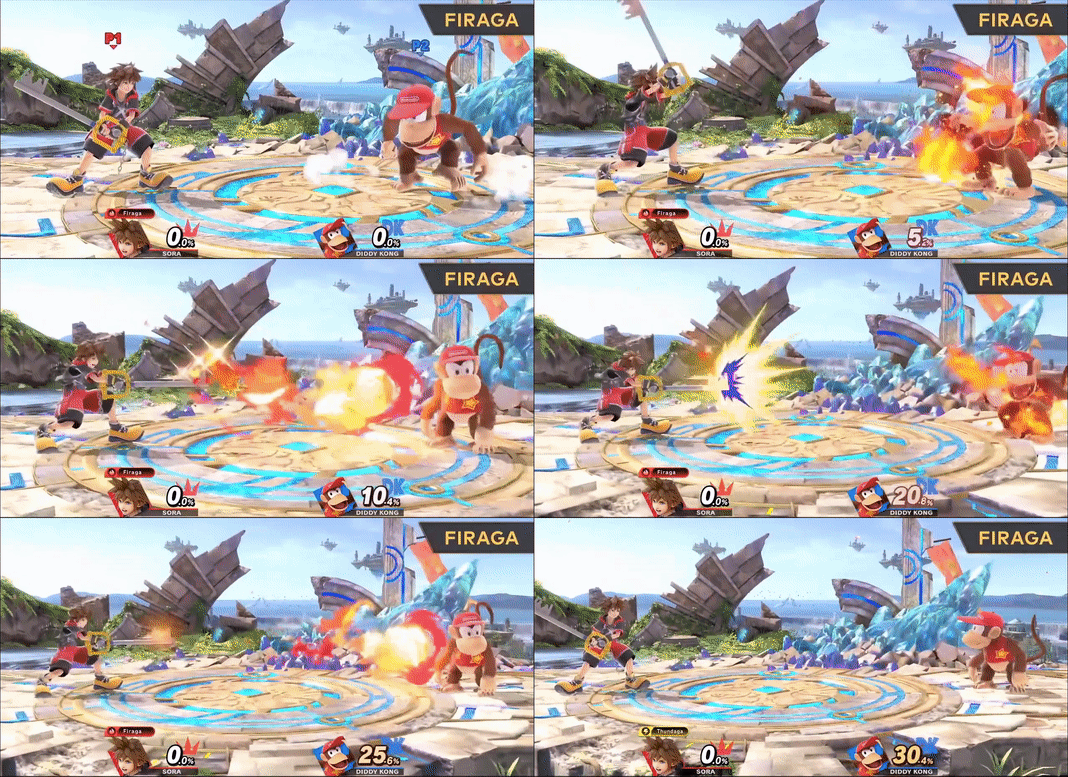
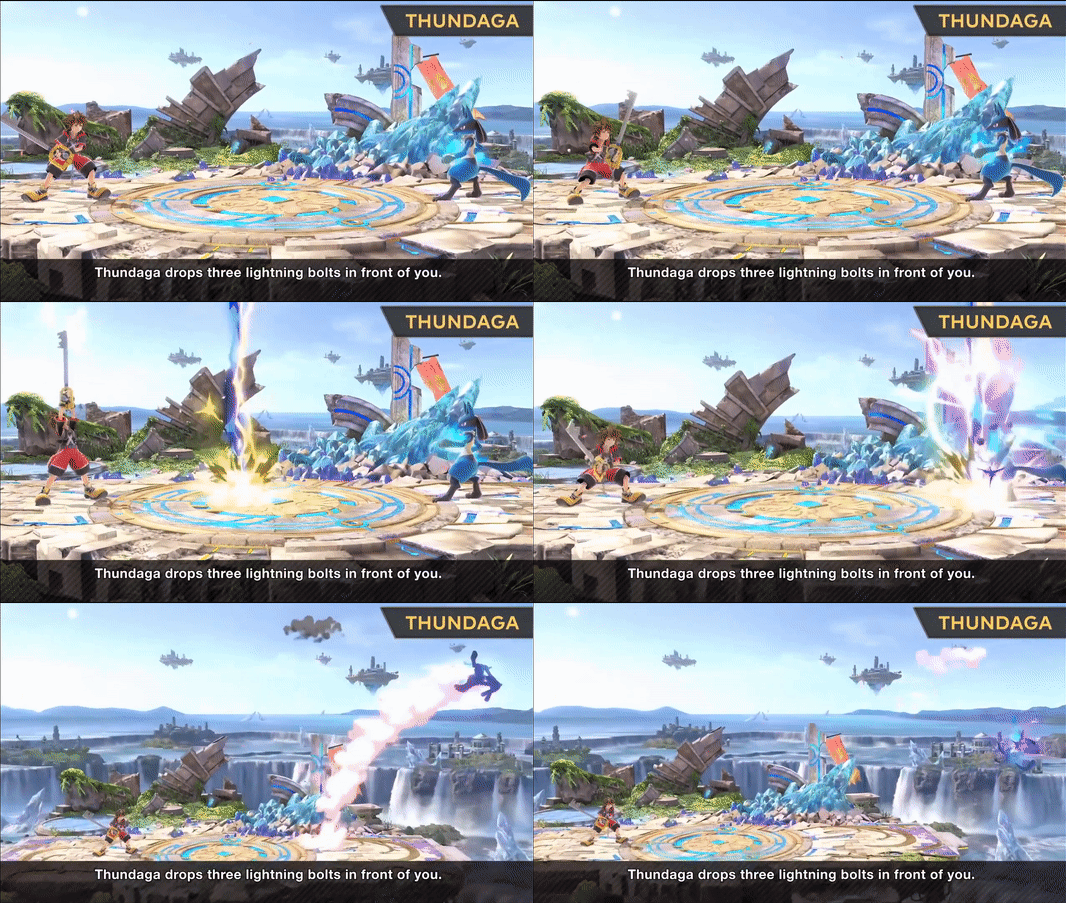
Sora’s specials are all direct references to attacks from Kingdom Hearts 1. The magic available, firstly, all behaves as it does in that debut game. Firaga is a repeatable, spammable, almost rapid-fire series of small projectiles. Thundaga is a vertically-oriented series of lighting strikes that can clear out a wide area. Blizzaga is a shotgun-pattern spray of particles, although it curiously did not freeze enemies in the original. The notable thing about Sora’s magic in Smash Bros. is the way it rotates, which was not a feature of the original game. This rotation does, however, reflect the way that Kingdom Hearts is menu controlled. Yeah. Kind of odd for an action game, but all of Sora’s actions outside of running and jumping are operated by selecting them from a menu in the corner of the screen. Yes, even attack is a menu item, and so was magic. Each spell could be chosen from an expanding sub-menu, which is what this rotation of spells in Smash represents. A few of the other DLC smash fighters do this, using a similar but not quite the same mechanic to represent something from the original game when it was not feasible to lift it directly to Smash, like with the Persona fighter Joker, whose rage meter does not feature in his home title. It does, however, somewhat reflect the themes of Persona 5 – rebellion and defiance.
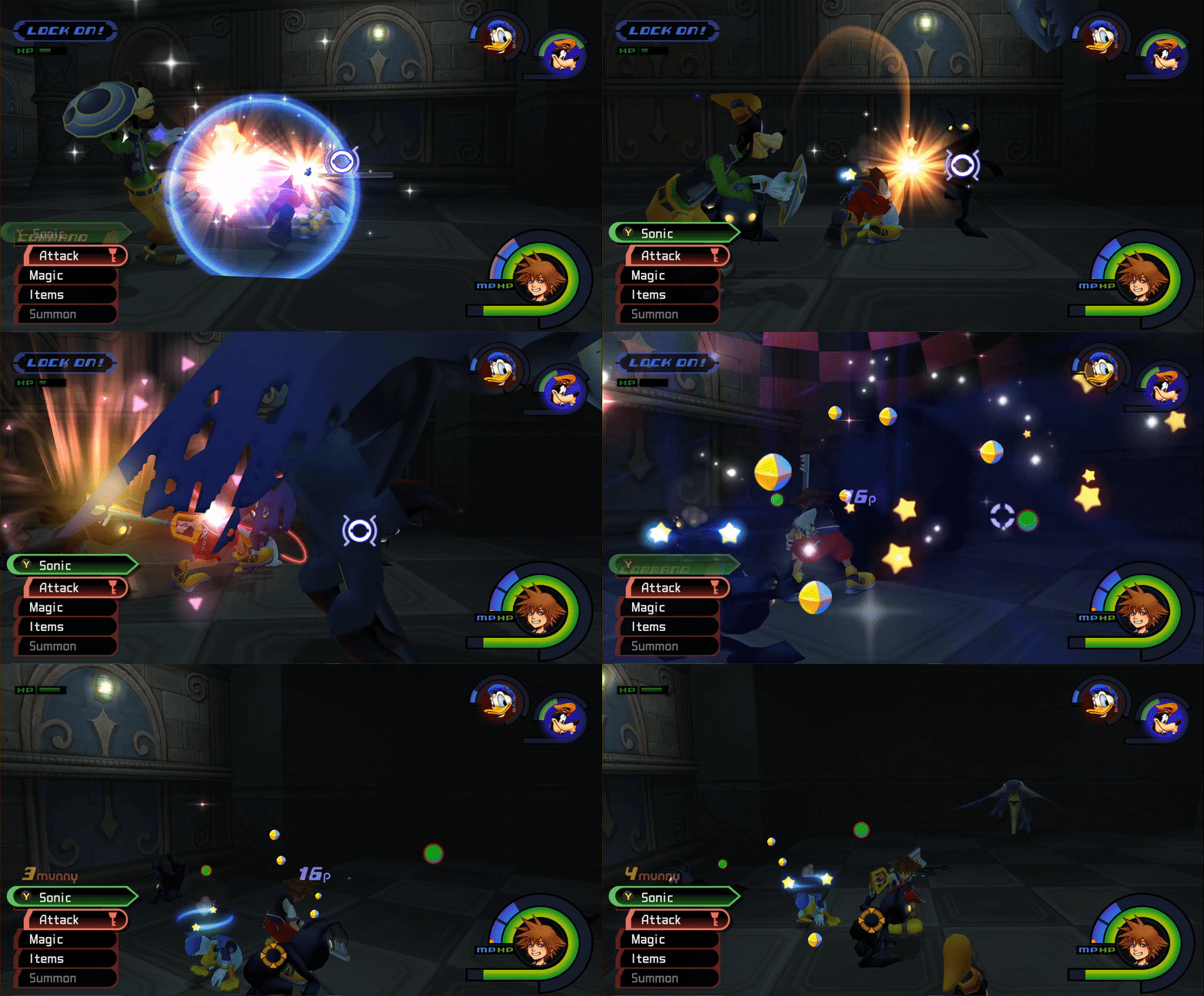
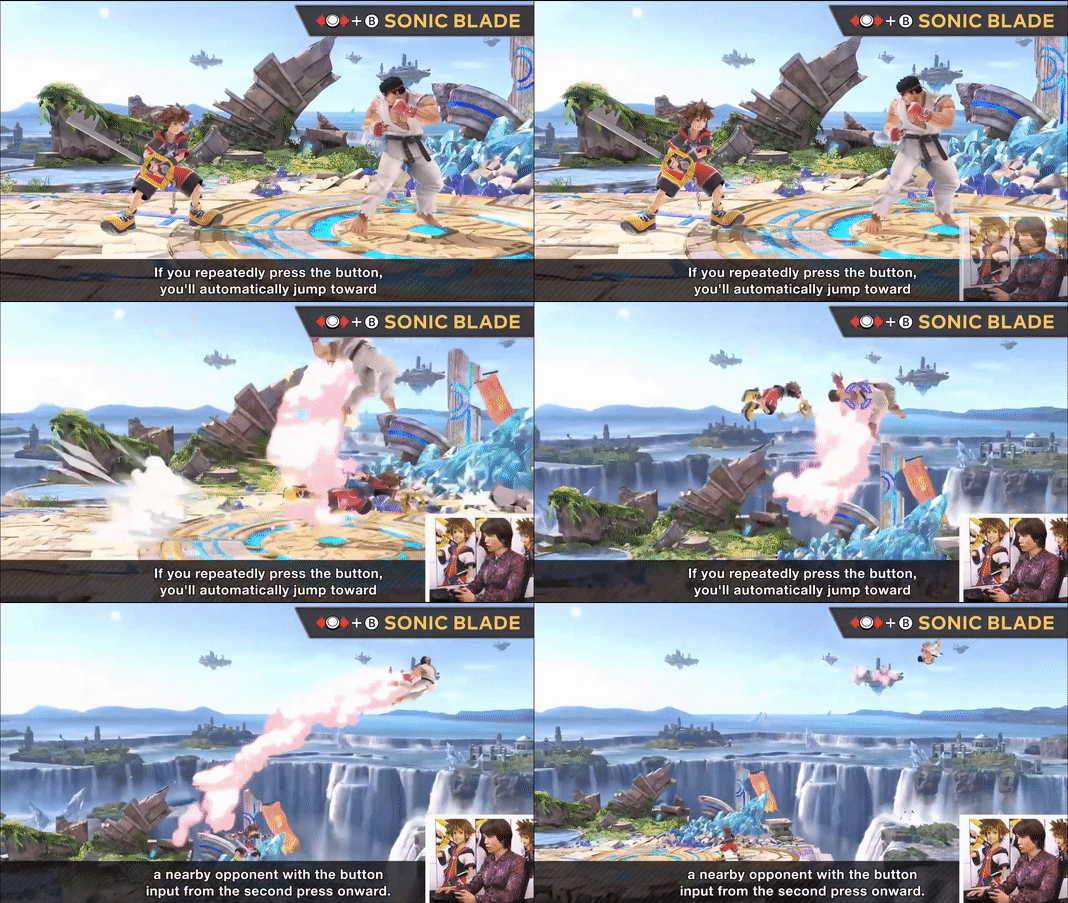
The Sonic Blade (actually a move Sora learned from Cloud Strife of Final Fantasy VII, fun fact.) allowed Sora to dash across the battlefield repeatedly, piercing enemy defenses and clearing out crowds of enemies. In Smash, this move has been given an aerial component, probably for a couple of reasons. First off, the original Sonic Blade was notable mainly for how it would zigzag across enemies, hitting them at multiple angles in a row. On a 2D plane, you can’t really convey this without, well using both of the two dimensions, so Sonic Blade has to go up now. The second reason reinforces the overall design of Sora in Smash, which is the archetype of an air fighter. Smash, along with many other fighting games, utilizes certain models for its fighters, or archetypes, such as fighters that are heavy and difficult to move, fighters that can quickly close distance, or fighters that are dangerous to cross with in the air. Sora falls into the latter category, and this too is a reflection of his original game, which included a lot of fighting mid-air, where Sora was able to home in on enemies like a bird of prey. In addition to reasons I’ve mentioned such as the full utilization of 3D space, there are also segments in which Sora can literally fly, and all the fighting takes place in the air! So making Sora a huge aerial threat fits perfectly. Sonic Blade in Super Smash Bros. can be directed manually by the player, which is technically possible in Kingdom Hearts, just not with the control stick – You’d have to change your lock-on target mid-attack to change Sonic Blade’s trajectory, but they thought of that! Smash Bros. features the blue lock-on indicator from the original game when chasing down a fighter! See what I mean about that attention to detail?

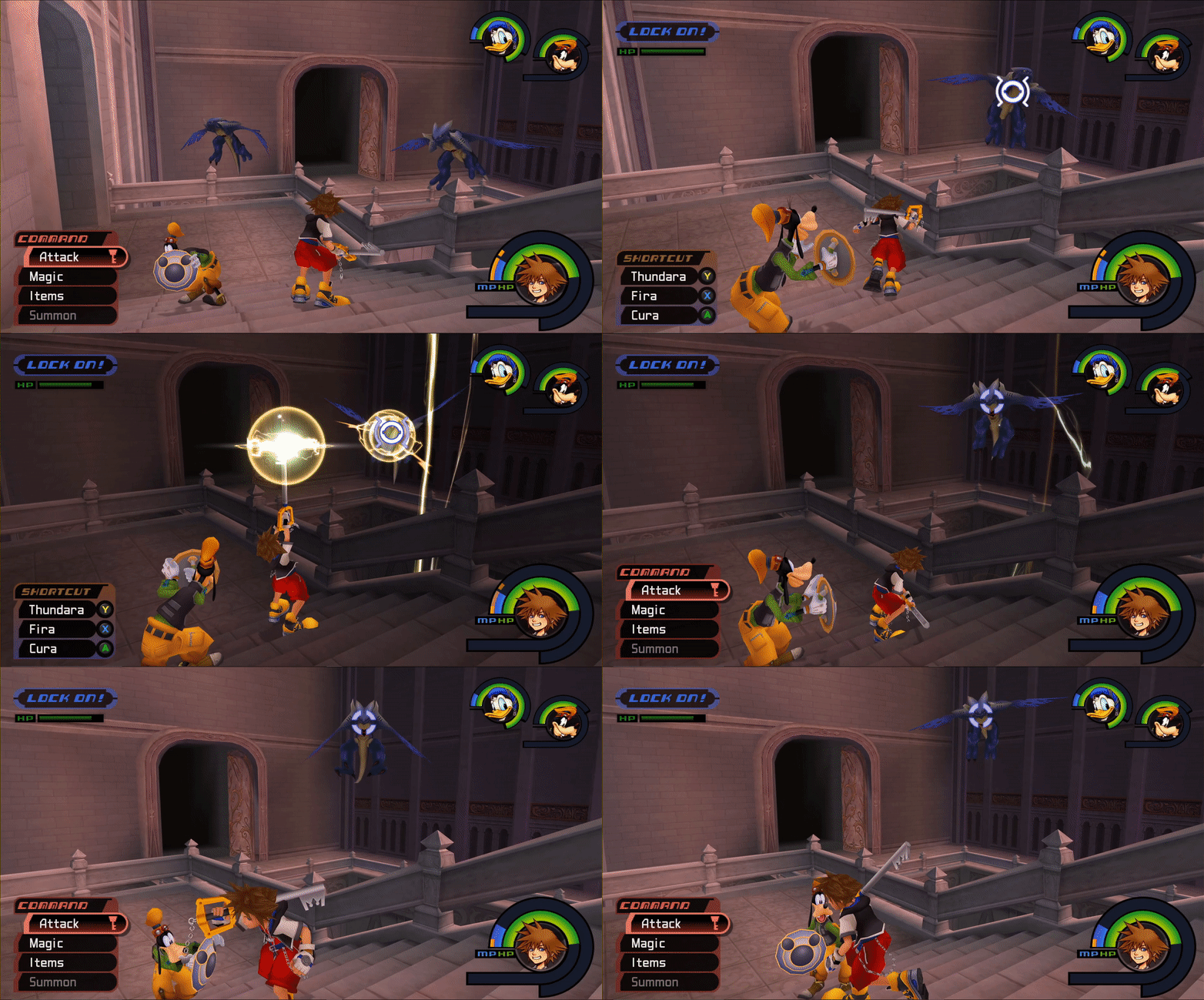
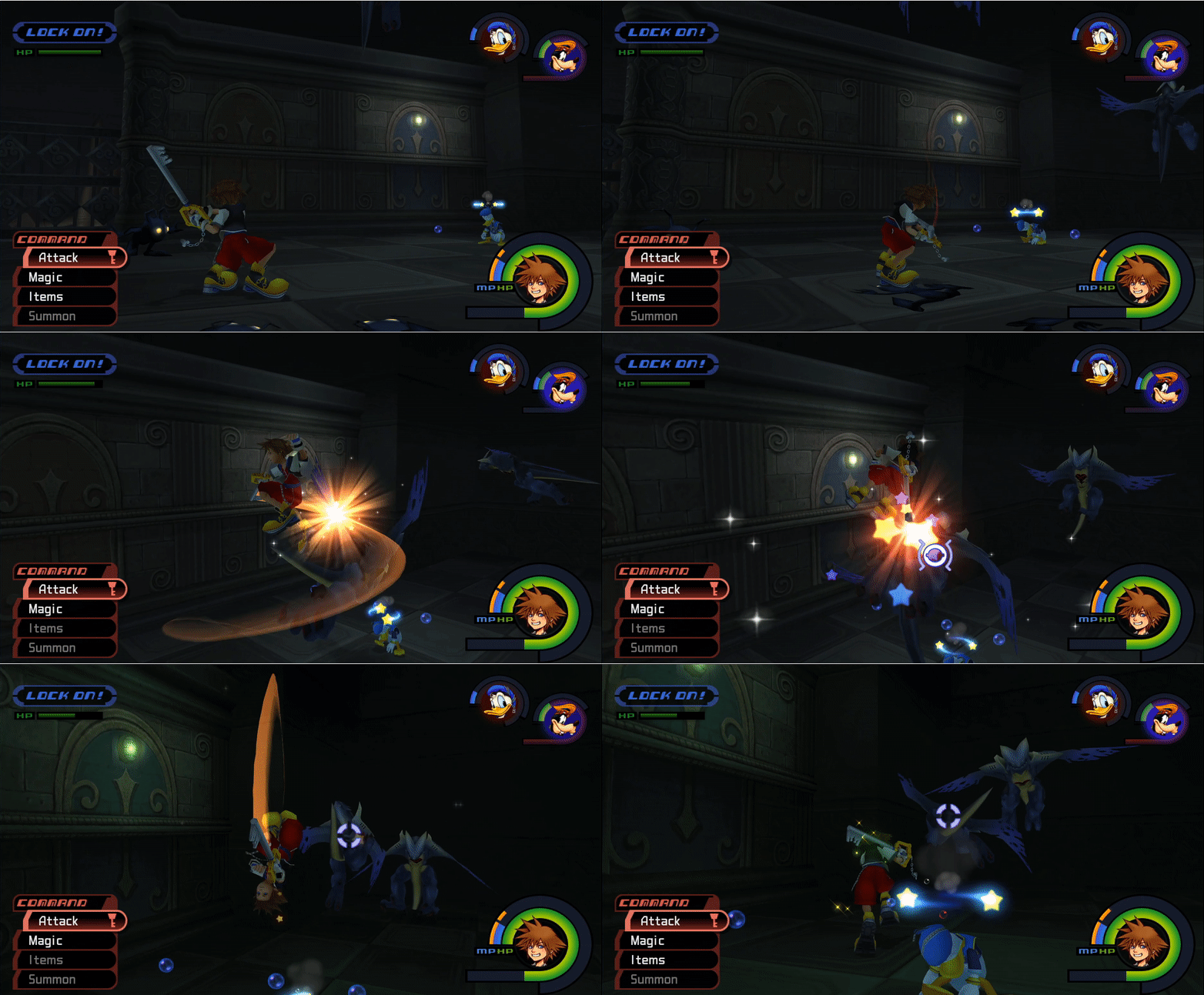
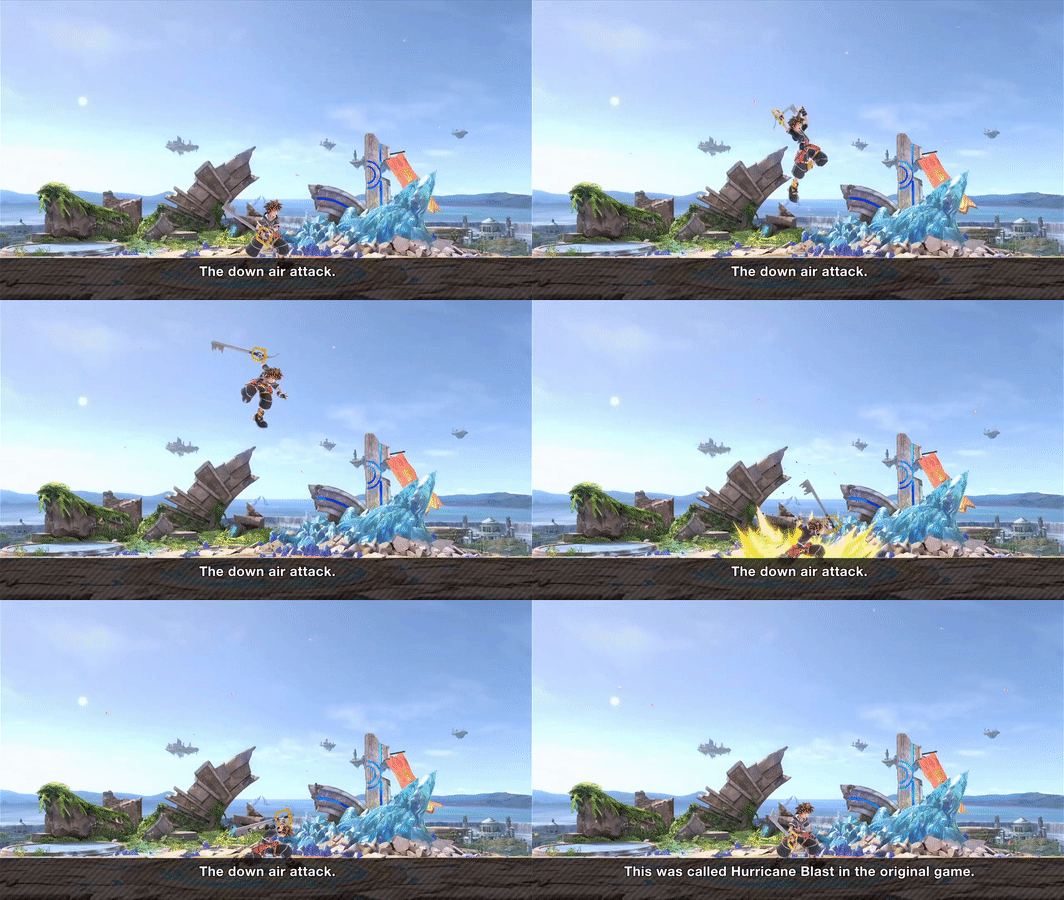
Speaking of air fighting, Aerial Sweep and Hurricane Blast are among the tools in Sora’s toolbox from his debut game that made air fighting so powerful. Sora’s attack combo is set and invariant until he levels up through experience. Once he does, he can unlock new abilities that extend or modify his attack combo. Arial Sweep and Hurricane Blast are both such modifiers. The Kingdom Hearts modifiers operate in an interesting way, where they may only activate when Sora and his target are in certain positions relative to each other. For example, Hurricane Blast, an attack in which Sora spins his keyblade vertically like a pinwheel around his body, activates if Sora attacks an enemy at a lower elevation than him, while midair. Aerial Sweep activates if Sora is grounded, and attempts to attack an enemy at a significantly higher elevation, without jumping. Kingdom Hearts combo modifiers were so compelling because, while they tended to deal more damage with more advantageous hitboxes than regular attacks, they needed to be set up with careful positioning, making the player change the way that they play as they level up, and think more critically about the game space. Super Smash Bros. is a game almost entirely about critically engaging with the game space, so both Hurricane Blast and Aerial Sweep are situated appropriately in Sora’s moveset to reflect their uses in Kingdom Hearts. Hurricane Blast can close distance with foes beneath sora, and Aerial Sweep does the same for foes above.


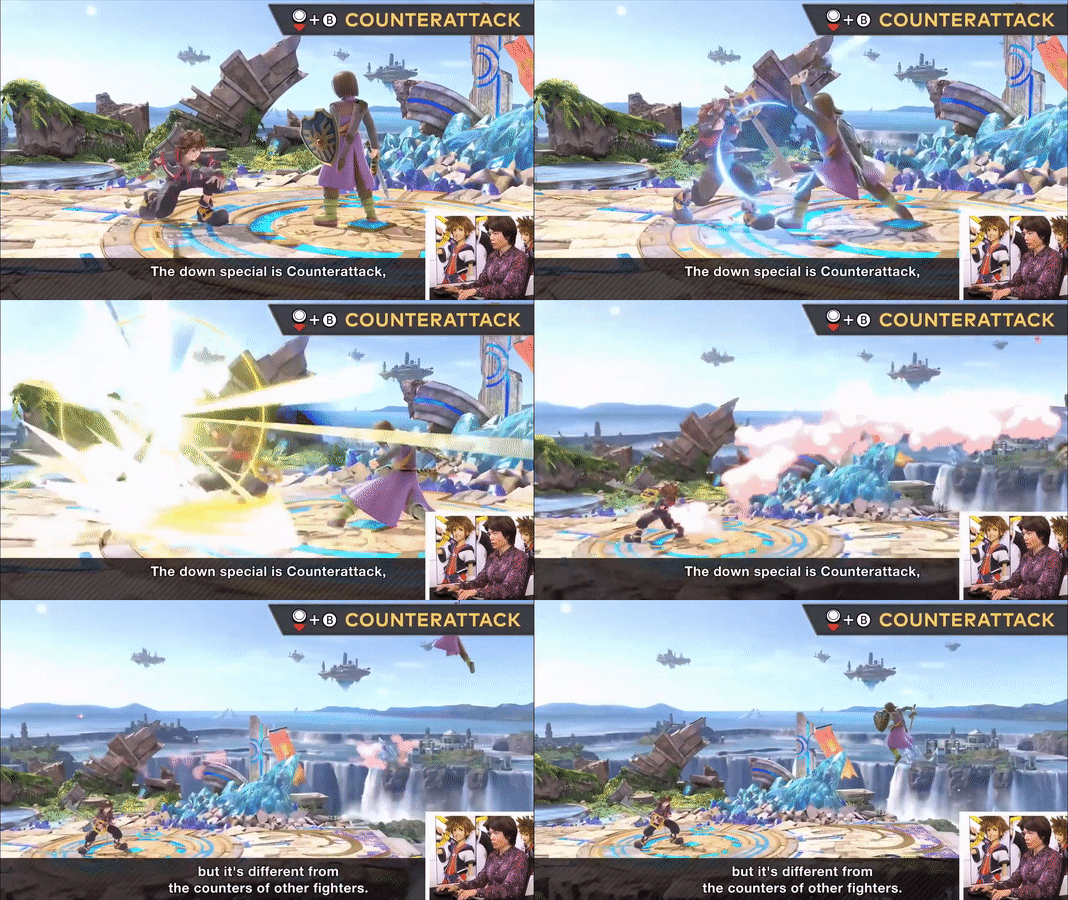
Finally Sora’s got his counter. He takes a defensive stance, and if an enemy hits him during that short window of time, Sora retaliates with an attack of his own. It’s a common mechanic in Smash, but I can see why it’s so oft used. Fighting games are inherently games of prediction, and some of their most exciting interactions are between players pulling one over on each other by anticipating an attack and turning it against the attacker. It just makes sense to include a mechanic specific to that sort of interaction, even if it is perhaps somewhat overused for various fighters. This kind of had to be in Sora’s kit, though, as it’s one of the primary methods for defeating the more difficult foes of Kingdom Hearts. Sora even had an ability specific to it that would increase his attack speed and restore magic points when he successfully countered. Countering is so integral to Kingdom Hearts that Sora can even convert a blocked attack of his own into a counter in his original game through the clash system, although Smash has its own system for handling clashing attacks between two fighters, so it wouldn’t make sense to give Sora the advantage over everyone else on that front.
So yeah I couldn’t be more chuffed. One of my favorite video game heroes from one of my favorite games is now.. in another of my favorite games, a celebration of all things video game. I pretty much just wanted to geek out over how incredible the translation to Smash fighter has been for Sora, and hopefully I pointed out something or other that you didn’t notice before. Now if you’ll excuse me, I’ve got some labbing to do…

Colors weave into a spire of flame…
 Parry Everything