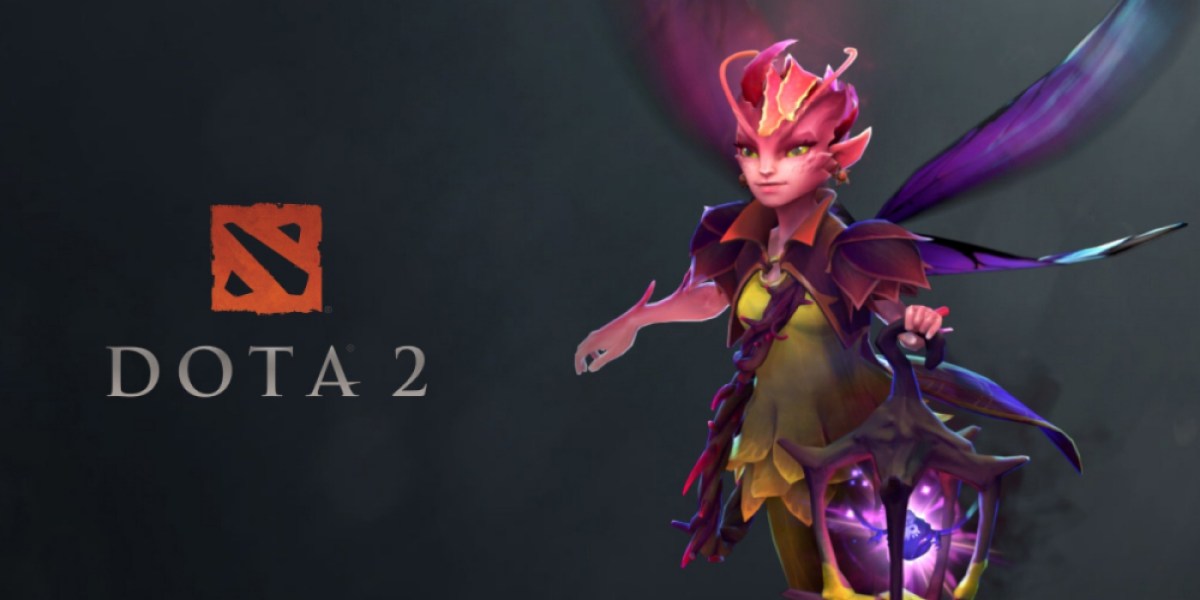
Dota 2 is a game of the genre MOBA, Multiplayer Online Battle Arena. In simpler terms, it’s a team-based game with a focus on combat and strategy. It’s played from a bird’s eye view, and features a number of colorful fantasy heroes to choose from. Dark Willow, the mischievous, slightly sadistic thieving fairy is my personal favorite, and I wanted to just jot down my thoughts on how effectively her abilities are communicated through audio-visual feedback.
“Let’s have some fun, shall we…”
Audio-visual feedback is as it sounds; the fairly basic concept that important information should be communicated to players implicitly through their senses, and that things like affirmations of success or confirmations of failure should be communicated in this way. For example, if a player character swings a sword, that sword swing should make a distinctly different sound whether it misses its target, strikes an enemy, or strikes a wall. It should probably look distinctly different in each of those cases as well.
Dark Willow has five abilities. Bramble Maze allows her to sprout a circle full of equally spaced bramble bushes at a distant location. Enemies will have only a narrow space to squeeze between the brambles, and if they touch one they are rooted to the spot and damaged. Shadow Realm allows Dark Willow to hide in a shadow form, immune to most attacks, then burst out with a powerful shadow attack. The longer she is hiding, the stronger the attack, so long as the ability does not wear off first. Shadow Realm can later be upgraded to fire a barrage of shadow attacks. Cursed Crown is a curse Dark Willow places on a target, causing it and nearby allies to be stunned exactly four seconds after the curse is cast. Bedlam causes Dark Willow’s wisp minion to orbit her, firing destructive magic at nearby enemies. Terrorize projects the wisp to a distant location, causing any enemies at that location to be terrified and sent running toward their base.
Here you can see me line up exactly where the brambles should be placed, so I can catch multiple targets, thanks to the handy previsualization UI.
A lot of Dark Willow’s power as a hero comes from the synergy between her various ability mechanics. Bramble maze does a great deal of damage and holds foes in place, but they have to touch the brambles for this to happen. Luckily, Dark Willow has the ability to force enemy movement in the form of Terrorize, clever of use of which can cause enemies to flee in terror into her brambles. Cursed Crown is a strong stun that can disable multiple opponents but only if they are standing together, which is why Terrorize, in conjunction with Bramble Maze, is so effective at sticking enemies together. Dark Willow can dish out immense damage with Bedlam, but only if she gets close, and she is not very durable herself. Luckily, Shadow Realm renders her immune to most dangers, which she can use in conjunction with Bedlam. The fact that Shadow Realm can cap off this combo with a burst of damage is a nice compliment to the more sustained damage of Bedlam, which can be more easily reacted to.
Clever use of synergized game mechanics can make your player very powerful
Because it is so important to coordinate your various abilities together like this, it is essential the player can develop a seamless feel for how the various timings, cast ranges, and nuances of her abilities work, without having to look at a detailed explanation. That’s where audio-visual feedback is essential for making gameplay mechanics like this synergize in an effective way that’s satisfying and fun for the player. Dark Willow’s Shadow Realm is an excellent example of this.
The red aura around Dark willow becomes more and more distinct as the shadow realm attack becomes ‘ripe’ for unleashing.
First off, Shadow Realm is kind of a complicated ability when you break it down. When its button is pressed, Dark Willow becomes subsumed in shadow and immune to most enemy attacks, which is easy enough to understand. However, during this period Dark Willow is also charging up an attack. This shadow attack reaches the peak of its potency after 3.5 seconds of charging, but the ability itself ends after 5 seconds. So there is a period of 1.5 seconds in which it is optimal to use Shadow Realm’s attack competent. That’s a little unintuitive, or rather it would be if not for the audio and visual considerations. After 3.5 seconds of Shadow Realm, Dark Willow is surrounded by an additional visual effect: a red circular aura that surrounds her and gives the impression of peak power. As soon as Shadow Realm begins, a distinct and almost melodic humming sound begins to emanate from Dark Willow, it gives a sense of building power and changes over time. Its intensity crescendos after exactly, you guessed it, 3.5 seconds. The humming then peters out for the remaining 1.5 seconds, giving a strong impression of when the attack should be dealt.
Here, I crucially missed the shadow realm cue, and my attack fails to kill my target. Entirely my own misplay, but emphasizes the importance of those cues.
This sort of feedback is also helpful for those opposing Dark Willow. Without having to count, any player can get a pretty good idea of when Dark Willow is most likely to release her shadow attack. Giving easy access to this sort of information is conducive to a healthy competitive game, allowing complex strategies to form. Knowing what your opponent is capable of, if not necessarily what they intend to do, you can act and react to game events as they occur. Acting and reacting is the core of competitive gameplay. If each player doesn’t have the right information to available for them to utilize, there is no counterplay, there is no game.
Curse Crown is a very interesting example of this concept. It counts down, loudly and with a visual timer represented by four icons for each of the four seconds in the countdown, but this countdown is a strategic benefit to both Dark Willow and her victim. The victim will know that standing near allies when the countdown pops means putting those allies in danger. Dark Willow will be eagerly awaiting for her victim to become stunned and helpless, so she can unleash her most powerful offense. The strong visual feedback makes for a better experience for both the victim and user of the spell. By giving both parties this important information as a readily apparent graphic and audio cue, they can both formulate plans to deal with the respective obstacles to their goals, which is itself the fun of the game.
With terrorize, enemies are driven off of my allies, and with shadow realm, I can further pursue and subdue them.
As the victim is stunned, Dark Willow may try to line up a Bramble Maze on them, to further damage and disable them. Typically, you’d want to place the brambles in the enemy’s path, so they move into the bush themselves. If they are stuck in place though, one can carefully line up the bramble to appear beneath your target’s feet, thanks to a convenient target-preview interface that will shadow the Dark Willow player where exactly they brambles are going to appear. For the opponent’s part, the brambles are distinctly shaped, leaving little ambiguity as to where it is and is not safe to walk.
As you may have gleaned, Dota 2 can become fairly visually loud, with ten individual heroes all throwing out impressive and explosive spells like this. That’s why it’s so important to keep a distinct visual not only for each ability, but a distinct visual style for each hero as well. It should be unambiguous when it is Dark Willow in particular using her spells, so that enemies and allies have a fair amount of information with which to react. Dark willow’s visual effects are uniformly composed of dark violets and maroons, evocative of shadowy undergrowth and wild flowers, which is also thematically relevant to her character as a dark fairy. Big and important abilities that can completely shift the tide of battle, such as Terrorize, tend to be louder and more immediately noticeable, in proportion to their power.
In an extended battle, there’s LOTS to keep track of, so knowing the visual and audio cues becomes an essential skill. It’s better to make that learning curve as painless as possible. It may be hard to track Dark Willow in all this mess at first, but look out for her midnight color scheme.
Audio-Visual Feedback is one of those things you really have to nail, if you’re game’s to be any good, honestly. If a lot of important information is moving around in your game and it doesn’t reach the player in a prompt and unintrustive way, it can severely hamper the experience. Dota 2 is pretty good at it, considering all the challenges of keeping things clear and readable that comes with the MOBA genre. Dark Willow is a particularly strong example, and perhaps that’s one of the reasons I was drawn to her and her playstyle.
Can’t believe I haven’t done one of these on this topic yet. The Legend of Zelda: Ocarina of time is rightfully revered for how it set the tone for what action and adventure games could be in what was the relatively new frontier of polygonal 3D games in 1998. Moving to 3D comes with a whole host of problems, though, especially when it comes to active combat. Our real three dimensional space is very complicated, and abstracting that to a computer program can have some disorienting results if not done with care. One of Zelda‘s most notable contributions to the craft, I think is the Z-Targeting system. “Z-Targeting” is the name for Ocarina of Time‘s 3D targeting system which would let the player focus the game camera’s attention on a single point of interest by tapping the “Z” button. It gets plenty of mention, but honestly I feel like sometimes this one innovation doesn’t get praised enough. It kind of set the standard for how real-time gameplay involving two moving bodies works even to this day. There are also a lot of little things that helped this first iteration of a 3D targeting system work remarkably well, despite its age.
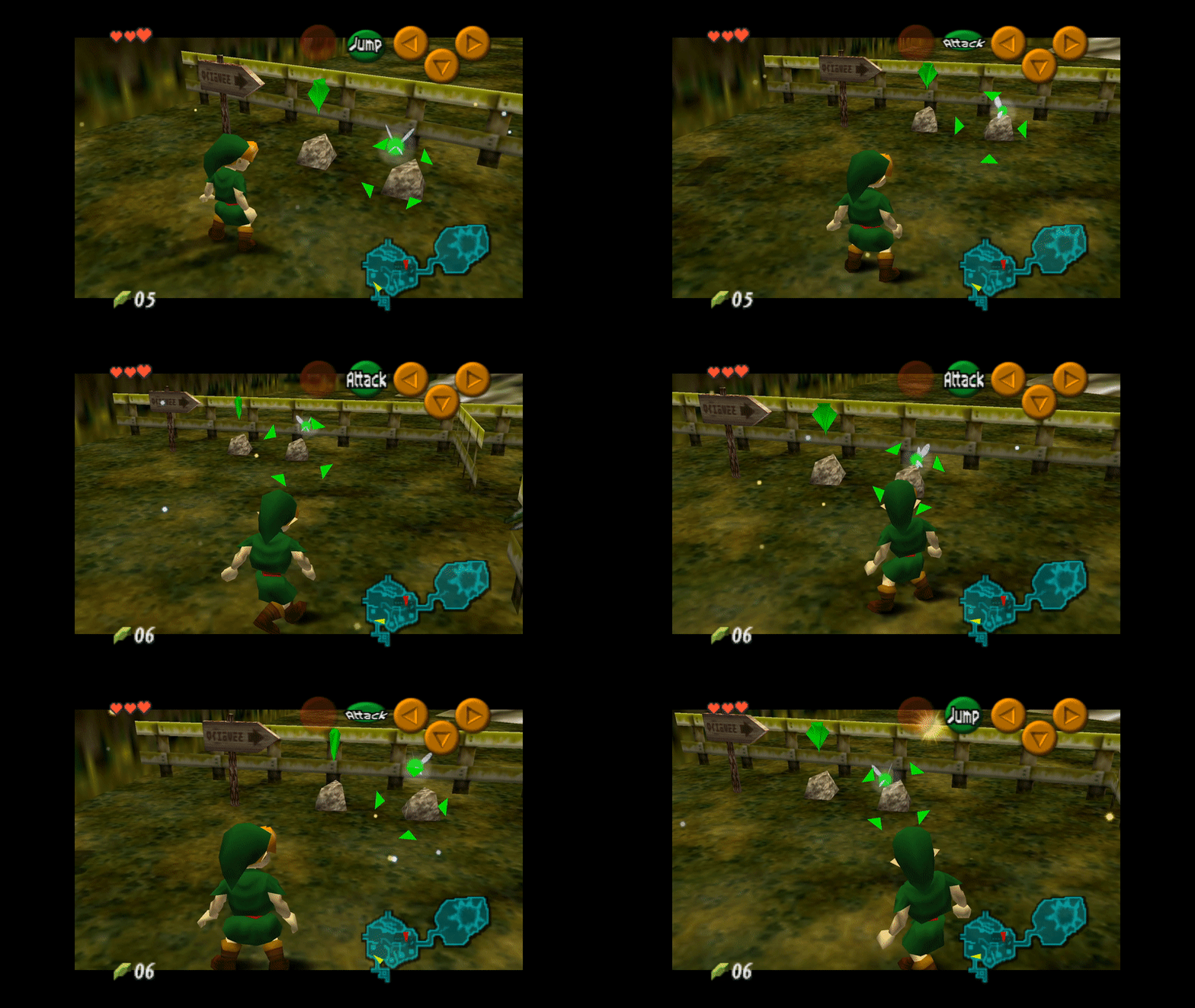
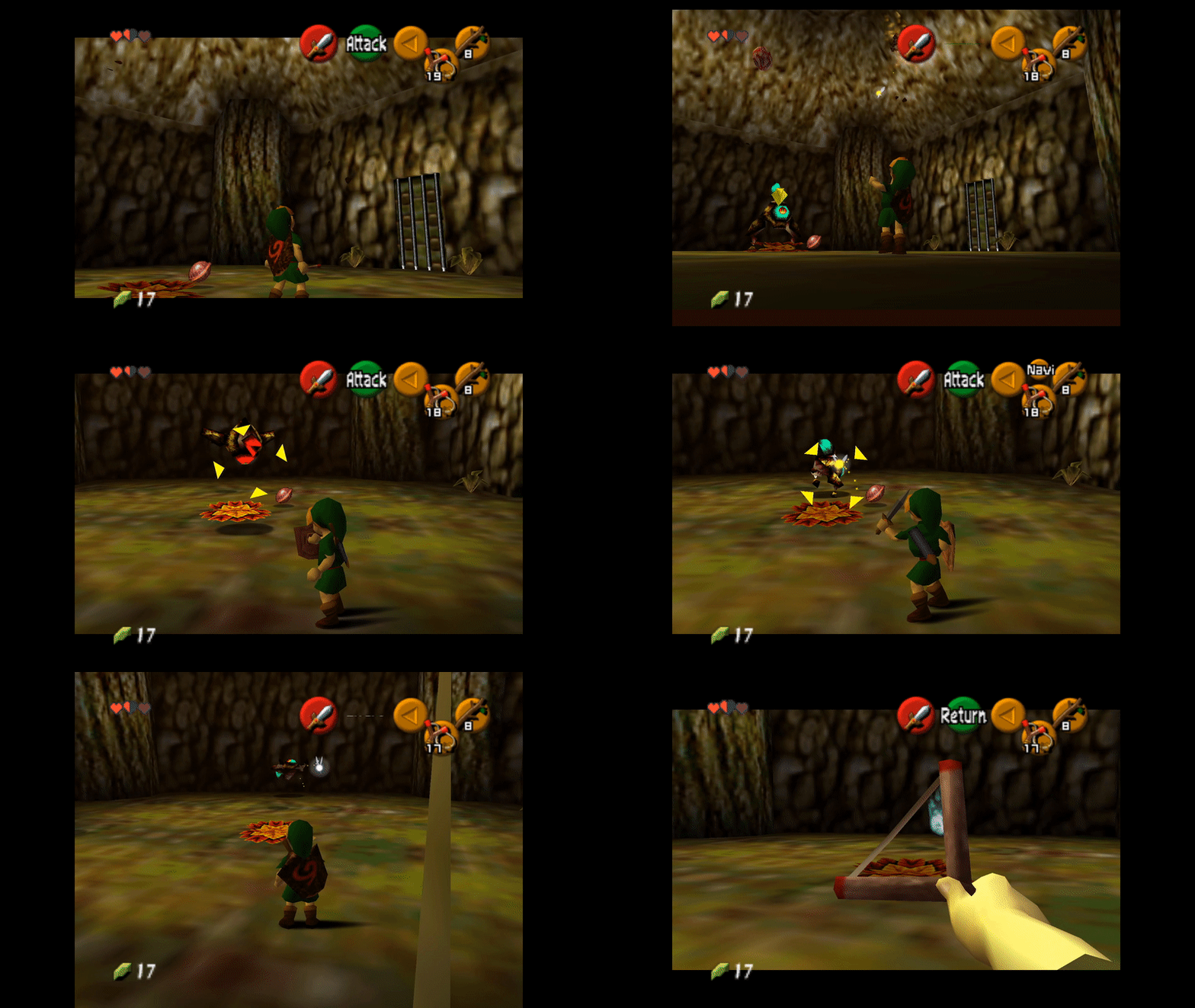
The rock was very patient with me during the filming of this clip.
Notice in the image above how the camera smoothly and automatically situates Link to one side. You may have heard of the rule of thirds, an stylistic concept in art for generating compelling composition. By dividing an image into thirds and placing the subject of your art into the first or last of those thirds helps emphasize their importance, and draws the eye. It also frames the remaining, more open two thirds as a point of interest to the subject, a place they might be looking or going. Link is the subject in this scenario, and the camera essentially enforces the rules of thirds while Z-target is active. It’s not only very aesthetically pleasing, and helps draw the player into the drama of a good sword fight, but it’s very functional. But ensuring Link and the target occupy opposite ends of the screen, then it becomes very rare that Link himself will obscure his target from the player sitting on their couch. In this way essential information conveyed by your target, like an incoming attack, isn’t accidentally hidden from the player. This diagonal framing also helps keep the spacial relationship between Link and his target clear and unambiguous, which as I’ve mentioned elsewhere, is essential to satisfying combat.
This mechanic of making Link’s position relative to his target unambiguous is very strictly upheld. The camera will eagerly clip into walls to ensure the target remains properly framed, but this isn’t a problem as obscuring geometry will often not be rendered, so the camera’s over-commitment to framing is actually an advantage. It’s very intuitive. In an interview with the game’s general director, Toru Osawa, it was said that the system was inspired by a ninja and samurai themed performance. A ninja attacked with a sickle on a chain which was caught by the samurai. The ninja moved in a circle around his opponent as the chain connecting them was pulled tight. It seems drawing an invisible and unbreakable line between two entities helped the developers visualize how this new system would work. Link will always circle around his target in-game, and inputs on the controller are changed during a Z-target to reference the subject of the target. Moving Link “Left” means he will move clockwise around his target. “Right” means he will move counterclockwise around his target. It is as if Link is moving on a 2D plane, but bent and wrapped around the target. This abstraction expands into a rather robust system.
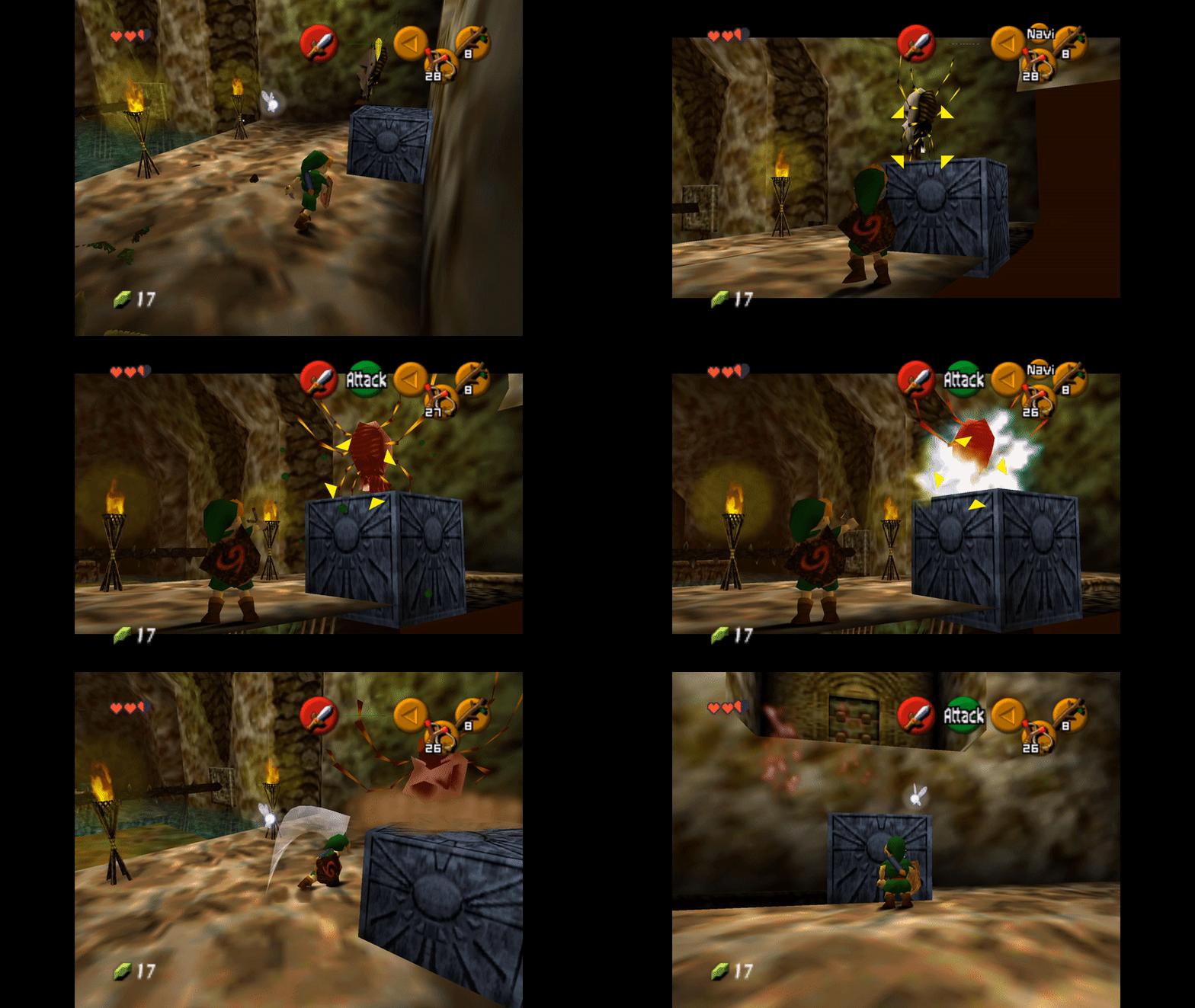
With the spider conveniently framed by the camera, even through this wall, Link is able to sneak a shot in to hit its vulnerable underside.
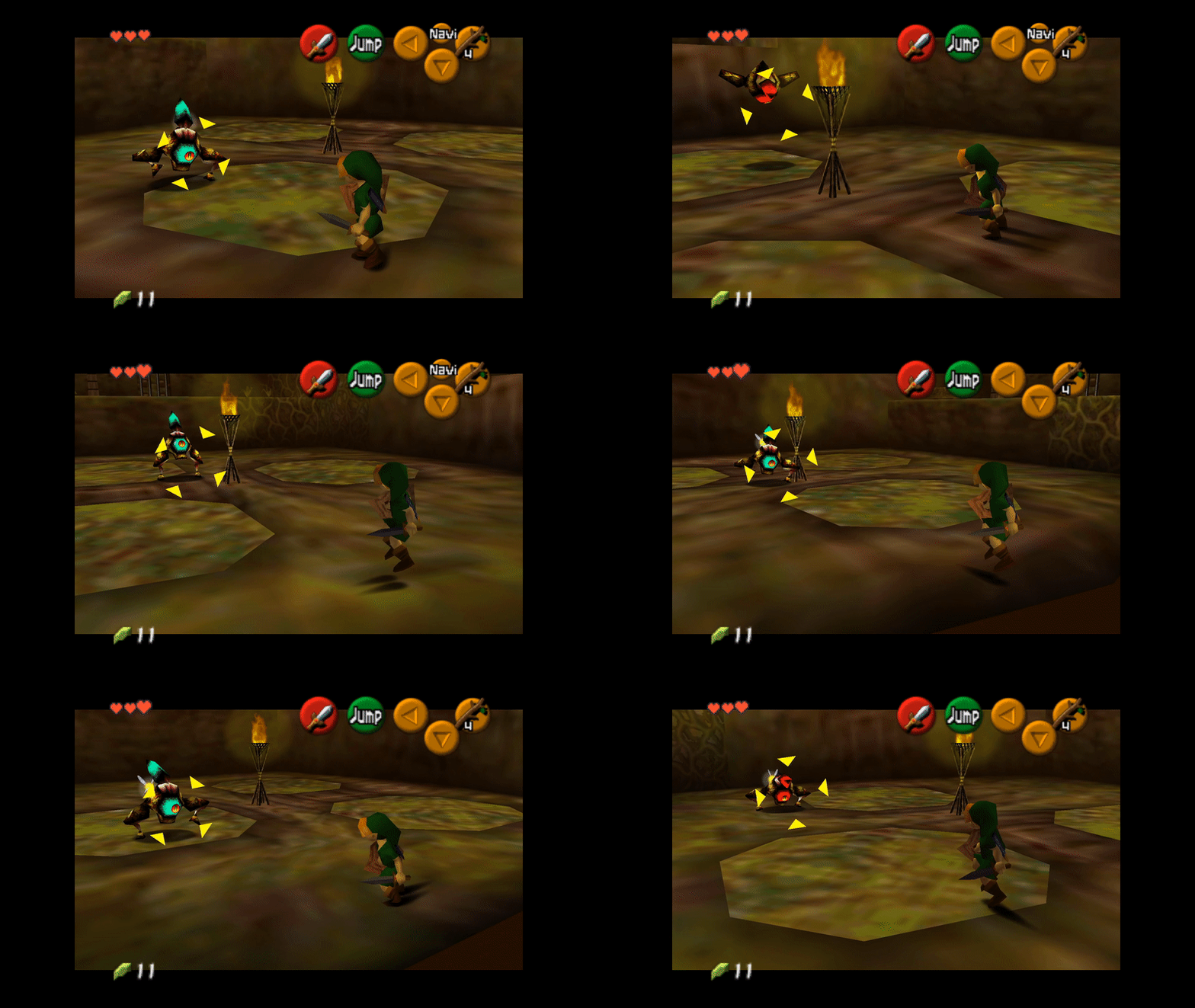
Another thing I noticed while playing Ocarina of Time recently is how movement during Z-targeting relates to the input of the gamepad controller. I’ll give you an example. While a Z-target is active, Link can do a quick side-step or back flip to avoid enemies. Holding the control stick back, toward yourself, when you press the action button will initiate a back flip. Holding the control stick to the left or right will initiate a side-step when the action button is pressed. So it seems the game is tracking Link’s relative facing direction to the camera for the purposes of his evasive jumps. If Link is facing perpendicular to the camera, or in other words, if his shoulder line forms a right angle with the plane of the game screen, then a “right” or “left” input on the control stick is considered “back” for the purposes of evasion. You can see this illustrated below:
During this clip, I am holding only the “right” direction, but Link eventually back flips anyway.
In this above clip, I am holding “right” on the control stick throughout. Once Link’s angle to the camera becomes too extreme, he no longer side-steps, and instead back flips. However, Link’s stride never changes. “Right” on the control stick is always considered to be Link’s right, relative to his current standing position, for the purposes of calculating what direction Link should be running. I can imagine a couple of reasons this might be. Changing Link’s continuous move direction on a dime would be very disorienting for the player. Link’s stride is not really changing in the previous clip, only the player’s angle of observation, so it’s unintuitive to think that a change in input is required to keep that stride in any scenario. The evasive jumps, however, are discreet units of movement and thus are not jarring when their operation changes based on camera position. Further, if Link were to side-step while side-on to the camera, it would be difficult to tell if he had done much of anything. By changing it to a back flip, the feedback of Link making an evasive move is maintained.
The Legend of Zelda: Ocarina of Time, being the first 3D Zelda game, obviously utilizes its verticality in ways that previous Zelda games could not. Zelda is a series well known for an arsenal of unique weapons and tools for solving puzzles and dispatching enemies. Iconic tools like the boomerang and hero’s bow are very compelling. It would have been a drastic admission of defeat to not translate such things into the first 3D Zelda. They have some hefty inherent problems, though. Control sticks are, frankly, not best suited for precision pinpoint aiming compared to a computer mouse, a gyroscope, or a photonic motion sensor. Ocarina of Time still offers the option of manually aiming projectiles through a first-person perspective, which is convenient for solving puzzles, but not ideal for most combat encounters. The Z-Targeting system rather elegantly solved this problem as well. The drawback is that the player doesn’t do much aiming at all when utilizing their bow and arrow in combat, which could be argued as part of the skill set of playing the old Zelda games, but in trade Ocarina gets the advantage of keeping airborne enemies in focus and keeping the use of projectiles in combat practical. Zelda combat is typically more about understanding the best tool for the job than skillful execution anyway, so I think it was a savvy decision to enable ranged combat in this way.
There was an intent focus in this game on making your tools practical and functional, even if they’re not always the most complex or involved.
So many modern games utilize an automated camera or targeting system that can be traced directly back to Z-targeting, so I felt it deserved its own appreciation post here. The mechanic is unintrusive, fit-for-purpose, artistically sound, and practically seamless. It even has its own little diegetic explanation of your partner fairy, Navi acting as the source of your target’s focus. You might notice her dancing around targeted enemies in the clips I’ve provided. Helps reinforce her as an important partner to Link, even in spite of her infamous chattiness. Honestly, after looking into it, there are some features that even some modern targeting systems don’t do as well as Ocarina of Time. There have been perhaps more elegant, more robust, and even more interesting targeting systems since, but it’s absolutely astounding how much Zelda nailed it on its first try, and set the stage for the iteration of 3D navigation for many years to come.
Time passes, people move. Like a river’s flow, it never ends…
There’s a specific design ethos that I’ve noticed runs through a lot of roguelike games such as Risk of Rain 2 and The Binding of Isaac: Rebirth. These are action games in which the player collects a myriad of various weapons, powerups, and augments to enhance their combat capabilities. These items often do weird and wild things that greatly change up the gameplay, and yet, they all almost always work together in ways that never cancel out. Every item you collect remains significant throughout your run of the game, and adding new powers on top of it only further enhances your abilities, and often, these items even synergize in exciting ways that multiply your capabilities. Risk of Rain 2 and The Binding of Isaac: Rebirth adhere to this design philosophy almost religiously.
A lot of games have cool effects and weapon qualities that augment your combat abilities, but tend to lean toward special exceptions, edge cases, and fuzzy inter-connectivity between combat abilities. For example, I play a Dark Knight character in the online RPG Final Fantasy XIV. The Dark Knight can spend the resource MP on special abilities which deal extra damage, allowing them more attacks in the same amount of time than they’d normally be able to do . The Dark Knight can also activate an ability called Blood Weapon to restore some MP with every attack ability they land for a few seconds. I’d often find myself wondering if I can generate MP with the same abilities that spend it, as they are technically attack abilities. Through experimentation, unfortunately, the answer is no. I feel as though storing up MP to spend before using Blood Weapon to get in more hits is a cool ability synergy I’m missing out on because of this arbitrary lack of inter-connectivity. Blood Weapon also specifies in its description that extra MP is not awarded for using AoE abilities which hit multiple enemies, another case of non inter-connectivity of abilities. A lot of RPGs do this, Final Fantasy is just one example. This can not only cut off cool synergies that reward exploration of ability interactions, but also makes systems more difficult and complicated to read, as the player needs to parse sometimes very complicated layers of exceptions when it comes to understanding how things work. Being able to critically strike with normal attacks does not guarantee one can critically strike with special attacks, etc.
Something that a lot of roguelike games such as The Binding of Isaac and Risk of Rain have embodied, is a system of interconnected combat abilities which do not interfere with one another, and coexist with very few special exceptions. I never find myself asking the question ‘do these two things work in concert?’ while playing Risk of Rain 2, as pretty much invariably, they do. Sometimes this happens in ways you may not even expect, but are a welcome synergy when you realize. For example, Risk of Rain 2 features an item which will spray razors at nearby enemies when you take damage, and even these razors will apply any attack effects the player has, like bleed and critical strike, among others. This opens a world of possibilities, where things like building a loadout in which taking hits is a viable method of destroying enemies, may be plausible.
Here my tears (bullets) are capable of blocking enemy projectiles, shooting out of the back of my head, and inflicting fear on enemies, all-in-one!
There are a couple of big advantages to this strategy. As I explained above, it allows for a much grander scope of variety when it comes to player loadout, which often translate to a grander variety of playstyles. Variety is always an excellent tool for increasing replayability, expanding your games appeal, and just generally enhancing interest. Another advantage is a clarity and unity of combat attributes when it comes to the player’s loadout. You’re demanding less parsing of systems, rules, and exceptions on the part of the player if it can be assumed that any advantage they obtain from an item or powerup can be applied universally.
Notice that the arc of lightning, itself a powerup, originates from the missile, another powerup. Powers in Risk of Rain can be nested, and synergize in this way.
To be clear, there are also advantages to making exceptions to ability interaction, even beyond the technical overhead. Design wise, lots of games have made interesting decision making out of a specific separation of abilities. One of the most common forms this takes is separate magic and physical ability types, wherein each set of abilities have their own advantages and disadvantages that don’t intersect, which leads to compelling strategizing on the part of the player. Sometimes having to choose between one advantage and another is a good thing, both for strategic depth and for fun. Another advantage to compartmentalizing game mechanics in this way is simplicity for the designer’s sake. Making sure everything in a very large pool of game mechanics mix and mingle in an organic way can be a daunting task.
The disadvantages, however, become apparent when abilities do not combine in ways that feels like they should. If a special item exist that causes your bullets to split on impact and hit multiple enemies, and there’s another item that causes your bullets to bounce between enemies, it stands to reason having both my allow your bullets to split as they bounce between targets. In The Binding of Isaac, this is the case! Although I’m sure you can imagine a fair few games with similar scenarios in which these items are mutually exclusive, and that cuts off a lot of interesting gameplay opportunity!
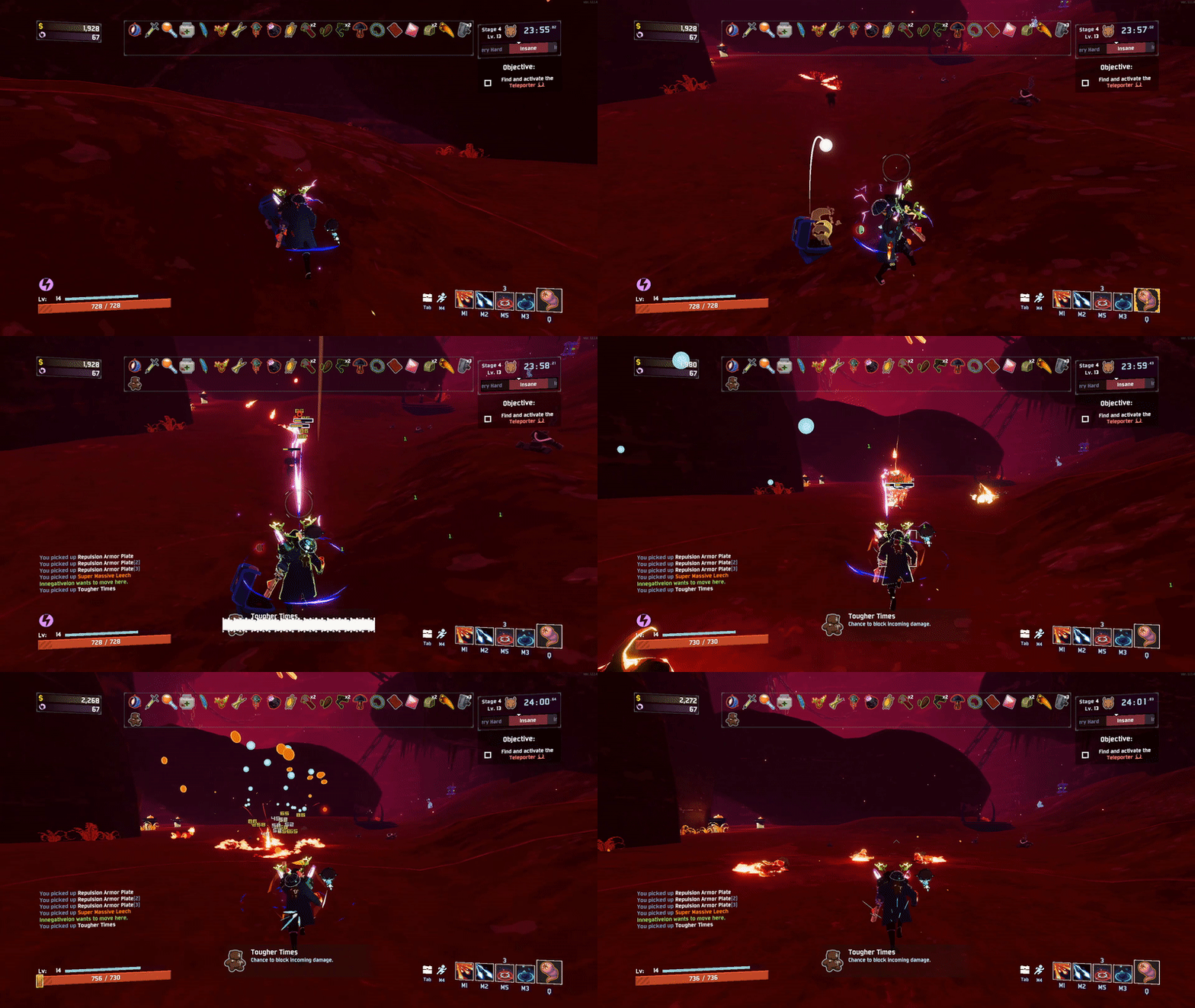
Passive damage is one of my favorite ways to play Risk of Rain 2
I love how in this clip, my passive lightning-emitting item is launching missiles and spraying lava at enemies. I have an item that causes me to do so when damaging enemies, and indeed that means all damage I deal, no matter the source. This comforting reliability, that any special bonus to attacks I pick up applies to all forms attack allows me to play the game in whatever way I want. If I prefer to use the shotgun, I can. If I want to focus on passive damage, I can. If orbital strikes are more my thing, that works too.
I do love those orbital strikes.
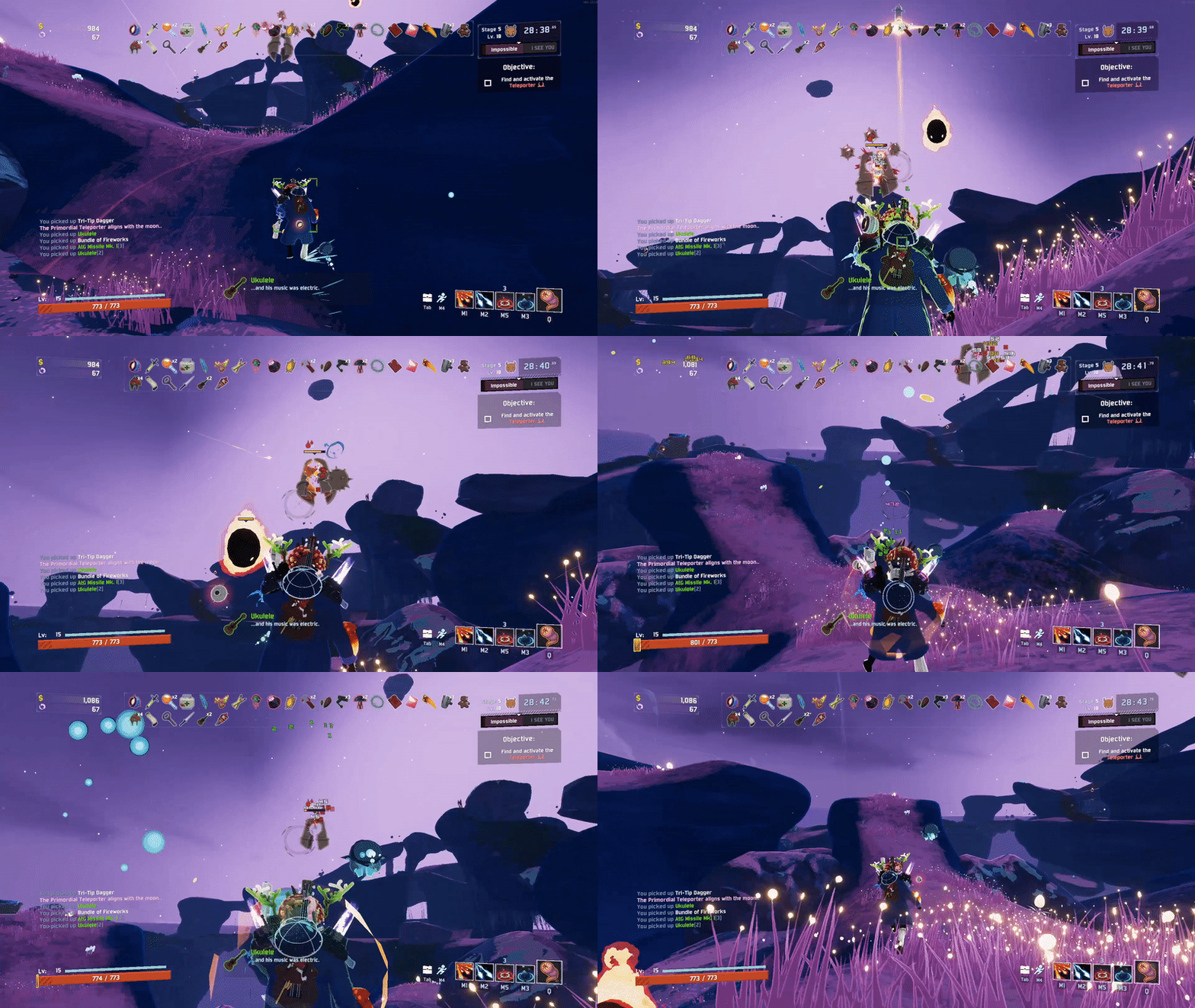
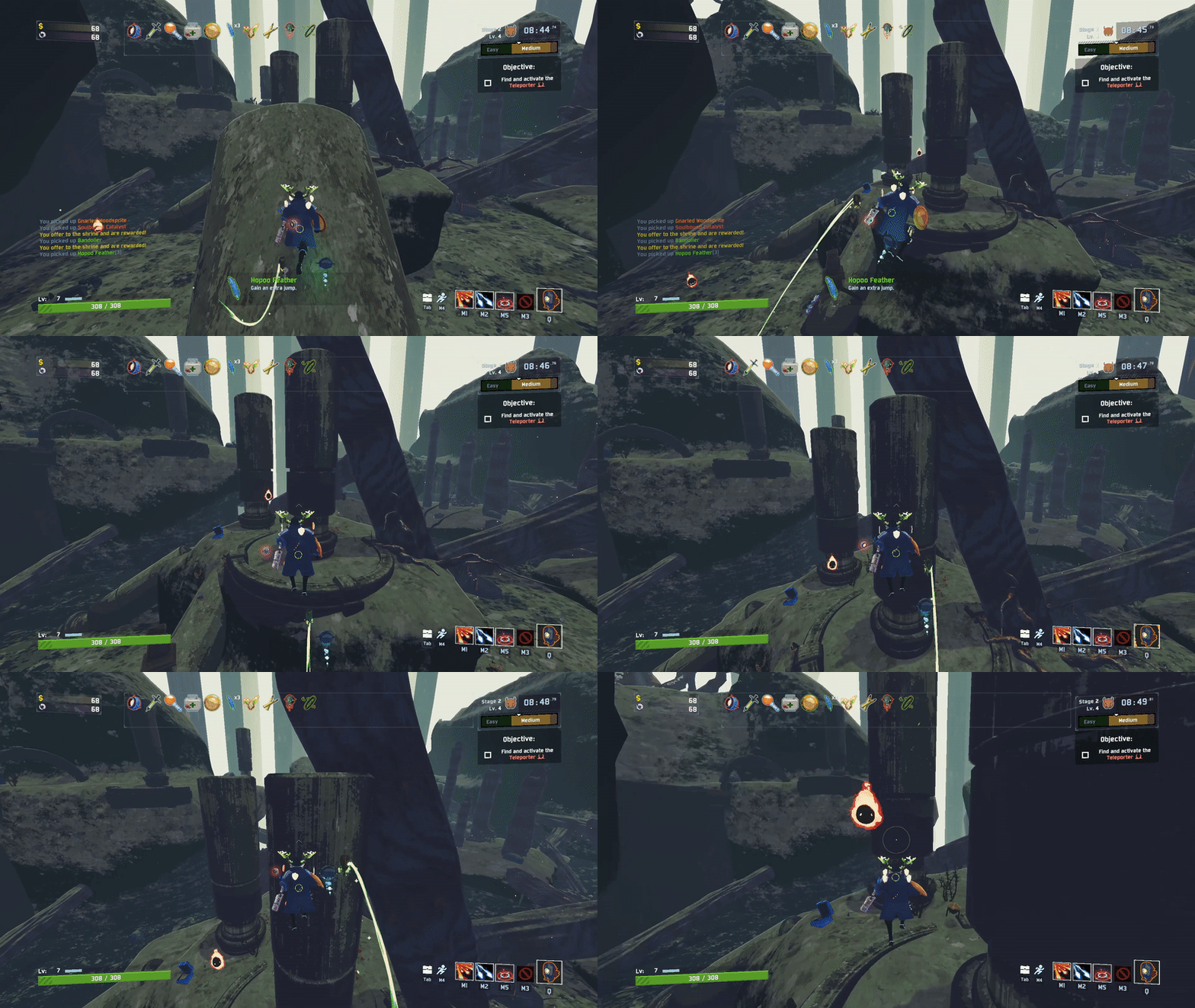
Another example of this from Risk of Rain 2 that I love are the mobility items. The Hopoo Feather allows your character to perform a double jump, or in other words jump a second time in midair before touching the ground. If get multiple Hopoo feathers… you just get more midair jumps. In fact, I was lucky enough on my last run to get three Hopoo feathers, meaning I can jump a total of four times in one. This insane level of mobility is something many games would shy away from, the fact that Risk of Rain 2 does not makes all of its systems feel a lot more organic and reactive to the player.
Get enough items in this game, and you can basically fly.
Overall, I tend toward preferring this sort of game mechanic parity that allow unambiguous and universal interaction between mechanics. When every stacks with everything, I find it all much simpler to understand as a player. I also find it affords a lot more room for creativity in playstyle by allowing a multitude of interesting and often bizarre combinations. There’s a lot of design overhead necessary to make sure everything works together seamlessly and without jank, and not every gameplay system will be conducive to this level inter-connectivity of gameplay mechanics
I love parrying things in video games. You might have already guessed that. I’m always looking for how and why things work or don’t work in games, so I have a particular interest in one of my favorite gameplay mechanics, the parry. So what is a parry? In the context of an action game, I’d define it as a maneuver the player can execute on the fly to nullify incoming damage and disarm enemy defenses, which requires an acute execution of timing to succeed. Commonly, it’s a button press that initiates a short window of animation during which, if an enemy attack connects with the player character, the parry activates. After considering how to approach the design of this gameplay mechanic, I’ve decided there are three pillars of a good parry mechanic: usability, versatility, and impact.
Usability describes the practicality, from the player’s perspective, of actually using the parry at all. How restrictively difficult is the timing necessary to succeed in using one? Is the risk of using the parry worth the reward? How necessary is the use of this parry to succeeding within the game? Are there other specific considerations like spacing that make the parry more or less practical?
Versatility describes the frequency of general use cases for the parry. Can the parry be used to deflect any attack encountered in the game, or is it limited in some way? Can even large and powerful enemies be parried? Do you need a specific weapon or in-game skill to use the parry? Is the parry’s reward worth forgoing a more straightforwardly offensive approach?
Impact is at the center of what makes me want to use a parry. A parry can be powerful, but ultimately I am motivated to use it by how fun it is. What’s the audio-visual feedback of a successful parry like? Do I get a rush from disarming my opponent, or is the reward for parrying barely noticeable? Does it make me feel powerful? Does it make me feel skilled?
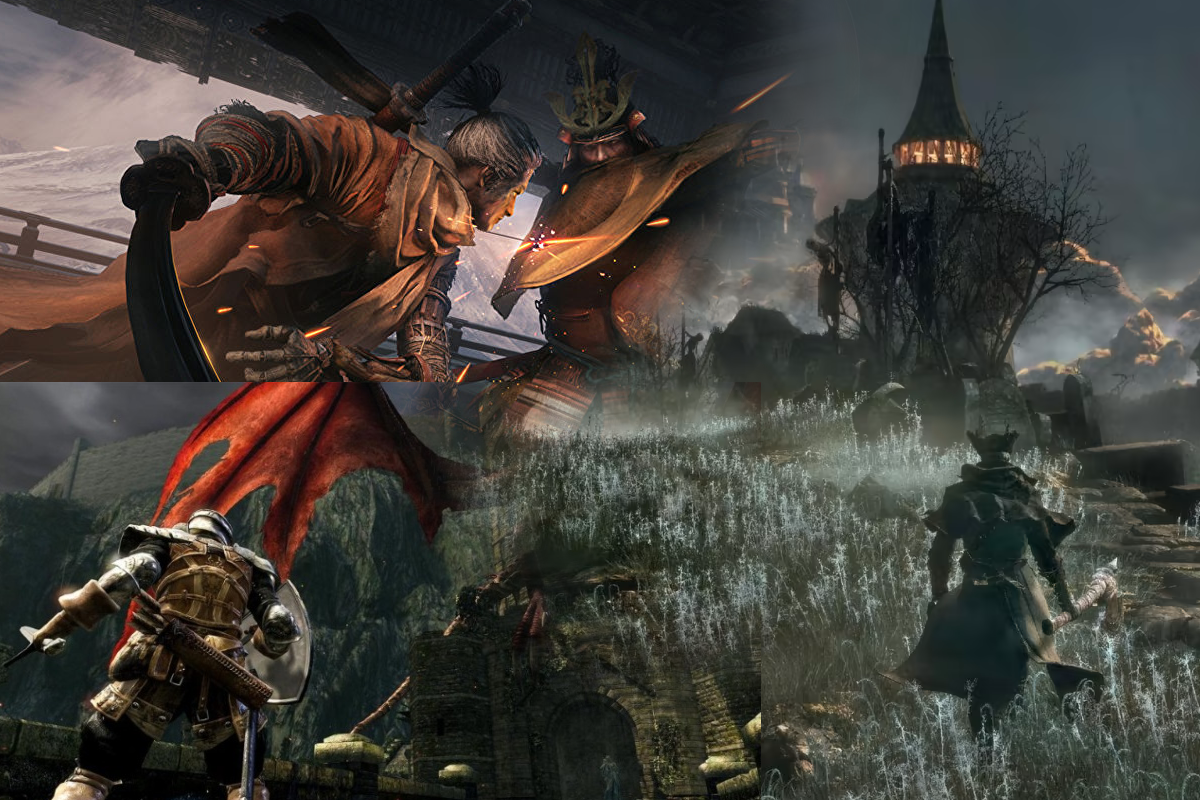
FromSoftware or FromSoft is a Japanese game developer well known for their popular action games, all of which in recent memory include a parry of some kind. I want to run through three of their flagship titles, the original Dark Souls, Bloodborne, and Sekiro: Shadows Die Twice, and analyze their respective parry mechanics through this lens I’ve come up with to see how it can be applied to specific cases.
The parry mechanic in Dark Souls is an interesting beast. A favorite of the game’s more hardcore fans but, in my experience, one that new and even many veteran players ignore completely. It’s powerful, and it’s fun to use once you get the hang of it, but that’s kind of the problem, it’s not very fun to learn to use, and many players will not bother with it, as it is far from essential to completing the game. I’ve found most friends I’ve introduced to the game simply ignore the utility of parrying, or try it once and discard it in favor of the game’s more developed mechanics.
Though powerful, the parry in Dark Souls is stiff, restrictive, and difficult to master
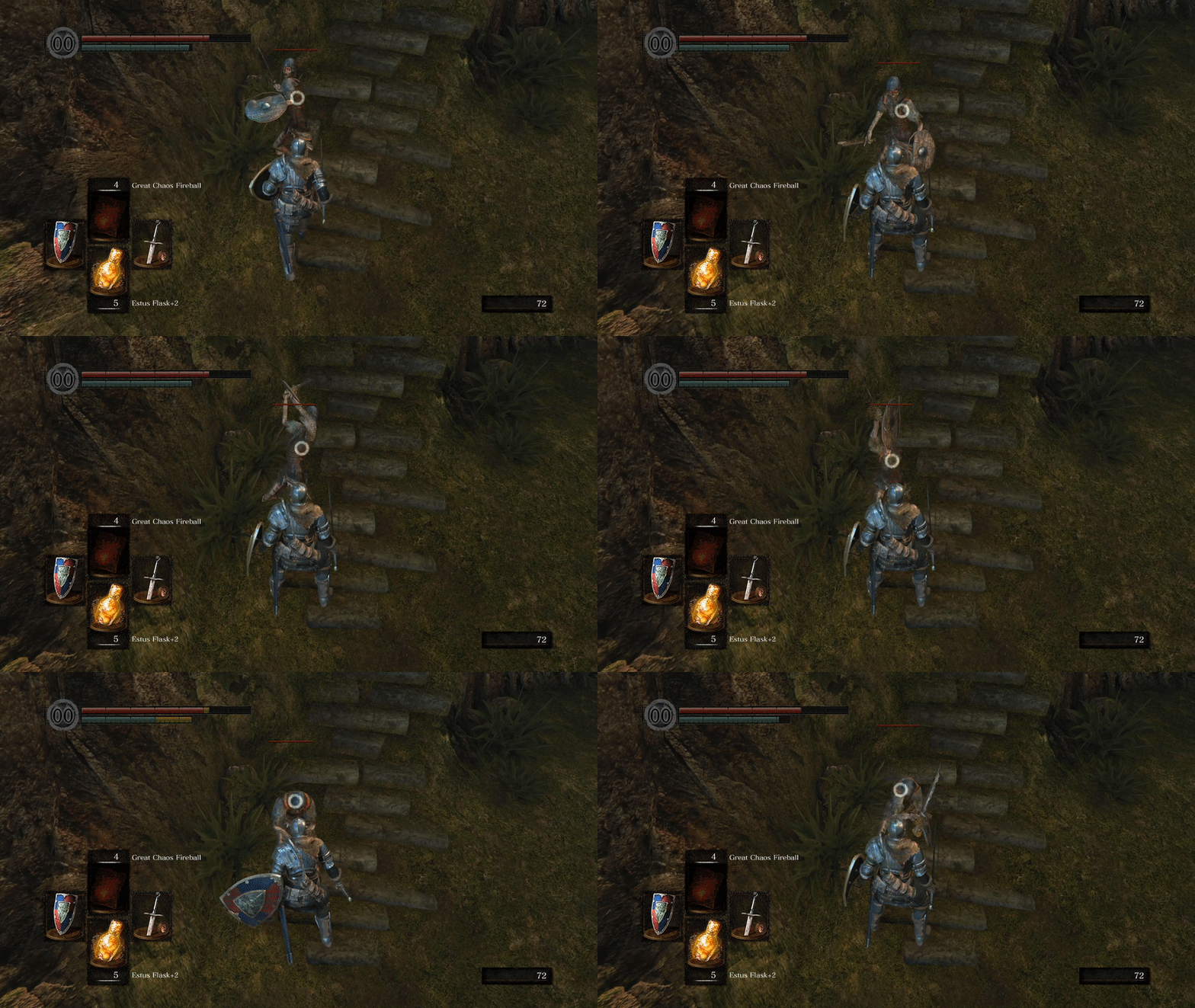
The parry in Dark Souls suffers severely from a lack of usability and versatility. Usability, as I explained, is my concept of how practical it is for a player to actually execute your parry maneuver consistently and successfully. Firstly, this parry is not universally available – the player must be wielding a small or medium sized shield in their off-hand. Given the wide and varied options of character customization in this game, it’s possible a player won’t be using a shield at all. I think the greatest source of dissuasion for using this mechanic, though, is how difficult it is to succeed with it. Dark Souls has a very specific and narrow window of time at which a parry will succeed. An enemy’s attack must connect with the player character during this 6 frame window – that’s one fifth of a second. Needless to say, it is a difficult mark to hit. Now, with practice one can hone in on Dark Souls‘ very consistent and reproducible rhythm. Not every enemy attacks with the same timing, but they all share a fairly general pattern of wind-up, swing, and follow-through. Once you get it, you’ll find parrying a pretty consistent tool.
Failing to parry can result in incurring massive damage, and its timing is excessively strict
However, the skill floor to reaching this point of consistency is restrictive, even by this game’s standards. Given how great the risk is of failing a parry in this game, and how the game itself trains players to be extremely risk-averse with enemies that deal massive amounts of damage when interrupting player actions, players are naturally disinclined to even take those risks. Thus, they’ll not learn the parry timing. What’s more, most enemies can be thoroughly dispatched, with far lesser risk, by simply striking them down with your favorite weapon or spell when the foe’s defenses are down, between their attacks. I conclude that the parry in Dark Souls is not entirely practical, or usable without a great deal of personal investment, time, and effort most players will find better spent in learning the nuances of movement, dodging, and attacking. These options are far more practical, realistically, even if the parry becomes very powerful once one masters it.
The impact of this parry is intense, and intensely reward, so it’s a shame it’s so hard to use
This would be enough turn off most players from the mechanic on its own, but the move also struggles in the versatility department, meaning the frequency of its general use cases. Dark Souls is filled with enemies that can be parried – essentially any enemy that can suffer a backstab. I’d always say that any enemy with an obvious spine that your player character can reach can probably be backstabbed and parried, as a general rule of thumb. Not every enemy matches this criteria though, and nearly none of the game’s 25 boss encounters do either. Boss encounters are a major part of this game, and something players will be spending a lot of time on. They’re also notoriously among the game’s most difficult and high-intensity segments. Since parrying is useless in those encounters, it further disincentivizes paying the mechanic any time or energy. If you can’t use a move for a game’s greatest challenges, what worth is it? Any real world skill building towards parry mastery is, objectively, better spent on other things, if finishing the game is your goal.
I like using the Dark Souls parry – it’s got excellent impact. A harrowing low boom sound effect accompanies its successful use. Parried enemies reel in a wide, exaggerated swooping animation, soon to be followed by a riposte that drives a weapon straight through them, gushing comical amounts of blood (if the foe has blood). It all really accentuates the player’s power and superior skill over the opponent. The totality of the audio-visual feedback here is excellent, it’s just a shame so few will ever get to actually see it. The move is simply not useful to a significant portion of the player base.
When a mechanic like this goes so underutilized by your players, the designer might ask themselves what’s causing this discrepancy, and what can be done to address it.
In Bloodborne, FromSoft wanted to shift to a more action-oriented system, less about patient and considered movements, more about reaction and aggression, as compared to Dark Souls‘ more traditional RPG inspired roots. As part of this shift, the parry in Bloodborne was made to be more of a central mechanic than in Dark Souls, something to be expected of the player regularly throughout combat encounters. So that means getting players to actually use it. First, FromSoft needed to address usability. Bloodborne‘s parry is unique in that it takes the form of a projectile. This accomplishes two things. One, it makes accounting for space exceedingly easy for players. Dark Souls was fairly strict about where player and opponent were standing for a parry to successfully work. In Bloodborne, if an enemy is shot during the tail end of its attack animation, it will be parried, no matter its distance from the player. Two, this means the player does not have to put themselves in direct danger to parry, as an enemy can be parried even if their attack is very unlikely to actually hit the player. The risk to parrying now feels much more proportional to the benefit, making it a valid alternative to just wildly attacking.
Even when incurring damage, it’s possible to parry in Bloodborne, the mechanic is forgiving
As the timing for Bloodborne‘s parry is now timed to the enemy‘s attack, and a moving projectile, rather than lining up the player’s parry animation with the enemy’s animation, the player really only has to track one movement, the enemy’s. Together, these elements remove a ton of cognitive blocks on actually using Bloodborne‘s parry system, so its usability is extremely effective by comparison. Bloodborne‘s parry is also extremely versatile. When looking at the 30 or so bosses in the game, about 15 of them can be parried, roughly half, making mastery of the parry a far more effective tool in way more situations than it was in Dark Souls. Bloodborne doesn’t shirk in the impact department either. The same familiar boom sound effect accompanies a success, and can be followed up with a violent and beastly visceral attack that grabs the enemy’s insides, twists them, and rips out a huge gush of blood, knocking the foe to the ground and stumbling nearby enemies. The player hunter’s sense of superiority over their prey is the focus.
Even the biggest and burliest can be parried, and at a distance too!
The Dark Souls parry had another issue I didn’t mention; if you did master it, and made it a consistent tool in your arsenal, many enemies outside of boss encounters become exceedingly easy to deal with, even if they are still fun to beat. Nevertheless, this runs the risk of the move becoming too powerful, especially if it’s easier to use. FromSoft’s solution to this was to make parry attempts a limited resources. This elegantly maintains the risk of attempting a parry, while assuaging the frustration of losing one’s own progress as a result of said risk. There’s still some risk of injury to a failed parry, but it’s much less likely than in previous games, most of the risk is the parry-centric resource of quicksilver bullets.
If Bloodborne made parrying a more central mechanic, then Sekiro made parrying a core mechanic, one of the primary action verbs of the game. Parrying is most of what you do in combat. Formally, the Sekiro move is called ‘deflection’.
To accomplish its design goals, Sekiro‘s parry is made to be even more accessible and low-risk than Bloodborne‘s. A deflection can be directly transitioned into from a block (which itself nullifies incoming damage), and a block can be transitioned to directly from a deflection. Both ‘block’ and ‘deflect’ are activated with the same button, block is simply the result of holding it. Deflections are initiated when the button is compressed, not when it is lifted, so erring on early deflections makes the maneuver even safer – deflections that fail for being used too soon simply result in a block. No damage is taken either way. The limiting resources of Bloodborne are gone here, at least for parries, so player’s will often find themselves using the deflection move even more than they attack, but this was the goal. Sekiro aims to evoke the back-and-forth clanging of cinematic sword fights, and the game is built around the interest of deflecting a series of attacks in quick succession. Any one given deflection is easy, but the difficulty can be smoothly ramped up by stringing a sequence of them together.
Sekiro conditions the player to use a series of parries as a defensive, and offensive tool
We’ve come a long way since Dark Souls, with a skill floor that is extremely approachable, without sacrificing the skill ceiling. Where the parry window of Dark Souls was only 6 frames, one fifth of a second, Sekiro‘s deflection window starts at the extremely generous, by comparison, half-second. This deflection window decays in size if the player abuses the deflect button. Deflecting rapidly and repeatedly causes the window to shrink down to only a small fraction of a second. The goal is to make any given deflection easy, but the player is encouraged to use their own powers of reaction and prediction, rather than relying on spamming the button. Even still, this window decay is also generous, as the deflection’s full capability is restored after only a half second of not using it.
All this to say, Sekiro has extremely generous usability for its deflection mechanic. It has to, as deflection is the primary tool for defeating enemies in this game. Were it as restrictive as the parry in Dark Souls or even Bloodborne, it would be an exercise in frustration. To counterbalance this, the individual reward for one Sekiro deflection is much lesser, and you need to do a lot of deflections to add up to a bigger reward.
Sekiro is a masterclass in parry versatility. The deflection maneuver is applicable to nearly every encounter in the game. It’s extremely generally useful, so much so that exceptions, attacks which cannot be deflected, are unlikely to be deflected, or require other special maneuvers to deflect, are given their own glowing red UI graphic to further make them stand out. Outside of that, if it deals damage, it can be deflected by the player’s sword, near-universally. Formalizing what can and can’t be parried in this way is also helpful for usability, as it removes guesswork on the part of the player.
When deflecting successfully, right orange sparks fly like a firework cracker was set off as a cacophony of metal sounds clang in satisfying unison. The audio-visual feedback for a successful deflection is actually kind of subtle, compared to simply blocking. It is merely a heightened, more intense version of the block visuals, just distinct enough to unambiguously be its own separate function to ensure players know when they’re succeeding, but similar enough to not be distracting. This makes sense, as players are expected to deflect a lot of attacks in any given encounter. A series of successful deflections looks and sounds like a larger-than-life battle of master swordsmen, with sparks showering about amidst the metal clanging. When an enemy has finally been deflected past the limits of their endurance, Sekiro will delight players with some of the most lavishly animated executions in video games, anything from the tried and true gut-stab, to decapitating a gorilla with a hatchet the size of a refrigerator, to gingerly extracting tears from a dragon’s occular injury. The impact of Sekiro‘s parry system is not only good, but usually proportional to each situation, even though the overall impact of any one given deflection is not super intense.
It’s clear somebody at FromSoftware loves parrying things almost as much as I do. It’s a common mechanic for a reason, giving players an area of skill to strive for mastery over, which reinforces a sense of power. Few things can make a player feel more powerful than successfully turning enemy attacks against them. Over the course of these three games, FromSoft has made parrying more and more central to the experience, to the point of it becoming the main point of focus for Sekiro. It’s clear there was an awareness of how neglected parrying was in Dark Souls among casual players, and even some veterans. They needed to find ways to make using it more attractive, without sacrificing the sense of power it imparted, the thing that makes it fun in the first place. While the Dark Souls parry has its flaws, I’m glade they persisted in iterating on it. I think Sekiro and bloodborne have two of the most consistently fun combat systems out there, and the excellence of their respective parry mechanics are a huge part of that, in Sekiro especially, which deserves its own write-up, eventually. The metrics I’ve come up with here to assess parry mechanics are just the way I look at things, though. It’s useful to look at design through a variety of lenses. So the next time you stab some zombie in the face after battering its arm away like you’re in a kung-fu movie, think about why and how that maneuver works the way it does.






 Parry Everything